
Reviewed · SALVADOR & PELOURINHO
Salvador: Cultural Night of Capoeira, Samba, and Drumming
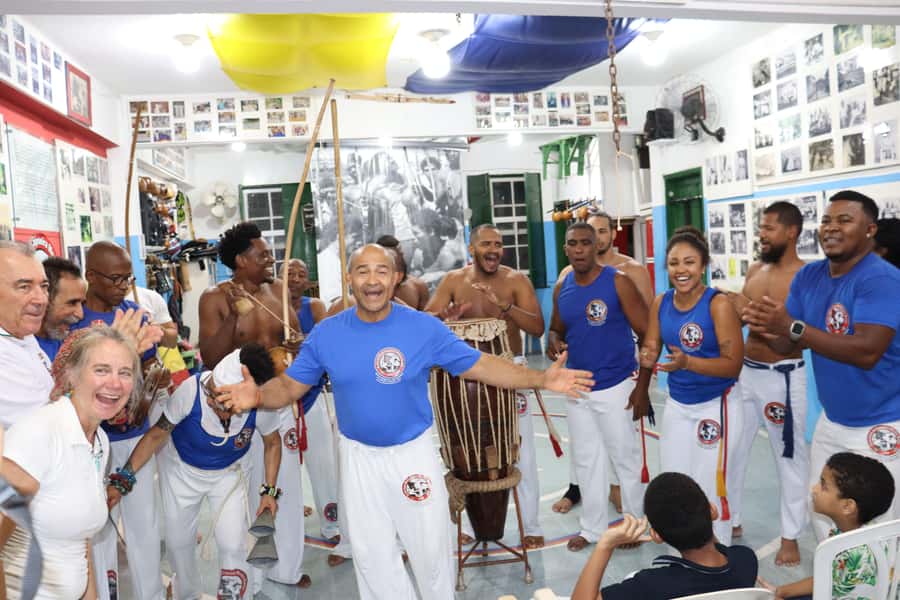
If you care about Afro-Brazilian culture, this Salvador evening is the real deal because it happens at Associação de Capoeira Mestre Bimba, the historic first Capoeira school in Brazil. You do not just watch from the edge, you feel how the music drives movement in real time.
I love two things here. First, the focus on Capoeira rodas that feel spontaneous and intense, not like rehearsed theater. Second, you get a full mix of capoeira plus samba, Maculelê, and traditional drumming in one compact night.
One thing to keep in mind: the room can get hot, and the experience is not a sit-down show. If you have back problems, or if you are pregnant, this may not be the best fit.
Key things to know before you go
- Mestre Bimba’s school setting: founded in 1937, tied to Capoeira Regional
- Organic energy: capoeira movements driven by the rhythm, not scripted routines
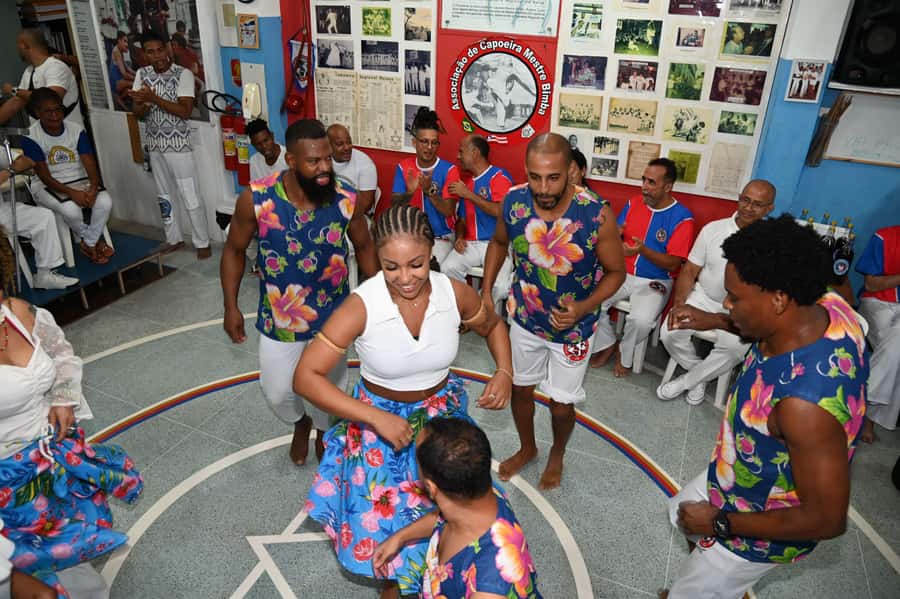
- Full Afro-Brazilian program: capoeira, samba, Maculelê, drumming, live music, and acrobatics
- All ages and genders get involved, so you are watching real practice and celebration
- Plan for heat and movement, bring comfortable clothes and shoes
Mestre Bimba’s 1937 School is the Real Star
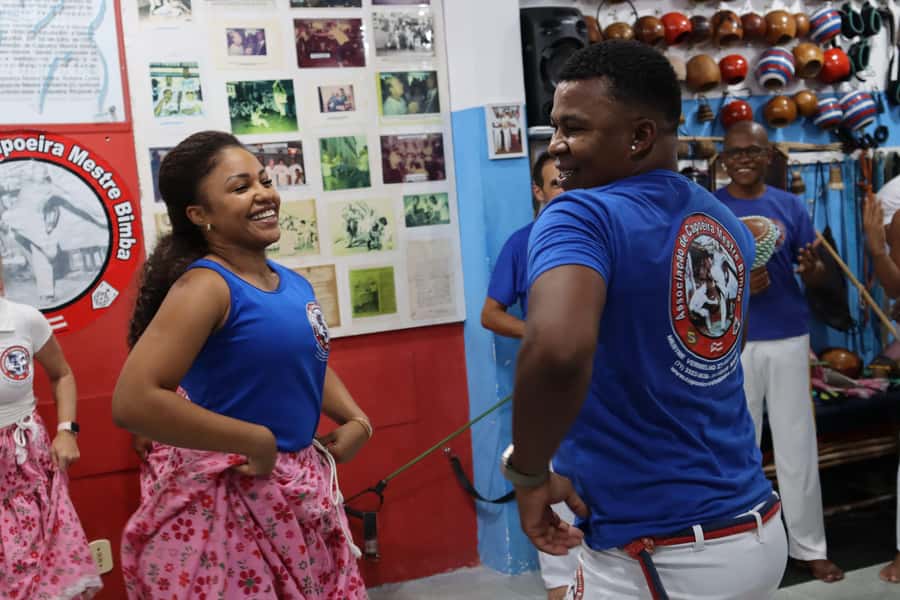
This is not a generic “cultural show” you can find anywhere. The venue matters because the night is hosted at Associação de Capoeira Mestre Bimba, founded in 1937 by Mestre Bimba, who created Capoeira Regional. That detail alone changes the mood. You are stepping into a place that is still treated as a landmark tied to cultural resistance and resourcefulness.
In practice, it also shapes what you see. You are not watching performers on a stage where everything happens at a safe distance. Instead, you get the sense that this is part celebration, part training, and part community gathering. Even if you do not speak Portuguese, the experience is guided by the sounds and the flow of the roda, the circle where capoeira happens.
The guide is there too, in English or Portuguese, so you are not stuck guessing what you are seeing. The goal is connection: to understand how the rhythm, singing, and movement link together.
More of Salvador and the Pelourinho:
- Round trip transfer, Salvador, Bahia, Brazil
★ 5.0 · 228 reviews - Salvador City Tour – Discover Brazil’s First Capital En, It, Es
★ 5.0 · 217 reviews - Cooking class in Salvador, an authentic dinning experience
★ 5.0 · 132 reviews
What Happens in the 1 Hour Program, and How It Feels
The listed duration is 1 hour, and the program runs about 1.5 hours once you include how the evening rolls. Either way, it is a short commitment, which I like in Salvador when evenings can get busy fast.
The night follows a simple rhythm. It starts with capoeira energy, moves into samba and Maculelê, and stays wrapped in traditional drumming and live music. Acrobatics are part of the mix, especially with Maculelê, so expect fast bodies and quick action rather than slow demonstrations.
The big “how it feels” detail is that this is presented as an organic celebration, not a tourist show with rehearsed routines. That means you might see more variety than you expect. One moment feels like training. The next feels like performance. It can be intense, but it also feels grounded and real because it is happening in an association space.
Capoeira Roda: Fast, Intense, and Driven by the Beat
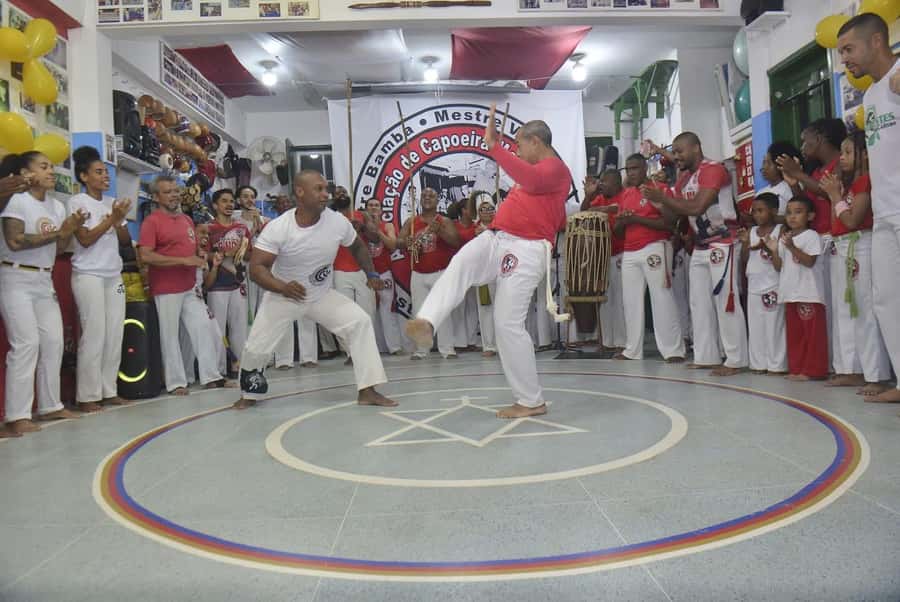
If you want to understand capoeira in a way that goes beyond a video clip, this is a strong choice. The heart of the night is the capoeira roda, where movements are spontaneous and powerful. You can watch how the style changes as different people step into the circle.
A detail I really appreciate is that the capoeira portion is described as showing fast, intense exchanges. That is exactly what makes capoeira harder to fake. When it is authentic, it is not just kicks and spins. It is timing, responding to the rhythm, and staying alert to what happens next.
You also get a sense that the tradition is lived across ages and genders. You are not seeing one “demo team” only. You see an association rhythm, where different participants join in as the night moves forward. That makes it easier to connect with the culture because it feels like a community practice rather than a one-time performance.
Samba and Maculelê: The Party Mode You Can’t Ignore
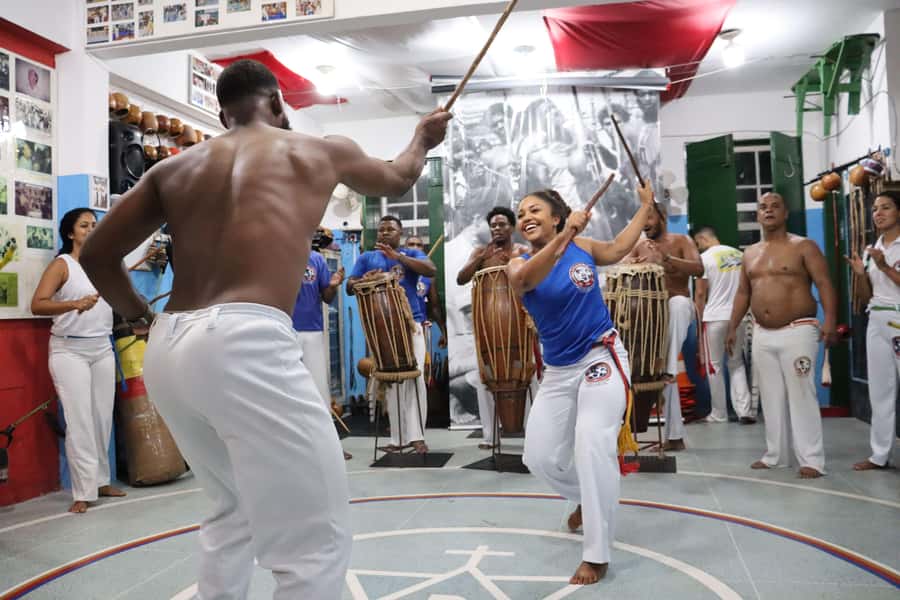
Once the capoeira sets the tone, samba brings the mood into a different kind of movement. Samba here is part of the cultural story, tied to rhythm and performance rather than a separate “intermission.” You will feel the shift in energy, and you will notice how the music shapes body language.
Then comes Maculelê, known for fiery performance and acrobatics. Even if you do not know the steps, the intensity comes through. Maculelê works because it is rhythm plus coordination plus athletic flair. It also pairs well with the drumming because the beat feels like it is steering what happens next.
One practical note: because this is not a museum-style lecture, your best viewing position is the one that lets you watch without thinking too much. Wear comfortable shoes. You will likely be standing and watching in close quarters.
More Carnival & Samba in Salvador da Bahia:
- Salvador: Cultural Treasure – Samba de Roda.
★ 4.9 · 51 reviews - Cultural Treasure of Salvador – Samba
★ 5.0 · 38 reviews - Rio de Janeiro: Beginner Samba Lesson in Ipanema
★ 4.9 · 1,071 reviews - Rio: Pub Crawl in Lapa with Cachaça Tasting and Live Samba
★ 4.7 · 881 reviews
Traditional Drumming and Live Music: The Link Between Everything
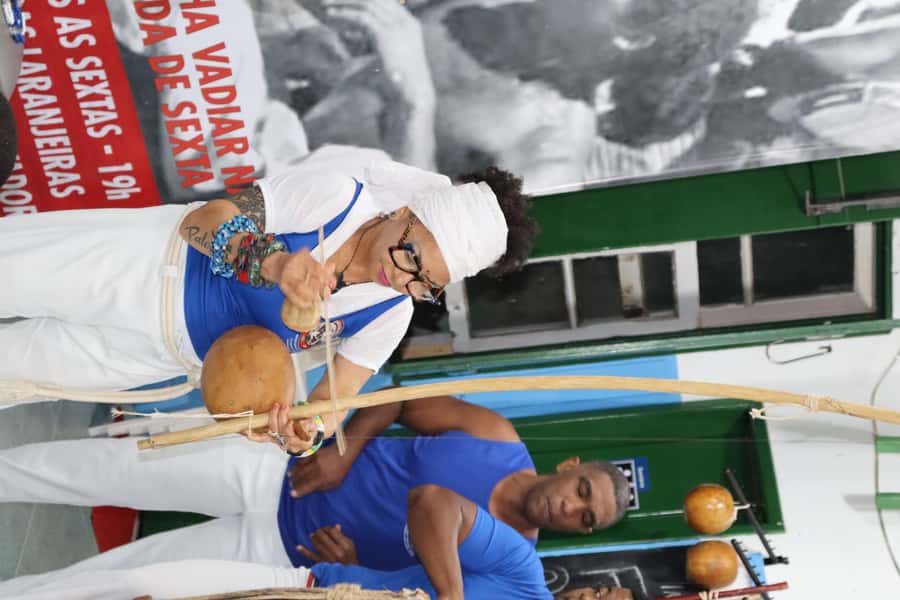
The night stays connected because the traditional drumming and live music run through it all. Drums and singing are not decoration here. They are the engine that makes capoeira conversations happen, and they also drive the transitions into samba and Maculelê.
You also get the best kind of cultural explanation by watching rather than only hearing. When the drumming shifts, you can see how the tone of the performance changes. That is the kind of learning you remember later.
It helps that the event is guided, with a live tour guide in English or Portuguese. Even with limited language ability, you can follow the thread: the music matters, and the people respond to it.
Price and Value: Is $30 a Good Deal?
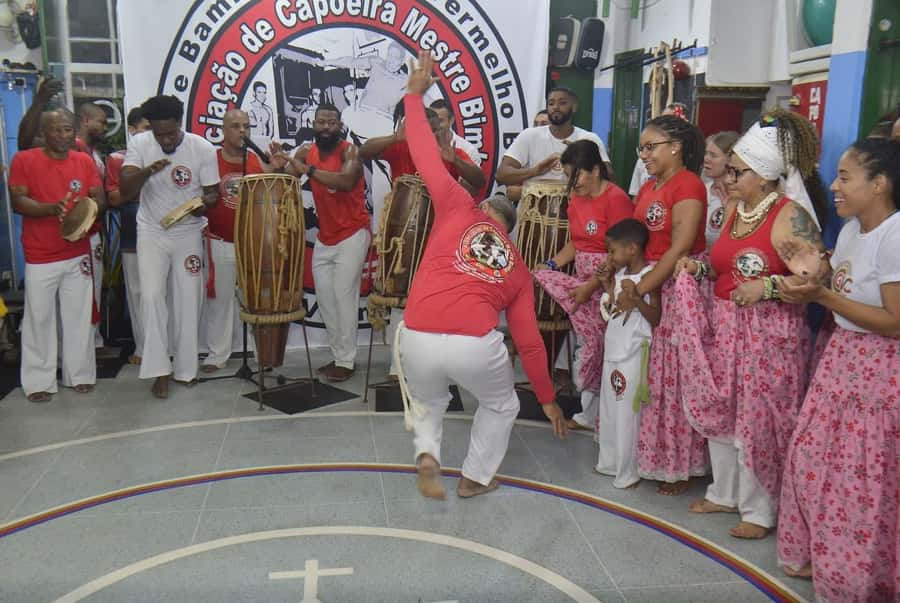
At $30 per person for an evening around an hour, the value is in what you get, not just that there is a show. Your ticket includes:
- Capoeira
- Samba
- Maculelê
- Traditional drumming
- Live music
- Acrobatics
And that matters because you are getting multiple Afro-Brazilian performance styles in one sitting, inside a real association environment, at a landmark tied to Mestre Bimba. If you only paid for one element, you would still be spending a chunk of money on an evening activity. Here, your ticket covers the full arc.
Two things are not included. Food or drinks are not part of the ticket, and transportation to the venue is on you. That is fine, just plan your evening so you do not arrive hungry with no options nearby.
If you are deciding between a longer dinner-and-show option versus this one, think about what you want most. This ticket buys a short, high-energy cultural night where the focus is movement and music.
Who This Fits Best in Salvador
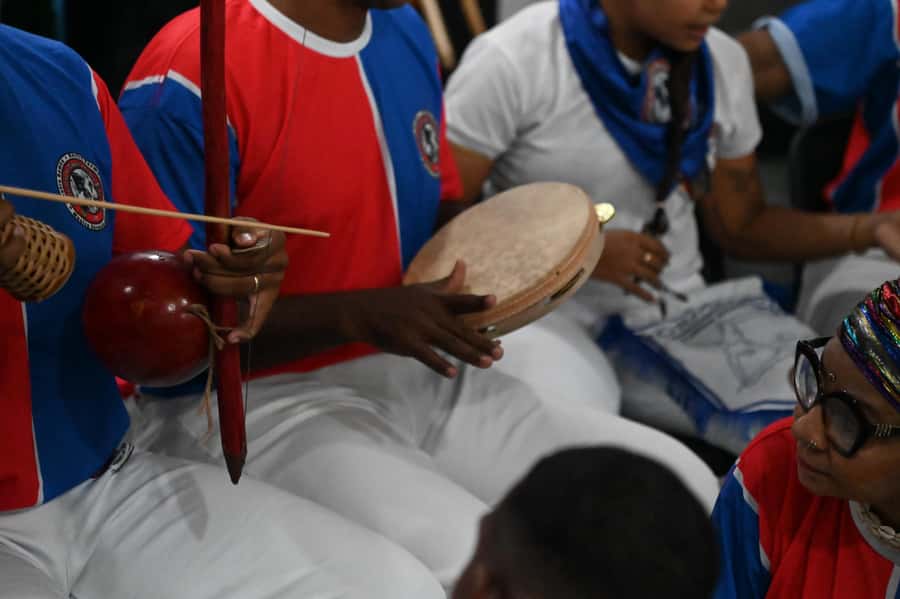
This is a strong match if you:
- Want an experience centered on Afro-Brazilian culture, not a staged tourist performance
- Like live music and movement that feels connected to the moment
- Have limited time and want a focused evening activity
- Enjoy watching people learn, train, and participate, not just watch actors
It may be less ideal if you:
- Need a fully seated, low-movement format
- Have back problems, since the event is not listed as suitable for that
- Are pregnant, since it is also listed as not suitable
Also, if you are the kind of traveler who gets uncomfortable in warm indoor spaces, plan for that. The experience happens in a room that can get hot, and that can affect how long you want to stand and watch.
Practical Tips: Meeting at Associação de Capoeira Mestre Bimba
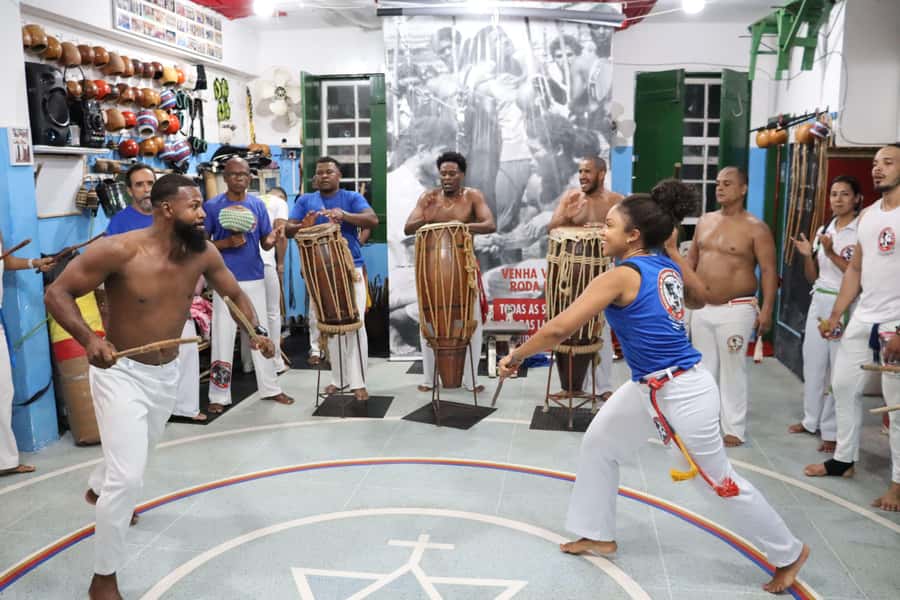
You meet at Associação de Capoeira Mestre Bimba. There is no pickup service, so you will want to get there on your own.
To help you locate it, use nearby landmarks like Ó Paí Ó Restaurante or São Domingos Gusmão Church in Largo do Terreiro de Jesus. That area gives you reliable reference points when you are walking at night.
What to bring is straightforward:
- Comfortable shoes
- Comfortable clothes
For rules: no smoking during the experience. It is a small but helpful reminder that you should plan around it, especially if you are used to taking breaks.
Because this is close to a training environment, keep your expectations realistic. You might see slightly different pacing compared to a choreographed show. That is part of the charm, and it is also why it feels like an actual association night rather than a scripted spectacle.
When to Go, and How to Plan Your Evening
This activity is short, so it works well as an anchor event. If you schedule it near dinner, plan to eat before you go or have a plan for after, since food or drinks are not included.
If you want to keep your evening smooth, build in a little buffer time before the start. You will want a moment to settle in, find a comfortable spot, and get ready for standing and movement.
Also, think about clothing and comfort as part of your “enjoyment strategy.” When a room gets hot, the traveler who is dressed for comfort has a better time. Choose breathable clothes and shoes you can stand in for an hour.
Should You Book This Cultural Night in Salvador?
I think you should book it if you want an evening where Brazilian culture is not filtered through a generic theater format. The venue tied to Mestre Bimba, the focus on Capoeira rodas, and the mix of capoeira, samba, Maculelê, and traditional drumming make this a strong value for the price.
Skip it or reconsider if you know you will not enjoy warm indoor conditions, or if standing and quick movement are hard for your body. This is energy-first, not comfort-first.
If you are on the fence, here is a simple test: do you want to feel the rhythm drive the action, and do you want a live association vibe more than a polished show? If yes, this night is very likely worth it.
FAQ
Where is the meeting point?
The meeting point is at Associação de Capoeira Mestre Bimba.
Are there nearby landmarks to help me find it?
You can use Ó Paí Ó Restaurante or São Domingos Gusmão Church in Largo do Terreiro de Jesus as nearby reference points.
How long does the experience last?
The duration is listed as 1 hour, and the program is described as about 1.5 hours once it gets going. Check available starting times for the exact schedule.
How much does it cost?
The price is $30 per person.
What’s included in the ticket?
The ticket includes entry plus capoeira, samba, Maculelê, traditional drumming, live music, and acrobatics.
Is food or drinks included?
No, food or drinks are not included.
Does the guide speak English?
Yes, the live tour guide is available in English and Portuguese.
Is there anything I should not bring or do?
Wear comfortable shoes and clothes. Smoking is not allowed. The event is also listed as not suitable for pregnant women and people with back problems.
More Capoeira in Salvador da Bahia
- Cultural Treasure of Salvador – Capoeira
★ 5.0 · 44 reviews - Salvador: Capoeira Class at Mestre Bimba’s 1st Ever School.
★ 4.9 · 34 reviews - Salvador: CAPOEIRA CLASS – CULTURAL
★ 4.6 · 13 reviews - Capoeira Classes for Beginners in Rio de Janeiro
★ 5.0 · 27 reviews
Newest Salvador da Bahia reviews
- Cultural Folkloric Show and Dinner in Salvador★ 4.5 · 15 reviews
- Transfer Vila Galé Marés (Guarajuba) – Private★ 5.0 · 15 reviews
- Tour to Praia do Forte and Guarajuba★ 4.0 · 16 reviews
- Private City Tour of Salvador da Bahia★ 5.0 · 17 reviews
- 3-Hour Private Tour of Salvador Capital Afro-Brazilian★ 5.0 · 17 reviews
- Afro-Brazilian Roots city Tour in Salvador with lunch at Favela★ 5.0 · 17 reviews
- Salvador African Heritage Private City Tour Including Afro Museum★ 4.5 · 18 reviews
- Morro de São Paulo Tour, Leaving Salvador-Bahia.★ 5.0 · 18 reviews
Salvador & Pelourinho, compared.


Salvador City Tour – Discover Brazil’s First Capital En, It, Es
Read our review →
Cooking class in Salvador, an authentic dinning experience
Read our review →
Tour to the Frades Islands and Itaparica, from Salvador – Ba
Read our review →
Transfer Salvador Airport / Hotel Litoral Norte
Read our review →


Tour Praia do Forte and Guarajuba, Leaving Salvador-Bahia.
Read our review →Browse the lists this tour appears in