
Reviewed · SALVADOR & PELOURINHO
Private City Tour in Salvador
Salvador works best when you stop hopping randomly and instead follow a smart route. This private, half-day style tour lets you get your bearings fast while still spending real time at the city’s big, meaningful sights.
I especially like the mix of walking and driving, because it keeps the pace realistic in the heat. I also like that the tour is designed around Salvador’s story, from colonial streets to Portuguese tiles and Jesuit art, not just postcard photos. One thing to keep in mind is that several entrances are not included, so your final total will depend on which churches and museum options you choose.
Key highlights to expect
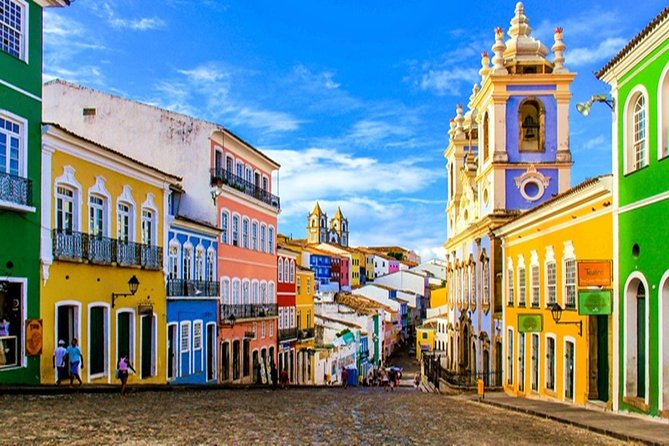
- Pelourinho in one focused walking block, including the old colonial streets and squares
- Igreja e Convento de São Francisco for Portuguese tiles plus gold-leaf church interiors
- Lacerda Elevator included, a quick ride that connects upper and lower Salvador
- Farol da Barra and the Bay of All Saints, with history tied to the transatlantic trade and Europe’s arrival
- Photo-friendly city squares like Tomé de Sousa Square, Praça da Sé, and Terreiro de Jesus
- Mercado Modelo shopping time, built in so you can buy crafts without rushing
A smart half-day city tour in Salvador
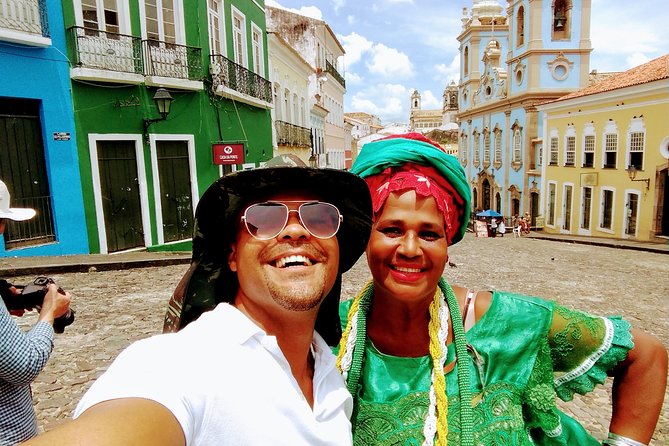
Salvador da Bahia is famous for strong contrasts. You’ll see colonial stone, religious art, and ocean views stacked side by side, and it can feel like the city has layers. The value here is that you do not waste time figuring out a route alone. Your guide shapes the day so the stops connect.
You also get a private air-conditioned vehicle plus hotel pickup and drop-off. That matters in Salvador because sun and humidity can drain energy fast, especially when you are also walking cobblestones in Pelourinho.
This is also built for people who want a “big picture” visit without losing the human details. Many guides in past experiences have been able to bring the African influence and modern Salvador culture into the explanation, not just the old-world dates and architecture.
More City Tours in Salvador
- Salvador City Tour – Discover Brazil’s First Capital En, It, Es
★ 5.0 · 217 reviews - Afro-Brazilian Roots Private City Tour in Salvador
★ 4.7 · 88 reviews - Historical African oriented City Tour
★ 5.0 · 52 reviews
Getting picked up and staying comfortable
The tour is about 4 hours, and the pacing is intentionally half walking, half driving. You’ll start in the upper historic area and work through the sights, then move back toward the coast and the lower city.
Because you have a private vehicle, you can usually adjust without the whole group losing time. This is especially helpful if you want extra photos at a square or if you need to shorten a walk. Past guests have praised how certain guides, like Monia and Vagner, helped tailor the day while keeping it efficient.
One practical tip: you should plan for some walking on cobblestones and old steps. The tour includes multiple short walks, not one long hike. If you are sensitive to uneven ground, go slow and wear shoes you trust.
Pelourinho: cobblestones, five squares, and the old capital vibe
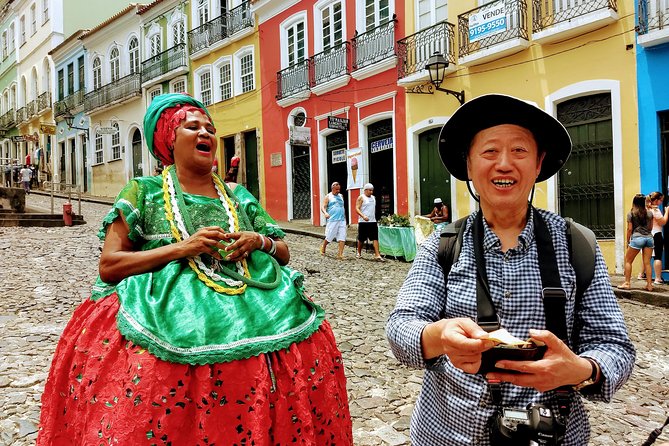
Pelourinho is the main “start here” neighborhood for understanding Salvador. You’ll do a walking tour through the historic complex made up of five colonial squares, with cobbled streets that keep you moving at a slower, more thoughtful pace.
This stop is 1 hour, and that timing works. You are not rushed through doorways and you get enough time to notice details like the way the buildings hug the street corners. Pelourinho is also where you can feel the city’s identity pulling at you, especially when a guide links what you see on the ground to what happened historically.
What I like about Pelourinho in this kind of guided format is that it is not only about architecture. A good guide points out cultural layers. In past experiences, guides like Wilson have been praised for weaving together the African influence and Salvador’s spiritual resilience with the colonial setting. Even if you only catch a few of those connections during the hour, it changes how the rest of the city “clicks.”
Igreja e Convento de São Francisco: Portuguese tiles and gold-leaf intensity
Next up is the Igreja e Convento de São Francisco, one of the stops you really want to do in person rather than scroll past. This part of the tour leans heavily into interiors: Portuguese tilework (azulejos) plus churches decorated with gold leaf.
The stop is short at 25 minutes, but that is the tradeoff for covering so much in a half day. The upside is focus. You go in with a plan, you see the tile patterns, you catch the baroque feel, then you move on.
Admission is not included for this stop. Plan to budget an entrance fee and keep a little extra cash or card on hand, because these places often involve separate tickets or charges.
If you care about art history, this is a highlight. The tilework and gilded church details are exactly the kind of thing you miss when you try to do Salvador solo without an indoor plan.
More of Salvador and the Pelourinho:
- Round trip transfer, Salvador, Bahia, Brazil
★ 5.0 · 228 reviews - Cooking class in Salvador, an authentic dinning experience
★ 5.0 · 132 reviews - Tour to the Frades Islands and Itaparica, from Salvador – Ba
★ 4.0 · 130 reviews - Transfer Salvador Airport / Hotel Litoral Norte
★ 5.0 · 111 reviews
Cathedral Basilica and a possible memorial stop
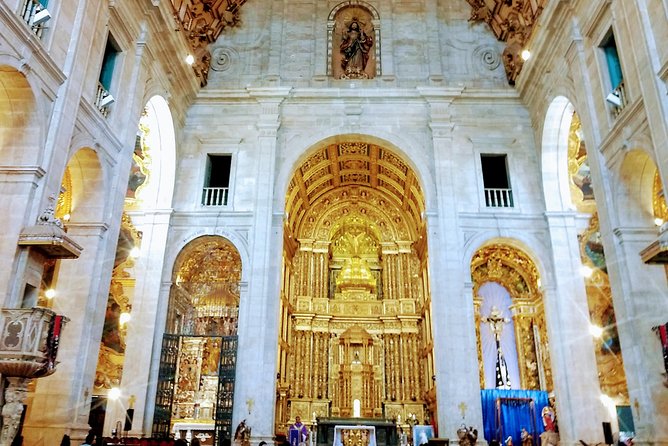
After São Francisco, you’ll have time at the Cathedral Basilica of Salvador for a quick look inside. The stated focus is Jesuit art and the church’s role as a major religious landmark from the colonial period.
This stop is 15 minutes, and entrances are not included. So again, you should think of this as “see it, absorb it, then keep moving.” If you want a long, slow cathedral visit, you might want to add an extra ticketed stop on another day.
There is also an optional stop described as a memorial connected to the state’s governors and democracy during a republic period. The key practical note is that entrance timing may be irregular, and you cannot count on it to be open. If you show up and it is shut, do not panic. Your guide’s job is to keep the day flowing around what is actually accessible.
Lacerda Elevator: short ride, big meaning
Now for the fun, practical one. The Elevator Lacerda is included, and you will actually go in for about 10 minutes.
This is the classic connector between Salvador’s upper and lower city, and it is also a great “orientation moment.” When you ride it, you understand the city’s vertical layout in a way maps cannot. Your guide can also connect that geography to why the city grew the way it did.
In past experiences, guides have been praised for explaining how each stop relates to the city’s larger story. That is exactly what an elevator ride can do here, because it is a real moving perspective shift.
This is also a good break between longer walking blocks. You get movement, a quick photo window, and then you are ready to head toward the coast.
Santo Antônio da Barra Fortress and Farol da Barra views
You start the Farol da Barra segment at Santo Antônio da Barra Fortress and lighthouse. The guide’s talk is built around the transatlantic trade and Europe’s arrival in the New World, with the Bay of All Saints acting like your visual anchor.
This is where Salvador’s setting really matters. From this coast angle, you can understand why the first capital was placed strategically. The tour gives you the history framing so you are not just staring at water. You are seeing a geographic reason.
There’s an additional option to visit the Nautical museum, but admission is not included. The information you have shows different costs depending on what you are entering, so budget for a lighthouse-related fee plus whatever museum ticket applies.
Also note a simple reality: your time here is short. It is about 15 minutes for the stop, so you cannot expect a full museum day. Use this as a “see it first” moment, then if you love it, plan a longer second visit later.
Porto da Barra beach stop: a cooling breather
After the lighthouse area, you head to Praia do Porto da Barra in the Barra district. This beach sits on the Bay of Todos os Santos, and the tour time is about 15 minutes.
The beach is described as having a smaller stretch of sand and calmer waves, making it a more relaxed stop than some other busy coastal stretches. It can be popular on weekends and holidays, so if your day lines up with one of those periods, expect more people around.
This beach break is mostly about comfort and atmosphere, not a long swim plan. Still, it is a smart reset after indoor churches and stone streets. If you want a quick stretch, photos with the bay behind you, and a moment to cool down, this is the slot.
Squares for photos and city logic: Tomé de Sousa, Praça da Sé, Terreiro de Jesus
Now you shift back to walking, but the focus becomes smart wandering through key squares. These are the places where the city’s power structures and religious roots show up clearly.
Tomé de Sousa Square
You’ll spend about 20 minutes at Tomé de Sousa Square, also called the Municipal Square. Here you get public buildings like Tomé de Sousa Palace (now the city hall), Rio Branco Palace, and the Salvador City Council, plus the statue of Tomé de Sousa. The Lacerda Elevator and bay views sit in the background, which makes this stop an easy photo win.
Praça da Sé
Next is Praça da Sé, about 15 minutes. It is described as the main square of the principal Catholic church today, with monuments tied to the heritage of the area. This is a walking-photo kind of stop, so go in with the mindset that it is for viewpoints and street-level context.
Terreiro de Jesus
Then you move to Praça Terreiro de Jesus for about 30 minutes. This is where the Jesuits developed evangelization and organized early higher education in Brazil. If you have been thinking about colonial religion, this square ties it together and gives your earlier church visits a bigger meaning.
In past guided experiences, people have praised guides for answering lots of questions and keeping the tone both educational and human. If you are the type who likes to ask why things look the way they do, these squares are where you can get those answers without feeling like you are delaying the whole trip.
Optional museum stops and quick interior time
Within this area, there are additional short museum-like stops mentioned: one described as a colonial building featuring silver art, and another described as a Portuguese colonial building with a wood and painting museum.
The details here are limited, and time is short, so treat these as flexible add-ons rather than guaranteed “must-see” anchors. Ask your guide which one is the best fit for your interests, then use the time to pick the item you are most curious about.
This is also a good moment to ask questions. In past experiences, guides like João Luís and Maria have been praised for being patient and adapting to what people want to focus on.
Mercado Modelo: crafts shopping without the scramble
Your final planned stop is Mercado Modelo, with about 30 minutes for shopping at the handcraft market.
This is a great way to end because it turns the history you saw into something you can take home. You can look for locally made crafts without needing extra transportation planning.
If you are the kind of visitor who hates being rushed at shops, appreciate that this stop is specifically given time. Use it to browse, then decide what you actually want. It is better to buy one thoughtful piece than five impulse items.
Price and value: what you get for $120, and what to budget
At $120 per person for roughly 4 hours, this is not a budget bus tour. What you are paying for is the private vehicle, hotel pickup and drop-off, and a guide who helps you cover the big sights without losing time.
Here is what affects the real cost beyond the base price:
- Several entrance fees are not included, including churches and Farol da Barra.
- The Nautical museum ticket, if you choose it, is also not included.
- Lunch and drinks are not included.
The practical move is to think of this tour as a history-and-sightseeing package plus optional paid entrances. If you plan to enter the churches and possibly a museum at Farol da Barra, you should budget extra money up front.
Also consider the “human value” part. Many guests have highlighted guides who tell the story in a way that feels personal, not scripted. If you want context for why Salvador looks and feels the way it does, that is the part that makes the price feel justified.
Who this tour fits best (and who might want a different plan)
This private tour is a strong fit if you want:
- a guided overview of Salvador in half a day
- a route that covers both historic upper areas and the coast
- comfort with air-conditioned private transport
- time to walk Pelourinho and hit multiple squares, not just drive-by stops
It may be less ideal if you want a slow, long museum day or deep dives into a single neighborhood. The overall structure is efficient, not leisurely.
It also makes sense for people traveling in small groups who need flexibility. Past experiences mention that guides can adapt for different ages and stamina. As always, bring realistic expectations: there is still walking, and cobblestones are cobblestones.
Should you book this private Salvador city tour?
I’d book it if your goal is to see the “main Salvador” with a guide who can explain what you are looking at and connect neighborhoods and monuments into one story. The mix of Pelourinho, major church interiors, the Lacerda Elevator, and the Bay of All Saints views gives you a full picture without draining your day.
Before you go, do two things:
- Plan your budget for entrances at churches and Farol da Barra, plus any museum option.
- If you want the strictest version of private, especially around busy dates, confirm with the operator what “private” means for vehicle size and group exclusivity on your exact day.
If that works for you, this tour is a very practical way to kick off Salvador, or to make sure you do not miss the key landmarks when time is tight.
FAQ
How long is the Private City Tour in Salvador?
The tour lasts about 4 hours.
How much does the tour cost?
It costs $120.00 per person.
What is included in the price?
You get an air-conditioned vehicle, hotel pickup and drop-off, a guide de turismo, and private transportation.
What is not included in the tour price?
Entrance fees are not included for churches, and entrance fees for Farol da Barra are not included. Lunch and drinks are also not included.
Is the Lacerda Elevator included?
Yes. The tour includes admission to go in and experience the Elevator Lacerda.
Are there entrance fees for churches and Farol da Barra?
Yes. The churches entrance fee is listed as R$20 per person, and Farol da Barra has an entrance fee listed separately.
Is lunch included?
No, lunch and beverages are not included.
Is the Nautical museum at Farol da Barra included?
No. It is described as optional, and the museum ticket is not included.
Is there a minimum number of adults required to book?
Yes. There must be a minimum of two adults per booking.
What is the cancellation policy?
Free cancellation is available if you cancel up to 24 hours in advance for a full refund. If you cancel less than 24 hours before the start time, the amount you paid will not be refunded.
Newest Salvador da Bahia reviews
- Cultural Folkloric Show and Dinner in Salvador★ 4.5 · 15 reviews
- Transfer Vila Galé Marés (Guarajuba) – Private★ 5.0 · 15 reviews
- Tour to Praia do Forte and Guarajuba★ 4.0 · 16 reviews
- Private City Tour of Salvador da Bahia★ 5.0 · 17 reviews
- 3-Hour Private Tour of Salvador Capital Afro-Brazilian★ 5.0 · 17 reviews
- Afro-Brazilian Roots city Tour in Salvador with lunch at Favela★ 5.0 · 17 reviews
- Salvador African Heritage Private City Tour Including Afro Museum★ 4.5 · 18 reviews
- Morro de São Paulo Tour, Leaving Salvador-Bahia.★ 5.0 · 18 reviews
Salvador & Pelourinho, compared.


Salvador City Tour – Discover Brazil’s First Capital En, It, Es
Read our review →
Cooking class in Salvador, an authentic dinning experience
Read our review →
Tour to the Frades Islands and Itaparica, from Salvador – Ba
Read our review →
Transfer Salvador Airport / Hotel Litoral Norte
Read our review →

Tour Praia do Forte and Guarajuba, Leaving Salvador-Bahia.
Read our review →
Afro-Brazilian Roots Private City Tour in Salvador
Read our review →Browse the lists this tour appears in