
Reviewed · SALVADOR & PELOURINHO
Salvador City Tour – Discover Brazil’s First Capital En, It, Es
Salvador can feel like two cities stacked on top of each other, and this tour is a smart way to experience that contrast fast. You get sea air at Farol da Barra, big spiritual energy at Bonfim, and the photo-stopping color of Pelourinho, all with guides like João and Samuel who know how to explain what you are actually seeing.
Two things I really like: first, the private-group format keeps the day from feeling rushed or generic. Second, the route mixes viewpoints and culture in a way that makes the city’s Afro-Brazilian roots feel practical, not just academic, including Orixá symbolism at Dique do Tororó and the daily-life feel of São Joaquim Market.
One possible drawback: not every stop has its entrance included. Museums and churches can add extra costs, so if you are budget-tight, check fees before you go and plan for a bit of walking on hills and cobblestones.
Key highlights you will actually care about
- Farol da Barra views over the Bay of All Saints, especially around late afternoon
- Dique do Tororó gardens and Orixá statues for strong, meaningful photos
- São Joaquim Market with a guided, food-and-faith focus (and free admission)
- Igreja do Bonfim ribbons and the hilltop bay view, with free entry
- Elevador Lacerda for classic Upper and Lower Town photos (entry not included)
- Pelourinho lunch stop in the UNESCO heart of the city, plus time for major landmarks nearby
Getting your bearings fast in Salvador da Bahia
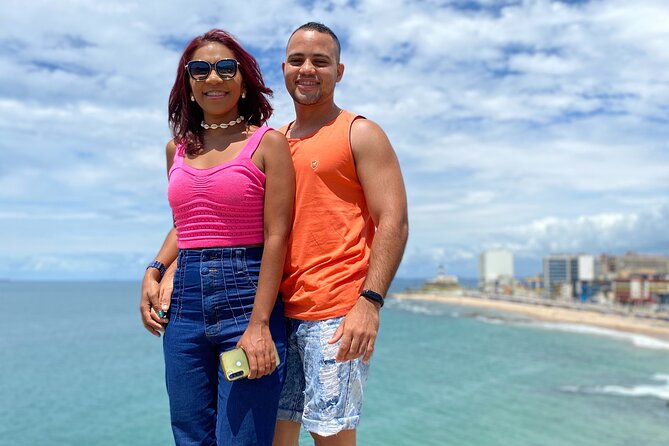
The best city days start with context, and this one does. You begin at Farol da Barra, where the Atlantic Ocean meets the Bay of All Saints. It is one of those places where Salvador instantly makes sense: water, weather, and the kind of coastline energy that shaped the city’s history.
The lighthouse itself has long guided ships, and now it also serves as a starting point for understanding Bahia’s maritime story. Even if you skip the museum component, you still get that classic sea-facing view. If your timing lines up, you can catch a warm sunset glow over the bay, which is when the city photos look their best.
Practical tip: wear a sun-ready hat and plan for breezy coastal wind. The ocean air can feel cooler than it looks, but you can still burn.
More City Tours in Salvador
- Private City Tour in Salvador
★ 5.0 · 110 reviews - Afro-Brazilian Roots Private City Tour in Salvador
★ 4.7 · 88 reviews - Historical African oriented City Tour
★ 5.0 · 52 reviews
Farol da Barra and what the Nautical Museum adds (if you choose it)
At Farol da Barra, the main payoff is the view. But you also have an optional museum angle through the Nautical Museum of Bahia, which can make the lighthouse more than a pretty stop. Since museum entrances are not included, you should decide based on your interest level.
If you like maritime and trade stories, it is worth budgeting time and entry cost. If you prefer photos and quick context, you can keep it light and still have a satisfying stop. Either way, this is a great anchor point because the sea and the bay are what tie many later sights together.
Dique do Tororó: gardens, Orixás, and peaceful city energy
Next you head to Dique do Tororó, a scenic water area in the middle of gardens and public art. What makes this stop meaningful is the Orixá theme. These deities are central to Afro-Brazilian religions, especially Candomblé, and here their presence is expressed through sculptures and symbolism you can actually see.
I like how this stop slows the day down. After the ocean view, you get a calmer, more reflective moment. And it is not just scenery. You are looking at cultural memory in stone and tile, which helps you understand why Salvador’s faith traditions show up everywhere, not just inside churches.
Photo note: the setting is ideal for skyline-style photos. If you want pictures that look like you are “inside” the city rather than just snapping landmarks, this is a good place to take a few extra minutes.
Fonte Nova Arena: soccer, concerts, and a modern Salvador layer
Then you move into the Itaipava Arena Fonte Nova area. This is not a museum stop, and it is not trying to be one. It is a reminder that Salvador is not only colonial streets and church bells. It also has a strong, modern public-life rhythm, especially through soccer and live events.
The arena’s renovation tied to the 2014 FIFA World Cup gives it a distinct architectural look. Even if you are not going to a match, the setting helps you read the city better. Salvador has always been both old and moving forward, and this stop shows the “moving forward” side.
Practical tip: this is also a useful photo pause. You can frame the arena against the city’s surroundings and see how the modern structures sit next to older areas.
More of Salvador and the Pelourinho:
- Round trip transfer, Salvador, Bahia, Brazil
★ 5.0 · 228 reviews - Cooking class in Salvador, an authentic dinning experience
★ 5.0 · 132 reviews - Tour to the Frades Islands and Itaparica, from Salvador – Ba
★ 4.0 · 130 reviews - Transfer Salvador Airport / Hotel Litoral Norte
★ 5.0 · 111 reviews
São Joaquim Market: the smell test for Bahia’s daily life
São Joaquim Market is the place where Salvador’s daily culture feels tangible. You are between the Bay of All Saints and the lower city, and the market stretches across alleys and colorful areas that can feel lively in a hands-on way.
What I like here is the guidance. With a guide, you are not just wandering. You are learning how everyday shopping connects to Bahian identity and Afro-Brazilian traditions, including religious items linked to Candomblé.
Expect to see vendors selling fruit, seafood, crafts, and religious supplies. The information about local fruits like umbu, cajá, and serigella is a good cue that this is a food-forward stop. Even if you do not plan to buy a lot, you will still get that smell-and-color education that makes the rest of the day click.
Admission is free, so you are not juggling additional ticket costs. Time-wise, you typically get about half an hour, which is just enough to absorb the scene without turning it into a rushed shopping sprint.
Bonfim ribbons and the hilltop moment at Igreja do Senhor do Bonfim
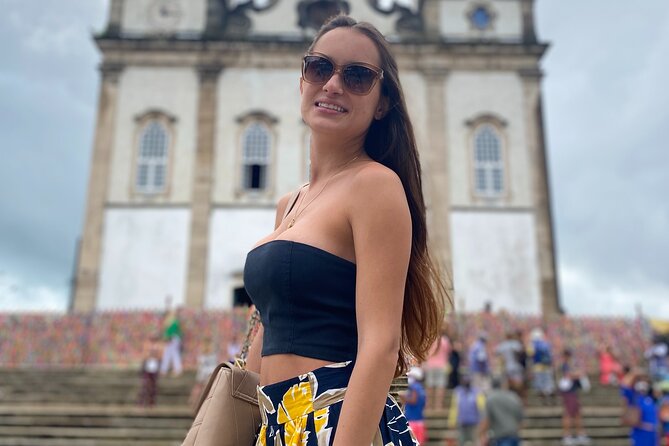
If Salvador has a “wish and thank you” ritual you can watch up close, it is Basilica do Senhor do Bonfim. This church is famous for the ribbons tied on gates, and you can see how faith mixes with community tradition in a way that feels very local.
The key detail that matters: the church is known for blending Catholic and Afro-Brazilian beliefs. That is why Bonfim can feel emotionally more complex than a typical sightseeing church. Pilgrims come to make wishes and give thanks, so you get atmosphere, not just architecture.
The view from the hilltop over the bay is another major reason to plan your time here carefully. You want a few minutes to look out, not just look at the church.
Entry is free, which is great. Still, bring small cash or card for personal items if you want to participate in any ribbon or souvenir tradition.
Elevator Lacerda: a short ride that explains Upper vs Lower Town
Elevador Lacerda connects Salvador’s Upper and Lower Towns, and that alone makes it a practical stop. You are not only photographing an art deco structure from 1873, you are using it to understand how the city is built.
This elevator is also described as the first public elevator used for urban transport, which is exactly the kind of fact that helps you appreciate why it matters. And the view from the top is the payoff: you see the Bay of All Saints, plus the Market Model below. It is a perfect “look, now I get it” moment after church hills and market alleys.
Since entrance is not included for this part, budget for it if you plan to ride. If you are short on energy, you could still enjoy surrounding views, but the real value is making the city’s geography visible in one smooth step.
Pelourinho: UNESCO streets, drums in the air, and a real lunch pause
Then you reach the Pelourinho, the cultural center of Salvador and a UNESCO World Heritage area. This is where the city feels like it is performing. Cobblestone streets, colorful colonial buildings, and rhythmic sound cues create an atmosphere that is hard to replicate from photos alone.
What makes Pelourinho worth your time is how it connects history to daily life. It is not just preserved facades. It is a living arts district where music and tradition show up in the streets.
This is also where you take a lunch stop. The food focus matters here. You will run into Bahian staples like moqueca, a seafood stew cooked with coconut milk and palm oil, and shrimp bobó. Even if you do not order those exact dishes, the point is that Pelourinho is a logical place to eat because you are already in the cultural center.
One practical consideration: Pelourinho streets can be uneven. Wear comfortable shoes. Take your time with the cobbles and enjoy the stroll instead of rushing for the next photo.
Cathedral Basilica of Salvador: baroque detail you can feel
In Pelourinho, you can step into the Cathedral Basilica of Salvador, built by Jesuits in the 17th century. This is one of the stronger art-and-architecture stops in the day because it is about craftsmanship you can actually see up close: marble altars, gilded woodwork, and sacred art with big visual impact.
Pipe organs, high ceilings, and baroque design elements make it feel like a time capsule. I like it because it does not require you to know deep church doctrine to appreciate the scale and the artistry.
Entrance is not included, so decide based on your interest in baroque churches. If you like ornate interior spaces, this is a worthy spend.
Sister Dulce Memorial: compassion as a quiet, powerful stop
Next is the Sister Dulce memorial, dedicated to Saint Dulce of the Poor. This is a different tone from Pelourinho streets. It is more reflective and focused on the story of love, charity, and compassion.
You can see her humble living quarters, personal objects, and photographs connected to her lifetime of helping the sick and poor. This kind of stop adds emotional balance to a city day. It gives you a human scale to the cultural and religious themes you have been seeing all morning.
Admission is free, and you get about thirty minutes. If you want a break from noise and crowds, this is a good one.
Plaza da Sé and Tomé de Souza: founders, civic buildings, and sea views
After the churches and memorial, you move toward the two symbolic squares that act like bookends for Salvador’s story. Plaza da Sé offers open views of the city and the sea, with monuments honoring the city’s founders. Plaza Tomé de Souza includes historical buildings such as the City Hall and the Palácio Rio Branco, tied to Thomé de Souza.
I like this transition because it widens your frame. You have seen faith. You have seen public life through markets and stadium culture. Now you see civic identity, where government and historical power shaped the layout you are walking through.
These are also photo-friendly spots. You get space to step back and absorb the city’s geometry without weaving through tight streets.
What you are really paying for: value, timing, and private convenience
The price is listed at $176.57 per person, and the tour runs about six hours starting at 9:00 am. That duration is just enough to cover major highlights without turning your day into a blur.
The best value piece is the format: this is a private tour, meaning only your group goes along. That matters in a city like Salvador where traffic, crowd density, and short sightlines can make group tours feel chaotic. A private setup also makes it easier to ask questions and adjust pacing, which shows up in the guide feedback: people call out flexible, friendly guidance and strong communication, including English that works well if you do not speak Portuguese.
What is included is also worth noting. You get parking and tolls, plus search and return at your combined pickup location. At the end, you return to your hotel or cruise port in comfort and safety, with a professional driver handling the ride back.
The main cost variable you should plan for is entrances. Museum and church entrances are listed as not included. That typically means you might pay for the lighthouse museum portion, the elevator ride, and any cathedral entry, depending on what you choose. On the bright side, some stops are free, including São Joaquim Market and the Bonfim church.
My practical budget advice: treat this as a guided, curated day with a midrange ticket cost plus likely small to moderate entrance fees. If you are trying to avoid all extras, you could still enjoy the views and street scenes at free stops, but you will lose some of the interior art and museum context.
Who this tour suits best
This is a great choice if you:
- Want a first-time Salvador day that hits the core neighborhoods without getting lost
- Prefer guided context for Afro-Brazilian faith sites like Bonfim and Dique do Tororó
- Care about architecture and city layout, not only street photos
- Like a flexible guide, especially if you want to spend an extra few minutes on viewpoints
It is also a strong fit for couples, solo travelers, and small groups who want a day built around comfort. The guide communication seems to work well even when Portuguese is not part of your plan, based on the guide experience described in the feedback.
Should you book this Salvador City Tour?
Yes, if you want a smart, well-paced highlight route that connects Salvador’s sea views, faith traditions, and Pelourinho streets into one coherent day. The private-group format plus consistently high ratings are a real vote of confidence, and the guide quality is the part that makes this tour feel more than a bus route.
Book it especially if you care about meaning, not just photos. Bonfim ribbons, Orixá symbolism at Dique do Tororó, and the baroque cathedral stop give you more than what you would get from walking alone.
Pass or adapt your plan if you are determined to avoid entrance fees and you prefer fewer stops with longer time per place. Entrance costs can add up a bit. Still, because several key stops are free, you can manage it by choosing which paid interiors feel worth it to you.
FAQ
What time does the tour start?
The tour start time is 9:00 am.
How long is the Salvador City Tour?
It runs for about 6 hours.
Is this a private tour?
Yes. It is private, meaning only your group participates.
Where does the tour take place?
It takes place in Salvador da Bahia, Brazil.
What is included in the price?
Included items are search and return at the combined location, plus parking and tolls.
Are entrance fees included?
No. Entrances to museums and churches are not included. Some stops are free, including São Joaquim Market and the Church of Senhor do Bonfim.
Do you make a lunch stop?
Yes. There is a lunch stop in Pelourinho, and it is described as an experience in itself, with Bahian dishes like moqueca and shrimp bobó mentioned.
Will I be picked up and returned to my hotel or cruise port?
Yes. The day ends with return to your hotel or cruise port, with comfort and safety.
Are service animals allowed?
Yes, service animals are allowed.
Is free cancellation available?
Yes, there is free cancellation. You must cancel up to 24 hours in advance of the experience’s start time for a full refund.
Newest Salvador da Bahia reviews
- Cultural Folkloric Show and Dinner in Salvador★ 4.5 · 15 reviews
- Transfer Vila Galé Marés (Guarajuba) – Private★ 5.0 · 15 reviews
- Tour to Praia do Forte and Guarajuba★ 4.0 · 16 reviews
- Private City Tour of Salvador da Bahia★ 5.0 · 17 reviews
- 3-Hour Private Tour of Salvador Capital Afro-Brazilian★ 5.0 · 17 reviews
- Afro-Brazilian Roots city Tour in Salvador with lunch at Favela★ 5.0 · 17 reviews
- Salvador African Heritage Private City Tour Including Afro Museum★ 4.5 · 18 reviews
- Morro de São Paulo Tour, Leaving Salvador-Bahia.★ 5.0 · 18 reviews
Salvador & Pelourinho, compared.

Cooking class in Salvador, an authentic dinning experience
Read our review →
Tour to the Frades Islands and Itaparica, from Salvador – Ba
Read our review →
Transfer Salvador Airport / Hotel Litoral Norte
Read our review →


Tour Praia do Forte and Guarajuba, Leaving Salvador-Bahia.
Read our review →
Afro-Brazilian Roots Private City Tour in Salvador
Read our review →Browse the lists this tour appears in