
Reviewed · SALVADOR & PELOURINHO
Samba-Reggae Percussion Class in Salvador
Samba-reggae in Salvador da Bahia is interesting because you do not just listen. You learn the beats that power Bahia’s Carnival energy, while the class connects them to spiritual music and African roots. I like that this experience links rhythm to meaning, from Samba de Roda to Candomblé.
I also love the hands-on vibe, especially the way Maestro Macambira and Alex keep things moving so you end up jamming through multiple styles instead of sitting through a lecture. One thing to consider, though, is that this is an active percussion workshop, and it does not include food or drinks, so plan to bring your own water and wear comfortable clothes.
Key Things You’ll Notice Right Away
- Hotel pickup and drop-off make it easy to show up on time without figuring out local logistics
- Maestro Macambira and Alex bring both teaching and performance energy to the room
- Samba-reggae, Samba de Roda, and Candomblé connections give the rhythms context, not just technique
- A full 3-hour rhythm class means you get time to play, adjust, and feel the patterns click
- Pelourinho studio setting keeps the experience tied to Salvador’s creative music culture
Samba-Reggae Percussion in Pelourinho: What You’ll Actually Do
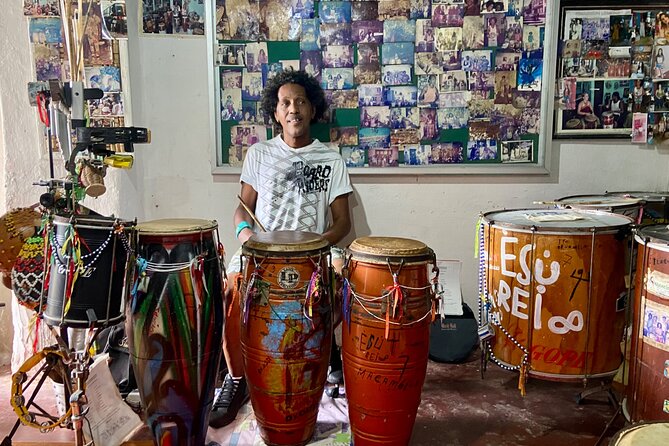
This is a 3-hour percussion class in Salvador, built around learning rhythms the way they are lived, not just explained. You are there to play. Expect guided instruction, group practice, and time to jam, so you hear patterns repeat and lock in through your hands and your timing.
The setting is in Pelourinho, a famous neighborhood for arts and music-making. The point is not only to be in a photogenic area, it is to be close to the creative process behind Bahia’s sound. You start with a visit to a music studio in Pelourinho, and from there the class focuses on how percussion drives the musical conversation.
The experience also has a clear theme: Bahia’s Carnival rhythms are not random. They come from older African musical traditions that were adapted in Brazil, and they continue to show up in major cultural settings like Samba de Roda and Candomblé. That gives the class extra weight, because once you understand where the beat comes from, you play with more intention.
More of Salvador and the Pelourinho:
- Round trip transfer, Salvador, Bahia, Brazil
★ 5.0 · 228 reviews - Salvador City Tour – Discover Brazil’s First Capital En, It, Es
★ 5.0 · 217 reviews - Cooking class in Salvador, an authentic dinning experience
★ 5.0 · 132 reviews
Meet Maestro Macambira and Alex, the Rhythm-Teaching Team
The class stands or falls on the teacher, and here the energy is led by Maestro Macambira, with Alex also playing a big role in the session. You will feel the difference between someone who can perform and someone who can teach performance.
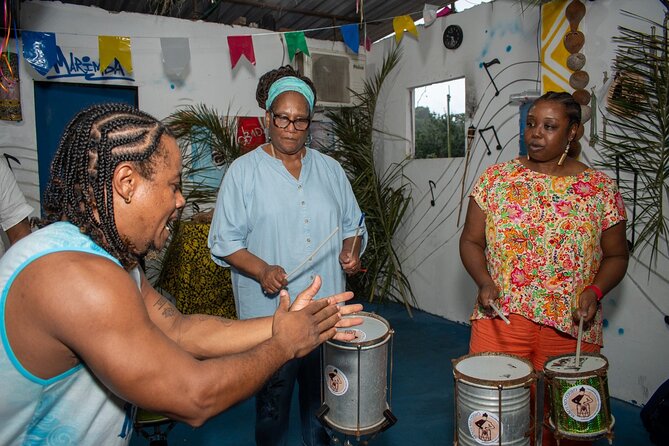
What I like about this team style is that the teaching does not pretend rhythm is complicated for the sake of it. Maestro Macambira explained different rhythms and their origins, and then you get pulled into the playing, not left to watch from the edge. Alex adds another layer of musical skill, and together they keep the atmosphere upbeat while still making the experience feel focused.
One review described the class as both uplifting and meditative, which makes sense. When you are playing rhythm, you quickly stop thinking about everything else. The patterns become the whole task. That is a great kind of vacation break, equal parts art class and mood reset.
Your 3-Hour Rhythm Workshop: A Practical Flow
A lot of music workshops feel like a quick demo followed by a token attempt at playing. This one is different because it is long enough to let your body learn the pattern and your ears catch the relationship between parts.
In plain terms, you should expect a flow like this:
- a guided introduction to the rhythm ideas and the cultural connections behind them
- hands-on practice so you can try the patterns with the group
- a jam-style segment where you play more actively and react to what others are doing
The class is described as a percussion workshop with a percussion class taught by professional rhythm artists. That matters because you are not dealing with a random playlist and a few pointers. You are learning a system, then applying it with other people.
Also, a practical plus: it is a private activity, meaning only your group participates. That usually translates to more attention per person, and a better chance that the teacher can respond to what the group is doing.
What to Bring and How to Prepare
Food and drinks are not included, so do not rely on a snack stop to get you through the full session. If you get dehydrated easily, bring water and plan a quick pre-class meal.
Wear something comfortable. You will be sitting, standing, and moving your arms. Skip anything stiff or uncomfortable. And if you are worried about not being “musical,” relax. This is not a test of talent. You are learning by repetition with a guide.
More Carnival & Samba in Salvador da Bahia:
- Salvador: Cultural Treasure – Samba de Roda.
★ 4.9 · 51 reviews - Cultural Treasure of Salvador – Samba
★ 5.0 · 38 reviews - Salvador: Cultural Night of Capoeira, Samba, and Drumming
★ 4.9 · 17 reviews - Cultural Night Experience Capoeira, Samba and Drumming
★ 5.0 · 14 reviews
Pelourinho Studio Time: African Roots Meet Modern Brazilian Sound
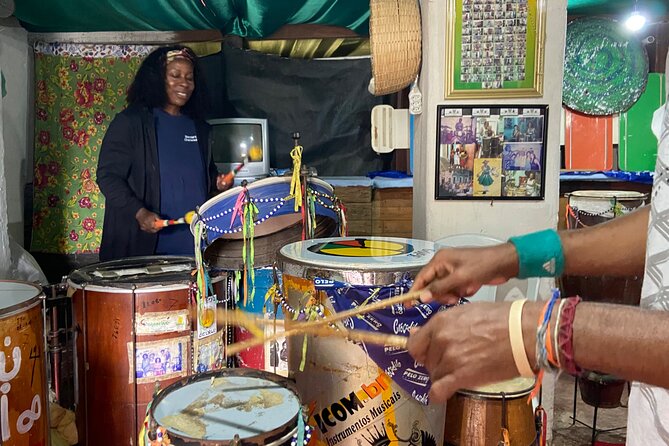
Pelourinho is more than scenery here. The studio visit is meant to help you experience the sounds and rhythm-making process that the city is known for. The class connects percussion to African musical foundations, then shows how those traditions transformed into modern Brazilian styles.
The music focus is not just one rhythm. You learn about the versatility of Bahia’s sound, with attention to:
- samba-reggae, including the note that it enchanted Michael Jackson
- Brazilian jazz, taught as another branch of the same rhythmic thinking
- rhythmic links to Samba de Roda and Candomblé
That list is not random trivia. It helps you understand that percussion in Bahia is not a single genre. It is a language that can speak in different dialects. When you play, you start to recognize the common pulse underneath the surface differences.
Why the Spiritual Context Matters
The class includes listening to music essential in Samba de Roda and the Candomblé ceremony. You might be tempted to treat that as background music. Instead, it is part of the learning. You get explanations from your local guide and professional teacher about how percussion has roots in Africa and how the tradition transforms in Brazil today.
For me, this is the difference between a fun drum session and a meaningful one. You are not only learning how to hit a beat. You are learning why people hit that beat in the first place.
Transportation and Timing: How to Plan Your Day in Salvador
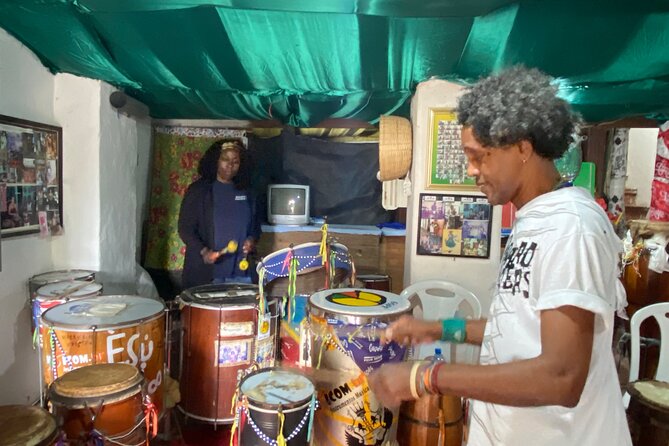
Round-trip transportation from Salvador hotels is included, which is a big deal in a city where getting around can turn into a time sink. For your planning, that means you do not need to factor in taxis or transit timing. You just need to be ready when the pickup happens.
The class lasts about 3 hours. That is a sweet spot. It is long enough to feel the rhythm patterns settle in, but not so long that it crowds out the rest of your day.
You should still give yourself a little buffer before you book this on the same day as a lot of walking. Music classes move at human speed. If you show up rushed, you will feel it when you try to lock into the group rhythm.
Price and Value: Is $100 Worth It?
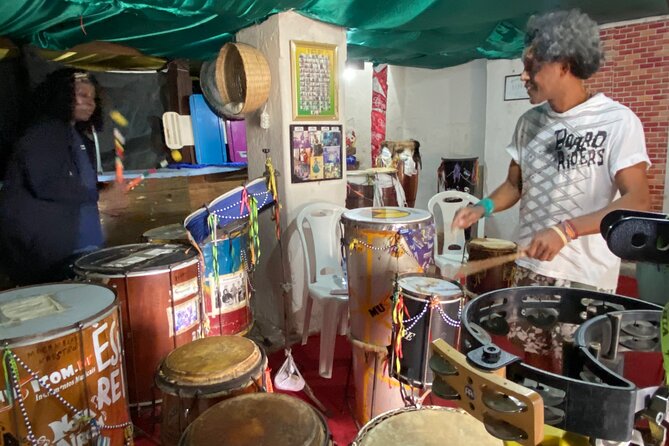
At $100 per person for about 3 hours, this is not the cheapest thing you can do in Salvador. But it also is not priced like a casual souvenir activity. You are paying for three real value drivers:
First, you get a professional percussion teacher experience with a full session where you play, not just watch. That is worth money anywhere, especially in a specialized skill like Brazilian percussion traditions.
Second, hotel pickup and drop-off are included. In many destinations, transportation quietly adds cost and friction. Here it is baked in, which makes the experience easier to commit to.
Third, you are in a private setting for your group. That typically means better interaction and more attention during practice.
Food and drinks are not included, so budget for a snack or water on your own. Even with that, the class still tends to feel like a “you did something real” day in Salvador, the kind that leaves you with a skill memory, not just a photo.
Who This Percussion Class Suits Best
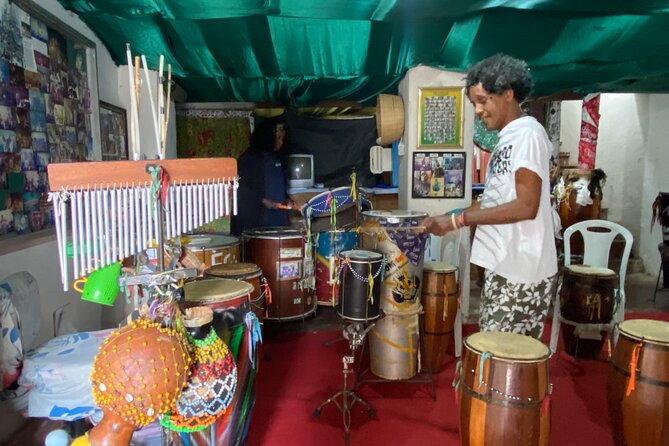
This is a good match if you want more than background culture. If you enjoy hands-on activities and like learning through doing, you’ll probably have a strong time with this one.
It also makes sense if you want to understand Bahia’s musical world. The class connects percussion to both cultural celebrations like Carnival and to spiritual music tied to Candomblé. If you care about “what it means,” this is a practical way to get there, since you learn in the same room where rhythms are made.
You might be less satisfied if you expected a mostly observational experience, like a concert with a short talk. This is structured for participation. Plan to play, not just listen.
Should You Book the Samba-Reggae Percussion Class in Salvador?
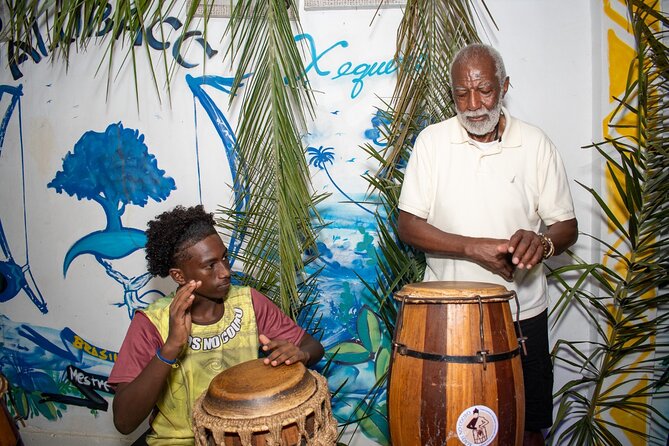
If you like the idea of learning rhythmic patterns with a real teacher, this is a strong book. The combination of Maestro Macambira and Alex, the studio-based Pelourinho setting, and the full 3-hour hands-on format are exactly what you want for a vacation activity that changes how you hear the city afterward.
Before you go, do three simple things:
- plan water and a light pre-class meal since food and drinks are not included
- wear comfortable clothes for movement
- treat it like practice, not performance
If you do that, the $100 price feels more fair. You are buying skill time, cultural context, and a jam session in Salvador’s music orbit, not just a ticket.
Newest Salvador da Bahia reviews
- Transfer Salvador to Barra Grande Round Trip★ 5.0 · 3 reviews
- Cruise Ship Special Private Tour Salvador da Bahia Historic Old Town Bonfim and Barra★ 5.0 · 3 reviews
- Airport Transfer-Grand Palladium Imbassai 1 to 4 people by Salvador Receptivo★ 5.0 · 3 reviews
- Exclusive Salvador City Tour with Beachtime Swim Stop★ 5.0 · 3 reviews
- Private Bike Tour Circuit Along the Beach★ 5.0 · 3 reviews
- Private Capoeira Class in Salvador★ 5.0 · 4 reviews
- Bahia By Night: Dinner and Folkloric show★ 5.0 · 4 reviews
- Candomblé: Religious,social Focus and Community visits★ 5.0 · 4 reviews
Salvador & Pelourinho, compared.


Salvador City Tour – Discover Brazil’s First Capital En, It, Es
Read our review →
Cooking class in Salvador, an authentic dinning experience
Read our review →
Tour to the Frades Islands and Itaparica, from Salvador – Ba
Read our review →
Transfer Salvador Airport / Hotel Litoral Norte
Read our review →


Tour Praia do Forte and Guarajuba, Leaving Salvador-Bahia.
Read our review →Browse the lists this tour appears in