
Reviewed · SALVADOR & PELOURINHO
Cultural Treasure of Salvador – Samba
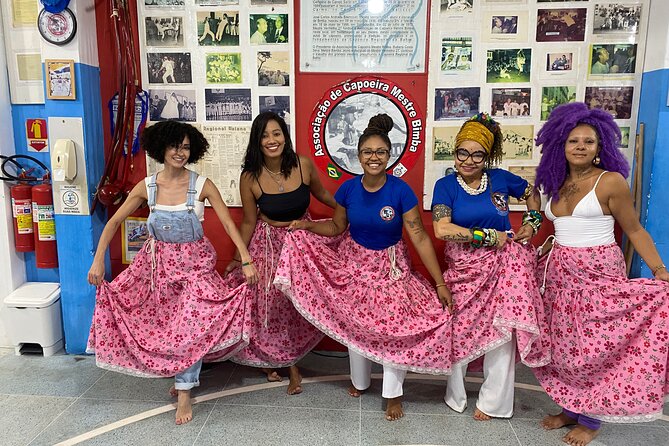
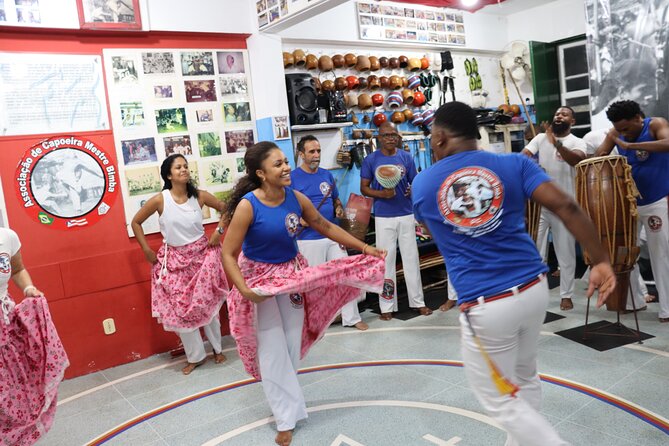
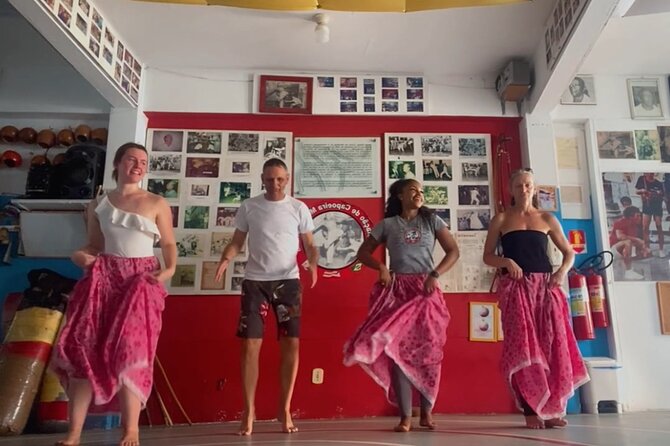
This Samba class is interesting because it’s not just step copying. You learn inside one of Brazil’s most important capoeira landmarks, the first capoeira school founded by Mestre Bimba in Salvador since 1937. I like the history woven into the dancing, and I like the fact that you can learn Samba without a partner or prior experience.
My favorite part is how the teaching builds skills in a practical way, with clear feedback from instructors like Yasmin, plus the comfort of having both male and female instructors available in the room. One thing to consider: it is a workout, with stretching and moves that can feel intense if you have knee issues or limited flexibility.
Key points to know before you go
- Samba lessons at the Mestre Bimba school (since 1937), tied to Bahia culture and Afro-Brazilian roots
- Beginner-friendly structure, with step-by-step progression and feedback
- A real body workout with stretching, not just sitting and watching
- Yasmin’s teaching style stands out for patience and constructive coaching
- You learn the meaning behind the moves, not only the motions
- Small groups up to 45 people, in a setting near public transportation in Pelourinho
Samba Moves With Cultural Context, Not a Stage Show
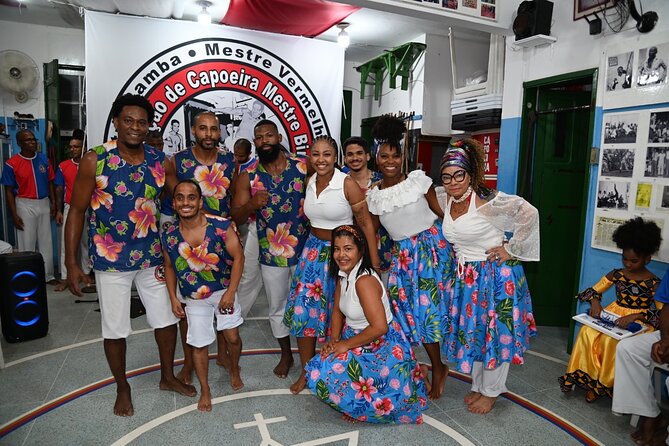
Salvador da Bahia has a talent for turning culture into something you can feel in your legs. This experience is built around Samba, a Brazilian music genre born in Bahia’s Afro-Brazilian communities in the late 1800s. The story matters here. Samba was not accepted early on. African cultural expressions like Capoeira and Candomblé faced suspicion and even criminalization, and Samba got treated the same way.
What you do in class connects to that arc. You learn that Samba later became a national symbol, and today it is recognized by UNESCO as an Intangible Cultural Heritage of Humanity. That’s not trivia. It helps you understand why the rhythm and movement carry pride, memory, and identity, not just entertainment.
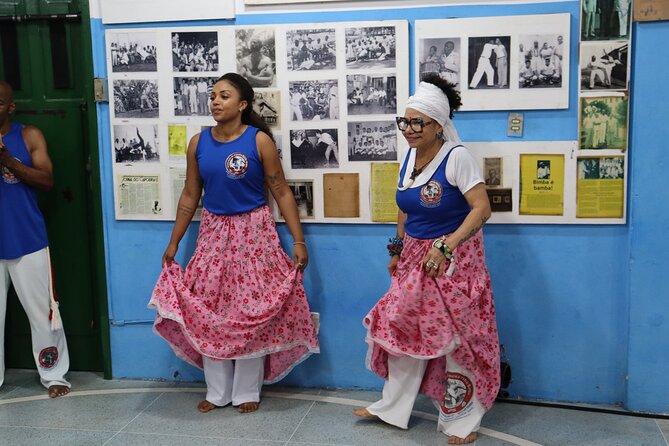
The setting also carries weight. The class takes place at the first capoeira school in Brazil founded by Mestre Bimba, creator of Capoeira Regional, and established in Salvador in 1937. The school is remembered as a quilombo of resistance, using cultural elements to stand firm inside the city. When you learn Samba in a space like that, it feels like you are stepping into the neighborhood where these traditions survived and evolved.
More of Salvador and the Pelourinho:
- Round trip transfer, Salvador, Bahia, Brazil
★ 5.0 · 228 reviews - Salvador City Tour – Discover Brazil’s First Capital En, It, Es
★ 5.0 · 217 reviews - Cooking class in Salvador, an authentic dinning experience
★ 5.0 · 132 reviews
Where the Class Happens in Pelourinho
Your start point is Associação de Capoeira Mestre Bimba, R. das Laranjeiras, n 01 – 1º andar, Pelourinho, Salvador – BA, 40026-230, Brazil. The class ends back at the same meeting point.
Pelourinho is walkable and full of energy, and this matters because it keeps the experience flexible. After class, you don’t have to plan a long return. You can keep exploring the area right away, which is exactly how this day tends to work best. It’s also close to public transportation, so you’re not stuck figuring out complicated logistics just to get to a one-hour activity.
Class size is capped at 45 travelers, which helps keep the experience from feeling like a huge production. You’re more likely to get the sense that the instructors are watching you and adjusting the class pace.
In One Hour, You Learn the Samba Body Basics
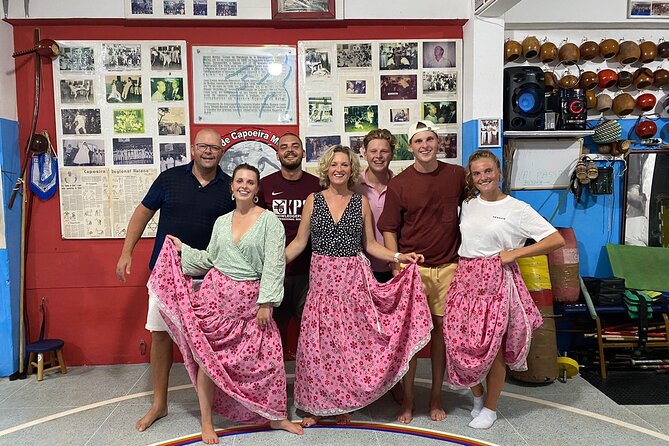
The big promise is simple: no partner and no dance experience required. That’s a huge deal for many first-timers. If you’ve ever worried you’ll be in the way, this class is designed to let you contribute from your starting point.
You can expect a progression. The teaching style is known for building up skills gradually, with constant constructive feedback. Yasmin, for example, is praised for being patient and focusing on how to improve without making you feel rushed. That means you’re not just getting a single burst of steps. You get a rhythm to follow, you practice what you’re learning, and you get coaching as you go.
Expect the body work too. Reviews point to stretching and a real workout. This is not a slow “look and admire” kind of class. Even if you start as a complete beginner, your body will be awake by the end.
One more useful detail: some sessions include both male and female instructors available. That can make it easier to feel comfortable during instruction, especially if you prefer a certain kind of coaching or you’re more at ease taking cues from someone you feel matches your comfort level.
The Samba Story You Actually Use in the Dance
A lot of classes teach movement, but not meaning. This one does both. You get a short history lesson about Samba’s roots in Bahia and why the music and dance were pushed back against for so long. That context helps you understand what the dance is expressing, even if you can’t explain it like a professor.
Here’s what that context adds in practice:
You stop treating Samba like a random set of steps.
You start noticing the rhythm, the timing, and how the body communicates with the beat.
You also get a clearer sense of why the instructor might teach certain moves in a certain way. If you later watch a folklore performance, or you see Capoeira and drumming in action, you will recognize more than you expected. One of the best uses of this class is as a warm-up. If you have an evening performance planned, this can help your brain connect what you see on stage to what you practiced in the room.
And because the class is held at Mestre Bimba’s historic school, the culture isn’t presented like something in a museum. It’s presented like something lived, passed along, and shaped by survival.
More Carnival & Samba in Salvador da Bahia:
- Salvador: Cultural Treasure – Samba de Roda.
★ 4.9 · 51 reviews - Salvador: Cultural Night of Capoeira, Samba, and Drumming
★ 4.9 · 17 reviews - Rio de Janeiro: Beginner Samba Lesson in Ipanema
★ 4.9 · 1,071 reviews - Rio: Pub Crawl in Lapa with Cachaça Tasting and Live Samba
★ 4.7 · 881 reviews
Why This Setting Is a Better Cultural Choice Than Guessing Alone
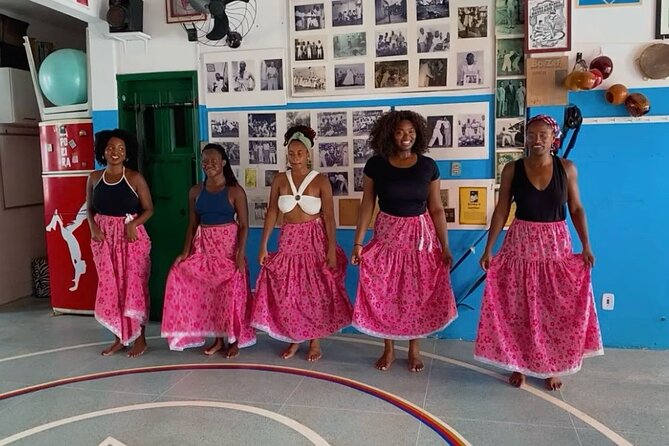
If you’re in Salvador for a short time, you might be tempted to pick the most obvious things, like a show or a neighborhood walk. This class is different because it gives you hands-on participation in the culture.
That matters for two reasons.
First, it creates memory. You don’t just hear about Samba’s rise from persecution to global recognition. You carry it with you in your body for days.
Second, it gives you a framework. When you understand that Afro-Brazilian traditions faced criminalization, you see the bigger picture when you notice drumming, group movement, and the way people talk about tradition. You’re not guessing what you’re seeing anymore.
In other words, this is a small, focused investment that can make your later sightseeing and performances feel more personal and less confusing.
Price and Value for a $42.15 One-Hour Class
The price is $42.15 per person for about 1 hour. On paper, that’s a lot for a single hour. But value is about what you get in that time, and this class stacks the benefits.
You are paying for:
- instruction that’s adapted for beginners
- a real workout, including stretching and repeated practice
- cultural background that explains why the dance matters
- a historic setting tied to Mestre Bimba and Capoeira Regional
Also, the class is capped at 45 people, so it’s not the kind of situation where you feel invisible. With group limits like that, your $42.15 buys more personal attention than the biggest, most crowded activities.
Timing helps too. Since the experience is about one hour and ends right where it started, it fits easily into a day in Pelourinho. That reduces opportunity cost. You can pair the class with other activities instead of losing half your day to travel back and forth.
If you like practical experiences where you come away better than you arrived, this is a strong use of your time.
The Best Way to Fit It Into Your Salvador Day
Because the class is in Pelourinho and you return to the same meeting point, I’d plan around it like this.
Start with something nearby, or come early for a quick orientation walk.
Take the class.
Then keep going, stay in the neighborhood, and connect it to what you see next.
If you have evening plans for live music, a folk dance show, or a cultural program, this can function like a head start. The class gives you movement language and cultural context, so you spot details faster once the lights go up.
And if you’re pairing this with Capoeira, even better. The Mestre Bimba link makes it feel like one continuous thread instead of separate experiences. One of the most common outcomes is signing up for more training because the environment feels friendly and supportive.
Practical Tips You Can Use Before the Doors Open
Here are a few practical points based on how the class works and what people say about it.
Plan for movement. Even if you are a beginner, the class includes stretching and dancing. If you have knee concerns, take that seriously. This is not a sitting class.
Arrive with a mindset to learn, not to perform. The teaching approach is patient and step-by-step, with feedback that helps you adjust.
Bring yourself to participate. You don’t need a partner, but you do need your attention. You’ll get more out of it if you treat it like a training session, even though it feels fun and joyful.
You also get bottled water, so you can count on hydration during the hour.
Should You Book Cultural Treasure of Salvador – Samba?
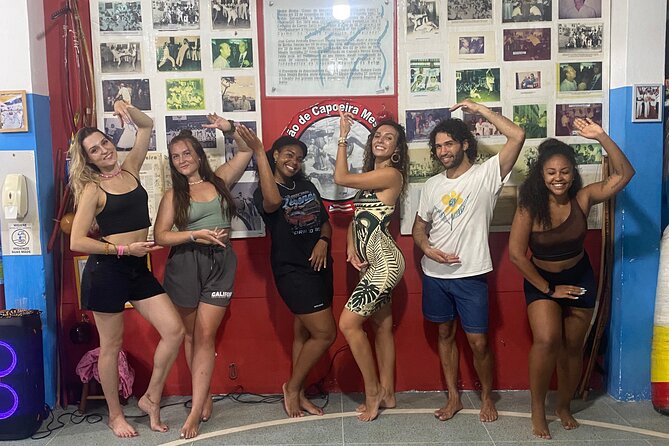
Book it if you want a hands-on way to understand Salvador’s culture, not just a photo stop. It’s ideal for beginners, especially if you want a friendly class that teaches you real steps and also explains why Samba matters. I also think it’s a smart add-on if you’re going to a cultural show later the same day, because the class helps you connect the dots fast.
Skip it or think twice if you know you struggle with knee strain or if the idea of stretching and dancing feels stressful. The workout aspect is real, and it’s better to plan your body honestly before you commit.
If you’re trying to choose between a generic activity and something tied to a historic cultural institution, this one wins on meaning. You walk in for Samba basics and you leave with context that follows you around Salvador.
FAQ
What is the price per person?
The price is $42.15 per person.
How long is the Samba class?
It lasts about 1 hour.
Do I need a partner or prior dance experience?
No. A partner and dance experience are not required.
Where does the class meet?
The meeting point is Associação de Capoeira Mestre Bimba, R. das Laranjeiras, n 01 – 1º andar, Pelourinho, Salvador – BA, 40026-230, Brazil.
What is included in the tour?
Bottled water is included.
Is the group size limited?
Yes. The activity has a maximum of 45 travelers.
Is it near public transportation?
Yes, it is near public transportation.
Can I cancel for a full refund?
Yes. You can cancel up to 24 hours in advance for a full refund. If you cancel less than 24 hours before the start time, the amount paid is not refunded.
Newest Salvador da Bahia reviews
- Cultural Folkloric Show and Dinner in Salvador★ 4.5 · 15 reviews
- Transfer Vila Galé Marés (Guarajuba) – Private★ 5.0 · 15 reviews
- Tour to Praia do Forte and Guarajuba★ 4.0 · 16 reviews
- Private City Tour of Salvador da Bahia★ 5.0 · 17 reviews
- 3-Hour Private Tour of Salvador Capital Afro-Brazilian★ 5.0 · 17 reviews
- Afro-Brazilian Roots city Tour in Salvador with lunch at Favela★ 5.0 · 17 reviews
- Salvador African Heritage Private City Tour Including Afro Museum★ 4.5 · 18 reviews
- Morro de São Paulo Tour, Leaving Salvador-Bahia.★ 5.0 · 18 reviews
Salvador & Pelourinho, compared.


Salvador City Tour – Discover Brazil’s First Capital En, It, Es
Read our review →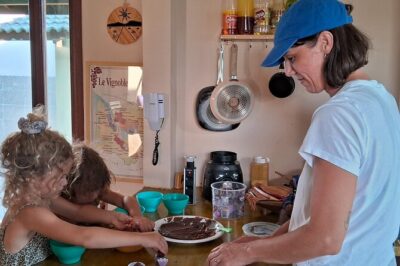
Cooking class in Salvador, an authentic dinning experience
Read our review →
Tour to the Frades Islands and Itaparica, from Salvador – Ba
Read our review →
Transfer Salvador Airport / Hotel Litoral Norte
Read our review →


Tour Praia do Forte and Guarajuba, Leaving Salvador-Bahia.
Read our review →Browse the lists this tour appears in