
Reviewed · SALVADOR & PELOURINHO
Salvador African Heritage Private City Tour Including Afro Museum
Salvador da Bahia is one of Brazil’s most expressive cities, and this African Heritage private route uses that energy to explain where the African roots of Bahia show up today. You spend focused time in the Pelourinho area and in Cidade Baixa, where faith, music, memory, and street-level history are part of the same story.
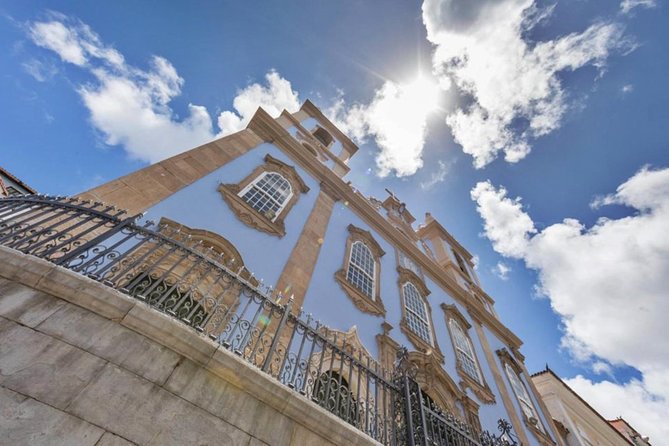
I especially like two parts. First, the private format means your guide can slow down for what you care about, like the old-city walk and the way the neighborhood context is explained instead of just pointed at. Second, the Church of Our Lady of the Rosary of the Black People is the kind of stop that changes how you see Salvador, with its African-influenced worship and the old slave cemetery in the back.
One consideration: the Afro Brasileiro Museum visit depends on it being open, since the stop is scheduled as a visit only when the museum is operating. If you’re traveling on a tight timetable, it’s smart to plan for the possibility that opening hours could affect your final time inside the museum.
Key things you will notice right away
- UNESCO Pelourinho context with a guided old-city walking route on cobblestones, not a quick drive-by.
- Church of Our Lady of the Rosary of the Black People with music and ritual tied to Candomblé traditions, including atabaques (drums) described as part of the experience.
- Dique de Tororo for orixás imagery outdoors, plus a football stadium view without needing extra tickets.
- Benin House with about 200 pieces connected to the Gulf of Benin, collected by photographer Pierre Verger.
- Afro Brasileiro Museum (included), visited when open, making timing important.
- Photo-first stops like Modelo Market (front only) and Lacerda Elevator viewpoint (view from below, no ride).
Pelourinho, Cidade Baixa, and the African roots you can actually see
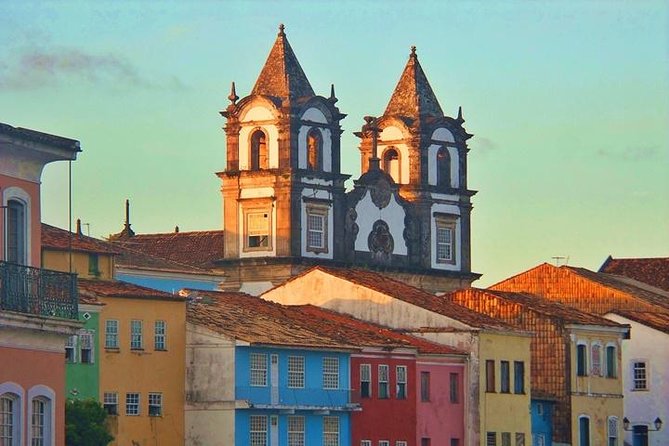
This is a half-day tour built around one idea: African presence in Bahia is not a side note. You feel it in the geography, the architecture, and even the way religious space and music connect. The route leans into Cidade Baixa, where you can understand the historical layers behind what you see on today’s streets.
You get a real guide-led rhythm through neighborhoods that can otherwise feel chaotic. Pelourinho is UNESCO for a reason, but it’s easy to get distracted by the colorful facades and miss the meaning. A good guide helps you connect the dots, especially when you move from viewpoints and monuments to places of worship and museums.
Because it’s private, you are not stuck with a one-size-fits-all pace. If your group wants more time on photos, you can ask. If you want the story behind one stop more than the view from another, you can guide the conversation.
More City Tours in Salvador
- Salvador City Tour – Discover Brazil’s First Capital En, It, Es
★ 5.0 · 217 reviews - Private City Tour in Salvador
★ 5.0 · 110 reviews - Afro-Brazilian Roots Private City Tour in Salvador
★ 4.7 · 88 reviews
The private format, pickup, and why 4 hours can feel full (in a good way)
The tour runs about 4 hours, and you start with hotel pickup and end with drop-off. That matters in Salvador because getting across town can burn time. Door-to-door service helps you spend your limited hours where you actually want to be.
You should also expect a route with several short stops. Some are quick photo windows, others are short walks, and a few are meaningful interior visits. That structure is actually a strength if you like compact, high-impact sightseeing.
The tour is priced at $110 per person. In practical terms, you are paying for a guide to string together cultural context, plus included entry to the Afro Brasileiro Museum (when open). You also get guided time in places where doing it alone might be slower, like the old-city cobblestone walk and the church’s specific background.
Food and drinks are not included, so plan for a snack or decide whether you want lunch after. When a tour is this concentrated, a simple water and fruit break can keep energy up through the walking.
Santo Antonio da Barra Fort and Nautic Museum, plus the city’s “first beach” angle
The route begins near the first beach area associated with the arrival of Portuguese colonizers. It’s a reminder that Salvador’s story did not start with tourism, it started with shifting power, settlement, and trade routes.
Your first major stop is Santo Antonio da Barra Fort and the Nautic Museum of Bahia. You’ll get about twenty minutes for a walk and photos around the fort area with your personal guide. Importantly, entry into the fort is not included in the tour price. You can add it if you want, but you’ll pay R$12 per person on site for the fort entrance.
If you like framing your sightseeing with context, this is a smart opening. Even if you skip the interior, the fort area is a good place to connect the “before” (colonial arrival) to the “after” that the rest of the tour explores, especially the African-influenced culture that developed across Bahia.
A practical tip: if you’re the type who loves museums, you might feel a little tempted to spend more than twenty minutes here. Just know this tour is designed to keep momentum for the key African-heritage stops later.
Dique de Tororo: orixás imagery and quick views outside the stadium
Next comes Dique de Tororo, where you can see orixás images outdoors. It’s a breather in the schedule, but it’s not random. The tour uses it to ground the African religious imagination in visible city art.
You’ll also get a view from outside the football stadium. That kind of add-on can be surprisingly useful for first-time visitors because it shows you the city’s everyday life alongside the heritage sites.
This stop is listed at about twenty minutes, and admission is free. That makes it low-risk and easy to enjoy. If you have a camera, this is a good place to grab shots before the route shifts fully into the old-city and church area.
More Historical Tours in Salvador
- Salvador Historic Walking Tour – Pelourinho
★ 4.8 · 62 reviews - Historical African oriented City Tour
★ 5.0 · 52 reviews - Full-Day Historic Private City Tour of Salvador with Lunch
★ 5.0 · 50 reviews - Full City Tour Historic and Panoramic
★ 5.0 · 24 reviews
Passing the view from below of Elevador Lacerda, without riding it
You’ll pass in front of a viewpoint for the Elevador Lacerda. Salvador’s elevator is famous for a reason, and seeing it from below gives you a sense of the vertical connection between parts of the city.
But this tour does not include riding the elevator, and it does not send you up to the upper city. You still get the visual payoff and the chance to photograph the structure, but the tour focus stays on Cidade Baixa and the African heritage landmarks.
If you want both lower-city heritage and upper-city viewpoints, you’ll need a separate plan. This tour is specifically built to keep the time concentrated.
Modelo Market as a front-facing photo stop
You also pass by the Modelo Market, a central spot for handicrafts and souvenirs. You will not visit the interior, but you can take photos in front.
If you enjoy shopping, this can feel a little tease-like, because markets are often where you want extra time. But it’s also useful if you want the cultural walk and church and museum stops without the risk of losing an hour to bargaining and browsing.
My advice: treat it as a photo and orientation stop. If you later decide you want souvenirs, plan a separate shopping visit when you’re not in a tight guided schedule.
The cobblestones walk in Cidade Baixa: where the story is in the streets
Cidade Baixa is where several points of African presence in Bahia and Brazil show up in a way that connects to the present. The tour emphasizes that this part of town concentrates key historical processes, including the idea of a former slave market.
Then you get a walking tour of the old city. That matters because Salvador’s heritage is not neatly boxed. Streets, elevation changes, and small architectural details help explain how people lived, worked, and worshiped.
This is also where a private guide becomes more valuable than a generic audio app. You are not just looking at buildings, you are hearing why those buildings and locations mattered. The tour description highlights special explanations, which is exactly what helps you understand what you are seeing rather than just collecting photos.
This segment is the “glue” of the tour. It links the morning beach and fortress area to the high-impact religious and museum stops that follow.
Church of Our Lady of the Rosary of the Black People: atabaques, music, and the cemetery
This is one of the stops you should plan around. The Church of Our Lady of the Rosary of the Black People is free to enter and it’s described as one you have to see, even if you are not Catholic. The reason is cultural and historical: it preserves a deep connection to slavery-era history in Salvador and to African religious influence.
What sets it apart is the description of how liturgy uses music inspired by Candomblé terreiros, specifically to the sound of atabaques. The church is also noted as being celebrated every Tuesday with a Catholic mass that incorporates elements of African culture like singing and dancing.
In the back of the church, there is an old slave cemetery. That detail is heavy, but it’s also a direct way to connect the spiritual site to the people whose lives shaped the city.
Time on site is about twenty minutes. That’s enough to get your bearings, but if you want a slower, more reflective visit, you may want to arrive with calm expectations. This tour moves through meaning, but it is still a condensed route.
Benin House: a compact museum stop with about 200 Gulf of Benin pieces
Benin House is another free stop, designed for a focused look at objects tied to the Gulf of Benin. The collection is listed as about 200 pieces, collected by photographer Pierre Verger during expeditions in Africa.
If you like museum learning but don’t want to spend half a day inside glass cases, this fits well. It’s also thematically aligned with the tour’s African heritage focus, bridging place and origin.
The time is about twenty minutes. That makes it easier to keep the tour pace and still feel like you saw something specific. You will likely walk away with better context for how visual culture traveled and transformed.
Afro Brasileiro Museum: your included time, when it is open
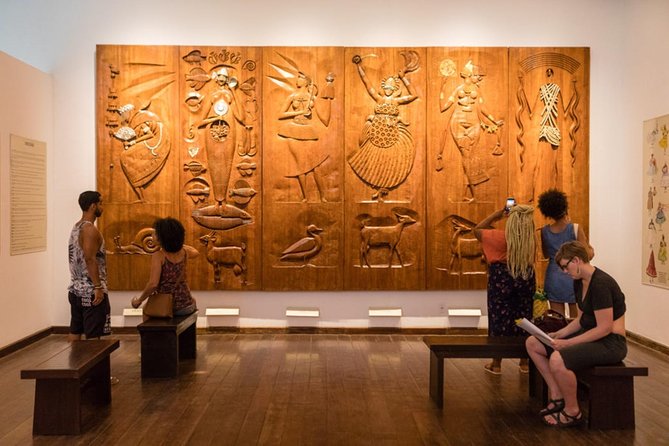
The Afro Brasileiro Museum is the museum stop that is explicitly included, with about thirty minutes allotted. The catch is stated clearly: the visit happens when the museum is open.
This is the one place where your planning matters most. If you care about museums, I recommend you arrive ready to spend that time there, and keep your day flexible if your schedule allows. If the museum is closed, the tour operator may not be able to deliver the same museum content at that moment, so don’t treat this stop as guaranteed interior time.
Still, when it is open, this is the portion that turns the walking and church story into a more museum-based experience. It should help you connect what you heard outside to what you see in a curated setting.
Price and value: what you are really paying for in this $110 private tour
On paper, $110 per person for a 4-hour private tour is not cheap. The value comes from three practical things.
First, you get hotel pickup and drop-off, so you are paying for time saved and less stress. Second, you are paying for a local guide who explains cultural and historical connections as you move through stops like Pelourinho and Cidade Baixa. Third, there is included museum entry for the Afro Brasileiro Museum, plus the route includes multiple free sites that help the itinerary pack a lot of meaning into the time you have.
You will pay extra only for the fort interior if you choose to enter Santo Antonio da Barra Fort, at R$12 per person. Food and drinks are also on you, so budget for that.
If your group enjoys history but hates wandering without direction, this kind of focused private route often feels like the best compromise between independence and guidance.
Guides who get the best feedback, and how that helps your experience
The guides are a big part of why people rate this tour highly. For example, Jorge Hage has been praised for speaking French with a group member and for going above the scheduled time to show extra places. Wilson Badaró has also been singled out for being accessible and for strong English paired with thoughtful cultural explanations.
Even if you do not get those exact guides, the lesson for you is clear: this is a tour where your conversation with the guide can genuinely change the experience. If you have questions, ask them early. The guide can steer your route a bit in response to what you want to understand more deeply.
Who should book this Salvador African Heritage tour
Book this if:
- You want African heritage in Salvador explained in a way that connects religion, music, and history.
- You like walking routes with short, meaningful stops rather than long sightseeing marathons.
- You prefer a private setting where you can ask questions and set your own pace.
Skip or reconsider if:
- You mainly want the elevator ride experience or shopping time inside Modelo Market, since this route is view-and-photo focused for those spots.
- Museum time is your top priority, since one key museum stop is explicitly scheduled only when it is open.
- You are looking for a full day of upper city viewpoints, since this route keeps you mostly in the lower-city focus.
Should you book it?
Yes, I think this is a strong choice for the right traveler. If your goal is to understand how Salvador’s African roots show up in Pelourinho and Cidade Baixa, and you want a guide who can connect those dots, this tour delivers a lot of meaning in about four hours.
My “book it” checklist is simple: bring comfy walking shoes, plan for no included food, and treat the Afro Brasileiro Museum stop as the one part worth verifying for your travel day. If you can do that, you’ll get the most from a route that uses real places, real architecture, and real cultural practices to tell an important story.
FAQ
How long is the Salvador African Heritage private city tour?
It runs about 4 hours.
Is hotel pickup and drop-off included?
Yes, hotel pickup and drop-off are included.
Does the tour include museum or church entrance fees?
Yes. The Afro Brasileiro Museum entrance fee is included, while the Santo Antonio da Barra Fort interior is not included. The Dique de Tororo, Church of Our Lady of the Rosary of the Black People, and Benin House have free admission.
Do I get to ride Elevador Lacerda during the tour?
No. You pass by and view Elevador Lacerda from below, but you do not ride it and you do not go to the upper city.
Is food and drinks included?
No. Food and drinks are not included.
What time choices are available?
You can choose from a morning or an afternoon tour time.
Is this tour private?
Yes. It is a private tour, with only your group participating.
What is the cancellation policy?
You can cancel for a full refund if you cancel at least 24 hours before the experience starts. If you cancel within 24 hours, no refund is available.
More Museums in Salvador da Bahia
- Ticket MAI – Museum of Indigenous Art – Curitiba
★ 5.0 · 385 reviews - Combo: Platform Entrance, Abusado Adventure, Ferro Passar Museum
★ 3.5 · 314 reviews - Platform Entrance, Including Iron Museum
★ 3.5 · 226 reviews - Petrópolis Day Trip from Rio de Janeiro including Imperial Museum and Crystal Palace
★ 4.0 · 101 reviews
More of Salvador and the Pelourinho
- Round trip transfer, Salvador, Bahia, Brazil
★ 5.0 · 228 reviews - Cooking class in Salvador, an authentic dinning experience
★ 5.0 · 132 reviews - Tour to the Frades Islands and Itaparica, from Salvador – Ba
★ 4.0 · 130 reviews - Transfer Salvador Airport / Hotel Litoral Norte
★ 5.0 · 111 reviews
Newest Salvador da Bahia reviews
- Cultural Folkloric Show and Dinner in Salvador★ 4.5 · 15 reviews
- Transfer Vila Galé Marés (Guarajuba) – Private★ 5.0 · 15 reviews
- Tour to Praia do Forte and Guarajuba★ 4.0 · 16 reviews
- Private City Tour of Salvador da Bahia★ 5.0 · 17 reviews
- 3-Hour Private Tour of Salvador Capital Afro-Brazilian★ 5.0 · 17 reviews
- Afro-Brazilian Roots city Tour in Salvador with lunch at Favela★ 5.0 · 17 reviews
- Morro de São Paulo Tour, Leaving Salvador-Bahia.★ 5.0 · 18 reviews
- Private Historical Tour 5 hours★ 4.5 · 19 reviews
Salvador & Pelourinho, compared.


Salvador City Tour – Discover Brazil’s First Capital En, It, Es
Read our review →
Cooking class in Salvador, an authentic dinning experience
Read our review →
Tour to the Frades Islands and Itaparica, from Salvador – Ba
Read our review →
Transfer Salvador Airport / Hotel Litoral Norte
Read our review →


Tour Praia do Forte and Guarajuba, Leaving Salvador-Bahia.
Read our review →Browse the lists this tour appears in