
Reviewed · SALVADOR & PELOURINHO
Historic City Tour in Salvador
Salvador is a city of levels, viewpoints, and stories, and this 4-hour loop gives you a fast, physical way to understand it. You start at the coast and work your way toward the historic center, ending in the UNESCO-listed streets around Pelourinho.
I especially like the Lacerda Elevator panoramic views because they instantly connect the Upper City, the Lower City, and Pelô in one glance. I also like the mix of landmarks that range from modern Salvador’s main corridors to classic Portuguese Baroque architecture.
One thing to consider: the pace is tight, and some people found the stops more like quick walk-bys or drive-bys than slow, inside-the-sites visits. Also, if you’re booking for Spanish, double-check the day’s language setup, since at least one departure ended up mostly Portuguese-speaking.
Key things to know before you go
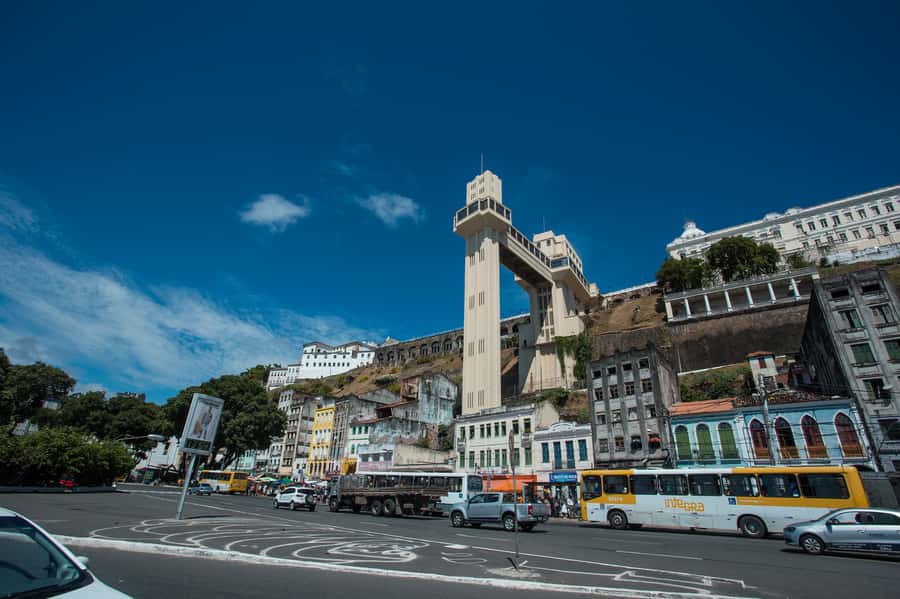
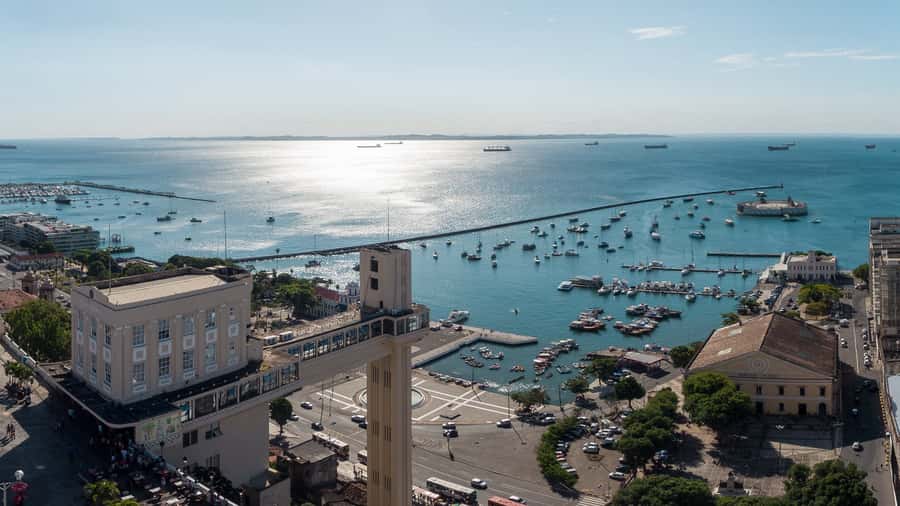
- Lacerda Elevator is the payoff moment, with views across the Bay of All Saints plus Pelô streets below
- Cidade Alta route makes sense fast, moving from coast to upper neighborhoods via the main corridors
- Terreiro de Jesus + Cathedral Basilica gives you an anchor point in the religious and historic heart of the city
- St. Francis Church is a standout for Portuguese Baroque design and interior wealth (time permitting)
- Pelourinho area is UNESCO-linked, with cultural weight tied to Jorge Amado’s legacy
- Expect a guided overview, not a slow-entry museum day, especially if you want lots of time inside churches and palaces
Why this 4-hour Salvador route feels like a city map
This tour works because it turns Salvador’s geography into a story you can feel. You’re not just hearing about the Upper City and Lower City, you’re moving through the corridors that connect them.
You’ll get a guided “orientation walk” style experience: coast first, then upper neighborhoods, then the historic core. That matters in Salvador, where streets and viewpoints can throw you off if you’re trying to wing it alone.
Value-wise, the price is built around the big components you usually pay more for in other formats: hotel pickup and drop-off plus a live guide for four hours. The tradeoff is time. You’ll see a lot of major names, but the tour is designed to keep you moving.
More City Tours in Salvador
- Salvador City Tour – Discover Brazil’s First Capital En, It, Es
★ 5.0 · 217 reviews - Private City Tour in Salvador
★ 5.0 · 110 reviews - Afro-Brazilian Roots Private City Tour in Salvador
★ 4.7 · 88 reviews
Barra Lighthouse to Cidade Alta via Corredor de la Victoria
You start with hotel pickup and head to the coast for Barra Lighthouse, a first look that sets the mood for Salvador’s waterfront side. It’s the kind of stop that helps you understand why so many viewpoints later make you feel like you can see the whole city at once.
From there you travel toward Cidade Alta (upper city) using the Corredor de la Victoria, with stops along the way including Campo Grande and Piedade. This part is useful even if you’ve never been to Salvador before because it frames what the city looks like today while still keeping the historic center in your sights.
This “transit with commentary” style also helps you build bearings for later. If you want to explore independently after the tour, the route makes the geography click faster than a purely walking itinerary.
Campo Grande, Piedade, and the modern economic hub
Not every highlight in Salvador is old stone. The route passes through the city’s modern zone, including the economic hub area where you’ll see taller buildings and shopping centers.
Stops like Campo Grande and Piedade are where you can notice the contrast: modern Salvador sits close to the historic core, and the city’s story isn’t frozen in time. You can also use this segment to spot what you might return to later if you want more shopping, coffee, or a slower wander.
One practical note: this is also where you can feel the group pace most. If you dislike “quick stops,” plan to be patient here and lean into the big-picture orientation.
Municipal Square: Rio Branco Palace and City Hall quick hits
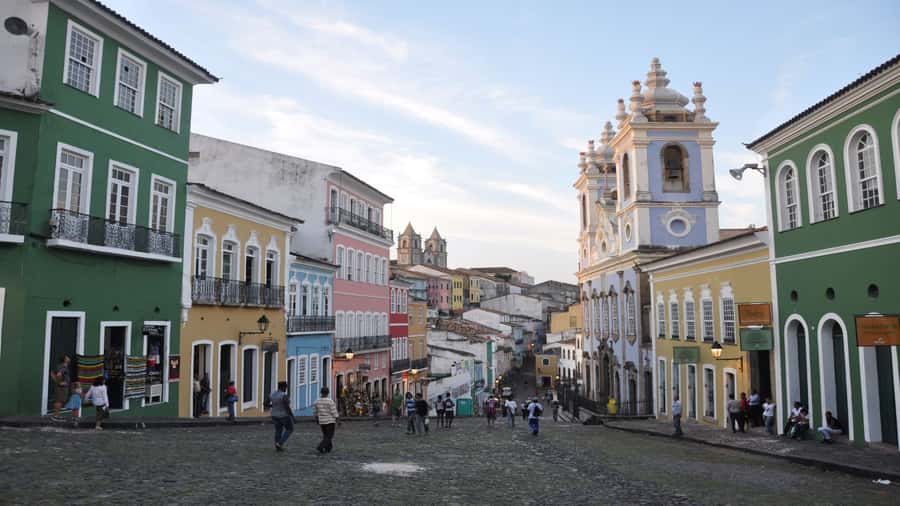
Next you arrive at Municipal Square, the kind of place that anchors the tour. Here you’ll see Rio Branco Palace and City Hall, two major civic landmarks that give the city a formal, government-center feel.
Even if you don’t spend long inside anything, this stop matters. It connects Salvador’s historic identity to the functioning city around it. It’s also a good moment to mentally reset. After the corridor drive and a sequence of viewpoints, Municipal Square is calmer, flatter, and easier to take in.
If you’re hoping for a long sit-down stop for photos, you may want to keep expectations realistic. The tour is structured to move you onward.
More Historical Tours in Salvador
- Salvador Historic Walking Tour – Pelourinho
★ 4.8 · 62 reviews - Historical African oriented City Tour
★ 5.0 · 52 reviews - Full-Day Historic Private City Tour of Salvador with Lunch
★ 5.0 · 50 reviews - Full City Tour Historic and Panoramic
★ 5.0 · 24 reviews
The Lacerda Elevator: where the views hit hardest
Then comes the moment people remember: the Lacerda Elevator.
You’ll see the elevator itself beside Largo da Sé and Lacerda Elevator access areas near Municipal Square, and from the balustrades you get views across the Bay of All Saints. This is where the tour’s value really shows, because you can visually link three zones:
- the Upper City
- the Lower City
- the streets and houses in Pelô
For photos, go with comfortable shoes and keep your camera ready. The viewpoints are the point here, and standing time can be limited by the group’s schedule.
A word of caution about group management
From one departure, there was an issue where the group got dispersed and some guests waited longer than expected for regrouping. The lesson for you: stay close to your group, and if you’re separated, don’t hesitate to move toward the next visible meeting point rather than relying on long-distance calls.
You’re on a timed loop. A small delay can snowball.
Pelô perspectives from above, then down into history
From the elevator area you’ll look toward Pelô, the historic neighborhood that often feels like a different Salvador inside the same city. What’s useful about this tour is that it doesn’t treat Pelô like a single spot. Instead, it gives you the “from above” context first, then later brings you down to the lively squares.
That approach makes your later walking feel more intentional. You’re not just following a route, you’re matching what you see at ground level to what you saw from the viewpoint.
If you’re the type who likes architecture and street layout, this is the part you’ll enjoy most.
Terreiro de Jesus: Cathedral Basilica and the anchor of the tour
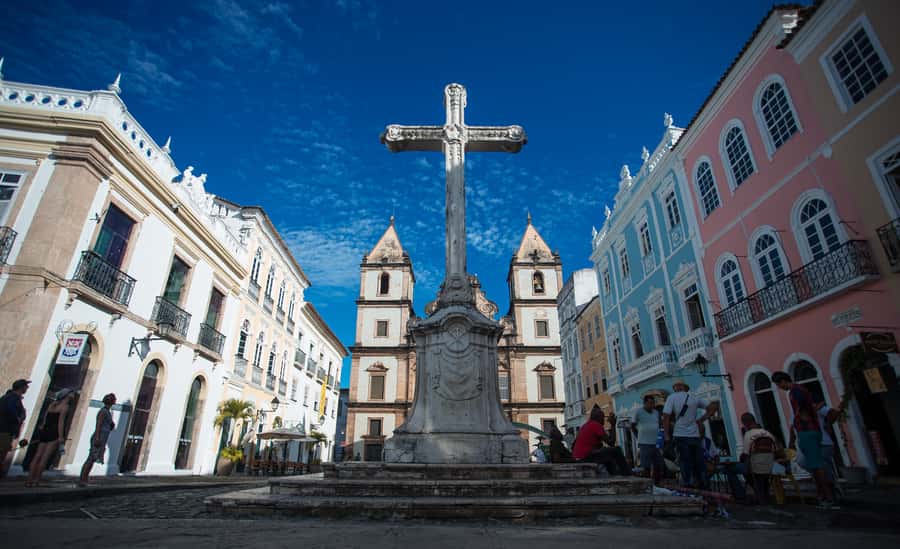
After the elevator, you move to Terreiro de Jesus, one of the most central historic-religious spaces in Salvador. The big destination here is the Cathedral Basilica of the Savior.
This stop is important because it’s not just a photo stop. It’s an anchor point. Terreiro de Jesus helps you understand why Salvador’s historic center became a magnet for major institutions and why the city’s identity is tied to faith and colonial-era building.
You’ll get a guided explanation as you visit, and the design and scale of the plaza and cathedral area tend to make the city feel “real” in a way that just reading about it never quite does.
St. Francis Church and Portuguese Baroque on display
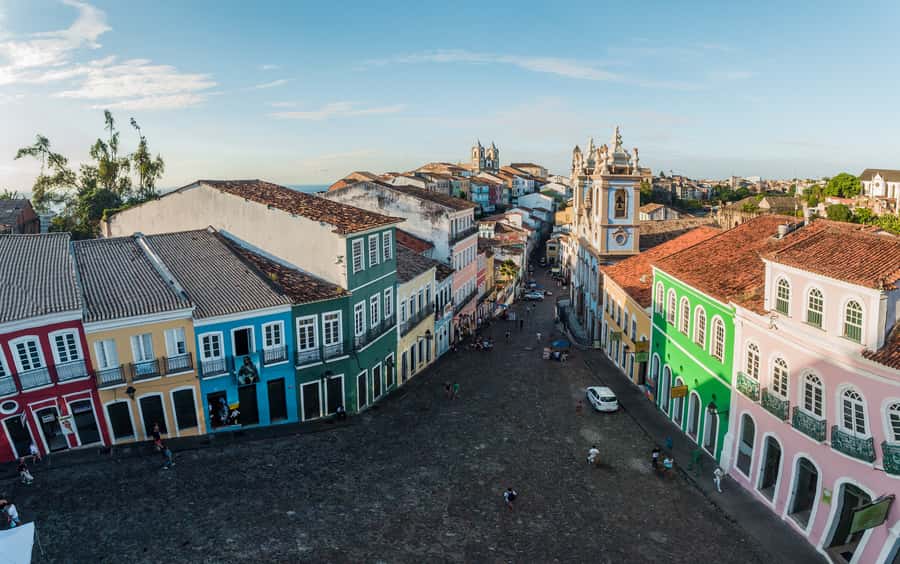
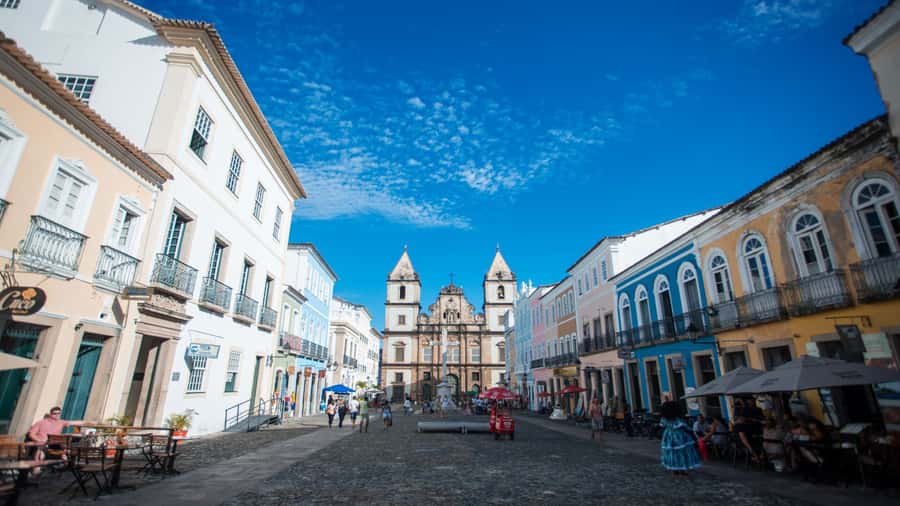
The tour also includes the St. Francis Church, known for its wealth and its place as an example of Portuguese Baroque design.
If you care about ornate interiors, this is a highlight worth pacing yourself for. Baroque architecture can overwhelm if you rush, but even a limited stop can show you the craftsmanship and the style language that makes Salvador distinct.
If your day’s schedule feels compressed, concentrate on the main architectural elements your guide points out. With this kind of tour, you get the best value by listening closely rather than trying to capture everything with photos.
Largo do Pelourinho: UNESCO streets and Jorge Amado’s shadow
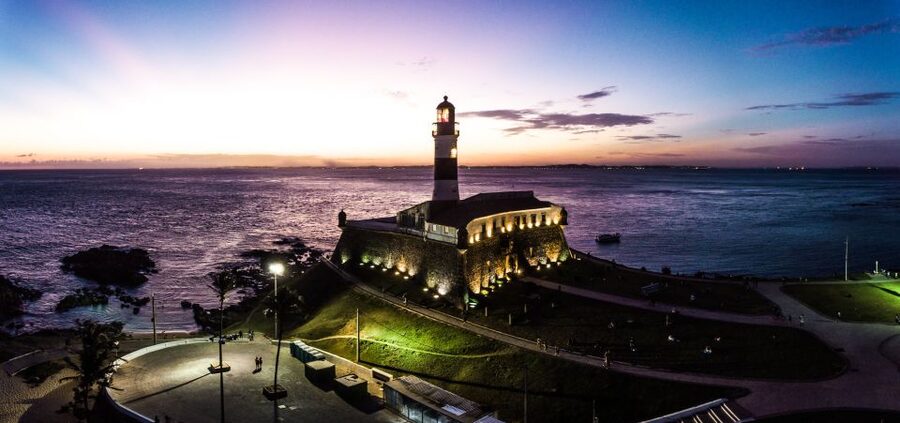
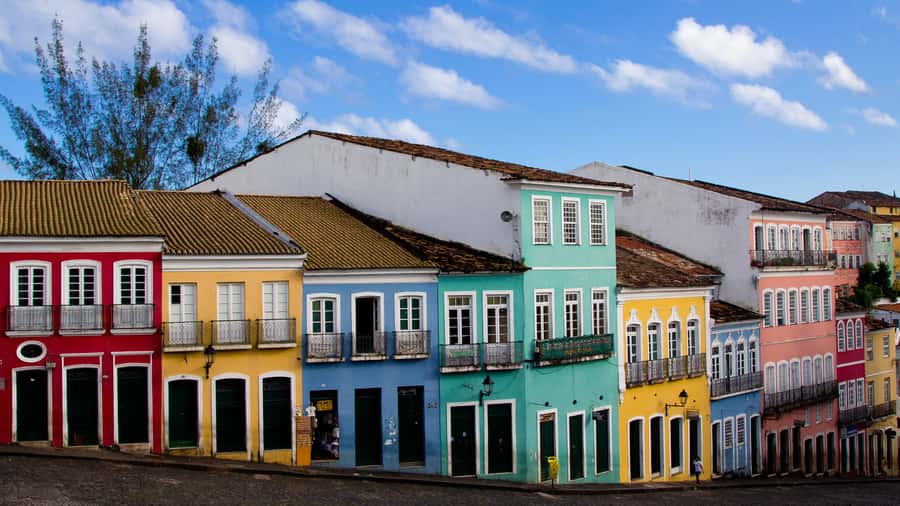
The tour ends at Largo do Pelourinho, one of the most energetic squares in the historic core. This is also where the UNESCO connection lands in a visible way.
What I like about ending here is that you finish where the city’s culture feels most present. Colors, street atmosphere, and the sense of movement are part of the experience, not an optional extra.
There’s also a literary link. This area is connected to writer Jorge Amado, so if you’ve heard of his Bahia novels, this final stop is where you can feel the setting behind the stories.
You’ll then head back to your hotel for the conclusion of the tour.
Price, language, and group pace: is $24 worth it?
At $24 per person for 4 hours, the value is strongest for two reasons: you get hotel pickup and drop-off, and you get a live guide walking you through multiple major landmarks.
If you were to do this as a private driver plus guided interpretation, you’d likely pay more. Even compared to self-guided sightseeing, Salvador’s geography is tricky enough that a guided overview helps you avoid wasted time.
That said, read the “fit” correctly. The tour is designed as an overview. Some people felt historic sites were more walk-by or drive-by than slow, inside-the-building time. If you’re looking for deep, extended time in each church or palace, you may feel like it moves too fast.
Language reality check
The activity description includes multiple languages, but on the ground, it can vary by group mix and guide format. One Spanish booking experience ended up with the group mostly Portuguese-speaking, with limited Spanish.
So here’s my practical advice: if Spanish is essential, confirm that Spanish will be used for interpretation on your departure. If you’re comfortable following Portuguese or getting the gist from a bilingual guide, you’ll likely be fine.
What you should bring for comfortable walking and viewpoints
This tour asks for comfortable shoes. You’re doing short walks, waiting outside at major landmarks, and standing at viewpoints like the Lacerda Elevator.
Bring an ID or passport for identification. Dress in comfortable clothes since you’ll be outside for stretches, and you’ll want to stay comfortable enough to keep up with the group pace.
Also, pack for weather changes. Coastal cities can shift quickly, and you’ll be moving between sea-level areas and the upper city.
Who this tour suits best
This is a strong pick if you:
- want a guided orientation to Salvador da Bahia in a short window
- like viewpoint-based sightseeing, especially from Lacerda Elevator
- enjoy iconic places like Pelourinho and Terreiro de Jesus even if your time inside each site is limited
- appreciate a guide who answers questions and shares practical context, which some departures have done well
It may be less ideal if you:
- need lots of time inside each church or palace
- dislike shopping-time pressure, since one experience felt too much attention was placed there
- require strict Spanish-only interpretation and can’t flex at all, given at least one mixed-language departure
Should you book this tour?
If you want the big Salvador hits in four hours, I’d say book it, especially for the Lacerda Elevator and Pelourinho finish. The hotel pickup and the route planning are the main reasons it’s worth doing as a package.
But book with clear expectations. This is a guided overview with short visits, not a slow, deep-study itinerary. If your priorities are extended time inside landmarks or guaranteed Spanish-only commentary, you should verify the language setup before you go or consider a tour format with more time per stop.
If you’re flexible and you like getting your bearings fast, this is a good use of a half-day in Salvador.
FAQ
How long is the Historic City Tour in Salvador?
It lasts about 4 hours.
Does the tour include hotel pickup and drop-off?
Yes. Hotel pickup and drop-off are included, with pickup from centrally located hotels in Salvador.
What languages are the guides available in?
The tour includes a live guide in Spanish, Portuguese. The activity info also lists English/Spanish/Portuguese guide.
What should I bring for the tour?
Bring a passport or ID card, plus comfortable shoes and comfortable clothes.
Is lunch included?
No. Lunch and beverages are not included.
Is free cancellation available?
Yes. You can cancel up to 2 days in advance for a full refund.
More Historical Tours in Salvador da Bahia
- Private Historical Tour 5 hours
★ 4.5 · 19 reviews - Salvador African Heritage Private City Tour Including Afro Museum
★ 4.5 · 18 reviews - From Salvador: Quilombo Heritage Daytrip with Lunch
★ 3.4 · 3 reviews - Rio de Janeiro Historical Center Walking Tour
★ 4.5 · 336 reviews
More of Salvador and the Pelourinho
- Round trip transfer, Salvador, Bahia, Brazil
★ 5.0 · 228 reviews - Cooking class in Salvador, an authentic dinning experience
★ 5.0 · 132 reviews - Tour to the Frades Islands and Itaparica, from Salvador – Ba
★ 4.0 · 130 reviews - Transfer Salvador Airport / Hotel Litoral Norte
★ 5.0 · 111 reviews
Newest Salvador da Bahia reviews
- Cultural Folkloric Show and Dinner in Salvador★ 4.5 · 15 reviews
- Transfer Vila Galé Marés (Guarajuba) – Private★ 5.0 · 15 reviews
- Tour to Praia do Forte and Guarajuba★ 4.0 · 16 reviews
- Private City Tour of Salvador da Bahia★ 5.0 · 17 reviews
- 3-Hour Private Tour of Salvador Capital Afro-Brazilian★ 5.0 · 17 reviews
- Afro-Brazilian Roots city Tour in Salvador with lunch at Favela★ 5.0 · 17 reviews
- Salvador African Heritage Private City Tour Including Afro Museum★ 4.5 · 18 reviews
- Morro de São Paulo Tour, Leaving Salvador-Bahia.★ 5.0 · 18 reviews
Salvador & Pelourinho, compared.


Salvador City Tour – Discover Brazil’s First Capital En, It, Es
Read our review →
Cooking class in Salvador, an authentic dinning experience
Read our review →
Tour to the Frades Islands and Itaparica, from Salvador – Ba
Read our review →
Transfer Salvador Airport / Hotel Litoral Norte
Read our review →


Tour Praia do Forte and Guarajuba, Leaving Salvador-Bahia.
Read our review →Browse the lists this tour appears in