
Reviewed · SALVADOR & PELOURINHO
Salvador, Bahia: A amazing Walking Tour!
Salvador, Bahia works best on foot, because the city shows you its personality in tight turns, painted facades, and sudden views from stone steps. This private historic center walking tour gives you a guide who can explain what you are seeing, and the best ones I’ve seen mentioned by name, like Wanderley and Gustavo, are strong at turning landmarks into real stories.
Two things I particularly like about this experience are the way it pairs the big viewpoint energy of Elevador Lacerda with the street-level culture of Pelourinho, and how it ties music and identity to places you can stand in, not just read about. One thing to consider: this is a walk-first tour, and it is not listed as suitable for motion sickness, plus the mobility notes conflict (it says wheelchair accessible, but also says not suitable for mobility impairments), so it is worth checking your needs carefully.
Key Highlights You Shouldn’t Miss
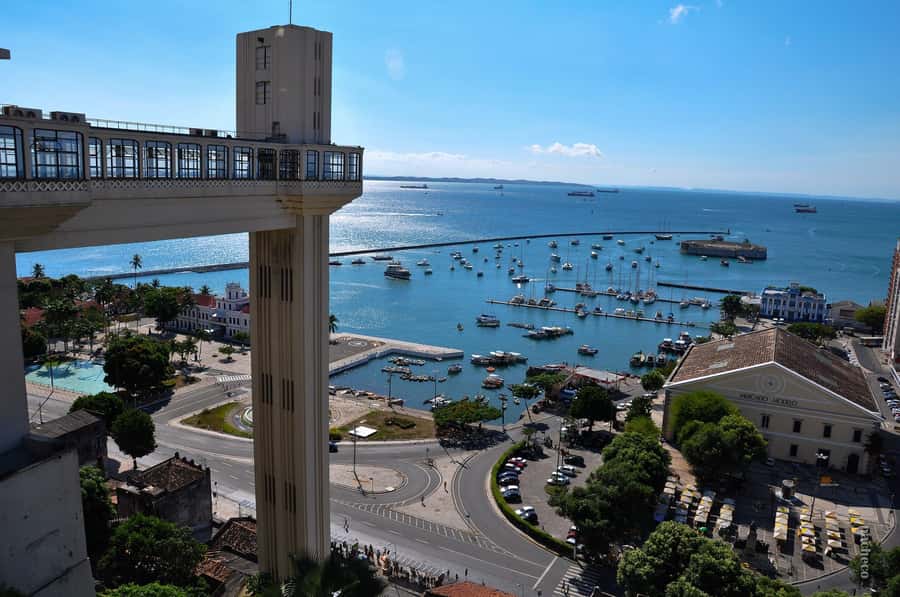
- Elevador Lacerda start and lift tickets: You begin with a major Salvador landmark and included access, not just a photo stop.
- Rua Chile moment: You’ll pass through one of the earliest streets associated with Brazil’s roots.
- Pelourinho music culture: You’ll connect the neighborhood to major music references, including OLODUM and famous performers.
- Cathedral Basilica of Salvador included: A guided visit at a key religious and architectural stop.
- O Cravinho stop for local drinks: Included tastings help you slow down and taste the local vibe.
- Multilingual private guides: The guide can operate in multiple languages, which makes the history easier to follow.
Why This Walking Tour Feels Like Salvador, Not a Checklist
If you want Salvador in a short amount of time, you need two things: momentum and context. This tour gives you both. You walk through the Historic Center with a private guide who adjusts the pace, so you can actually understand why the streets, churches, and plazas look the way they do.
I also like that you do not just hop from monument to monument. You get small cultural pauses, like tasting local drinks, and you spend time inside at least one major church. That mix is what makes the places start to mean something.
Finally, you should know the tour is built around walking plus a few timed visits. Expect sun, uneven steps, and the kind of close-up street atmosphere that feels great if you’re comfortable on your feet.
More Walking Tours in Salvador
- Private Walking Tour of Salvador Pelourinho
★ 5.0 · 70 reviews - Salvador Historic Walking Tour – Pelourinho
★ 4.8 · 62 reviews - Salvador: Walking Tour Through Pelourinho
★ 5.0 · 49 reviews
Starting at Elevador Lacerda, Then Getting Your Bearings
You start at Elevador Lacerda, and that matters more than it sounds. The elevator is one of the easiest ways to understand Salvador’s layout, because it connects viewpoints and neighborhoods that otherwise feel far apart.
You get time to enjoy the site, plus included tickets. In plain terms, this is not just a “look at it from outside” moment. You’ll be able to experience it as part of your route.
After that, you do a short walk to the next area. This is a useful rhythm for the first part of the day, because it helps your legs warm up while your guide sets the historical tone.
Rua Chile, Government-Era Buildings, and Streets With a Job to Do
Early in the walk you’ll pass by Rua Chile, described as the first street in Brazil, and the corridor of historic buildings along the route. Even if you’re not a street-history nerd, this stop helps you read Salvador correctly.
The guide frames the street as a living trace of colonial-era power and daily life. You also connect it to important government-linked landmarks, like the Rio Branco Palace, which helps you see how authority shaped the city’s look and layout.
Drawback to keep in mind: this area is tightly packed and visually busy. If you prefer wide open spaces and long pauses, you might feel a little “in it” from the start. The solution is simple: lean on your guide. Ask them to point out what to look for, not everything at once.
Pelourinho: Where Music, Faith, and History Share the Same Streets
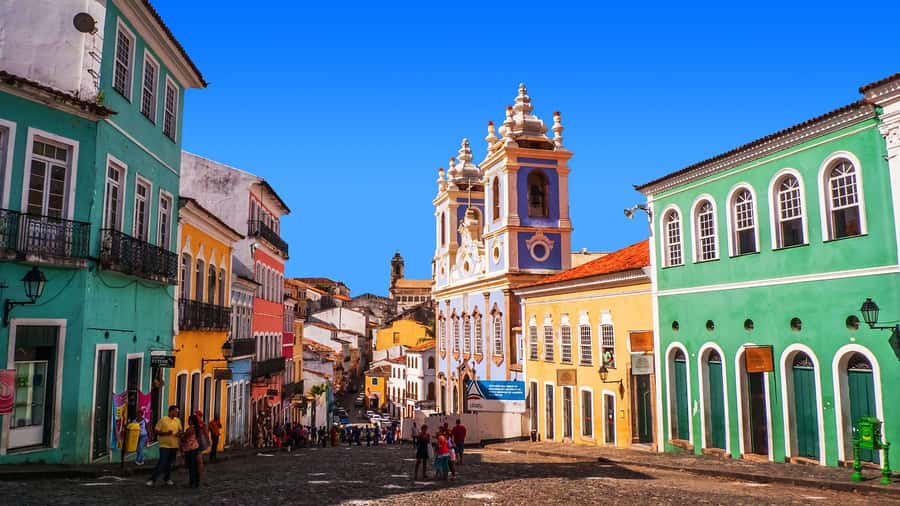
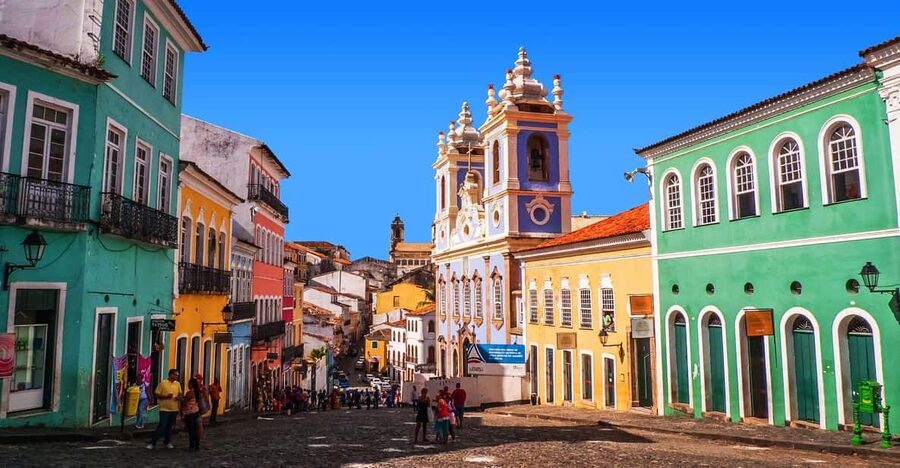
Pelourinho is the heart of the tour’s cultural payoff. You spend a focused chunk of time there, not a drive-by. This is where narrow lanes, colorful buildings, and public life overlap, so it feels like walking into the soundtrack of Salvador.
You’ll hear about music and cultural identity in a very grounded way, including major references like OLODUM, plus well-known international artists associated with the neighborhood. The point is not to name-drop for fun. It helps you understand why Pelourinho is a magnet for rhythm, performance, and community pride.
Expect churches and cultural spaces to show up in the same walking radius. That’s one reason Pelourinho feels different from a “museum district.” It’s a working neighborhood where you’re walking through history while real life continues around you.
More of Salvador and the Pelourinho:
- Round trip transfer, Salvador, Bahia, Brazil
★ 5.0 · 228 reviews - Salvador City Tour – Discover Brazil’s First Capital En, It, Es
★ 5.0 · 217 reviews - Cooking class in Salvador, an authentic dinning experience
★ 5.0 · 132 reviews - Tour to the Frades Islands and Itaparica, from Salvador – Ba
★ 4.0 · 130 reviews
Cathedral Basilica of Salvador: A Guided Church Stop That Actually Adds Meaning
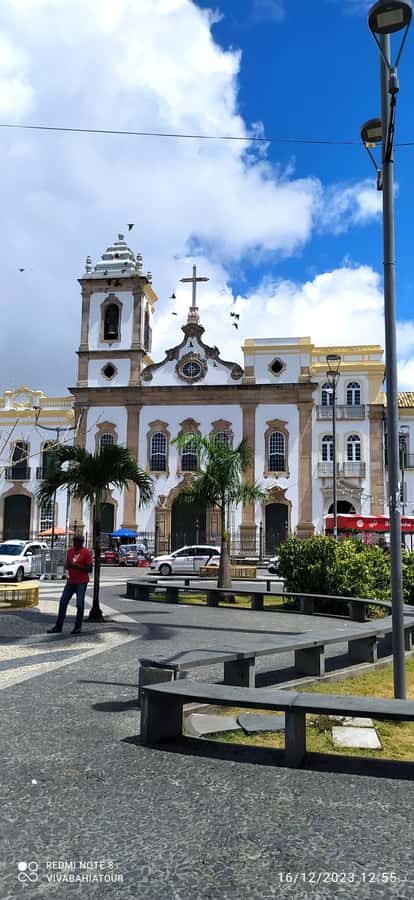
Next comes the Cathedral Basilica of Salvador. You get an included, guided visit, which is a big deal because churches can look impressive but still feel confusing if you’re on your own.
With a guide, you get the why behind the details, and you also get help locating what’s most important. This is the kind of stop where a good private guide can turn a 30-minute visit into something that sticks.
Practical note: churches can have different light and air flow than outdoor streets. If you’re sensitive to heat, plan to drink water after outdoor segments and take the church time as a calm break.
O Cravinho for Local Drinks: Stop and Taste, Not Just Look
Between the big landmarks, you’ll reach O Cravinho, a famous traditional Bahian pub. This is one of the tour’s smartest pacing choices. You get about 20 minutes to visit and you’re included for a tasting of local drinks, alcoholic and non-alcoholic.
This matters for value, because it is not an extra expense you have to negotiate on the spot. It also changes the tone from sightseeing mode to “I’m part of the place” mode.
One caution: drink preferences vary, and you do want to be clear with yourself about what you will enjoy. If you stick to non-alcoholic options, that’s totally fine, since the tasting is offered both ways.
Santo Antonio Alem Do Carmo: The Walk Segment That Links It All

You also pass through Santo Antonio Alem Do Carmo as a walking connection toward the end. This section is less about one single wow-factor site and more about how your guide ties together the city’s street logic.
When you have a couple of stops with real context, the walk segments feel like glue. The city stops being a list of locations and starts becoming a route you can picture later.
You’ll finish back at Elevador Lacerda, so the tour ends where it began. It’s a tidy way to close the loop and get yourself back to a familiar landmark.
What’s Included, and What You’ll Pay Separately
This tour’s included items help you manage costs while still getting the key experiences:
- Guide throughout
- Tickets to Elevador Lacerda
- Tickets to the Cathedral Basilica of Salvador
- Tasting of local drinks (alcoholic and non-alcoholic)
What’s not included: tickets to cultural spaces and museums. So if you’re hoping to add extra museum time beyond what the tour includes, you’ll need to budget for that separately.
This separation is normal for a walking tour, and it also gives you freedom. You can focus on the historic core during the guided time, and then decide later if you want to spend extra money on a specific museum.
Duration and Pace, So You Can Plan Your Day
You have 3 hours, private and focused. That is a good length if you want history plus culture without losing a whole day. It’s also long enough to feel like more than a quick orientation.
The pace works best if you do not treat every street corner as a separate photo session. Let the guide do the interpretation, then take photos where you feel moved. If you try to photograph everything, the tour can feel rushed.
Also, you should note the tour is not listed as suitable for motion sickness. If you are prone to nausea while walking or in tight indoor spaces, plan your route around that.
Price and Value: Why $141 Can Make Sense Here
At $141 per person for about 3 hours, you might wonder what you’re really paying for. Here’s the practical breakdown based on what’s included.
You’re buying three big things:
- A multilingual private guide who can explain what you see and shape the pace.
- Included access to major sites, including Elevador Lacerda and the Cathedral Basilica.
- An included tasting, alcoholic or non-alcoholic, so you’re not adding random costs mid-walk.
If you do those items on your own, the cost tends to creep up fast once you factor in tickets, time, and the value of having someone point out what to notice. This tour tries to bundle that logic into a single price.
So the value is highest if you want interpretation, not just sightseeing. If you are the type who loves reading street plaques and exploring alone, you might not feel the need for a guide. But if you want the city to make sense quickly, the pricing feels more reasonable.
Guide Quality Is the Difference (And You Can Pick the Right Language)
One of the strongest themes in the experiences I see described is that the guides do more than recite facts. They connect buildings and neighborhoods to culture and daily rhythm.
It also helps that the guides can work in many languages. The tour lists Dutch, French, English, Portuguese, Spanish, German, and Italian. That means you can choose a language that lets you actually follow the story instead of guessing.
From the names mentioned, guides like Wanderley and Gustavo are described as friendly, knowledgeable across Salvador’s layers, and good at making the city feel alive. That kind of guide is what turns a “pretty streets” walk into a “now I understand this place” walk.
What to Bring, and How to Avoid a Heat-Plus-Stones Problem
You’ll be outside enough that basic comfort matters. Bring sunglasses, a sun hat, and sunscreen. If you tend to forget sunscreen, trust me, you’ll notice in Salvador.
Also think about shoes. Even though the tour says wheelchair accessible, it also says not suitable for mobility impairments, which is another hint that surfaces may not be smooth everywhere. Wear shoes you can walk in for 3 hours without constantly thinking about your footing.
And if you’re sensitive to movement or walking discomfort, remember the tour is not suitable for motion sickness. That’s not a small warning, it’s a dealbreaker for some people.
Who This Tour Is Best For
This is a smart fit if:
- You want a private guide and prefer a history explanation tailored to what you’re seeing.
- You like culture tied to real places, not only photos.
- You have limited time and want the Historic Center highlights in a single organized walk.
- You enjoy tasting local drinks as part of the experience.
It may be less suitable if:
- You cannot do sustained walking.
- You have motion sickness concerns.
- You want lots of museum time, because only certain access is included and other ticketed spaces are extra.
Should You Book VivaBahiaTour’s Salvador Historic Center Walk?
I’d book it if you want Salvador to feel understandable fast. The tour’s real strength is the mix of included access (Elevador Lacerda and the cathedral), guided time where it counts, and a local tasting that keeps it from feeling like sightseeing-only.
Skip it or confirm details first if you have mobility needs, because the info provided is not fully consistent about accessibility. Also think twice if you’re prone to motion sickness, since the tour is not listed as suitable.
If you’re comfortable walking, want a private, multilingual guide, and like history that connects to music and street life, this is a solid use of your time in Salvador.
More Walking Tours in Salvador da Bahia
- Salvador Walking Tour Through Pelourinho
★ 5.0 · 35 reviews - Exclusive & Private Walking Tour in Pelourinho Salvador 3 hours
★ 5.0 · 20 reviews - Rio de Janeiro: Rocinha Favela Walking Tour with Local Guide
★ 4.8 · 3,052 reviews - Rio De Janeiro: Half-Day Rocinha Favela Walking Tour
★ 4.7 · 2,272 reviews
Newest Salvador da Bahia reviews
- Cultural Folkloric Show and Dinner in Salvador★ 4.5 · 15 reviews
- Transfer Vila Galé Marés (Guarajuba) – Private★ 5.0 · 15 reviews
- Tour to Praia do Forte and Guarajuba★ 4.0 · 16 reviews
- Private City Tour of Salvador da Bahia★ 5.0 · 17 reviews
- 3-Hour Private Tour of Salvador Capital Afro-Brazilian★ 5.0 · 17 reviews
- Afro-Brazilian Roots city Tour in Salvador with lunch at Favela★ 5.0 · 17 reviews
- Salvador African Heritage Private City Tour Including Afro Museum★ 4.5 · 18 reviews
- Morro de São Paulo Tour, Leaving Salvador-Bahia.★ 5.0 · 18 reviews
Salvador & Pelourinho, compared.


Salvador City Tour – Discover Brazil’s First Capital En, It, Es
Read our review →
Cooking class in Salvador, an authentic dinning experience
Read our review →
Tour to the Frades Islands and Itaparica, from Salvador – Ba
Read our review →
Transfer Salvador Airport / Hotel Litoral Norte
Read our review →


Tour Praia do Forte and Guarajuba, Leaving Salvador-Bahia.
Read our review →Browse the lists this tour appears in