
Reviewed · SALVADOR & PELOURINHO
Salvador: Walking Tour Through Pelourinho
Pelourinho can feel like a living postcard, but the best part is the way the streets explain Salvador. This 90-minute walking tour links the big landmarks with the stories that made them matter, from the bay overlooks to the climb of the Pelô slopes.
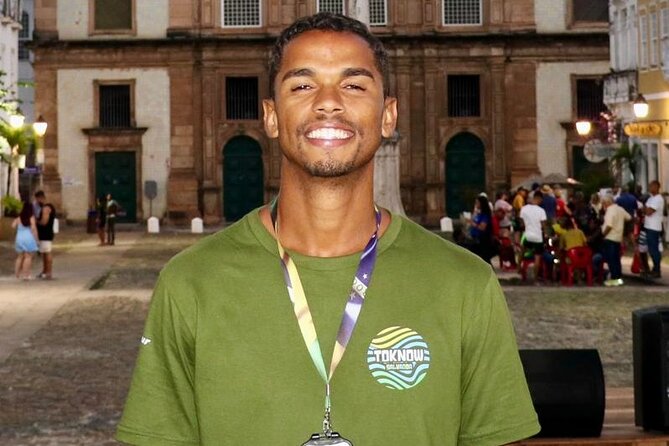
I love the small group size (up to 7), because you actually get to ask questions and hear details without getting lost in a crowd. I also like that the guide, Adriano, blends history with practical tips for what to do next, where to eat, and what to avoid. One thing to consider: this is a lot of walking on uneven streets, and it is not set up for wheelchair users or people with mobility impairments.
Key Highlights You’ll Actually Feel on This Walk
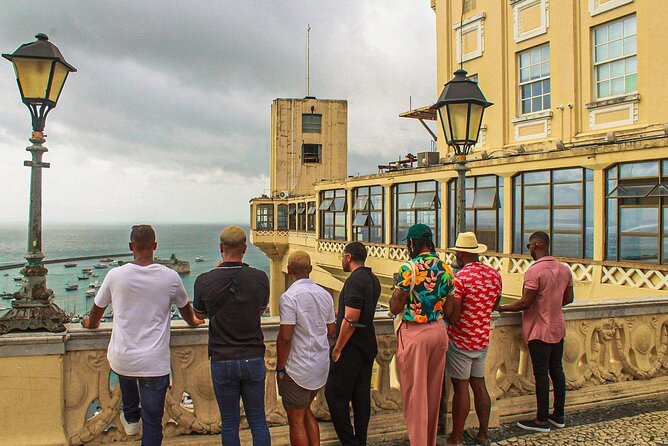
- Praça Castro Alves bay views at the start, with Baía de Todos os Santos and its islands in front of you
- Rua Chile, noted as the first street in Brazil, plus a photo stop at Pau da Bandeira
- Lacerda Elevator and the switch between Cidade Alta and Cidade Baixa, explained in plain terms
- Praça da Sé monuments, including the Monument to the Fallen Cross, Zumbi dos Palmares, and the first bishop statue
- First Faculty of Medicine in Brazil at Largo Terreiro de Jesus, paired with a cluster of churches
- Largo do Cruzeiro de São Francisco and Igreja de Ouro, then the Pelô slope tied to Michael Jackson’s They Don’t Care About Us
Why This Pelourinho Walk Works So Well in 90 Minutes
If you only have a short window in Salvador, this kind of tour earns its keep fast. You are not trying to “check boxes” at 10 stops. Instead, you walk a logical loop through the historic core, with a guide who connects each place to the bigger story of the city.
The pace is meant to be steady, not rushed. You get time to look up at buildings, take photos, and actually understand why you’re seeing what you’re seeing. In the reviews, the most consistent praise is Adriano’s ability to keep a good rhythm, explain clearly in English, and stay flexible with what each person is most curious about.
And since the group is limited to 7, you’re more likely to feel like you’re walking with a local friend, not standing in line behind strangers. That matters, because Pelourinho can be busy and confusing on your own.
More Walking Tours in Salvador
- Private Walking Tour of Salvador Pelourinho
★ 5.0 · 70 reviews - Salvador Historic Walking Tour – Pelourinho
★ 4.8 · 62 reviews - Salvador Walking Tour Through Pelourinho
★ 5.0 · 35 reviews
Meeting at Praça Castro Alves, Then Getting Your Bearings Fast
You meet at Praça Castro Alves, holding a credential. This is a smart start point because the plaza gives you a big-picture view right away. Before you start winding into the streets, you look out over Baía de Todos os Santos and the islands dotting the bay.
That view helps everything click later. When you move from street to street, you start to understand why Salvador’s historic center developed where it did, and how the water, hills, and neighborhoods shape daily life. Even if you’ve seen photos of Pelourinho, this first overlook is one of those moments that makes you feel oriented.
What to do here: take a minute, then focus your first questions on the “why.” Ask what the view means for the city’s layout, or which areas you should prioritize later. Adriano is the kind of guide who answers and then turns it into pointers for your next steps.
Rua Chile and Pau da Bandeira, Where the Streets Tell You the Timeline
After Praça Castro Alves, the walk heads along Rua Chile, described as the first street in Brazil. That detail might sound like trivia, but on foot it becomes real. You’re moving through a corridor that carries the city’s older rhythm, and your guide helps you see how street patterns and architecture relate to the city’s past.
Then there is a photo stop at Pau da Bandeira Street, known in Salvador for an impressive bay viewpoint. This isn’t just a “smile and move on” moment. A good guide helps you choose what angle to shoot so you capture the bay, the hills, and the sense of distance that photos often flatten.
Practical note: you’ll want comfortable shoes right here. Even when you think the pace is easy, historic centers tend to have uneven pavement and short uphill stretches.
Praça Thomé de Souza and the Lacerda Elevator, The Big Connector
Next up is Praça Thomé de Souza, named for the first General Governor of Brazil. In the middle of this plaza sits Palácio do Primeiro Governo, which was used as Brazil’s first prison. That’s a heavy detail, but it’s exactly the kind of historical anchor that helps Pelourinho stop feeling like a film set.
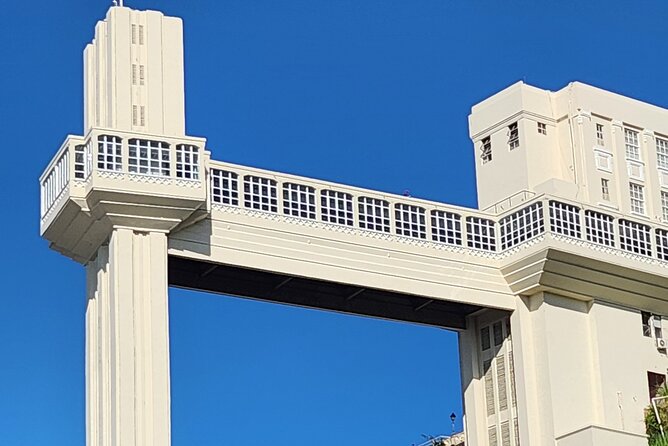
Then you get to the star that ties it all together: the Lacerda Elevator. This elevator connects Cidade Alta and Cidade Baixa, and the tour explains the significance of that link. You get a sense of how people and power moved through the city, not just how the city looks.
One nice benefit of this stop is the contrast. You’re standing in a place that reads as monumental and historic, and yet it’s still about real movement between neighborhoods. It’s the kind of sight that makes you understand why Salvador has layers instead of a single “old town look.”
If you like city planning, architecture, or transport history, this part is especially rewarding.
More of Salvador and the Pelourinho:
- Round trip transfer, Salvador, Bahia, Brazil
★ 5.0 · 228 reviews - Salvador City Tour – Discover Brazil’s First Capital En, It, Es
★ 5.0 · 217 reviews - Cooking class in Salvador, an authentic dinning experience
★ 5.0 · 132 reviews - Tour to the Frades Islands and Itaparica, from Salvador – Ba
★ 4.0 · 130 reviews
Passing Museu da Misericórdia, Then Arriving at Praça da Sé
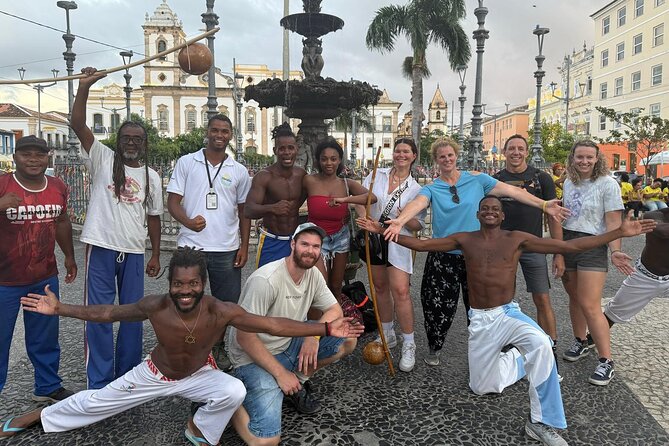
As the route continues along Rua Chile, you pass by Museu da Misericórdia. Even without diving into interiors, a museum exterior on a walking tour can be useful, because it signals where different institutions took root.
Then you reach Praça da Sé, one of the key squares in the area. Here, you’ll see the Monument to the Fallen Cross, erected as protest of the demolition of Igreja da Sé. The story matters because it frames the square as more than pretty stone. This is where conflict, belief, and civic change show up in public art.
This is also a moment where the guide’s narrative skills really matter. You’re likely to hear more than dates. You’re hearing how people responded when things changed, and how that response became visible in monuments.
Praça da Sé Stops, From Religious Protest to Resistance Against Slavery
In Praça da Sé, the tour makes two major viewing stops.
First, you see the statue of the first Bishop of Brazil and learn about his tragic end. Second, you see the statue of Zumbi dos Palmares, a leader in resistance against slavery.
This is one of the best parts of the tour for anyone who wants context. Pelourinho can be easy to experience only visually, but these stops push you into the human side of history: suffering, resistance, and the way those stories were turned into enduring symbols.
A practical tip: pause long enough to look around the square, not only at the statues. Squares can feel like open spaces until you notice how they function as meeting points, transitions, and stages. The guide helps you read those transitions as you move.
Largo Terreiro de Jesus, First Faculty of Medicine in Brazil
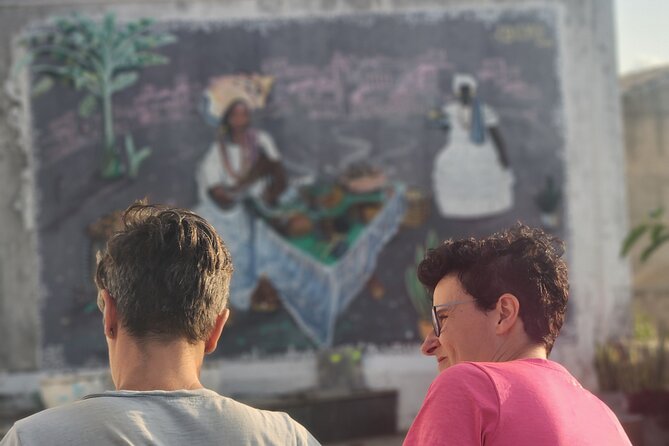
After Praça da Sé, you head to Largo Terreiro de Jesus. This is where the tour shifts from monuments and memorials into education and religious life.
You’ll be amazed by the first Faculty of Medicine in Brazil. You also visit a complex of churches that stands out in the square. Even if you don’t go inside every structure, the key value is interpretation: your guide helps you understand what the area meant and why it gathered so much importance around it.
This stop works well for mixed groups. If you’re into history, you’ll appreciate the medical education milestone. If you’re more into architecture or atmosphere, the church cluster gives you multiple viewpoints and details to notice while you keep moving.
Igreja de Ouro at Largo do Cruzeiro de São Francisco
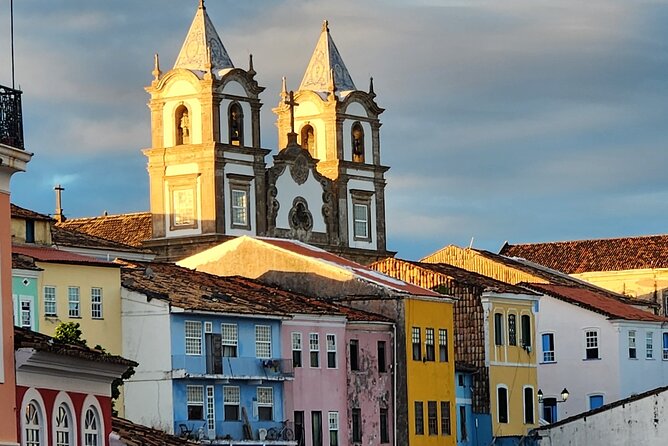
Then the tour moves to Largo do Cruzeiro de São Francisco, where the impressive Igreja de Ouro is a highlight. The name alone tells you to expect something striking, and this is one of those places where you get the payoff for the earlier walks.
The value here is pacing. After the educational and memorial stops, Iglesia de Ouro feels like a focal point where the visual impact and the guide’s story line up.
Even if your photo style is quick snapshots, slow down for this one. Look at how it sits in the square and how the light hits the area. In a short 90-minute tour, this kind of visual moment is what makes the whole walk feel complete.
Olodum’s House, Then the Pelô Ladeira With Michael Jackson’s Footsteps
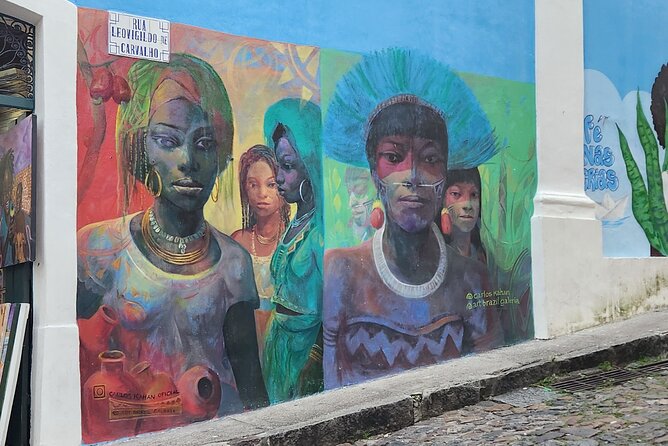
From there, you pass by Olodum’s house. This is a small stop, but it’s the kind of reminder you want in Pelourinho: Salvador’s identity is not only something inherited from the past. It also lives in modern culture and community.
Finally, you reach the famous Ladeira do Pelô, known for where Michael Jackson filmed the music video for They Don’t Care About Us. This is a pop-culture reference, yes, but the real value is the way it gets tied back to the neighborhood itself. You’re not just hearing a trivia fact. You’re seeing a street slope that has carried attention, art, and global curiosity.
And if you’re wondering what to do with this moment, here’s my advice: use it as a chance to look beyond the camera angles. Stand still and take in the street texture, the facades, and the way people navigate the slope. The tour gives you the context, but your eyes finish the job.
The walking also leads into a stop linked to the community: the church of black people, described as the brotherhood of black men in Brazil. That’s an important piece of the tour, and it adds weight to everything you saw earlier. You come away with a clearer picture of how communities shaped what Pelourinho became.
Price and Value, Is $80 Worth 90 Minutes?
At $80 per person for a 90-minute guided walk, the question is not whether it sounds “cheap” or “expensive.” It’s whether you’re buying what costs you most on the ground: time, confusion, and missing context.
For this tour, you’re paying for:
- A live English guide, which matters a lot in Pelourinho, where signage and local history can be hard to interpret quickly
- A tight route through major sites that you would struggle to connect on your own
- A small group of 7, which tends to make the experience more interactive and less like a cattle line
- Adriano’s storytelling style, plus follow-up recommendations for food and where to spend your next hours in Salvador
From the review patterns, the most praised aspect is how well Adriano balances enough information with a pace that keeps you engaged. Multiple people call out his friendly, local feel, his clarity in English, and his willingness to answer questions and tailor suggestions based on personal interests. That sort of guide quality is exactly what justifies a higher price on short trips.
If you’re the type who likes to read plaques and figure things out yourself, you could do Pelourinho without a tour. But if you want to walk in 90 minutes and leave understanding what you just saw, this price is easier to defend.
What You Need to Bring (And Why It Matters Here)
This is a practical walking tour, and Salvador weather can change fast. Bring:
- Comfortable shoes
- Sun hat
- Camera
- Sunscreen
- Water
You’ll thank yourself for carrying water early. Even if the tour feels short, you’ll be outdoors, moving between plazas, and stopping for views and photos.
Also, plan for sun. You’re at bay viewpoints and open squares, so shade might be limited at certain moments. Light clothing helps, but the hat plus sunscreen is what keeps the experience pleasant.
Who Should Book This Tour (And Who Might Want Something Else)
This walking tour is a good match if you want:
- A first introduction to Pelourinho and Salvador’s historic heart
- Clear English guidance and strong storytelling
- A compact itinerary with major sights like Lacerda Elevator and Igreja de Ouro
- Cultural context, including monuments tied to religion, protest, and resistance
It is not suitable for wheelchair users or people with mobility impairments. If you have mobility limitations, don’t force it. Look for an option with accessibility support.
Small Group Style, Why Adriano’s Approach Seems to Click
A lot of walking tours can feel the same: facts, photos, then moving on. This one feels different because Adriano’s approach is described as friendly, inclusive, and energetic.
In the reviews, people highlight that:
- The explanations feel balanced, not overwhelming
- English is clear and easy to follow
- He checks in with participants and offers recommendations based on interests
- He answers questions and keeps the tone entertaining, not stiff
That combination matters. When you’re walking through a dense historic center, you do better when the guide feels like a real person who can adapt, not a script reader who never changes pace.
Should You Book This Salvador Pelourinho Walking Tour?
Yes, I think you should book it if you want a smart way to orient yourself fast and get context for the places you’ll see in Pelourinho. It’s ideal as a “start here” experience, especially if you enjoy history but don’t want a slow, museum-style day.
Book it when:
- You have about 90 minutes and want maximum meaning
- You want a small group tour with lots of Q and A potential
- You care about how Salvador’s landmarks connect to real stories, not just architecture
Skip it if:
- You need wheelchair access or low-mobility options
- You prefer to wander without a structured route or guide narration
If you’re deciding between doing this on your own versus with a guide, I’d choose the guided walk. You’ll move faster, understand more, and spend your remaining time in Salvador with better instincts.
FAQ
Where is the meeting point for the Salvador Pelourinho walking tour?
You meet in Praça Castro Alves, where the guide will be standing using a credential.
How long is the walking tour?
The tour lasts 90 minutes.
Is the tour guided in English?
Yes, the live tour guide provides the experience in English.
How many people are in the group?
The group is small, limited to 7 participants.
What is included in the tour price?
The tour includes a walking tour and a guide.
Are entrance fees included for attractions?
No. Entrance fees are not included.
What should I bring with me?
Bring comfortable shoes, a sun hat, a camera, sunscreen, and water.
Is the tour suitable for wheelchair users or people with mobility impairments?
No. It is not suitable for people with mobility impairments and wheelchair users.
Can I cancel and get a full refund?
Yes. You can cancel up to 24 hours in advance for a full refund.
More Walking Tours in Salvador da Bahia
- Exclusive & Private Walking Tour in Pelourinho Salvador 3 hours
★ 5.0 · 20 reviews - Salvador, Bahia: A amazing Walking Tour!
★ 5.0 · 14 reviews - Rio de Janeiro: Rocinha Favela Walking Tour with Local Guide
★ 4.8 · 3,052 reviews - Rio De Janeiro: Half-Day Rocinha Favela Walking Tour
★ 4.7 · 2,272 reviews
Newest Salvador da Bahia reviews
- Cultural Folkloric Show and Dinner in Salvador★ 4.5 · 15 reviews
- Transfer Vila Galé Marés (Guarajuba) – Private★ 5.0 · 15 reviews
- Tour to Praia do Forte and Guarajuba★ 4.0 · 16 reviews
- Private City Tour of Salvador da Bahia★ 5.0 · 17 reviews
- 3-Hour Private Tour of Salvador Capital Afro-Brazilian★ 5.0 · 17 reviews
- Afro-Brazilian Roots city Tour in Salvador with lunch at Favela★ 5.0 · 17 reviews
- Salvador African Heritage Private City Tour Including Afro Museum★ 4.5 · 18 reviews
- Morro de São Paulo Tour, Leaving Salvador-Bahia.★ 5.0 · 18 reviews
Salvador & Pelourinho, compared.


Salvador City Tour – Discover Brazil’s First Capital En, It, Es
Read our review →
Cooking class in Salvador, an authentic dinning experience
Read our review →
Tour to the Frades Islands and Itaparica, from Salvador – Ba
Read our review →
Transfer Salvador Airport / Hotel Litoral Norte
Read our review →


Tour Praia do Forte and Guarajuba, Leaving Salvador-Bahia.
Read our review →Browse the lists this tour appears in