
Reviewed · SALVADOR & PELOURINHO
Exclusive & Private Walking Tour in Pelourinho Salvador 3 hours
This tour stands out because Salvador in three hours can feel like a whole chapter of Brazil. You start on Praça Castro Alves, then ride to big viewpoints from the area around the Lacerda Elevator, with scenes over the Bay of All Saints and Itaparica Island.
I love how the route connects history to what you can actually see, not just dates on a page. I also love the food focus through the Baian Gastronomy Museum, where African influence shows up in the dishes you’ll recognize from Bahia’s street and home cooking. One thing to keep in mind, you’ll be walking in the sun and between uneven streets, and church ticket costs are not included.
Highlights You Should Not Miss
- Praça Castro Alves, or praça do povo, sets the tone with Salvador’s “people’s square” energy
- Lacerda Elevator and the viewpoint area, including the Fallen Cross views over the bay and Itaparica
- Cathedral of Salvador and São Francisco, classic churches that show different sides of colonial power
- Pelourinho Square plus a stop for coconut water, a small reset before the heart of the Historic Center
- Baian Gastronomy Museum, focused on African influence through typical dishes
- Private format with flexible attention, including guides who tailor to your interests, like Gabriela Parnetti, Marina, and Icaro
Salvador’s Pelourinho, Built to Make Sense in 3 Hours
If you want one solid way to understand Salvador quickly, this is it. The tour is designed around the places that explain how this city became so central, especially as the Black Capital of Latin America. Instead of hopping randomly, you move in a pattern that helps the story click.
You begin at Praça Castro Alves, which locals call praça do povo (people’s square). That naming matters. It signals the city’s feel is not only about palaces or churches, it is also about public life, community, and the layers of culture people have kept alive.
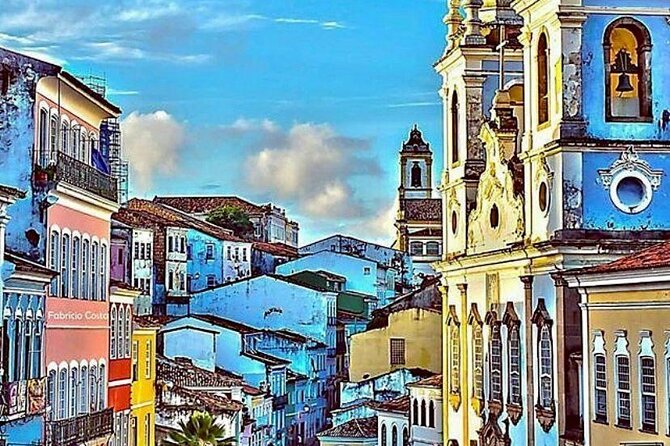
Then the tour builds toward the views and the architecture. You’ll look out over the bay from the area around the Lacerda Elevator and the Fallen Cross, and you’ll walk through landmark churches that shaped how power and belief showed up in the streets. Finally, you land where the culture is lived daily in Pelourinho, with the food museum making the Afro-Brazilian connections clear.
More Walking Tours in Salvador
- Private Walking Tour of Salvador Pelourinho
★ 5.0 · 70 reviews - Salvador Historic Walking Tour – Pelourinho
★ 4.8 · 62 reviews - Salvador: Walking Tour Through Pelourinho
★ 5.0 · 49 reviews
Starting at Praça Castro Alves, Then Getting Your Bearings Fast
Your tour meets at Hotel Fasano Salvador, Praça Castro Alves, 5 in the Centro area. From the beginning, I like that the start point is not some hidden corner. You’re right where the action is, close to major public transit, so arriving is usually simple.
At Praça Castro Alves, you get oriented to Salvador’s shape and the meaning of the Historic Center. The guide frames it in a way that makes the rest of the walk easier. Instead of you guessing what connects to what, you learn why Salvador became so important at the start of Brazil’s broader story.
Also, this is where a good guide can set the tone. In real guides like Gabriela Parnetti, you can feel the difference when someone can explain the same street scene from multiple angles: history, culture, and what to notice as you walk.
Lacerda Elevator and the Fallen Cross, The Views That Explain the Geography
Next comes one of Salvador’s best “see it, then understand it” moments. You head to the Lacerda Elevator area, where you get the kind of views that help you stop thinking of the city as flat and start seeing the coastline and its islands as part of the story.
From here, the tour’s highlight is the perspective over the Bay of All Saints and Itaparica Island. Even if you’ve seen photos before, the scale hits differently when you’re standing in it. The bay turns the city into something more than old buildings. It becomes a working coastline, a place where movement, trade, and survival shaped daily life.
There’s another practical side. When you walk through a historic center, it helps to know which directions matter. This viewpoint makes it easier to follow the rest of your route later because you can feel the geography under your feet.
Praça Tomé de Souza, Cathedral of Salvador, and Power in Stone
After the elevator views, you move to Praca Thome de Souza, then on to the Cathedral of Salvador. These stops are about structure and meaning: the big institutions that anchored the city when colonial influence was strongest.
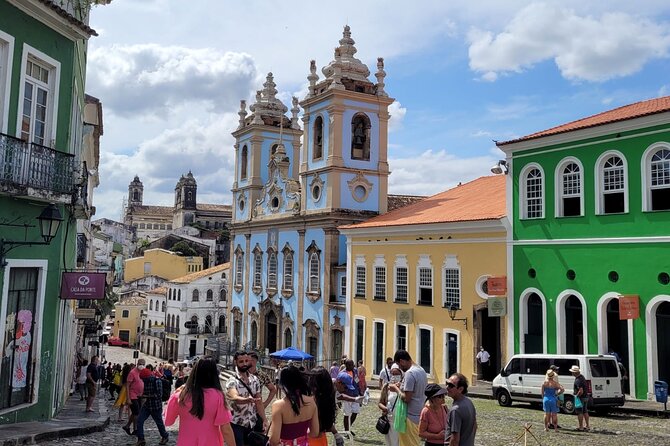
The Cathedral stop is your chance to see a “main church” in a way that doesn’t feel like a quick photo stop. With the right guide, you’ll understand why churches like this weren’t only religious spaces. They were also public statements. They shaped how streets developed, how people gathered, and how communities learned to interpret the world around them.
One useful note: church tickets are not included. So if you want to enter every church fully, budget for that on the day. If you prefer outside views and architectural details only, you can still enjoy the stop, but plan your expectations.
More of Salvador and the Pelourinho:
- Round trip transfer, Salvador, Bahia, Brazil
★ 5.0 · 228 reviews - Salvador City Tour – Discover Brazil’s First Capital En, It, Es
★ 5.0 · 217 reviews - Cooking class in Salvador, an authentic dinning experience
★ 5.0 · 132 reviews - Tour to the Frades Islands and Itaparica, from Salvador – Ba
★ 4.0 · 130 reviews
Igreja e Convento de São Francisco, Where Details Make the Church Work
Then you head to Igreja e Convento de Sao Francisco. This is one of those places where the outside looks like “yes, that’s a major church,” and the inside gives you more. The tour is set up so you’re not just walking past it. You’re meant to register the differences that make São Francisco stand out.
Even if you’re not a hardcore architecture person, this stop helps you understand how faith, art, and wealth mixed in Bahia’s urban story. Your guide will point out what to focus on, and that can make the visit far more rewarding than wandering on your own.
If you’re short on energy, this is also a good mid-tour moment to slow down. You’ll have already gotten the big coastal views, so now your brain can focus on textures, shapes, and how the building holds attention.
Cooling Off With Coconut Water, Then Into Pelourinho’s Core
After the churches, the pace shifts from monuments to the center of everyday culture. There’s a refreshing coconut water stop on the way into the heart of the Historical Center, and I’m a fan of this break. In Salvador’s sun, it is the difference between a walk you enjoy and one that feels like work.
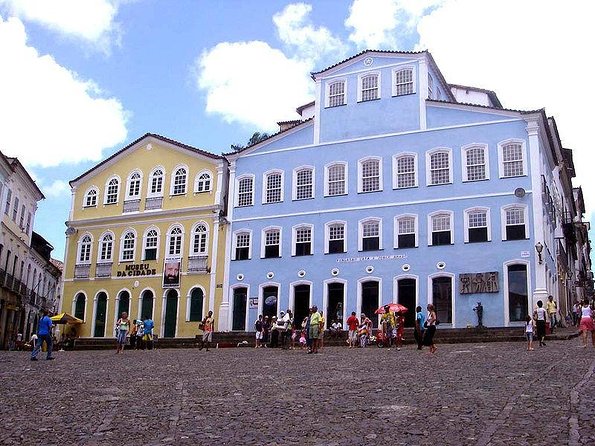
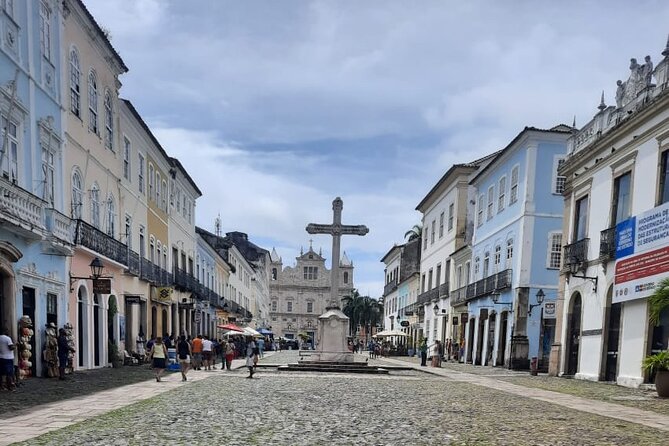
From there, you reach Pelourinho Square, the kind of place that feels like the city’s memory made visible. Pelourinho is where you can sense Afro-Brazilian identity as a daily presence, not something locked away in a museum.
One more reason I like this part of the tour: you’re not only collecting sights. You’re moving toward a learning stop that ties the city’s cultural roots to something you can actually taste and recognize later.
Baian Gastronomy Museum, How African Influence Shows Up in Food
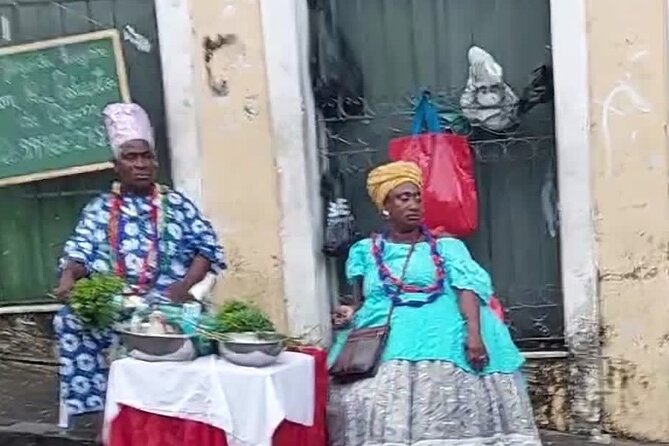
The tour’s cultural payoff is the Museu da Gastronomia Baiana. This is where African influence becomes concrete, because the guide connects it to typical dishes and the way food tells history in a way that people can carry across generations.
If you like food travel, this is a smart move. It gives you a framework for understanding why certain flavors, ingredients, and cooking styles matter in Bahia. Instead of treating dishes as random tasty things, you start seeing patterns.
And if you want practical ideas for later meals, the tour’s format makes that easy. Guides like Marina and Icaro have a reputation for turning history walks into useful “what to eat next” advice. You might even get a recommendation tied to what you just learned.
If you’re the type who wants to follow up the same day, use this museum stop to create your food hit list for the next 24 to 48 hours.
Price, Value, and Why a Private Tour Can Be Worth $80
At $80 per person for about 3 hours, the value depends on how you like to travel. If you’re the kind of traveler who hates “doing history in a group,” the private format is a big plus. You get your guide’s attention and your route stays focused.
Also, this is not just a walk around photo spots. You’re getting a structured narrative from major squares to viewpoints to centenary churches, then finishing with a museum tied directly to cultural identity. That combination is what justifies the price more than the time alone.
There’s one extra cost to plan for. As mentioned earlier, church tickets are not included, so your real day spend might be a bit higher if you want full entries. If you’re comfortable with that, the tour is a strong use of a half-day.
Finally, it is popular. On average, it’s booked about 11 days in advance, which is a good sign for a tour that people actually enjoy enough to schedule ahead.
Walking Comfort and Practical Tips That Make It Easier
This tour recommends comfortable shoes, light clothes, and a hat for the sun. That advice is not optional. Pelourinho streets can feel like a mix of steps, slopes, and uneven surfaces. A good shoe choice turns the walk into “manageable sightseeing.” A bad choice turns it into an endurance test.
If you’re sensitive to heat, the coconut water break helps, but you should still think like you’re walking in warm weather, even when you start early.
Accessibility note is important. The tour says the Pelourinho area has been modified to attend wheel chairs since 2014. Most travelers can participate, and since it is a private tour, your guide can usually help you move in a way that fits your group.
So, Should You Book This Pelourinho Walking Tour?
I’d book it if you want your Pelourinho visit to feel organized and meaningful. This is best for first-time visitors to Salvador who want the city’s big story fast, plus a food-oriented learning stop that makes African influence understandable in everyday terms.
I would skip or reconsider if you hate walking, don’t want to pay for any church entries, or you only want museums and not streets and viewpoints. Also, if you’re the type who wants a very quiet day, the lively public squares in the Centro area may not be your style.
If you book, pick the mindset of learning and noticing. Bring comfortable shoes, protect yourself from the sun, and lean into the food portion. This tour is the kind that makes your next Salvador meal feel smarter, not just tastier.
FAQ
How long is the private walking tour in Pelourinho?
It lasts about 3 hours.
What is included in the tour price?
The tour guide service is included.
Are church tickets included?
No. Tickets for churches are not included.
Where does the tour start and end?
It starts at Hotel Fasano Salvador, Praça Castro Alves, 5 – Centro, Salvador – BA, and it ends back at the meeting point.
Is this tour private?
Yes. It is a private tour/activity, so only your group participates.
Is the Pelourinho area wheelchair accessible?
The Pelourinho area has been modified to accommodate wheel chairs since 2014, and most travelers can participate.
Can I cancel for a refund?
Yes, you can cancel for free up to 24 hours in advance for a full refund. If you cancel less than 24 hours before the start time, the amount paid is not refunded.
More Walking Tours in Salvador da Bahia
- Salvador Walking Tour Through Pelourinho
★ 5.0 · 35 reviews - Salvador, Bahia: A amazing Walking Tour!
★ 5.0 · 14 reviews - Rio de Janeiro: Rocinha Favela Walking Tour with Local Guide
★ 4.8 · 3,052 reviews - Rio De Janeiro: Half-Day Rocinha Favela Walking Tour
★ 4.7 · 2,272 reviews
Newest Salvador da Bahia reviews
- Cultural Folkloric Show and Dinner in Salvador★ 4.5 · 15 reviews
- Transfer Vila Galé Marés (Guarajuba) – Private★ 5.0 · 15 reviews
- Tour to Praia do Forte and Guarajuba★ 4.0 · 16 reviews
- Private City Tour of Salvador da Bahia★ 5.0 · 17 reviews
- 3-Hour Private Tour of Salvador Capital Afro-Brazilian★ 5.0 · 17 reviews
- Afro-Brazilian Roots city Tour in Salvador with lunch at Favela★ 5.0 · 17 reviews
- Salvador African Heritage Private City Tour Including Afro Museum★ 4.5 · 18 reviews
- Morro de São Paulo Tour, Leaving Salvador-Bahia.★ 5.0 · 18 reviews
Salvador & Pelourinho, compared.


Salvador City Tour – Discover Brazil’s First Capital En, It, Es
Read our review →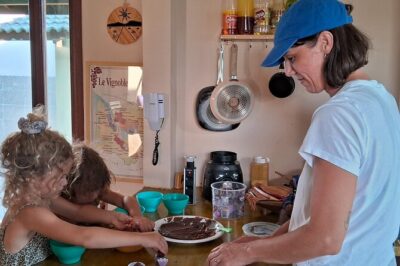
Cooking class in Salvador, an authentic dinning experience
Read our review →
Tour to the Frades Islands and Itaparica, from Salvador – Ba
Read our review →
Transfer Salvador Airport / Hotel Litoral Norte
Read our review →


Tour Praia do Forte and Guarajuba, Leaving Salvador-Bahia.
Read our review →Browse the lists this tour appears in