
Reviewed · SALVADOR & PELOURINHO
Private Walking Tour of Salvador Pelourinho
Private Walking Tour of Salvador Pelourinho
Salvador da Bahia feels like a living postcard, and this private walk zooms in on the parts you want to see slowly. You start in the historic core, then connect the views from the Lacerda Elevator to the cobbled streets of Pelourinho, where you’ll understand why the area earned UNESCO World Heritage status.
I love how practical the pacing is for a 2 to 3 hour tour. You get a focused hour in Pelourinho, then short stops at major landmarks like Palácio Rio Branco and the memorial at Cruz Caída, before you spend real time inside big-ticket sights such as Catedral Basílica Primacial de São Salvador and the Igreja e Convento de São Francisco.
One thing to consider is that not every stop’s ticket is included, and bottled water isn’t included either. Also, you’ll be sharing key meeting logistics, so double-check the exact pickup spot and timing, since one unhappy experience in the feedback mentions a guide no-show and confusion about the meeting location.
Key Highlights You’ll Actually Feel
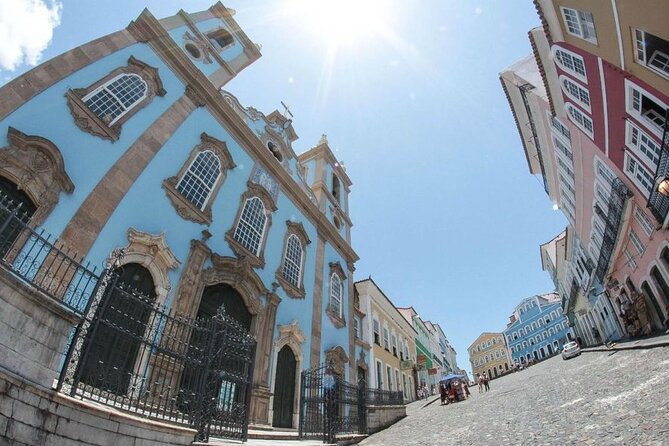
- Pelourinho in context, with time to see the 17th and 18th century mansions that make this neighborhood UNESCO-worthy
- Conceição Elevator views with the historic “Parafuso” story, plus how it functions as everyday public transport
- Cruz Caída details, including the lost Sé Church and why the 1999 monument matters
- Big church time at Catedral Basílica Primacial de São Salvador, including admission
- São Francisco’s Portuguese tiles and gold powder carvings, a visual feast built for your eyes
Getting Oriented in Pelourinho’s Historic Core
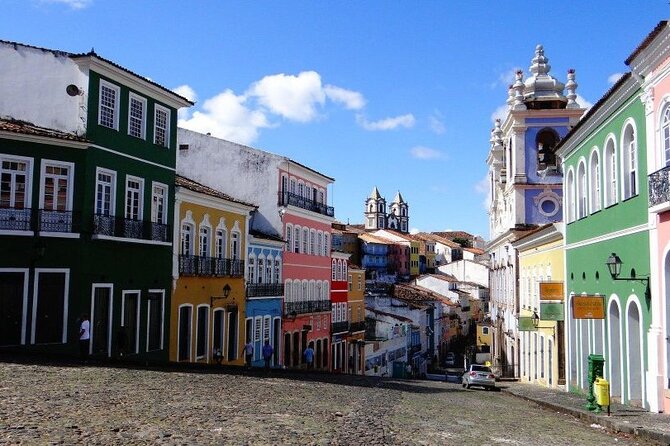
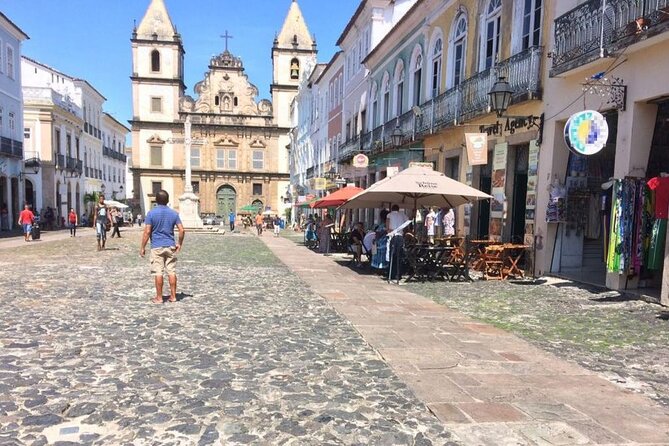
Pelourinho is the start and the finish of this tour for a reason. Your guide works in layers, first helping you grasp how the streets and landmarks fit together in Salvador da Bahia’s historic center. You’ll spend about an hour right in the neighborhood, which is enough time to do more than snap photos. It’s time to understand what you’re looking at.
What I like most here is that you’re not only chasing pretty facades. You’ll focus on the “why” behind UNESCO World Heritage status, tied to the area’s surviving architecture and the feel of those 17th and 18th century mansions. When someone points out the details in the right order, the neighborhood stops feeling like a film set and starts feeling like a place with a timeline.
Pelourinho can also be a lot on your feet. The tour is listed for travelers with moderate physical fitness, and it’s a walking experience, not a sit-and-watch plan. Wear comfortable shoes and plan to slow down on the uneven ground.
More Walking Tours in Salvador
- Salvador Historic Walking Tour – Pelourinho
★ 4.8 · 62 reviews - Salvador: Walking Tour Through Pelourinho
★ 5.0 · 49 reviews - Salvador Walking Tour Through Pelourinho
★ 5.0 · 35 reviews
The Lacerda Elevator Ride, From Parafuso to Public Transport
The Lacerda Elevator is one of those Salvador sights that sounds like a trivia question until you’re actually riding it. You’ll head to the Conceição Hydraulic Elevator, which locals have long called the Parafuso. It’s famous because it was the first urban elevator in the world, and it also held the record as the tallest when it opened in 1873, reaching 63 meters.
The practical part is quick: it connects Bairro do Comércio to Cidade Alta in a roughly 20 second journey. But here’s the real tip, because it matters for your experience. When there’s no queue, you’ll move through smoothly. On busier days in the area, the elevator becomes everyday public transport for people living in the city, so you may spend more time waiting.
Even if you’ve never cared about elevators before, you’ll probably understand why this one is iconic once you see the view from the top. This is the tour’s “wow, okay, I get it” moment, and it helps you see Pelourinho and the surrounding city from a better angle, not just from street level.
Ticket note: the elevator admission is not included, so expect a small extra cost for the ride.
Palácio Rio Branco, a Quick Hit With Big Identity
After you connect the elevator story back to the city, you’ll make a short stop at Palácio Rio Branco. It’s the kind of landmark that’s worth a pause because it helps you understand where the city’s power and prestige were expressed in earlier eras.
This is not a long interior visit in this tour plan. You’re there to see it and absorb the landmark setting, then move on. That works well because your time isn’t wasted repeating the same slow sightseeing loop. Instead, it keeps the tour moving between viewpoints, plazas, and churches.
If you like architecture and city identity, you’ll find this stop useful as a “bridge” between major scenes: the dramatic elevator moment and the deeper historic walking that follows in Pelourinho. If you’re the type who wants to spend an hour inside one building, you might feel the short stop is brief. But for most people, it’s a smart use of time.
Cruz Caída and Terreiro de Jesus, Where Layers of Faith Show Up
Two of the tour stops focus on memory and place: Monumento da Cruz Caída and the square of Terreiro de Jesus.
Cruz Caída is at Praça da Cruz Caída, and the site comes with competing opinions and complicated history. What you can count on is the story of what happened to the earlier Sé Church. The Sé Church was demolished in 1933 to make way for a tram, and the monument you see now was inaugurated in 1999. Cruz Caída honors the disappearance of that former cathedral, the Primatial of Brazil.
This stop is short, but it lands. It’s a reminder that historic cities don’t freeze in time. They change, and monuments often show up to hold onto what was lost.
Then Terreiro de Jesus comes in as a cultural and historical anchor in Salvador’s historic center. It’s a named square, important because so many stories orbit it. Think of this part of the tour as your “pause and reset” moment before you step into the biggest religious building visits of the day.
More of Salvador and the Pelourinho:
- Round trip transfer, Salvador, Bahia, Brazil
★ 5.0 · 228 reviews - Salvador City Tour – Discover Brazil’s First Capital En, It, Es
★ 5.0 · 217 reviews - Cooking class in Salvador, an authentic dinning experience
★ 5.0 · 132 reviews - Tour to the Frades Islands and Itaparica, from Salvador – Ba
★ 4.0 · 130 reviews
Inside Catedral Basílica Primacial de São Salvador
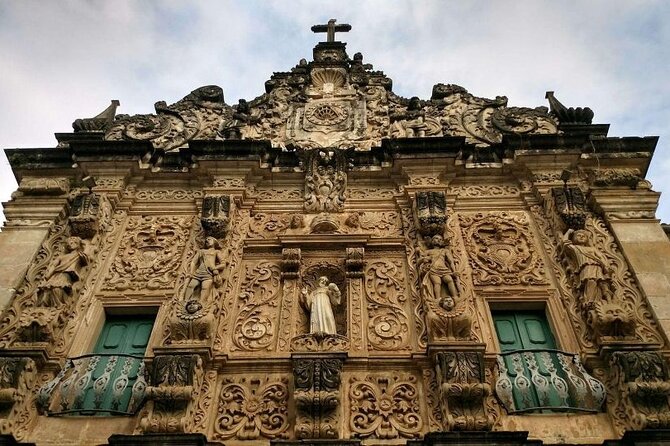
When the tour moves into the Catedral Basílica Primacial de São Salvador, you’ll actually slow down. You’ll spend about 20 minutes here, and admission is included, so you don’t need to budget extra just to enter.
This is one of the most important sacred buildings in Colonial Brazil, and your guide helps you understand why it matters. The renovation took three years and eight months to complete, and the construction time is the kind of fact that makes you stop and stare at the building: it took 18 years to build, built since 1657.
This cathedral is not framed as a museum-only stop. It’s back in everyday life and tied to the faith of Bahia and people around the world. For me, that context is what turns a church visit from a quick look into something more meaningful. You’re not just checking architecture boxes, you’re seeing how the building operates in real time.
Practical tip: this is an indoor stop with a set time in the itinerary. Plan to listen and look, not run photos like a sprint.
Igreja e Convento de São Francisco, Tiles, Gold Powder, and Portuguese Roots
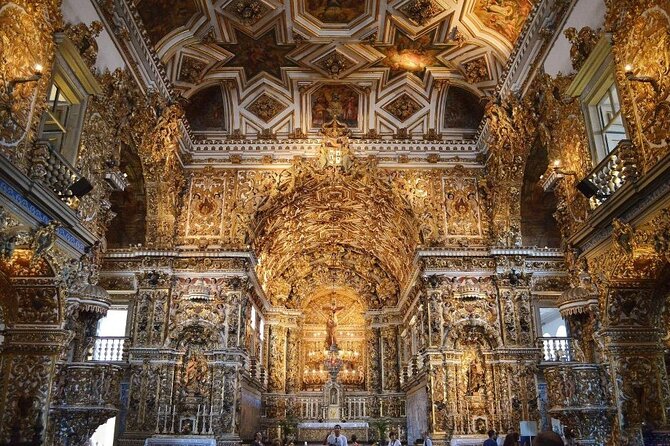
The Igreja e Convento de São Francisco is the art highlight for many people, and it earns it. You’ll spend about 25 minutes here, and admission is not included, so you’ll need a separate ticket.
What makes this place special is the combination of Portuguese and Brazilian baroque details. The church and convent date to the 17th and 18th centuries, and it’s listed as one of the Seven Wonders of Portuguese Origin in the World. It’s also listed by IPHAN, which gives the site a formal level of cultural protection and recognition.
The interior details are the headline. You’ll see 18th century Portuguese tiles depicting the birth of Saint Francis. You’ll also notice wooden carvings molded with gold powder. Your guide points out Brazilian baroque symbols such as leaves, pelicans, flowers, and little angels.
This is the stop where you’ll feel the difference between a generic “walk by” experience and a guided visit. Those symbols can look decorative at first. With context, you start reading them like a story.
If you don’t care much about religious art, you can still enjoy the craftsmanship. But you’ll likely get the most satisfaction if you’re willing to look up, not only forward.
Finishing in Pelourinho’s Michael Jackson Film Spot Areas
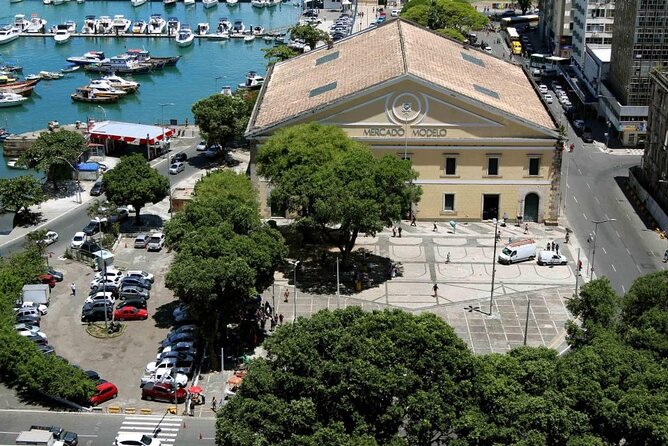
You end back in Pelourinho, around the most famous points people associate with Michael Jackson’s iconic video clip. This is about the atmosphere and the location. You’re using your earlier Pelourinho time to understand where these scenes sit in the neighborhood fabric.
The value here is closure. After churches, plazas, and monuments, your last minutes give you something more pop-culture than academic. But because you’ve already built a sense of Pelourinho’s historic streets and architecture, the film spot locations won’t feel random. You’ll be able to place them in the larger walking context you learned earlier.
This last stop is only about 10 minutes, so it’s not meant for a long wander. It’s meant to mark the ending point of your route and help you keep your orientation for whatever you do next after the tour.
Price, Time, and Ticket Value for a 2 to 3 Hour Private Walk
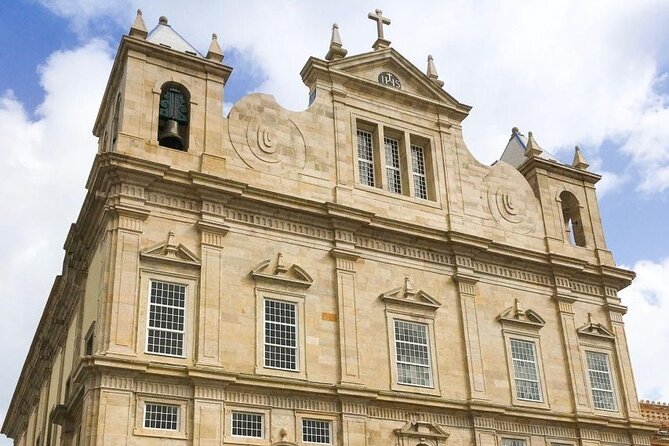
At $60 per person, this tour is priced like a serious guided experience, not a casual self-guided stroll. The big value is that it’s private, meaning only your group participates, and you get a bilingual guide plus mobile ticketing support.
The route is also time-smart. At roughly 2 to 3 hours, you’re seeing a lot of different “types” of Salvador experiences. You move from street-level Pelourinho to viewpoints from the elevator. You do landmark exterior stops, then you shift into two meaningful church visits where you’ll actually spend time.
Now the cost equation matters. Not everything is included with the tour price. The cathedral admission is included, which reduces friction for one of the biggest stops. The Lacerda Elevator ticket is not included, and São Francisco admission is also not included. So you’re likely to pay small extra costs in transit and at entrance points.
Also, bottled water is not included. That might sound small, but it can matter in a walking tour. I suggest you bring your own water or plan to buy on the way so you don’t have to hunt at the last minute.
Finally, weather matters. The experience is listed as requiring good weather. Salvador can throw unpredictable conditions, and if the tour can’t run as planned, you should expect an option to reschedule or get a full refund.
Is This the Right Tour for You?
Book this if you want a guided Pelourinho walk that connects historic streets to the city’s signature viewpoint ride. It’s a good fit for first-time visitors who want the major landmarks without feeling rushed, and it’s especially great if you like churches, monuments, and learning what the details mean.
I’d be a bit more cautious if you’re the type who gets upset by small ticket add-ons. The elevator and São Francisco aren’t included, so you’ll need to handle those costs. And because there is at least one reported issue about a guide no-show, I recommend taking meeting point instructions seriously, arrive a few minutes early, and confirm the exact pickup location on the day.
Bottom line: with a 4.9 rating and 99% recommended, the odds are strongly in favor of a well-run, satisfying tour that helps you see Salvador’s historic heart with better understanding and fewer guesswork moments.
FAQ
How long is the Private Walking Tour of Salvador Pelourinho?
It lasts about 2 to 3 hours.
What is included in the tour price?
A bilingual guide is included. Admission is included for the Catedral Basilica Primacial de Sao Salvador. Some stops are free.
Are tickets included for the Lacerda Elevator and the São Francisco church?
No. The Lacerda Elevator admission is not included, and the Igreja e Convento de Sao Francisco admission is also not included.
Where do we meet and where does the tour end?
You start at Cine Glauber Rocha, Praça Castro Alves, 5, Centro, Salvador. The tour ends at Largo do Pelourinho in the Pelourinho neighborhood.
Is this a private tour?
Yes. It is private, and only your group participates.
What if the weather is bad?
The experience requires good weather. If it is canceled due to poor weather, you will be offered a different date or a full refund.
More Walking Tours in Salvador da Bahia
- Exclusive & Private Walking Tour in Pelourinho Salvador 3 hours
★ 5.0 · 20 reviews - Salvador, Bahia: A amazing Walking Tour!
★ 5.0 · 14 reviews - Rio de Janeiro: Rocinha Favela Walking Tour with Local Guide
★ 4.8 · 3,052 reviews - Rio De Janeiro: Half-Day Rocinha Favela Walking Tour
★ 4.7 · 2,272 reviews
Newest Salvador da Bahia reviews
- Cultural Folkloric Show and Dinner in Salvador★ 4.5 · 15 reviews
- Transfer Vila Galé Marés (Guarajuba) – Private★ 5.0 · 15 reviews
- Tour to Praia do Forte and Guarajuba★ 4.0 · 16 reviews
- Private City Tour of Salvador da Bahia★ 5.0 · 17 reviews
- 3-Hour Private Tour of Salvador Capital Afro-Brazilian★ 5.0 · 17 reviews
- Afro-Brazilian Roots city Tour in Salvador with lunch at Favela★ 5.0 · 17 reviews
- Salvador African Heritage Private City Tour Including Afro Museum★ 4.5 · 18 reviews
- Morro de São Paulo Tour, Leaving Salvador-Bahia.★ 5.0 · 18 reviews
Salvador & Pelourinho, compared.


Salvador City Tour – Discover Brazil’s First Capital En, It, Es
Read our review →
Cooking class in Salvador, an authentic dinning experience
Read our review →
Tour to the Frades Islands and Itaparica, from Salvador – Ba
Read our review →
Transfer Salvador Airport / Hotel Litoral Norte
Read our review →


Tour Praia do Forte and Guarajuba, Leaving Salvador-Bahia.
Read our review →Browse the lists this tour appears in