
Reviewed · SALVADOR & PELOURINHO
Salvador: 3-Hour Percussion Class
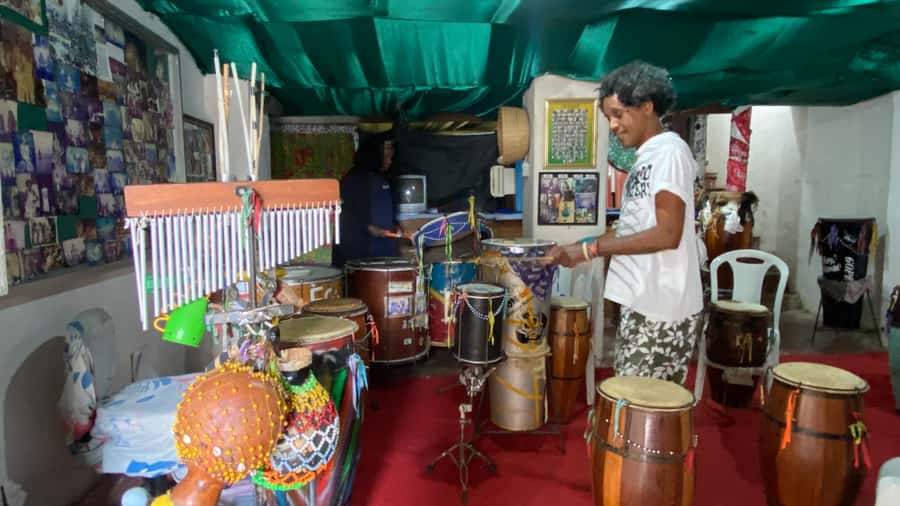
If you like music you can feel in your chest, this Salvador percussion class is a smart way to get that fast. You’ll spend a focused few hours with the people who keep samba reggae alive, learning rhythms that connect Bahia to African musical roots.
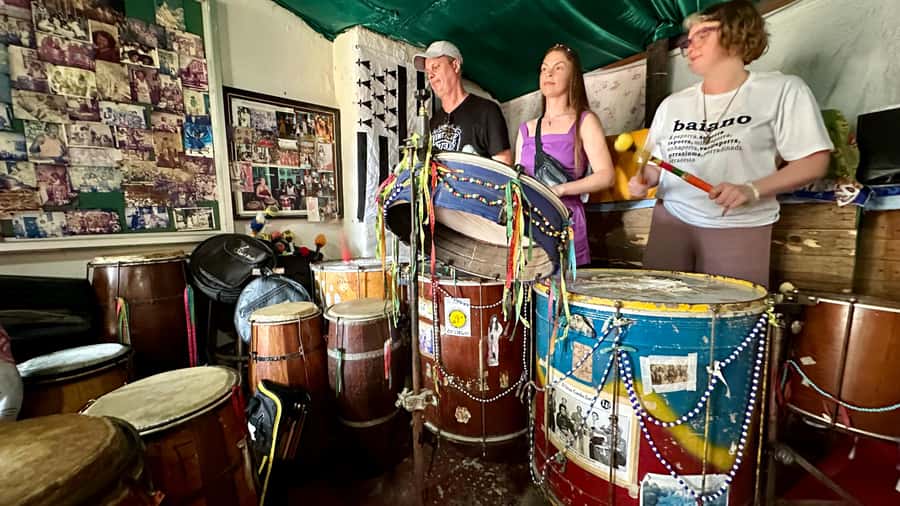
What I love most is the small group size (max 6), because the teaching stays personal and you actually play, not just watch. I also like that you’re guided through multiple drums and get to jam together, so the session turns into a real rhythm conversation.
One thing to think about is time. Even though it’s listed as 3 hours, the hands-on instruction can be closer to about 1.5 hours depending on pickup and the schedule. If you want complicated, long sequences, you may wish it went further.
Key highlights to look for
- Samba reggae plus samba basics: you’ll learn the signature sounds tied to Bahia and Brazilian popular music
- Watch first, then play: you see the pattern, then your hands join the groove
- Max 6 participants: intimate teaching, with room for questions and correction
- Local insight: a guide helps connect the dots, including translation during the instruction
- Maestro Macambira’s teaching style: patient, attentive, and tuned to different levels
- Hotel pickup and drop-off included: it’s easy to show up ready to play
Bahia percussion is not a tourist show, it’s a daily language
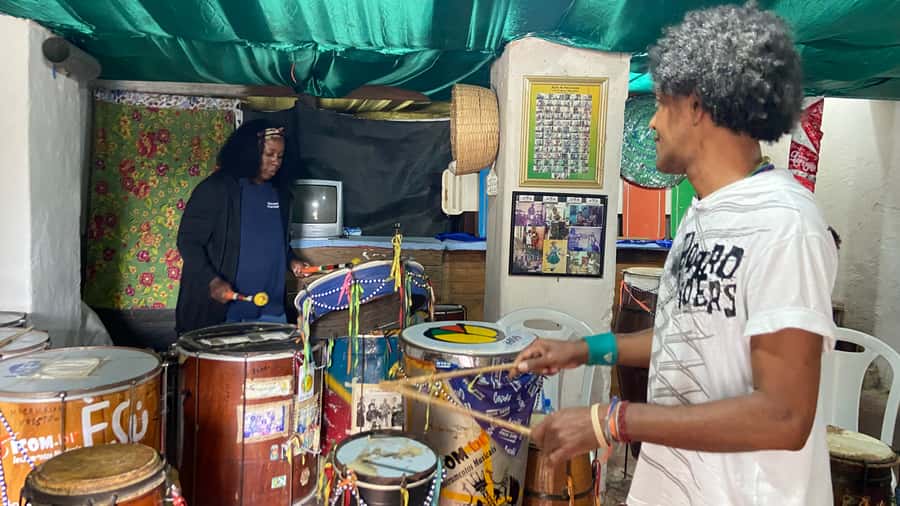
In Bahia, percussion is how people talk with their bodies. It shows up at celebrations and ceremonies, including Samba de Roda circles and Candomblé contexts. The point is not just noise. Drums shape mood, push songs forward, and help people get into the right mental and emotional space.
That cultural framing matters for you as a visitor. If you show up expecting only technique drills, you might miss why the rhythms feel so alive. This class treats drumming as a living skill, rhythm as communication, and your participation as part of the music itself.
Also, you get context about how Bahia’s sound-making connects to the African continent for inspiration. You’re not stuck in one genre either. The session connects the dots across styles, with samba reggae called out as a famous bridge rhythm, and additional references to other musical languages that sit in the Brazilian orbit.
More of Salvador and the Pelourinho:
- Round trip transfer, Salvador, Bahia, Brazil
★ 5.0 · 228 reviews - Salvador City Tour – Discover Brazil’s First Capital En, It, Es
★ 5.0 · 217 reviews - Cooking class in Salvador, an authentic dinning experience
★ 5.0 · 132 reviews
The 3-hour plan, how the time usually feels
The experience runs about 3 hours and includes hotel pickup and drop-off from your hotel lobby, plus entrance fees and a professional guide. That sounds straightforward, and it is. The practical question is how much of that time is hands-on.
A common theme from the experience is that the active class portion may be closer to about 1.5 hours once transportation is counted. That does not mean the experience is short on value. It means you should mentally plan for a packed session with quick progression, not a slow, full-length rehearsal.
What you can expect during that time:
- You start with a welcome and setup with your guide.
- You watch percussion patterns demonstrated.
- You learn rhythms and start playing on drums.
- You get a chance to jam with the group before it wraps up and you’re sent back.
Because the group is capped at 6 people, the instructor can move faster without losing people. You’ll likely leave feeling like you learned “enough to play,” not just “enough to understand.”
What you’ll actually learn: samba reggae, samba, and the rhythm logic
Let’s talk about what the rhythms mean in practice.
Samba reggae: the showpiece rhythm
Samba reggae is the star highlight, and for good reason. It’s a rhythm tied to Bahia’s musical identity, and it’s also widely known beyond Brazil thanks to its catchy, driving feel. In the class, you’re not only told what it is. You see how the groove locks together and then you try to reproduce it.
The valuable part for you: once you understand the “engine,” you can hear the rhythm even when someone else is playing. That’s what makes the lesson stick. You’re learning pattern awareness, not only hand positions.
A few more Salvador da Bahia options
- 4h Cooking Class in Salvador with 9 Recipes & Bottomless Drinks
★ 5.0 · 73 reviews - Salvador: Capoeira Class at Mestre Bimba’s 1st Ever School.
★ 4.9 · 34 reviews - Salvador: CAPOEIRA CLASS – CULTURAL
★ 4.6 · 13 reviews - Salvador: Traditional Drumming and Percussion Workshop
★ 4.4 · 10 reviews
The most famous rhythm: samba
The class also focuses on samba, the Brazilian rhythm most people recognize. Here, the goal is usually to help your hands land consistently in the cycle and make clean connections between beats and accents.
For beginners, that’s perfect. You’ll build confidence fast. For more experienced players, the class might feel like it stays on simpler versions of the beat, at least at first. One participant felt the beats stayed basic and the total time for learning instruments was limited.
So here’s a realistic expectation: you’ll get the core groove and the feel of how it’s taught in Bahia, but you may not walk away with advanced variations and long solos.
Bahia roots: Samba de Roda and Candomblé context
Even though you’re in a workshop setting, you’ll get cultural framing for where these rhythms come alive. The class connects percussion to Bahia’s social life and ceremony, especially through Samba de Roda and Candomblé references.
You don’t need to know religious or cultural details to enjoy it. But if you’re curious, this context gives you respect for the sound, not just enjoyment of the beat.
The teaching vibe: small group, real guidance, and translation help
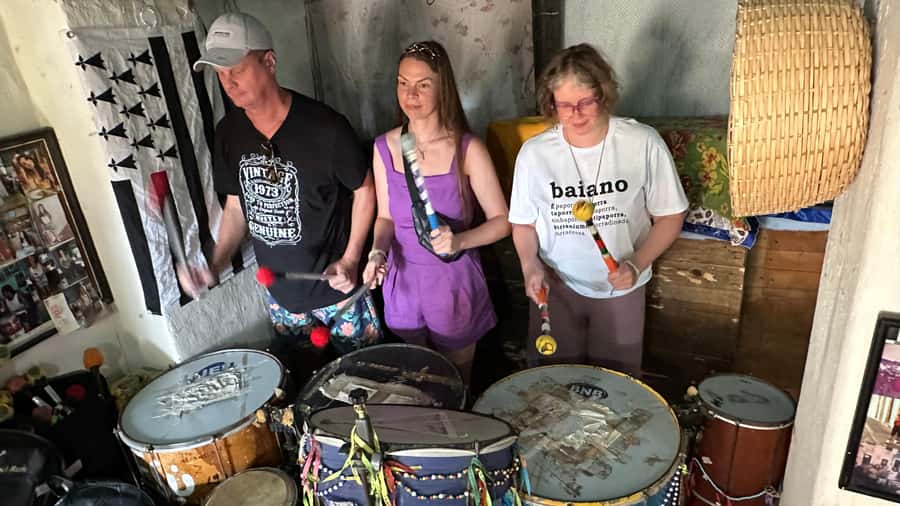
What makes this class work well is the teaching approach. It’s not just an instructor on one side and you on the other. You’re guided step-by-step, with a professional guide translating what the instructor demonstrates.
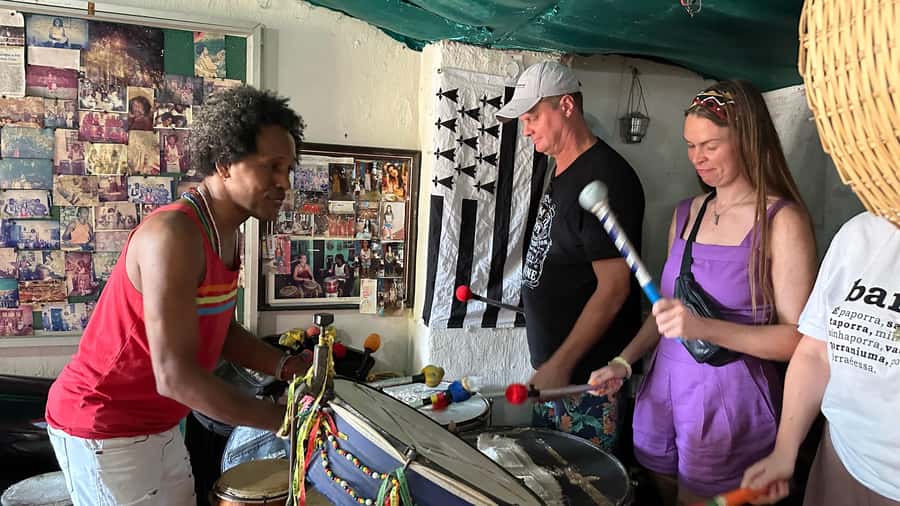
A key name you might hear is maestro Macambira. People specifically highlighted how he pays attention to the level of each person. That means you’re less likely to feel lost if you’ve never played drums before, and you’re less likely to feel bored if you already have some rhythm experience.
And because the group is small, correction can happen quickly. You can adjust your hands without waiting through a long line of people.
One reviewer described it as feeling close to one-on-one. That’s a big deal in a music class. When you can hear the groove and also get feedback on your timing, you progress.
Instruments and the jam moment you’ll remember
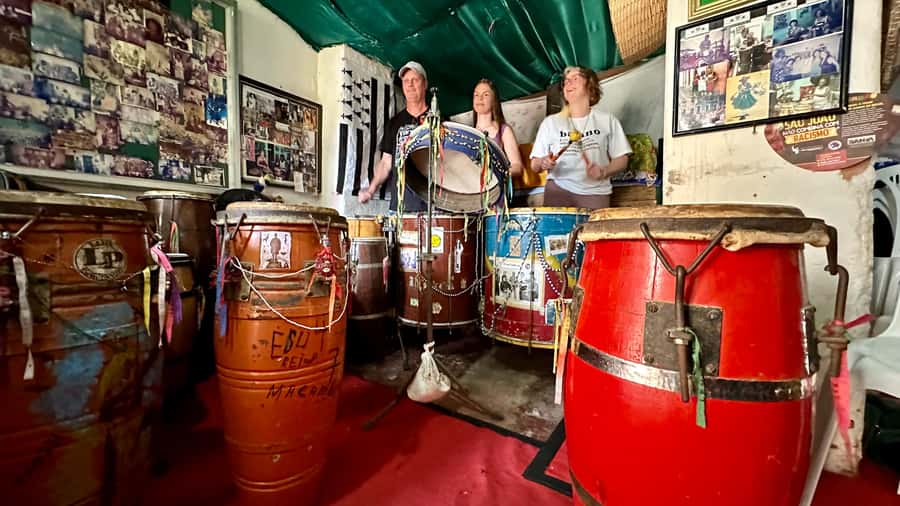
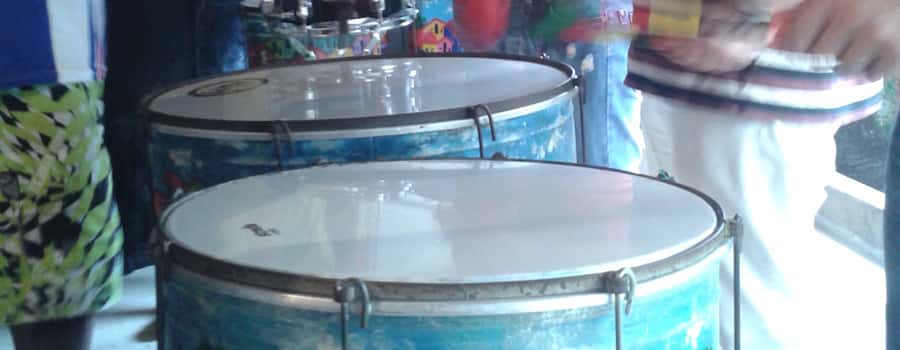
This is a drumming class, so at some point you’ll switch between drums and learn patterns for each. The highlight for many people is getting to play multiple instruments rather than sticking to just one.
That variety helps you in two ways:
- You understand how each drum supports the rhythm structure.
- You stop thinking of drumming as one technique and start hearing it as a system.
Then comes the part that makes the experience feel complete: the group jam. You’re not just doing call-and-response in theory. You jam together, guided by the percussionists. It’s the moment where you feel the rhythm as a shared thing.
If you’ve ever watched a drum circle and thought, I want in, this is that. Not as a performance. As participation.
Price and value: is $90 fair for a Salvador drumming class?
At $90 per person for a 3-hour experience with pickup and entrance fees, the value depends on what you want out of it.
Here’s the honest math in human terms:
- If you want cultural context plus hands-on drumming, you’re paying for more than noise. You’re paying for guided rhythm teaching, plus a local guide experience, plus logistics that make it easy to participate.
- If you expect a long, in-depth drumming course with lots of technique drills and tons of instrument time, you might feel underwhelmed. The concern that instruction time may be closer to 1.5 hours shows up more than once, and one person thought it was overpriced for the amount of instrument playing and the simplicity of the beats.
So my take: the price is reasonable if you treat this as a joyful intro and rhythm experience, not a full drumming boot camp. It’s a good use of a short Salvador window, especially if you want to understand Bahia music from the inside.
Logistics that matter: pickup, language, food, and accessibility
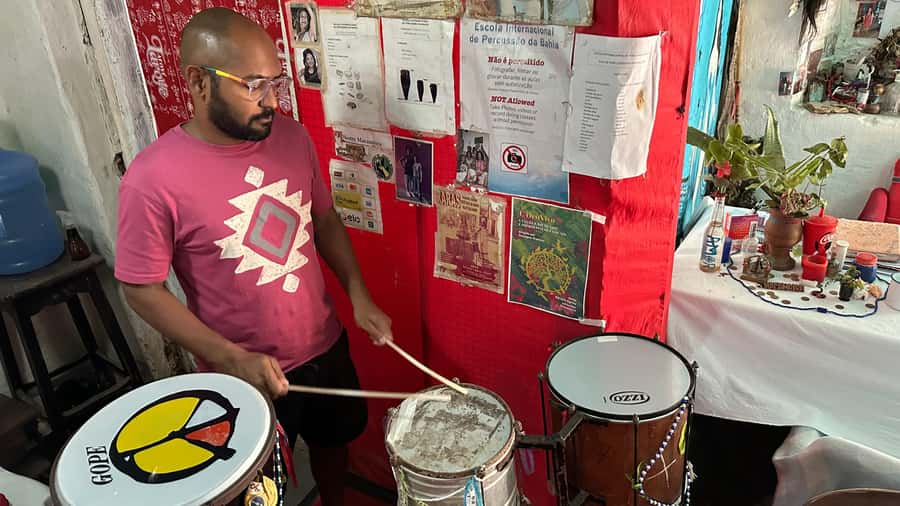
A few practical points so you can plan without stress.
Pickup and drop-off
Pickup is included from your hotel lobby. That makes it easier than finding your way to a workshop on your own. Still, plan for some transport time, and that’s part of why the class portion may feel shorter.
Languages
The live tour guide supports Spanish, English, and Portuguese. If you’re comfortable in one of those, you’ll get the most out of the teaching because the guide translates what the percussionists are demonstrating.
Food and drinks
Food and drinks are not included. Bring water or plan to eat before you go. Drumming burns energy even if you think you’re just sitting and hitting pads at first.
Accessibility
This tour cannot accommodate wheelchairs. If mobility needs are part of your plans, you should look for an alternative activity in Salvador.
Who should book this percussion class
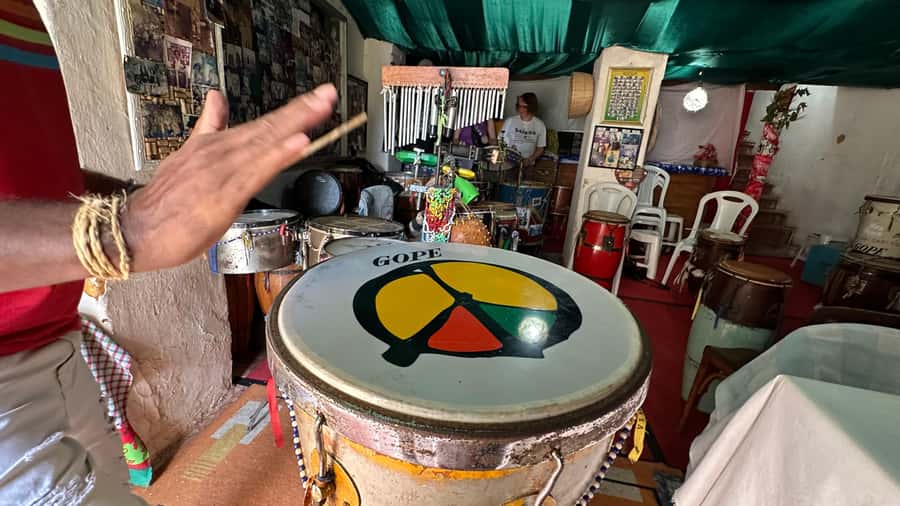
This works best for:
- You want a hands-on Salvador percussion experience without needing musical training
- You like African-Brazilian rhythms and want context, not just a performance
- You prefer small groups and direct guidance
- You’ll enjoy participating, clapping, listening, and timing your hands to other people
It might not be ideal if:
- You want a longer technical workshop with advanced progression
- You expect a large instrument menu and extended solo time
- You get annoyed when transportation eats into the instructional window
Should you book the Salvador 3-hour percussion class?
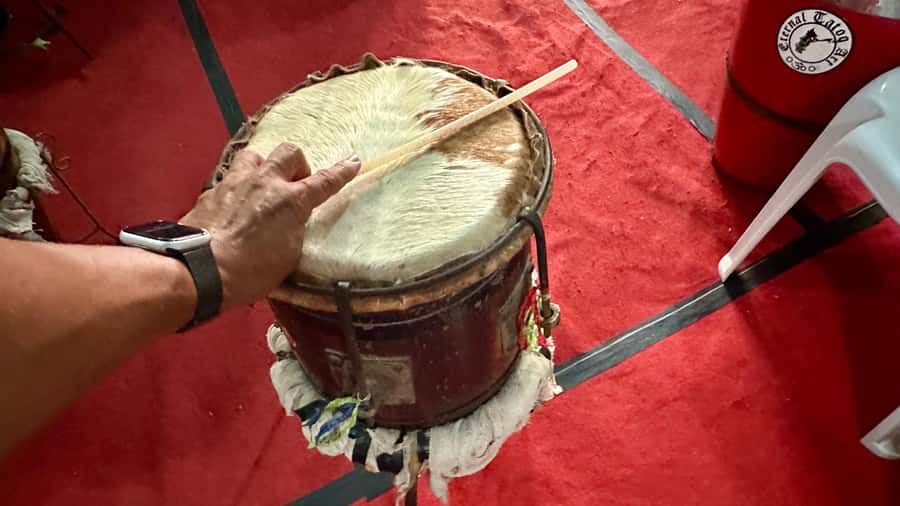
If you want a short, memorable way to connect with Bahia’s rhythm culture, I’d book it. The small group size, the chance to play multiple drums, and the jam moment are the big wins. And the fact that teaching includes guidance and translation helps you get it faster, even if you’re a first-timer.
If money is tight or you’re very performance-focused, go in with the right expectations. Treat it as a high-energy introduction and a cultural experience, not a long-form drumming curriculum.
My simple rule: if you’re excited to play and you can handle a schedule where some time is travel, this class is a strong bet.
FAQ
How long is the Salvador percussion class?
The duration is 3 hours, with the schedule depending on availability.
What is the group size?
It is a small group limited to a maximum of 6 participants.
Does the tour include hotel pickup and drop-off?
Yes, pickup and drop-off are included, and pickup is from your hotel lobby.
What languages are available for the live tour guide?
The guide offers live interpretation in Spanish, English, and Portuguese.
Is food or drinks included?
No, food and drinks are not included.
Can wheelchair users participate?
No, this tour cannot accommodate wheelchairs.
Is the price $90 per person?
Yes, the price is listed at $90 per person.
Can I cancel for a refund?
Yes. Free cancellation is available up to 24 hours in advance for a full refund.
Newest Salvador da Bahia reviews
- Cultural Folkloric Show and Dinner in Salvador★ 4.5 · 15 reviews
- Transfer Vila Galé Marés (Guarajuba) – Private★ 5.0 · 15 reviews
- Tour to Praia do Forte and Guarajuba★ 4.0 · 16 reviews
- Private City Tour of Salvador da Bahia★ 5.0 · 17 reviews
- 3-Hour Private Tour of Salvador Capital Afro-Brazilian★ 5.0 · 17 reviews
- Afro-Brazilian Roots city Tour in Salvador with lunch at Favela★ 5.0 · 17 reviews
- Salvador African Heritage Private City Tour Including Afro Museum★ 4.5 · 18 reviews
- Morro de São Paulo Tour, Leaving Salvador-Bahia.★ 5.0 · 18 reviews
Salvador & Pelourinho, compared.


Salvador City Tour – Discover Brazil’s First Capital En, It, Es
Read our review →
Cooking class in Salvador, an authentic dinning experience
Read our review →
Tour to the Frades Islands and Itaparica, from Salvador – Ba
Read our review →
Transfer Salvador Airport / Hotel Litoral Norte
Read our review →


Tour Praia do Forte and Guarajuba, Leaving Salvador-Bahia.
Read our review →Browse the lists this tour appears in