
Reviewed · SALVADOR TOURS
Mysteries of Candomblé: Private Afro-Brazilian Religion Tour
Candomblé is where faith, history, and symbolism all touch the same street corner in Salvador da Bahia. This private half-day tour takes you from museum galleries to an actual Afro-Brazilian terreiro, with stops that explain how orixás and African spiritual traditions shaped daily life in Bahia.
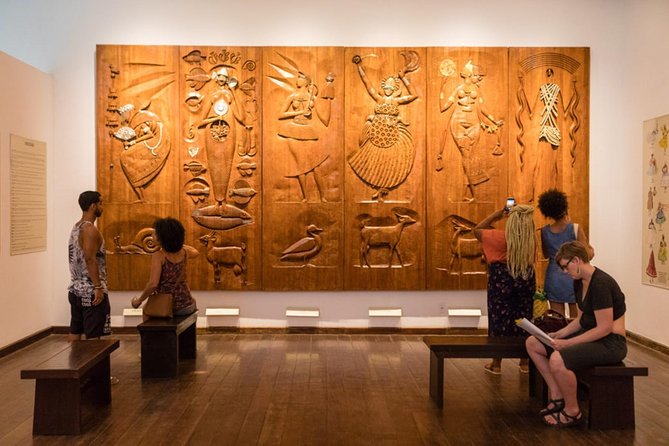
I especially like the guided explanation that turns complex beliefs into clear, human context, including how people interpret sacred spaces and spiritual lineage. I also like that you get hands-on understanding through art and research, from Carybé’s carved panels to Pierre Verger’s photography and the orixá sculptures at Dique do Tororó.
A key consideration: not every stop is guaranteed to run the same way every day. The terreiro you visit depends on availability and the religious calendar, and on some dates certain sites may be closed, with substitutions made on the fly.
Key things to know before you go
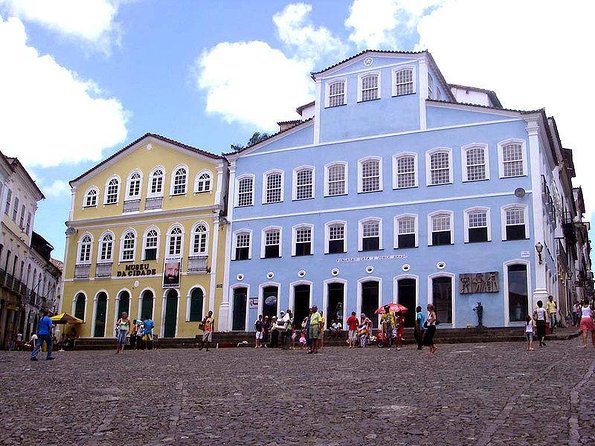
- Two possible terreiro choices: Kwe Vodun Zo (Jeje Vodun) or Ilê Axé Oxumarê, based on availability and the calendar
- Oracle consult, but no ritual participation: it is positioned as a respectful daytime educational visit
- Start in Pelourinho’s Afro-Brazilian Museum: artifacts and sacred objects put the story in context fast
- Art-led stops: Carybé carvings, Pierre Verger photography, and Tati Moreno orixá sculptures
- Scenic plus sacred viewpoints: Dique do Tororó and Iemanjá at the Rio Vermelho shrine
- Dress code matters: knees and shoulders must be covered, no shorts or sleeveless tops
Pelourinho’s Afro-Brazilian Museum: where the story gets concrete
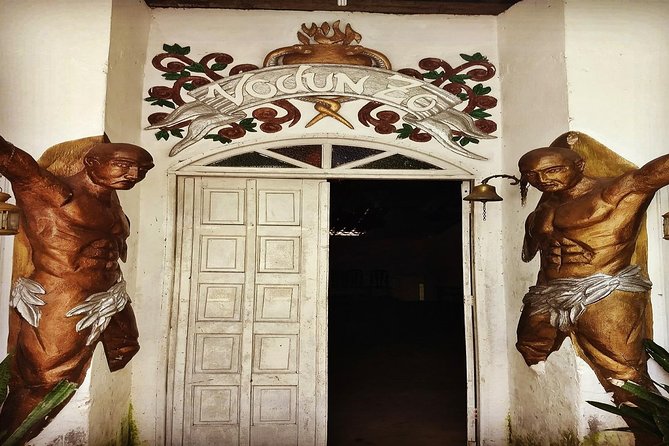
Your morning (or afternoon) mindset sets the tone. This tour starts at the Afro-Brazilian Museum in Pelourinho, one of Salvador’s most important institutions for African heritage in Brazil. It is not just a hallway of objects. It is a structured introduction to how African civilizations influenced Brazilian culture, and how that influence survived and transformed under slavery, resistance, and community life.
Expect to see artifacts, sculptures, sacred objects, textiles, and historical pieces tied to Afro-Brazilian identity. The exhibitions also touch Candomblé and traditional orixá representations, plus African art and the cultural exchange between Brazil and West Africa. This matters because it gives you language for what you are about to see later in sacred spaces. Without that primer, a terreiro visit can feel like you are watching symbols without knowing what they mean.
There is also time to wander. One specific detail that tends to stick with visitors is the museum’s carved wooden panels by Carybé. If you pause there, you are likely to notice how art is doing spiritual work, too. It helps turn abstract ideas into something you can look at slowly.
Practical tip: plan to move at a museum pace, not a sprint pace. You get about 40 minutes at this first stop, which is enough for a real read if you focus on the Candomblé-related sections and the African heritage themes.
More days in Salvador:
- Round trip transfer, Salvador, Bahia, Brazil
★ 5.0 · 228 reviews - Salvador City Tour – Discover Brazil’s First Capital En, It, Es
★ 5.0 · 217 reviews - Cooking class in Salvador, an authentic dinning experience
★ 5.0 · 132 reviews
Two possible terreiro visits, plus a sacred-oracle moment
The heart of this experience is a visit to a Candomblé terreiro, meaning a living community with spiritual authority and daily practice. Here’s the part you need to understand before you book: the exact temple you visit depends on availability and the religious calendar.
You’ll go to one of these:
- Kwe Vodun Zo in the Liberdade area (a historic Jeje Vodun house), or
- Ilê Axé Oxumarê in Federação (one of the oldest and most respected Candomblé temples in Bahia)
In the time you are there, the tour is designed around authorized outdoor and common areas. You will learn the history and spiritual lineage of the house, and you’ll be shown why sacred spaces, plants, architecture, and traditions are treated as meaningful. The important wording is that it is a respectful daytime educational visit, not a ritual performance for visitors.
Still, the tour offers an opportunity to consult the sacred oracle. That sounds dramatic, but the framing stays grounded: you are not signing up for hands-on ritual participation. You are there to understand symbolism and practice through guidance, and you may have a chance to experience the oracle consult as part of that educational approach.
This is also where a strong guide can make or break the day. In past experiences, a guide named Wagner got praised for explaining Candomblé in clear, understandable English while keeping it respectful. You may not have the same guide, but it’s a good sign of what you should hope for: context, translation, and pacing that respects the sacred.
Practical tip: bring your best manners. These are religious communities. Ask questions, but keep your tone calm, and follow any instructions about where you can stand or walk.
Dique do Tororó: orixá sculptures meet a quick, photogenic pause
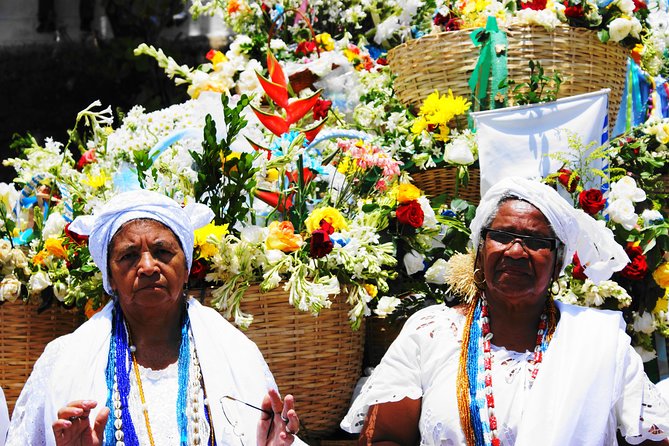
After the terreiro visit, you get a change of pace at Dique do Tororó, one of Salvador’s iconic scenic viewpoints. This is a lake surrounded by lush vegetation, with famous floating sculptures of the orixás created by artist Tati Moreno.
This stop is shorter, about 20 minutes, but it has two jobs. First, it gives you a break from walking and a chance to reset your senses after sacred and museum spaces. Second, it visually reinforces what you just learned. These sculptures are a public, outdoor way to encounter orixá imagery in the city.
If you like photography, you will do fine here. If you prefer quiet reflection, you can also treat it like that. Either way, focus on the orixá statues and how they relate to Candomblé themes you heard earlier. A quick stop works best when you have a focus, and this one gives you a simple one: orixás in public space.
Admission here is free, which is great when you are trying to keep the day’s budget predictable.
Pierre Verger’s Bahian photography spaces and the power of images
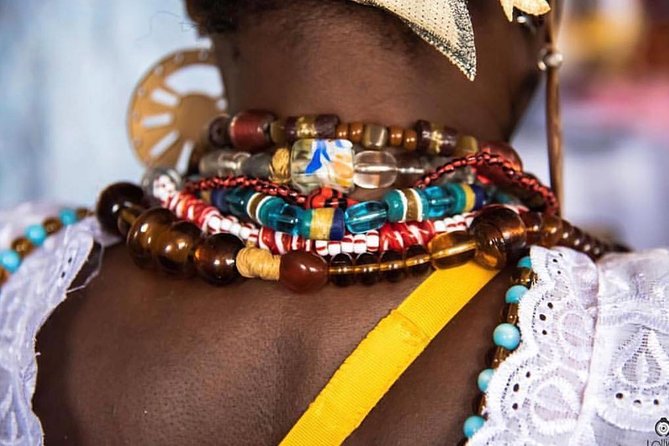
Next up is the Espaço Pierre Verger da Fotografia Baiana, a photography-focused stop. This is short at about 20 minutes, but it plays an important role. Museums explain. Temples teach. Photography connects you to what belief looks like in daily life and public celebrations.
You’ll see exhibitions tied to Pierre Verger, the French photographer and researcher who documented Afro-Brazilian culture, alongside contemporary photographers from Bahia. Expect to see images related to daily life, Candomblé traditions, popular celebrations, and African heritage in Salvador.
Why this matters: you get “before your eyes” proof that Candomblé symbolism is not locked away in theory. It shows up in community events, visuals, and lived culture. Even if you do not read every caption, the images can teach you how to recognize orixá references and how the communities express faith through everyday moments.
One practical note: admission to this photography space is not included. If you hate surprise fees, check the cost when you arrive or ask your guide before you step in.
A few more Salvador da Bahia options
- Private City Tour in Salvador
★ 5.0 · 110 reviews - Transfer Iberostar Waves Bahia / Praia do Forte – Private
★ 5.0 · 93 reviews - Afro-Brazilian Roots Private City Tour in Salvador
★ 4.7 · 88 reviews - Private Walking Tour of Salvador Pelourinho
★ 5.0 · 70 reviews
Rio Vermelho’s Iemanjá shrine and Casa do Benin’s Afro-Atlantic connections
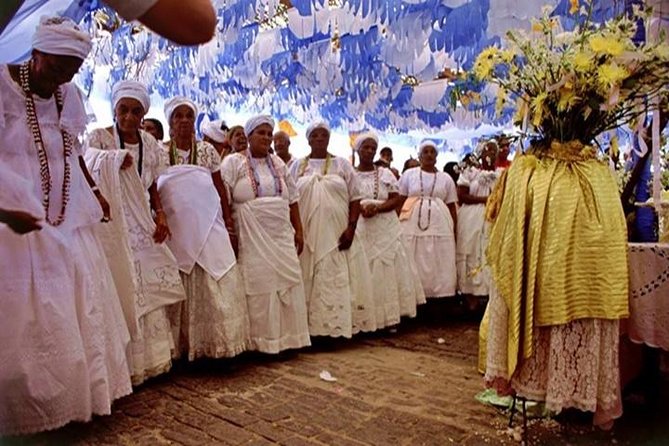
This tour does a clever thing by pairing two places tied to African connections, one through the sea and one through shared history.
Casa de Yemanjá
In Rio Vermelho, you’ll visit the Casa de Iemanjá, a symbolic oceanfront sacred space dedicated to Iemanjá, the Afro-Brazilian deity of the sea. It is a smaller shrine, but it preserves offerings, images, and symbolic objects left by devotees throughout the year.
Your time is about 20 minutes, and it is framed as a quiet, reflective moment. You’ll look toward the Atlantic, observe the traditional blue-and-white architecture, and learn how Iemanjá fits into local Candomblé and wider culture. The tour also points out the annual Festa de Iemanjá on February 2nd, which is one of Salvador’s most iconic celebrations.
Practical tip: keep your phone down unless you are sure photos are welcome. Sacred spaces can be strict about what is allowed, and the guide will help you follow the rules.
Casa do Benin
Then comes Casa do Benin, a cultural space celebrating historical ties between Salvador and Benin. This stop is also about 20 minutes and is free. Expect rooms filled with art, photography, sculptures, masks, textiles, and everyday objects that highlight Afro-Atlantic heritage.
The connection to Pierre Verger shows up again here through his photography and ethnographic work. The point is to help you see Salvador as part of a wider West African story, not as an isolated culture. Even if your brain wants a clean timeline, the best takeaway is cultural links, shared motifs, and how communities kept meaning alive across distance.
The Church of Our Lady of the Rosary of the Black People in Pelourinho
In Pelourinho, the tour adds a faith marker that is also a story of resistance. You’ll visit the Church of Our Lady of the Rosary of the Black People, built over nearly 100 years by enslaved and free Black artisans. That combination of oppression and agency is what gives this church its power.
Expect a striking blue façade and an interior with religious art. The stop focuses on the Black brotherhood that founded the church and its cultural significance in Salvador’s history.
This is one of those places where your guide’s pacing matters. If you spend the full time, you can connect the dots between Christianity in public architecture and African spiritual survival in community life. The tour keeps the message balanced: you are not being asked to compare faiths. You are being shown how identity, community, and sacred space can carry history forward in different forms.
Admission for this stop is included, which is a nice value win in a day that already has a paid museum component.
That favela walk: maroon history in street form
One of the highlights is a walk through a favela that originated from a maroon community, described as a historical haven for African slaves practicing Candomblé. Even though the detailed route name isn’t provided here, the concept is clear: you are not only learning in museums, you are seeing how survival communities shaped Salvador’s neighborhoods.
This is important context. You get a reminder that Candomblé did not grow in galleries. It grew in homes, courtyards, and places where people could protect each other. Walking this kind of neighborhood can make the whole day feel less like tourism and more like understanding how culture lives under pressure.
Practical note: for safety and respect, follow your guide’s instructions closely, stay with the group, and keep your questions thoughtful.
Transportation, timing, and why 4 hours feels about right
This is a private tour with round-trip hotel pickup and drop-off in Salvador, using an air-conditioned private vehicle. That matters because Salvador traffic and distances can change your day fast. Having your transport handled keeps you from turning a cultural half-day into a logistics problem.
The total duration is about 4 hours. The itinerary is tight but not frantic, because most stops range from 20 to 40 minutes. You will likely feel informed, not exhausted. If you have a longer stay, this tour works great as an “anchor” experience early in your Bahia planning. It gives you a mental map for later exploring Pelourinho and Rio Vermelho on your own.
Food is not included. If you have a sensitive stomach or low patience for fasting, plan a snack before you go, or schedule a meal after. Water helps too, especially on warmer days.
Dress code and site rules: the one thing that can ruin your day
Several places of worship and selected museums require a dress code. This is not a suggestion. You need knees and shoulders covered for both men and women. That means no shorts and no sleeveless tops. If you arrive dressed casually, you risk being refused entry.
So, think practical:
- Wear lightweight pants or long shorts that still cover knees
- Bring a light layer for shoulders if you tend to wear sleeveless tops
- Wear shoes that work for walking through museum corridors and outdoor areas
If you’re traveling from the beach, this is the moment to swap outfits before the tour starts.
Price value check: $120 for a 4-hour cultural day
At $120 per person for about 4 hours, the value comes from the access and guidance, not just the number of stops.
You are paying for:
- Hotel pickup and drop-off
- Private, air-conditioned transport
- A guide to explain Candomblé and the meaning behind sacred spaces
- Admission fees for multiple stops (including the Afro-Brazilian Museum and the Church of Our Lady of the Rosary of the Black People)
- Entry-related access at a terreiro community through authorized areas
On a pure ticket-only basis, you could probably pay less by building a museum day yourself. But this is different. The most valuable part is interpretation and the ability to visit a living religious community on a schedule that respects the house and the religious calendar.
One more value clue: bookings tend to be planned ahead, with an average of about 15 days in advance. If you want a specific departure time that matches your schedule, reserve early.
Should you book Mysteries of Candomblé?
Book this tour if you want a focused introduction to Afro-Brazilian religion in Salvador with real context. The combination of museum grounding, a terreiro visit, and art-led stops (Carybé, Pierre Verger, and Tati Moreno) makes it a strong option for first-timers who want more than postcards.
Skip it only if you want a long, ritual-heavy experience. This tour is framed as a respectful daytime educational visit. You can get an oracle consult opportunity, but you are not being promised full ceremony participation.
Finally, if you care about getting explanations that actually make sense, look for that “clear English, thoughtful framing” vibe that people have praised in past experiences. With the right guide, you’ll walk away with a better sense of how Candomblé ties African heritage to identity today.
FAQ
How long is the Mysteries of Candomblé tour?
It runs for about 4 hours.
How much does the tour cost?
The price is $120.00 per person.
What is included in the price?
Hotel or port pickup and drop-off, air-conditioned private vehicle transport, a tour guide, and entrance fees for included stops are listed as included.
What locations do you visit during the tour?
You visit the Afro-Brazilian Museum in Pelourinho, one Candomblé terreiro (either Kwe Vodun Zo or Ilê Axé Oxumarê depending on availability and the calendar), Dique do Tororo, the Espaco Pierre Verger da Fotografia Baiana, Casa de Yemanjá in Rio Vermelho, Casa do Benin, and the Church of Our Lady of the Rosary of the Black People in Pelourinho.
Do I need to pay for everything at the stops?
Admission to the Afro-Brazilian Museum and the Church of Our Lady of the Rosary of the Black People is included. Admission to the Espaco Pierre Verger da Fotografia Baiana is not included, while Dique do Tororo, Casa de Yemanjá, and Casa do Benin are listed as free.
What is the dress code requirement?
You must cover knees and shoulders. No shorts or sleeveless tops. If you do not follow this, entry may be refused.
Do you participate in Candomblé rituals?
The tour is described as a respectful daytime educational visit and is not participation in rituals or ceremonies. You may have an opportunity to consult the sacred oracle during the terreiro visit.
Is food and drinks included?
No, food and drinks are not included.
Is this tour private?
Yes. It is a private tour or activity, and only your group participates.
What is the cancellation policy?
Free cancellation is available. You can cancel up to 24 hours in advance for a full refund.
Newest Salvador da Bahia reviews
- Cultural Folkloric Show and Dinner in Salvador★ 4.5 · 15 reviews
- Transfer Vila Galé Marés (Guarajuba) – Private★ 5.0 · 15 reviews
- Tour to Praia do Forte and Guarajuba★ 4.0 · 16 reviews
- Private City Tour of Salvador da Bahia★ 5.0 · 17 reviews
- 3-Hour Private Tour of Salvador Capital Afro-Brazilian★ 5.0 · 17 reviews
- Afro-Brazilian Roots city Tour in Salvador with lunch at Favela★ 5.0 · 17 reviews
- Salvador African Heritage Private City Tour Including Afro Museum★ 4.5 · 18 reviews
- Morro de São Paulo Tour, Leaving Salvador-Bahia.★ 5.0 · 18 reviews
Salvador Tours, compared.


Salvador City Tour – Discover Brazil’s First Capital En, It, Es
Read our review →
Cooking class in Salvador, an authentic dinning experience
Read our review →
Tour to the Frades Islands and Itaparica, from Salvador – Ba
Read our review →
Transfer Salvador Airport / Hotel Litoral Norte
Read our review →


Tour Praia do Forte and Guarajuba, Leaving Salvador-Bahia.
Read our review →Browse the lists this tour appears in