
Reviewed · SALVADOR & PELOURINHO
Salvador: Traditional Drumming and Percussion Workshop
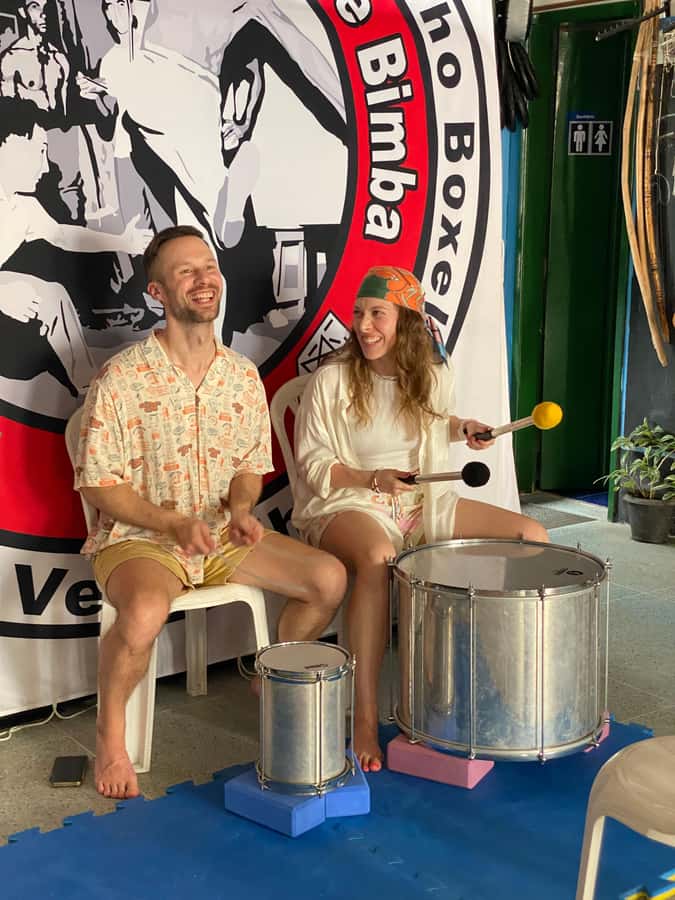
At Associação de Capoeira Mestre Bimba, you get Afro-Brazilian percussion training inside a place tied to Quilombo resistance and resilience. It is a hands-on hour where the culture is not just explained, it is played.
I love two things here: the class is beginner-friendly, and you get instructor guidance while learning beats and movement basics. It is also structured so you can follow along even without prior musical experience.
One thing to consider is English support can vary. One participant noted a language mismatch, so if you want English as the main language, it is worth being ready to work around it.
Key things I’d bank on
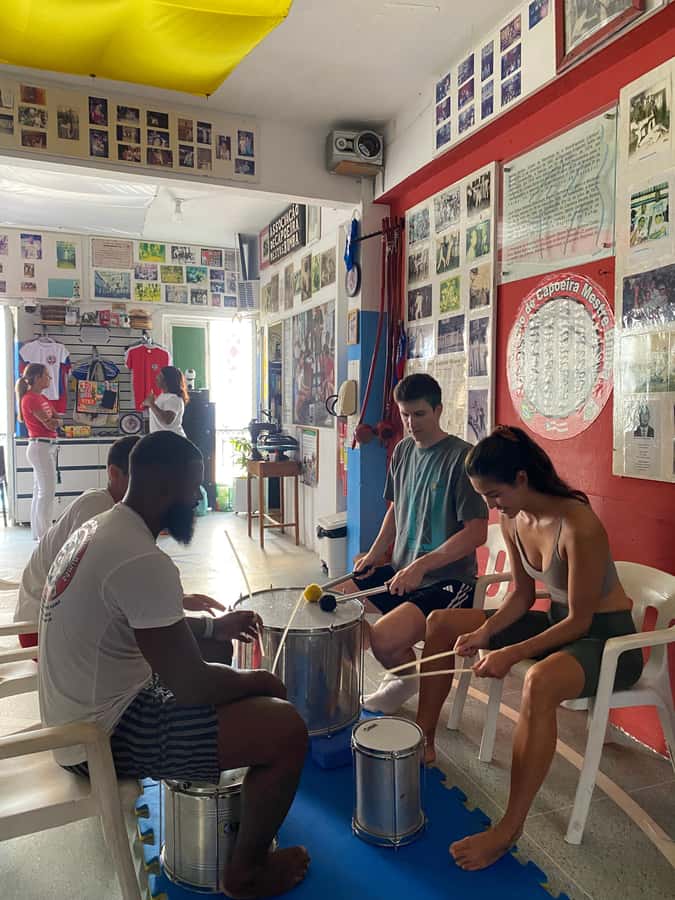
- Afro-Brazilian percussion practice in a small setting (limited to 10 participants)
- No musical experience required, you learn technique and timing step by step
- Culture and history explained alongside the drumming, not tacked on at the end
- A strong connection to Quilombo resistance tied to Mestre Bimba’s school
- A full hour that feels practical, enough time to leave with usable rhythms
Entering Mestre Bimba’s School in Salvador’s Historic Center
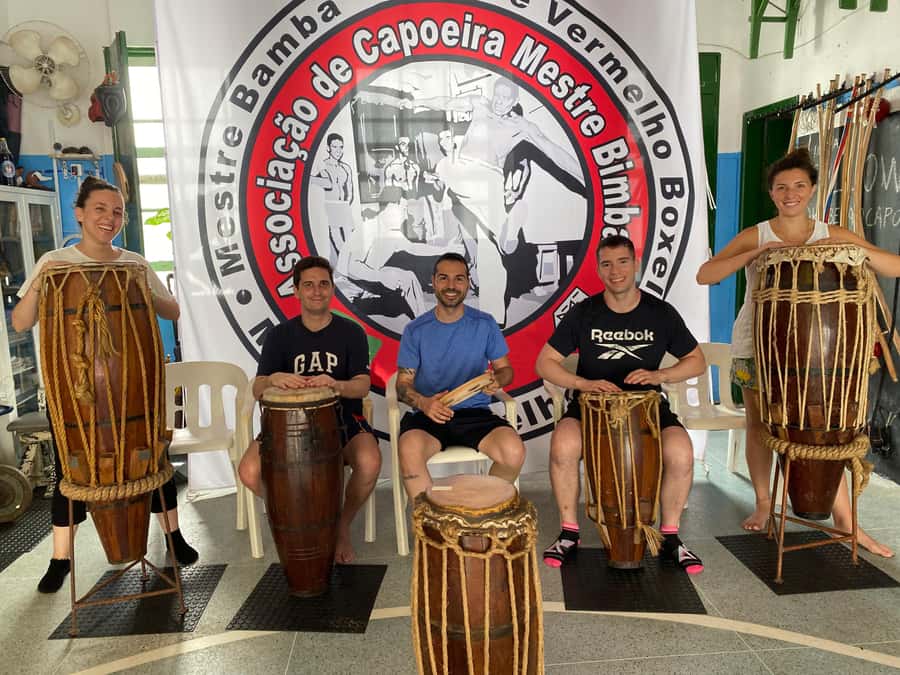
This workshop takes place at Associação de Capoeira Mestre Bimba, and that matters more than you’d think. You are not sitting in a generic performance venue. You are learning rhythms in the kind of community setting where capoeira and percussion are treated as living practice.
Finding it is straightforward if you know the landmarks. Plan to aim for the area around Largo do Terreiro de Jesus. For orientation, use nearby reference points such as Ó Paí Ó Restaurante and São Domingos Gusmão Church. Since there is no hotel pickup, you will want to build in a little extra time to walk over and get settled.
If you are pairing this with sightseeing, I’d schedule it while you are already in the Pelourinho area. The workshop is short, so being close by makes the rest of your day easier to manage. You can keep momentum instead of losing it to transit.
More of Salvador and the Pelourinho:
- Round trip transfer, Salvador, Bahia, Brazil
★ 5.0 · 228 reviews - Salvador City Tour – Discover Brazil’s First Capital En, It, Es
★ 5.0 · 217 reviews - Cooking class in Salvador, an authentic dinning experience
★ 5.0 · 132 reviews
Your 1-Hour Plan: From First Beat to Recognizable Rhythm
The workshop runs for 1 hour, and it is built for real beginners. The goal is not to turn you into a percussionist overnight. The goal is to get your body and ears aligned with Afro-Brazilian rhythm so you can actually participate.
You can expect the instructor to start by showing what to do and how to hold your posture. One class experience highlighted how the teacher took time to demonstrate good gestures and postures, plus showed more than one way to play. That is a big deal. When someone corrects your basics early, you stop fighting the rhythm and start riding it.
From there, you will practice. You will learn beats and movements, and you will get cultural context as the class goes. The teaching style is meant to be interactive, not just a lecture. In plain terms, you should be ready to clap, tap, follow patterns, and repeat until it makes sense.
Because it is small (up to 10 people), the instructor can give feedback without the class turning into a one-size-fits-all performance. That feedback loop is what helps an inexperienced person feel confident quickly.
Is one hour short? It can be, depending on your goals. But in this case, one participant felt the hour was plenty for a solid introduction. If you are looking for a starter session that you can build on later, this timing works.
Why the Quilombo Story Changes How You Hear the Drums
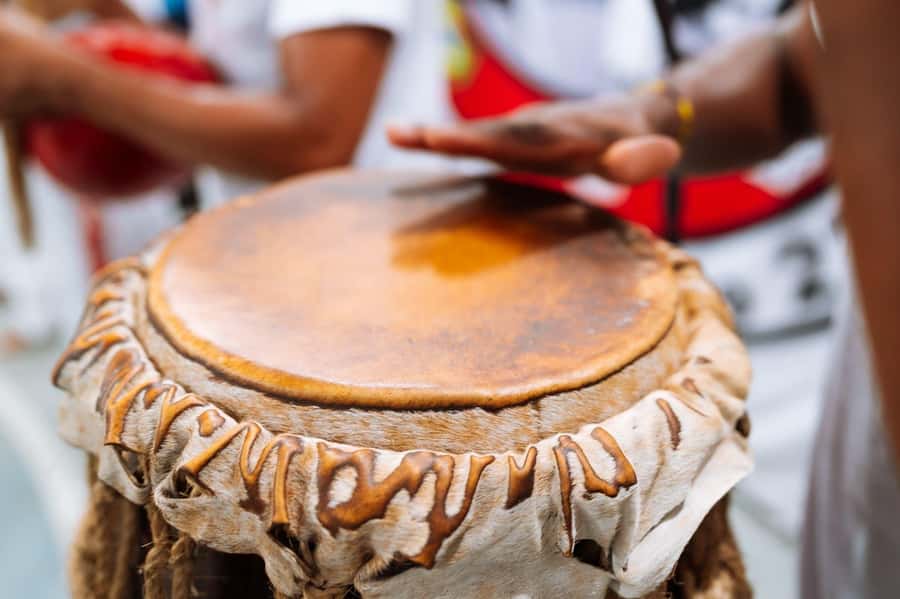
This is not just a rhythm lesson. The workshop frames percussion as part of a broader Afro-Brazilian story tied to Quilombo resistance.
During the late 19th century, practices like capoeira, samba, and drumming faced suspicion and were often criminalized. Over time, those arts changed from persecuted practices into signals of national identity. That historical arc is the backdrop for why you are learning these patterns here, at this particular school.
When an instructor connects the beats to that context, you hear more than sound. You hear purpose. You understand why the rhythm matters socially, not just musically.
For you, that means the workshop can feel more meaningful than a typical “try the instrument for a photo” activity. You leave with an explanation for what you just did, so it sticks.
Beats, Posture, and the Non-Musician Advantage
You do not need prior musical experience, and that is one of the most valuable parts of the offering. Many music activities assume you know how to keep time. Here, you start with guidance.
What makes the instruction feel manageable is the focus on body mechanics. Good posture and hand or strike technique show up early, then you apply it to simple rhythmic patterns. That approach helps because percussion is physical. If your posture is off, your timing will be off too.
One participant specifically praised attentive, step-by-step instruction and the chance to learn different ways of playing. That matters because Afro-Brazilian rhythm is not one flat beat. Even within a short workshop, you should get at least a sense of variation.
Also, do not underestimate how quickly your coordination improves when you are surrounded by people doing the same thing. In a group of 10, you are not hidden in the back row. You participate in a way that feels social but still guided.
A few more Salvador da Bahia options
- 4h Cooking Class in Salvador with 9 Recipes & Bottomless Drinks
★ 5.0 · 73 reviews - Salvador: Capoeira Class at Mestre Bimba’s 1st Ever School.
★ 4.9 · 34 reviews - Salvador: CAPOEIRA CLASS – CULTURAL
★ 4.6 · 13 reviews - Salvador: 3-Hour Percussion Class
★ 4.9 · 10 reviews
Instructor Languages: What to Expect and What to Watch
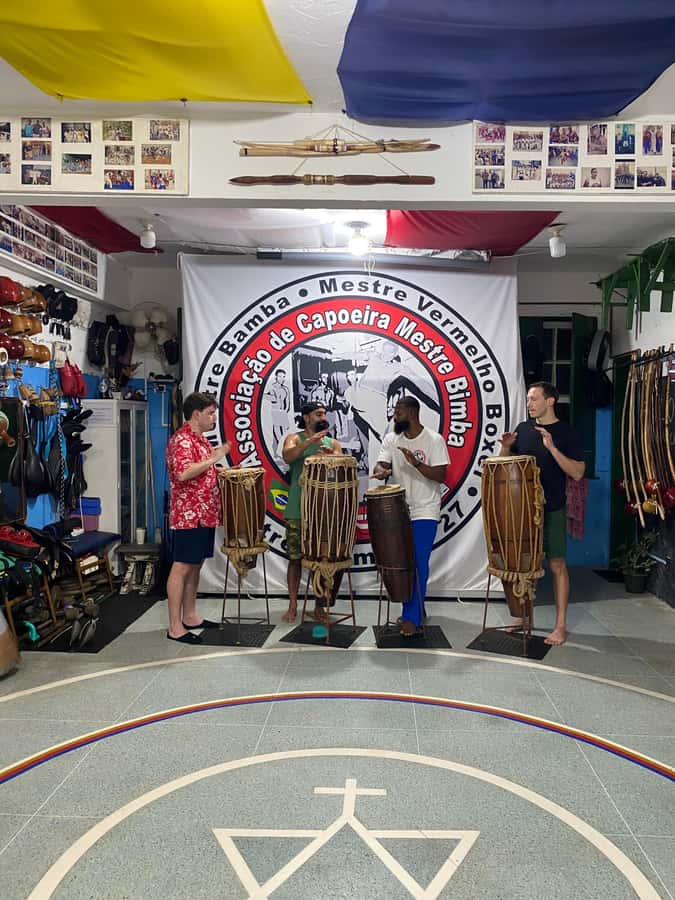
The instructor is listed as speaking Portuguese and English, and that is a plus for international visitors. But one participant reported an issue where the teacher did not speak English despite it being booked. So I would treat the language plan as helpful, not guaranteed.
What can you do with that?
- If you speak some Portuguese, even basic phrases will help you follow along faster.
- If you rely completely on English, plan to be flexible in how you communicate during feedback. Rhythm is visual too, so you can still learn by watching and copying.
- Ask yourself whether you want the lesson mainly for participation and culture, or mainly for detailed verbal explanation in English. This workshop offers both, but your comfort level can affect how much you catch in the moment.
One name that showed up in a positive teaching experience is Yasmin, described as patient and kind, and as someone who provided thoughtful instruction with capoeira percussion instruments and drumming. If you are matched with an instructor in that teaching style, you will likely feel supported even when you are learning something new.
Getting Your Money’s Worth at $43 for an Hour of Teaching
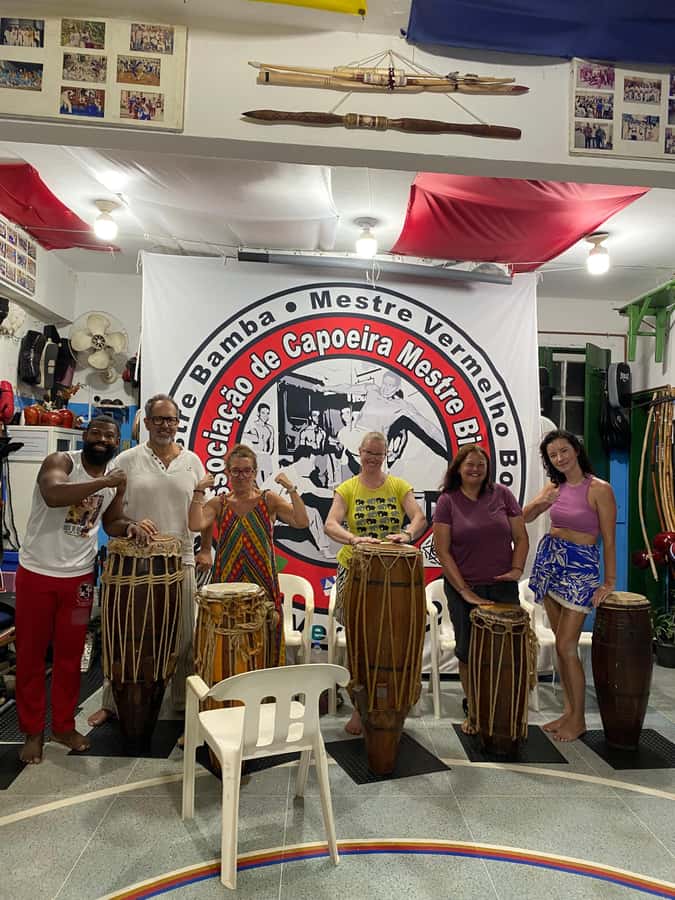
At $43 per person for 1 hour, this workshop is priced like an instructor-led cultural experience. It includes the drumming workshop and the instructor, which is the main cost driver.
What is not included? Hotel pickup and drop-off, and meals and beverages. That means the real “value” depends on how efficiently you can reach the meeting point and how you plan food around it.
Here is the practical way to think about it: if you are already in or near Pelourinho, you can treat this like a high-value add-on. You spend $43, you get training plus history context, and you do not have to lose time on transport logistics.
If you are staying far away, the lack of pickup could make it feel less convenient. Still doable, but you should account for walking time and transit so the class does not eat into your day.
Also, the group is small, so you are paying for more direct attention than a big show-type workshop. That is where the price tends to make sense.
Fit This Into Your Day: Walkable Salvador, Short and Focused
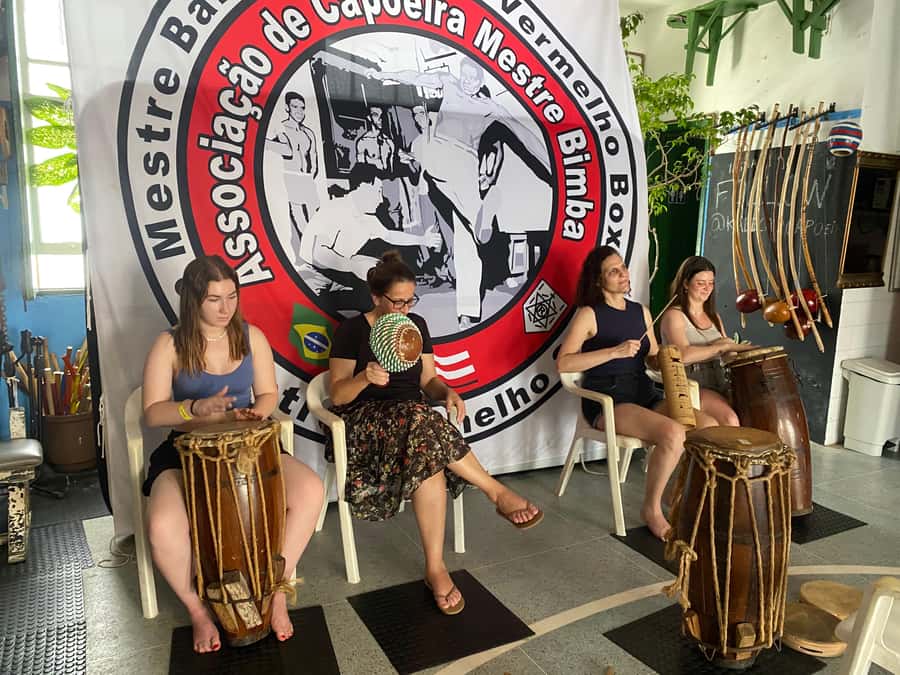
The meeting point location is in the historic center area around Largo do Terreiro de Jesus. That makes this activity easy to combine with other Salvador stops because you are already where tourists tend to spend time.
One participant tied the experience to an afternoon plan, saying it worked well alongside sightseeing in the Pelourinho area and even during Carnaval celebrations. Even if you are not in Carnaval season, the basic idea holds: a one-hour class is a good anchor activity.
Here’s how I would schedule it:
- Go to the class when you want a break from long walking.
- After the workshop, continue sightseeing with your energy back up, not down.
- Eat before or after, since no meals are included.
For clothing, you’ll be learning beats and movements. That strongly suggests wearing something you can move in and that won’t restrict your arms or hands. Keep it simple and comfortable.
Who Should Book This Drumming Workshop (and Who Might Want Options)
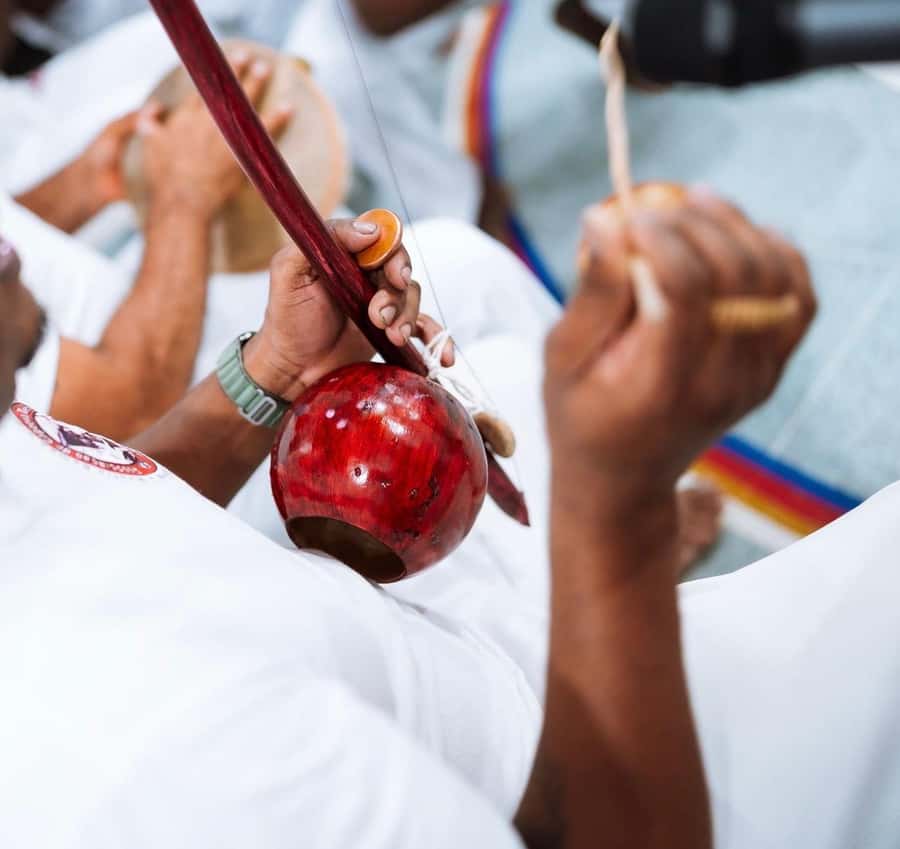
Book it if:
- You want a hands-on introduction to Afro-Brazilian percussion.
- You like learning cultural context, not just doing a physical activity.
- You have no musical background and still want to feel capable in an hour.
- You prefer a small group format where you are not lost in a crowd.
Be cautious if:
- You need a strictly English-led explanation with no language friction.
- You are the type who wants long-form instruction. This is a short session, so it is best as a start, not a complete training program.
This activity is especially well-suited for first-timers in Salvador who want to feel the rhythm of the city and understand why percussion and capoeira rhythms are linked to community identity.
Should You Book It?
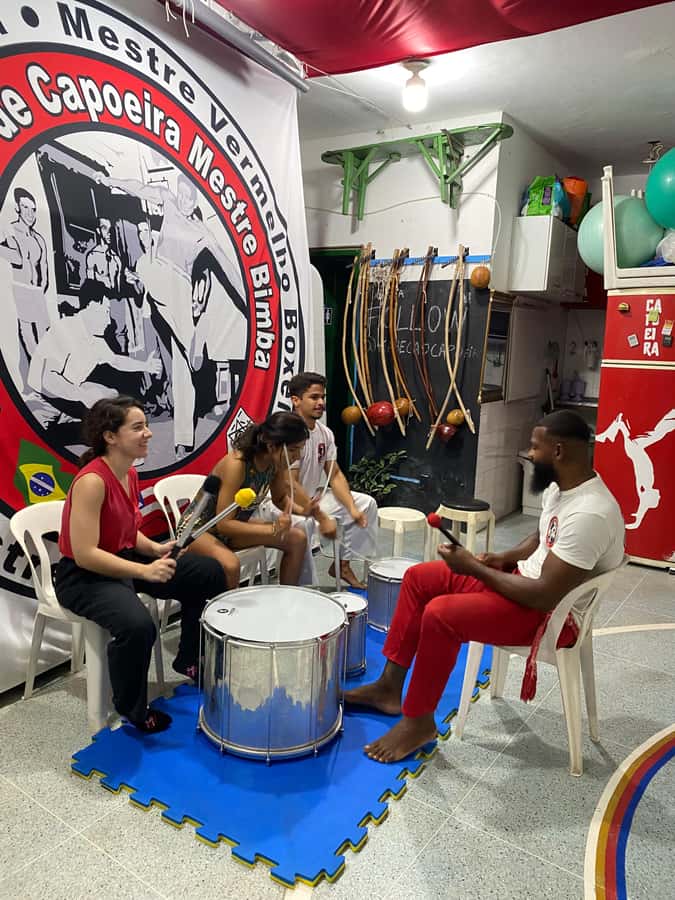
I think you should book it if you want a beginner-friendly, instructor-led way to learn percussion with cultural framing at Associação de Capoeira Mestre Bimba. The small group size, the hands-on format, and the focus on posture and participation make it a smart choice for people who learn by doing.
If English is your non-negotiable requirement, go in with realistic expectations and plan to learn through watching as much as listening. For everyone else, it is a well-priced hour that turns Salvador culture into something you can actually make with your own hands.
FAQ
Where is the meeting point for the workshop?
The meeting point is at Associação de Capoeira Mestre Bimba, near Largo do Terreiro de Jesus. Helpful nearby landmarks include Ó Paí Ó Restaurante and São Domingos Gusmão Church.
Is hotel pickup and drop-off included?
No. Hotel pickup and drop-off are not included, and there is no pickup service.
How long is the drumming workshop?
The workshop lasts 1 hour.
Do I need prior musical experience?
No. You do not need any prior musical experience.
What languages does the instructor speak?
The instructor speaks Portuguese and English.
How big is the group?
This is a small group, limited to 10 participants.
What is included in the price?
The price includes the drumming workshop and the instructor.
Is cancellation allowed?
Yes. You can cancel up to 24 hours in advance for a full refund.
Is pay later available?
Yes. You can reserve now and pay later, so you can book your spot without paying immediately.
Newest Salvador da Bahia reviews
- Cultural Folkloric Show and Dinner in Salvador★ 4.5 · 15 reviews
- Transfer Vila Galé Marés (Guarajuba) – Private★ 5.0 · 15 reviews
- Tour to Praia do Forte and Guarajuba★ 4.0 · 16 reviews
- Private City Tour of Salvador da Bahia★ 5.0 · 17 reviews
- 3-Hour Private Tour of Salvador Capital Afro-Brazilian★ 5.0 · 17 reviews
- Afro-Brazilian Roots city Tour in Salvador with lunch at Favela★ 5.0 · 17 reviews
- Salvador African Heritage Private City Tour Including Afro Museum★ 4.5 · 18 reviews
- Morro de São Paulo Tour, Leaving Salvador-Bahia.★ 5.0 · 18 reviews
Salvador & Pelourinho, compared.


Salvador City Tour – Discover Brazil’s First Capital En, It, Es
Read our review →
Cooking class in Salvador, an authentic dinning experience
Read our review →
Tour to the Frades Islands and Itaparica, from Salvador – Ba
Read our review →
Transfer Salvador Airport / Hotel Litoral Norte
Read our review →


Tour Praia do Forte and Guarajuba, Leaving Salvador-Bahia.
Read our review →Browse the lists this tour appears in