
Reviewed · SALVADOR & PELOURINHO
3-Hour Private Tour of Salvador Capital Afro-Brazilian
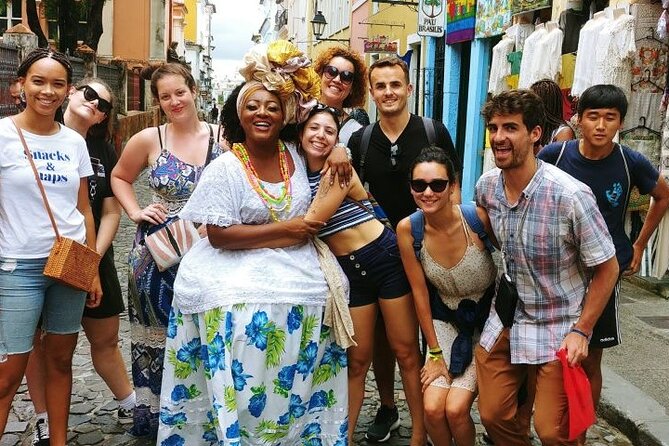
This private walking tour in Salvador da Bahia is interesting because it connects the city’s streets to African roots, not as a side note, but as the main storyline. I especially like the stop at Casa do Benin, with its collection built from pieces linked to the Gulf of Benin, collected by French photographer Pierre Verger. It is the kind of visit where you start noticing patterns, even if you arrived knowing only the basics.
What I like just as much is how the tour mixes faith, education, and street culture into one route. You will see places tied to Carnival education through Olodum, plus the role of music and dance like samba and capoeira, and you will hear it explained by guides such as Adilson (and Eduardo), who are known for pacing the walk and answering questions calmly. The main drawback to consider is price, since if you already study African history in the diaspora, the experience may feel like more money than you need.
Key highlights you should know before you go
- Casa do Benin connects Salvador to the Gulf of Benin through a collection linked to Pierre Verger’s field work
- Olodum shows how Carnival ties to cultural and educational work, not just parades
- Samba and capoeira come up at the Church and Convent of São Francisco, so you hear the story and feel the rhythm
- Museum visits cover identity, slavery, Black resistance, and quilombos in one stop
- The Conceição Hydraulic Elevator (Parafuso) is a quick city moment that turns into a view of everyday life in motion
Meeting at the Cathedral, then walking into Salvador’s Afro-Brazilian core
The tour starts at 2pm outside the Cathedral Basilica of San Salvador on Largo Terreiro de Jesus. From the beginning, the plan is simple: you walk, you stop often, and the guide keeps the story focused on African influence in Salvador.
This is a private format, so you are not competing with strangers for space near the most interesting exhibits or outside the most crowded corners. It is also a good length. The schedule is listed as about 2 to 3 hours, and the stops are short enough that you can keep your energy for the full route, as long as you have a moderate fitness level for walking.
One practical thing to plan around: bottled water is not included. In Salvador, hydration matters, especially if your afternoon is warm. I also suggest bringing a small umbrella or light rain layer if the forecast looks iffy, since this experience requires good weather.
More of Salvador and the Pelourinho:
- Round trip transfer, Salvador, Bahia, Brazil
★ 5.0 · 228 reviews - Salvador City Tour – Discover Brazil’s First Capital En, It, Es
★ 5.0 · 217 reviews - Cooking class in Salvador, an authentic dinning experience
★ 5.0 · 132 reviews
Terreiro de Jesus and Casa do Benin: colonial power meets African connections
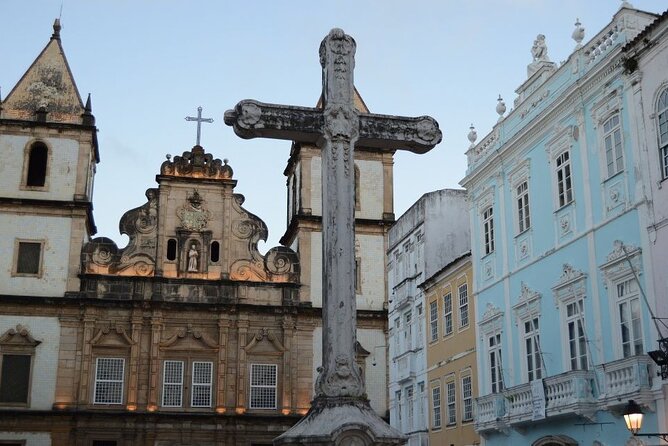
Your first formal stop is Praca Terreiro de Jesus, where you learn how this part of Brazil was shaped through colonization and Jesuit missions. Even if you have read a bit about Brazil before, I like that this is not presented as a distant timeline. You start with place, then you move outward from there.
Then the tour moves to Casa do Benin, one of the most direct “link-the-dots” stops on the route. The museum holds a collection of around 200 pieces originating from the Gulf of Benin, gathered during visits to Africa by French photographer Pierre Verger. It also includes Afro-diasporic pieces donated by artists and institutions.
Why this stop feels valuable: it helps you understand that the African presence in Bahia was not just implied. It was carried through objects, people, and knowledge, even when colonial systems tried to erase or control them. If you like museum visits that change how you see the city streets, this is the one.
Time-wise, it is roughly 25 minutes, which is long enough to look closely without turning into a rushed checklist.
Olodum School and Carnival: when rhythm becomes education
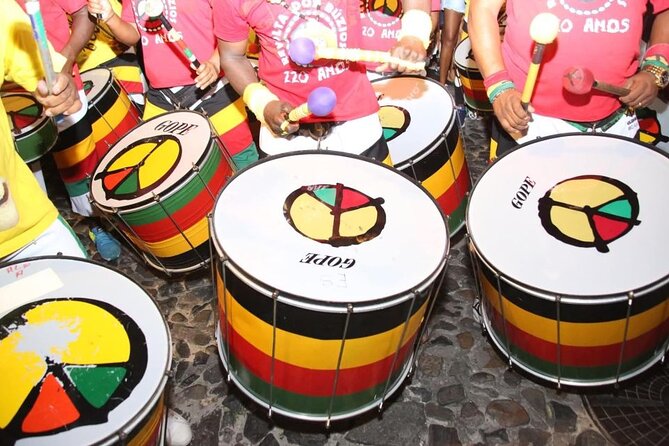
Next up is Olodum, at the Afro-descendant cultural and educational center. Here, the tour focuses on why Carnival matters in Salvador. This is not just a story about costumes and drums. You hear how cultural identity, schooling, and community work connect through Carnival.
You get about 20 minutes at this stop, and because the focus is on the center’s role, you should come ready to think a little. If you only want photos and quick facts, this part might feel more reflective than expected. But if you enjoy culture as a system, it is a strong middle of the tour.
A small tip for your experience: watch how the guide ties the Carnival story back to what you saw earlier at Terreiro de Jesus and Casa do Benin. That “thread” is what makes the route more than a series of separate stops.
São Francisco Church and Convent: brotherhood, liberation, and music
One of the most lively stops is Igreja e Convento de São Francisco. Admission here is listed as free, and the time slot is short, about 15 minutes, so it works well as an energy boost.
The guide explains the birth in the 19th century of a male organization aimed at helping the Black community of Salvador fight for liberation. In the same stop, you also connect this to African cultural expressions like samba and capoeira dances.
This mix matters. Salvador’s story is not only political or only spiritual. It is both, often at the same time. You will likely feel that most when the guide talks about rhythms and movement. Even if you are not a dancer, it makes the history easier to hold in your mind.
A few more Salvador da Bahia options
- Exclusive & Private Walking Tour in Pelourinho Salvador 3 hours
★ 5.0 · 20 reviews - Salvador: 3-Hour Percussion Class
★ 4.9 · 10 reviews - 3 Hour Rocinha Favela Walking Tour with a Local Guide
★ 5.0 · 833 reviews - 3-Hour Tasting Session in Rio with 33 Foods Brazilians Love
★ 5.0 · 220 reviews
Angola House: keeping cultural ties through a modern Afro-Brazilian center
After São Francisco, you head to Casa de Angola, the cultural center in a colonial mansion built in the 18th century. Angola House (as it is described in the tour) was founded on November 5, 1999, with the goal of keeping and strengthening cultural ties between Brazil and Angola.
This stop is about 25 minutes, and admission is included. What I like here is the balance of time. You get older architecture, then a modern mission statement. The message is that African influence in Bahia is not frozen in the past. It is ongoing in language, food, music, behavior, and religious manifestations, just as the tour framing suggests.
If you tend to prefer cultural stops with a clear purpose, this one will land well.
Cultural Afro-Brazilian Museum: identity, resistance, and the lived consequences of slavery
The Cultural Afro Brazilian Museum is one of the longer stops, around 40 minutes, and admission is included. This is where the tour takes a more direct look at Black identity and the forces that tried to shape it.
You will encounter themes such as:
- Black identity and the idea of Africa as the continent from which all humanity originated
- the history of people who were enslaved through trafficking
- Black resistance, including quilombos and revolts
- contributions to cuisine, religion, and popular festivals
- sports and music, including samba, semba, maracatu, and others
I like that the museum is not treated as a single-topic exhibit. It is presented as a whole web: how people resisted, how community life formed, and how culture kept going even under pressure.
One caution: this is an emotional subject. If you know you want gentler context on slavery and resistance, you might pace yourself. The good news is your guide can take the story in a way that matches your group’s questions, and in past tours, guides like Adilson have asked if people need breaks.
Church of Our Lady of the Rosary of the Black People: faith with an African slant
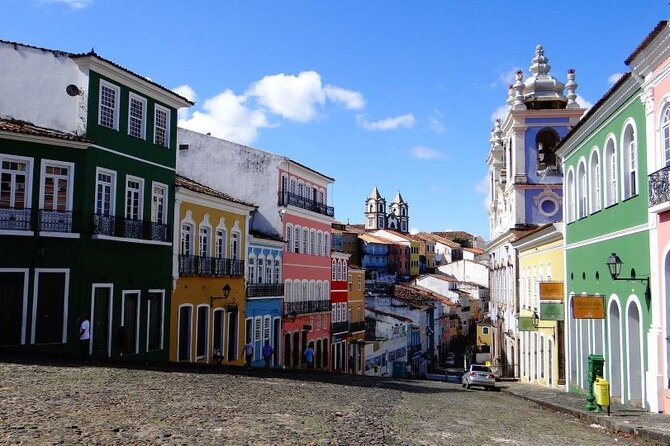
The next stop is Church of Our Lady of the Rosary of the Black People. Admission is listed as free, and time is about 20 minutes.
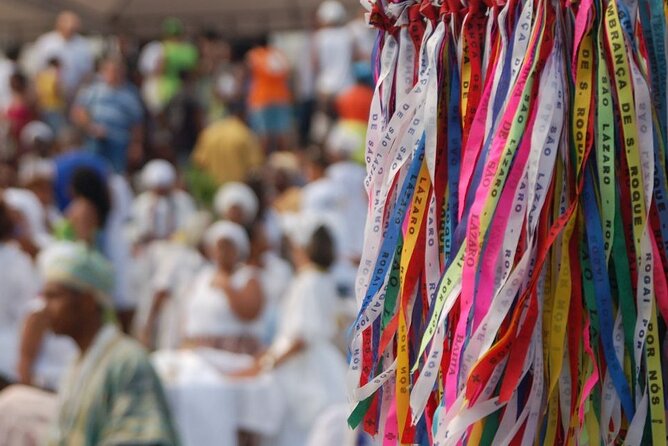
Here, the tour explains the purpose of worship tied to the Virgin of the Rosary, along with the commitment to rules of the association. It also mentions the Venerable Third Order of the Rosary of Our Lady at the Gates of Mount Carmel, a Roman Catholic apostolic brotherhood with an African slant. The tour notes that it has maintained its characteristics for more than three centuries as an African territory in the diaspora.
Why this stop is worth your attention: Salvador’s Afro-Brazilian story often shows up most clearly where faith and community traditions overlap. This is not presented as a side curiosity. It is a core part of how people organized life, belonging, and continuity.
If you are the type of traveler who enjoys places with living tradition, you will probably enjoy this one more than the purely museum-focused stops.
The Conceição Hydraulic Elevator (Parafuso): a 20-second ride that changes your viewpoint
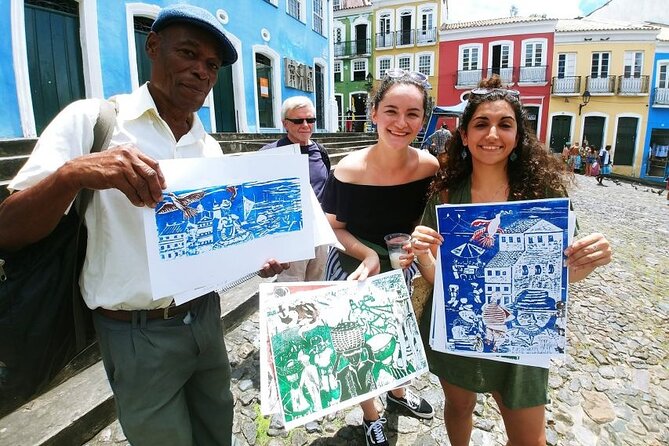
The route includes the Conceição Hydraulic Elevator, once called Parafuso. The tour frames it as the first urban elevator in the world, opened in 1873, and described as the tallest at the time, reaching 63 meters.
It connects Bairro do Comércio to Cidade Alta, with a journey time of around 20 seconds if there is no queue. On party days, the tour notes the elevator can be used as everyday public transport by local people.
You do not need to be a transportation nerd to enjoy this stop. It works because it gives you a quick shift from “history on walls” to “city in motion.” Even if you only get a brief look and a short ride, it helps you understand how Salvador operates day to day.
Price and timing: is $56.10 per person good value?
The price is $56.10 per person for a private experience lasting about 2 to 3 hours. Based on booking patterns, it is often reserved roughly 21 days in advance, which suggests it is in demand.
Value is where this tour makes a strong case. Several stops have admission included: Praca Terreiro de Jesus, Casa do Benin, Angola House, and the Cultural Afro-Brazilian Museum. Other stops are listed as free, including Olodum, the São Francisco church and convent, and the Black People Rosary church.
So you are not just paying for a guide and a walk. You are also paying for access to multiple cultural sites in one focused route. For a private group, that bundled access can be a real time-saver, especially if you would otherwise have to coordinate tickets and arrival times across different parts of the Pelourinho area.
The one caveat echoes that review-style concern: if you already know the diaspora history well, you may feel like some explanations overlap with what you already study. On the other hand, the route’s strength is in how it ties the sites together, not only in the facts.
What to expect on the ground: walking pace, guide style, and small practical tips
This tour is designed for a moderate physical fitness level. The stops are relatively close, but you are still outdoors and moving through older neighborhoods, so plan for uneven surfaces and sun or rain.
Your guide meets you at the cathedral and ends at Largo do Pelourinho. That end location is convenient if you plan to keep exploring Pelourinho after the tour, whether that means browsing shops, looking at more churches, or finding a late lunch.
Your guide is provided in the selected language, and the tour uses a mobile ticket. It is also private, meaning only your group participates. Service animals are allowed, and the meeting point is near public transportation.
Two small “make it better” tips:
- bring a water bottle since bottled water is not included
- wear shoes you trust, since you will likely be on streets with some rough edges
Who this tour fits best
This experience is a great match if you want Salvador’s Afro-Brazilian legacy to feel organized, human, and place-based. It also works well if you enjoy a mix of museums and cultural institutions, plus a bit of “how people live” in the city, like the Parafuso elevator.
You will probably get the most from it if you:
- like guided explanations that connect culture, religion, and history
- want a manageable half-afternoon that includes multiple admissions
- want to see Pelourinho area sites without doing the planning puzzle yourself
If you prefer a tour that is mostly visual and light on context, you might find some stops heavier, especially the slavery and resistance themes in the museum.
Should you book this 3-hour private tour of Salvador’s Afro-Brazilian legacy?
I’d book it if you want a structured way to understand why Salvador’s Afro-Brazilian culture is visible in churches, schools, museums, and even transportation. The stop selection is tightly focused, and the fact that multiple admission tickets are included helps justify the price for a private format.
Skip it or consider another option if you are already deeply immersed in this exact subject area and you want less explanation per stop. Also, keep an eye on weather, since the tour requires good conditions.
If you do go, arrive a few minutes early, ask questions as they come up, and take the guide’s tempo seriously. Past guides such as Eduardo and Adilson have been praised for being patient, taking time with explanations, and checking in about breaks, which makes the whole afternoon feel smoother.
FAQ
Where is the meeting point and what time does the tour start?
You meet at 2pm in front of the Cathedral Basilica of San Salvador, Largo Terreiro de Jesus, s/n, in Salvador, BA. The tour ends at Largo do Pelourinho in Pelourinho.
How long is the tour?
The tour is listed as about 2 to 3 hours.
Is this a private tour or shared with other people?
It is a private tour/activity, meaning only your group will participate.
Are entrance tickets included for the stops?
Some stops include admission tickets, including Praca Terreiro de Jesus, Casa do Benin, Angola House, and the Cultural Afro Brazilian Museum. Other stops are listed as free, including Olodum, Igreja e Convento de São Francisco, and Church of Our Lady of the Rosary of the Black People.
Is bottled water included?
No. Bottled water is not included.
What is the Conceição Hydraulic Elevator called, and how long is the ride?
The elevator is called the Conceição Hydraulic Elevator and it is also popularly called Parafuso. It connects Bairro do Comércio to Cidade Alta and the journey is approximately 20 seconds when there is no queue.
What is the cancellation policy?
You can cancel for a full refund up to 24 hours in advance. If you cancel less than 24 hours before the experience starts, the amount you paid will not be refunded. The tour also requires good weather, and if it is canceled due to poor weather you will be offered a different date or a full refund.
Newest Salvador da Bahia reviews
- Cultural Folkloric Show and Dinner in Salvador★ 4.5 · 15 reviews
- Transfer Vila Galé Marés (Guarajuba) – Private★ 5.0 · 15 reviews
- Tour to Praia do Forte and Guarajuba★ 4.0 · 16 reviews
- Private City Tour of Salvador da Bahia★ 5.0 · 17 reviews
- Afro-Brazilian Roots city Tour in Salvador with lunch at Favela★ 5.0 · 17 reviews
- Salvador African Heritage Private City Tour Including Afro Museum★ 4.5 · 18 reviews
- Morro de São Paulo Tour, Leaving Salvador-Bahia.★ 5.0 · 18 reviews
- Private Historical Tour 5 hours★ 4.5 · 19 reviews
Salvador & Pelourinho, compared.


Salvador City Tour – Discover Brazil’s First Capital En, It, Es
Read our review →
Cooking class in Salvador, an authentic dinning experience
Read our review →
Tour to the Frades Islands and Itaparica, from Salvador – Ba
Read our review →
Transfer Salvador Airport / Hotel Litoral Norte
Read our review →


Tour Praia do Forte and Guarajuba, Leaving Salvador-Bahia.
Read our review →Browse the lists this tour appears in