
Reviewed · HISTORICAL TOURS IN RIO DE JANEIRO
Rio Walking & Historical Tour
If you want Rio beyond the beaches, this Centro Rio historical walk is a great way to get your bearings fast. You’ll follow a Rio native guide past big name sites like the Theatro Municipal and the royal-era Paço Imperial, with lots of real-world stories along the way.
I like the hands-on pace. It is built for a small group, and it lets guides like Heraclito, aka Kiko and Tauan explain how the city layers colonial Brazil, empire, and modern institutions in the same blocks. I also like that several stops have admission listed as free, so you control the extra spending. One heads-up: this is a walking tour. Plan on spending serious time on your feet, and it is not recommended if walking is difficult, since the route includes church areas on hills.
Key highlights at a glance
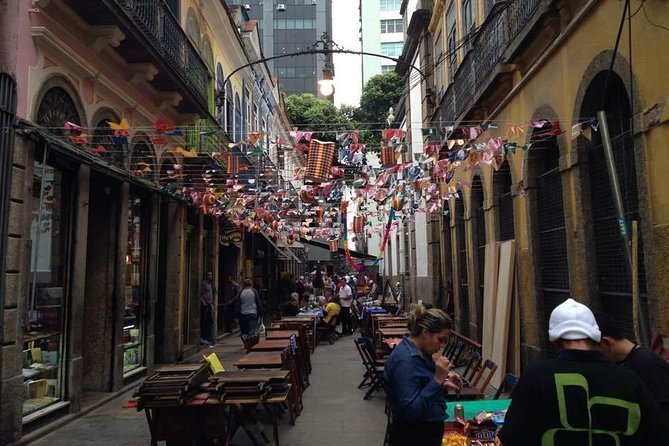
- Small-group size (max 14) helps the guide keep things personal and paced.
- Centro landmarks you can actually reach on foot, from theaters and palaces to church interiors.
- Free-admission stops on many key buildings, with only one church admission noted as not included.
- Guides who connect the dots, like Kiko and Tauan, with patient, friendly explanations.
- A mix of architecture and civic history, including eclectic-era federal buildings and older imperial sites.
What This Rio Centro Walking Tour Really Gives You
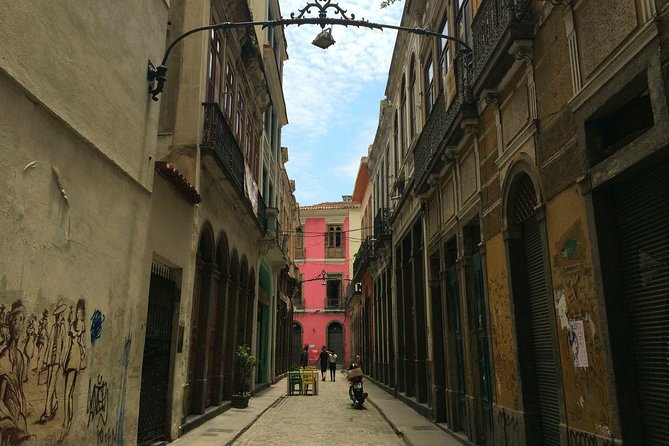
This is one of those tours that makes sense the moment you start walking. Rio’s postcard view is great, but it is also one slice. In Centro, you see how the city got shaped by Portugal, the empire, and the federal government reforms that still influence what you walk past today.
The tour’s best feature is simple. You are not looking at Rio from behind a bus window. You are moving block by block, learning why each building got built, what it replaced, and what it represented to the people in power at the time.
You will also get a local-feeling rhythm. The route is concentrated around historic squares and major institutions. That matters because it helps you understand Rio as a city, not just a list of sites.
And yes, it is a guided walk, not a museum sprint. The pace is casual enough that you can absorb what you’re seeing without feeling like you’re always rushing.
More Historical Tours in Rio de Janeiro
- Rio de Janeiro Historical Center Walking Tour
★ 4.5 · 336 reviews - Private Walking and Cultural Tour Rocinha-Rio de Janeiro
★ 5.0 · 239 reviews - Discover Rio Little Africa: A Cultural and Historical Journey
★ 5.0 · 238 reviews
Price and What You Really Get for $40.50
At $40.50 per person, you are paying mainly for three things: a professional guide, time efficiency, and interpretation. In Centro, that last part is the difference between seeing impressive buildings and understanding their role.
Most of the stops along the way list admission as free, which helps keep your total costs predictable. The one exception clearly flagged is the Church of São Francisco da Penitência, where admission is not included. So you might add a church entry cost if you want to go inside there.
The other value point is group size. With a maximum of 14 people, it feels manageable. You’re more likely to get direct answers and more tailored explanations than on a big group bus tour.
Time-wise, the listing says about 3 hours, but you should plan like it is 3 to 4 hours on your feet. That matches the reality of walking, plus the time you spend stopping for photos and stories.
Meeting in Copacabana and Reaching Historic Downtown
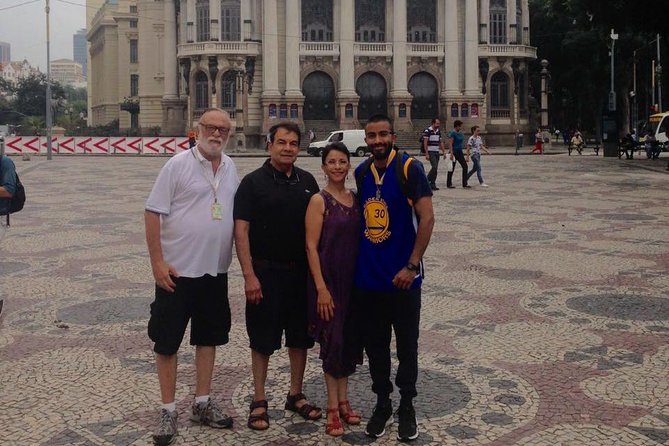
You start in Copacabana at Copacabana Palace, A Belmond Hotel. That is a very convenient launch point if you are staying in the big hotel zone. You also end back at the meeting point, so you are not stranded across the city after the walk.
Even with everything ending where you started, the day still involves moving from coastal Copacabana into Centro. One of the practical things I’d plan for is the possible use of public transit to get you downtown. It can feel like a surprise if you expect to walk every single step.
What matters is that once you reach the Centro area, the tour becomes very walkable. The sights are clustered around major squares, civic buildings, and church complexes.
Also pay attention to the weather note. The tour depends on favorable conditions, so if it is rainy or extremely hot, you will likely be rescheduled or offered an alternative date.
Theatro Municipal: Rio’s Big Statement of Architecture
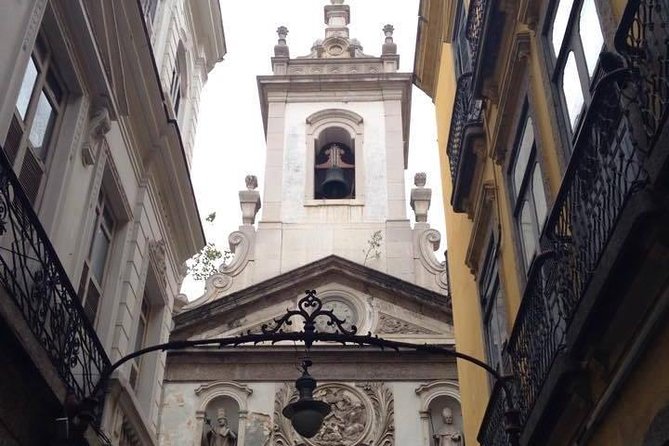
A perfect warm-up to Centro Rio is the Theatro Municipal, also called the Municipal Theater. It was built between 1906 and 1909, and it reflects an eclectic architectural style, with a reference to the Opera House in Paris.
When the guide talks about this kind of theater building, it is not just about beauty. It is about what a city wanted to signal. A major opera house like this is a public promise. It says Rio had cultural ambition and the resources to build something that felt international.
If you like architecture, this is a strong first stop. You get a quick framework for what you’ll see later: big public institutions with grand design, mixed with older colonial and imperial traces.
Tip for your photos: plan for angles. The theater’s facade is dramatic, but you often need to shift slightly to avoid crowds and get a clean view.
More Walking Tours in Rio de Janeiro
- Rio de Janeiro: Rocinha Favela Walking Tour with Local Guide
★ 4.8 · 3,052 reviews - Rio De Janeiro: Half-Day Rocinha Favela Walking Tour
★ 4.7 · 2,272 reviews - 3 Hour Rocinha Favela Walking Tour with a Local Guide
★ 5.0 · 833 reviews - Favela Tour Rio de Janeiro – Vidigal Walking Tour by Russo Guide
★ 5.0 · 377 reviews
Paço Imperial: From Colonial Palace to Royal Residence
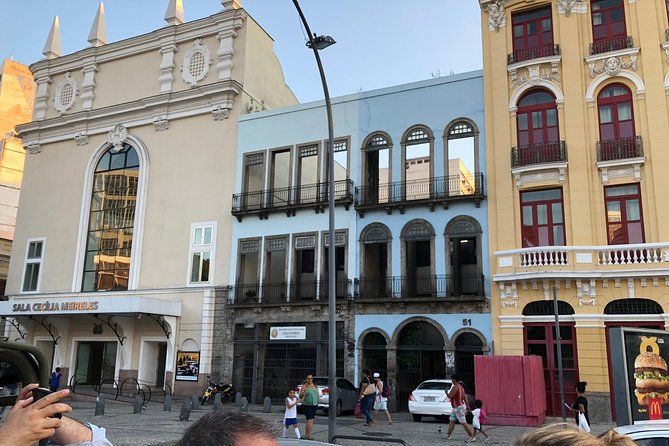
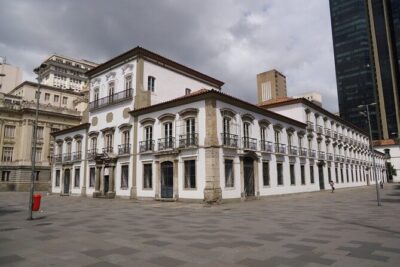
Next you step into the story of Rio’s power center with the Paço Imperial, also known as the Imperial Palace. The site dates back to the 18th century, when it served as the residence for governors of colonial Brazil.
Then it shifts into the empire era. From 1808, it became a royal residence for King John VI of Portugal, first as king of Portugal and later as king of Brazil. That sequence matters. It shows Rio’s growing political importance, not just its cultural life.
This stop is where the tour really earns its name as a historical walk. If you’ve only seen Rio as a holiday destination, you might not expect how much of the city’s story is connected to who lived in what building and why.
And since admission is listed as free, it is a low-cost way to start feeling the timeline in your head.
CCBB Rio and the Banking-Era Neoclassical Style
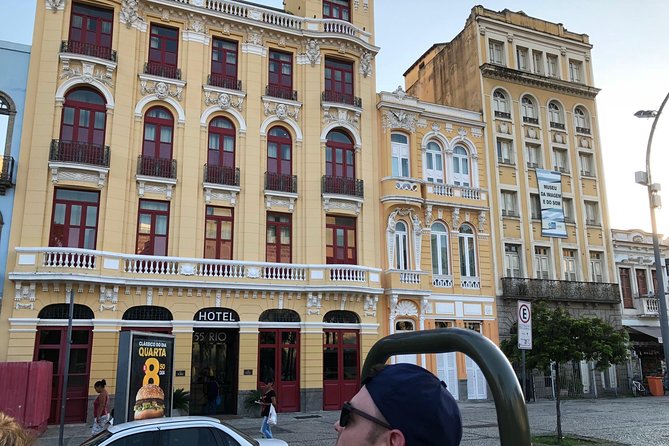
The Centro Cultural Banco do Brasil (CCBB) is a strong palate cleanser because it looks different from the royal and church architecture. It has neoclassical lines, and it carries a history tied to finance and business.
The foundation stone launched in 1880, and the project connects to architect Francisco Joaquim Bethencourt da Silva. The detail I like here is that it isn’t presented as random architecture. The guide links the building to the broader institutional story of arts, craft education, and civic development.
Practically, this is a good stop when you want a break. The CCBB area often gives you a chance to cool down, regroup, and reset before you head into more walking and church interiors.
Admission is listed as free, which means you can focus on the building itself and the explanations without feeling pressured to spend.
The Giant Library Stop: Why It’s More Than Books
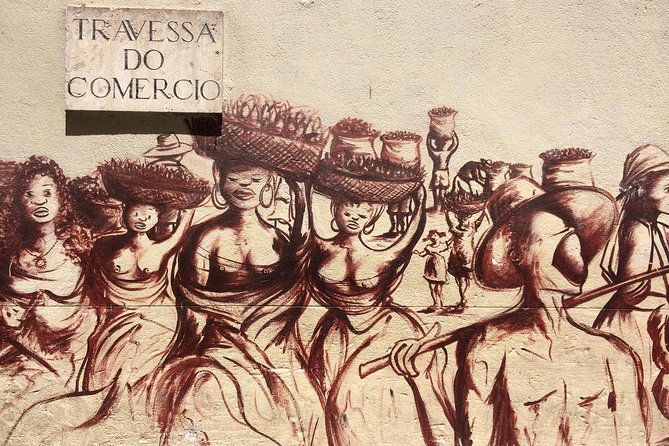
One of the most interesting stops is the huge library building, noted as the largest library in Latin America and the 7th largest in the world. It is associated with about 9 million items, plus educational contributions, including the first library science courses in Latin America.
You also learn that staff have led modernization work, including developing online databases. That’s a useful angle because it connects history to today. A historic institution is not always stuck in the past. It can keep reshaping how people access knowledge.
This stop is a reminder that Rio’s cultural story is not only about churches and theaters. It’s also about systems: information, education, and how a city preserves and organizes what it knows.
Candelária Church: Baroque Outside, Softer Inside
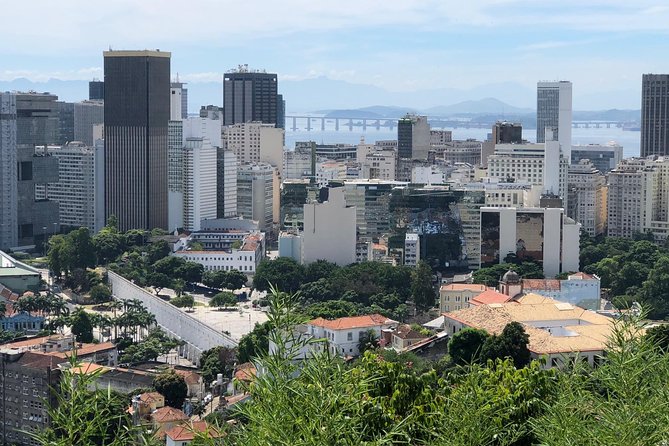
The Church of Our Lady of the Candelária is the kind of place you remember after the tour. It combines a Baroque facade with a mix of interior styles described as neoclassical and Neo-Renaissance.
It also has a long building and decoration timeline, from 1775 to the late 19th century. That span matters because it hints that styles can layer over time, rather than being made all at once. It’s one reason church architecture in older cities can feel slightly surprising in the best way.
Admission is listed as free, so this is another stop where you can spend time observing without paying extra.
If you’re short on time in Rio, you still want a stop like this. Churches here are not just religious buildings. They are major landmarks, and they shape how Centro feels.
Convent of St. Anthony: Morro de Santo Antônio and the Long Backstory
The Convent of St. Anthony adds depth and a touch of effort, because the history connects to the Morro de Santo Antônio hill area.
The story begins in 1592 when Franciscan friars arrived in Rio and initially settled near the Beach of Santa Luzia. Soon after, they built a small hermitage on a hill inland, then received definitive possession in 1607. Construction of the convent began June 4, 1608.
Even the architecture process gets attention. The first project author is listed as Brother Francisco dos Santos, but the work involved several other Franciscan architects over time.
This stop has two sides:
- It teaches you a timeline of how religious orders took root in Rio.
- It puts you in a place that feels physically tied to the city’s geography.
Just keep expectations realistic. The tour is not a gentle stroll, and church-hill areas can mean more stairs, more uneven ground, and longer standing time.
Praça Quinze de Novembro: Where Old and Modern Rio Overlap
At Praça Quinze de Novembro, you’re in the historical center. The square is flanked by the Palácio Tiradentes, which is the seat of the Legislative Assembly of Rio de Janeiro, and the Paço Imperial.
You also see why the area still functions for daily movement. Praça XV is connected to a ferry terminal that serves destinations in the city of Rio de Janeiro and Niterói.
So this is more than a scenic stop. It is about how historic squares stay useful. People still go there for transport and civic life, not just for sightseeing.
Admission isn’t the point here. The value is the context. After you’ve seen the royal palace and the churches, the square helps you understand how power and movement sit side by side.
Cinelândia and Praça Floriano Peixoto: The Civic Stage
Cinelândia is the popular name for Praça Floriano Peixoto. It is named in honor of Floriano Peixoto, the second president of Brazil. The tour uses this square to show how Centro became an official civic stage, not just an old-world neighborhood.
If you like urban planning, squares like this are where you learn to read the city. Buildings around a plaza often reflect national power. The guide’s job is to help you notice that pattern quickly.
You might also pass the Olympic torch area depending on the exact route flow. Since the tour’s route can vary slightly with timing and group movement, think of this as an extra visual bonus you may see rather than a guaranteed final stop point.
Arco do Teles: A Name With a Backstory
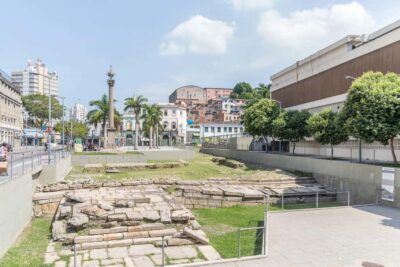
The Arco do Teles is tied to growth of the Largo do Paço region.
Construction begins in 1738 under the command of Gomes Freire de Andrade, Count of Bobadela, and a new house of governors is finished in 1743. Then the area appreciates, and Portuguese judge Antônio Telles Barreto de Menezes buys land and builds houses to rent to merchants visiting Rio.
The arch name comes from Antônio Telles Barreto de Menezes, so it’s a useful stop for learning how everyday economic life shaped what became a landmark.
This is one of those moments where the guide’s explanations click. You start seeing the city as an ecosystem. Officials, merchants, and builders influenced what stood where.
Casa Franca-Brasil: Neoclassical Solar by a French Artistic Mission Member
Casa Franca-Brasil is a striking neoclassical solar designed by Grandjean de Montigny, a member of the French Artistic Mission from 1816. He is also described as a professor at the Imperial Academy of Fine Arts.
The project is commissioned by João VI of Portugal in 1819 for the installation of the city’s first Commerce Square, and it inaugurates May 13, 1820.
To me, this stop connects two themes. One is Rio’s empire-era push to formalize public spaces. The other is international influence. A French architect helping shape a key commerce setting shows how ambitious Rio wanted to appear during that period.
It’s also a reminder that “history stops” do not have to be gloomy. Some buildings are about commerce, design, and civic order.
Federal Justice Cultural Center (CCJF): A Supreme Court Building With Eclectic Style
The Federal Justice Cultural Center (CCJF) occupies the former seat of the Federal Supreme Court. Construction began in 1905 as part of Mayor Pereira Passos’s reformulation of Rio, when it was the federal capital.
The building originally had a different intention, described as intended for the Mithra Archiepiscopal, before it was purchased for the Supreme Court. It was solemnly inaugurated April 3, 1909, designed by architect Adolpho Morales de Los Rios.
This is where you feel the “modern government” layer of Centro. It is not only colonial-era nostalgia. It is also what Rio built when it organized power under a new administrative system.
If you like architectural details, the guide’s context about eclectic style helps you read the facade and structure with more meaning than just looks.
Correios Cultural Centre: From Lloyd Shipping School Idea to Postal Powerhouse
Correios Cultural Centre is a practical kind of landmark. It was built to house the school of the Lloyd Brazilian shipping company and inaugurated in 1922. The planned school never got installed, but the building became important for administrative uses for more than five decades.
It supported the Brazilian Post and Telegraph company operations during that time.
Why this matters on a walking tour is that it shows how institutions evolve. A building can switch functions and still become part of a city’s backbone.
Also, a shipping company school never happened, but the building became a postal and communications hub. That kind of twist is exactly the type of city lesson that sticks after you leave.
São Francisco da Penitência Church: The Third Order and a Long Construction
The tour includes the Church of St. Francis of Penance, also described as the church linked with the Third Order of San Francisco.
The laity of the Third Order settled in Rio in 1619, and it begins with a chapel inside the Franciscan convent of Santo Antônio on the hill. Then in the middle of the 17th century, they received land next to the convent church to build their own temple.
Construction is noted as taking place between 1657 and 1733 with interruptions.
One practical detail: admission for this church is explicitly marked as not included. If church interiors are a must for you, plan your budget and don’t assume it’s free like every other stop.
Even if you only look from outside, the long date range is a good reminder. These religious buildings often took generations to complete.
The Old Chain and Tiradentes Waiting for Execution
The tour also references the old imperial parliament building from 1640, including the lower-floor chain known as the Old Chain, where prisoners in colonial times were held.
It connects the site to Joaquim José da Silva Xavier, Tiradentes, who was waiting for execution before April 21, 1792.
This portion can hit harder than the rest of the walking tour. It’s not about decoration. It is about how power and punishment worked in colonial Rio.
If you prefer lighter stops, this is the one segment where you might feel the mood shift. But it also makes the city’s history more real, because you see the consequences of politics, not only the architecture.
City Roots: From a Judge and Prosecutor in 1565 to a Municipal System
Finally, the tour covers how Rio’s municipal governance began. The city is described as founded together with the city in 1565, starting with just a prosecutor and a judge.
Two years later, there was the first election for the city hall of Rio. Councilors were elected yearly, twelve at a time, and the president of the house accumulated functions similar to what we think of as mayors.
This is a compact civics lesson. It helps you understand why certain civic buildings and squares feel important, even if you don’t know the details yet.
It also puts the rest of the tour into perspective. When you see a palace or a government building, you can connect it to the idea of Rio organizing itself step by step.
What to Expect on the Ground (So You’re Comfortable)
This tour is designed for people who can walk and stand at stops. It is specifically not recommended for people with walking difficulties.
In real life, that means you should plan for uneven sidewalks, long stop times, and some hills around the church areas. Bring water, wear comfortable shoes, and do a little mental prep that it is not a quick photo tour.
The good news is that it’s small-group sized, up to 14 people. That usually keeps stops efficient, and it makes it easier for the guide to slow down if someone needs a moment.
Also, bring patience for how city neighborhoods work. Centro Rio can feel different from Copacabana. If you want history and institutions rather than beach vibes, this tour matches that mood.
Who This Tour Suits Best
This tour is a strong fit if:
- You want an early trip orientation to Centro Rio.
- You like architecture, civic history, and churches with layered timelines.
- You prefer guided interpretation over wandering alone.
It is less ideal if:
- You want a beach-first day and do not care about history.
- You have limited mobility or can’t handle a full walking route.
If it’s your first day in Rio and you are expecting the classic sunshine experience, this can still work, but you need to be ready for a different side of the city.
Should You Book This Rio Walking and Historical Tour?
I think it is a smart booking for most first-timers who want real context. For $40.50, you get a professional guide, small-group attention, and a concentrated Centro route that hits major institutions, churches, and architecture with explanations that make the city feel connected.
Book it if you enjoy learning as you walk, especially if you like the idea of seeing Theatro Municipal, Paço Imperial, and multiple church sites in one morning or early day.
Skip it if walking is a challenge for you, or if you want a lighter, beach-only agenda. For everyone else, it’s a practical way to understand Rio as more than a view.
FAQ
How long is the Rio Walking and Historical Tour?
The tour is listed at about 3 hours.
What is included in the tour price?
You get a professional guide. Most stops list admission as free, but the Church of São Francisco da Penitência has admission not included.
Is the tour offered in English?
Yes. The tour is offered in English, and it may be operated by a multi-lingual guide that can also work in Spanish.
Where do I meet for the tour?
The meeting point is Copacabana Palace, A Belmond Hotel, Rio de Janeiro, Av. Atlântica, 1702, Copacabana.
Is hotel pickup or drop-off included?
No. Hotel pickup and drop-off is not included, and the tour ends back at the meeting point.
How many people are in the group?
The tour has a maximum of 14 travelers.
Is this tour suitable if I have trouble walking?
It is not recommended for people with walking difficulties.
Does the tour use a mobile ticket?
Yes. The tour includes a mobile ticket.
What happens if weather is bad or I need to cancel?
The tour is subject to favorable weather conditions. If canceled due to poor weather, you will be offered an alternative date. You can cancel for a full refund up to 24 hours before the experience start time.
Newest Rio de Janeiro reviews
- Two Brothers Hike in Rio de Janeiro At sunrise★ 5.0 · 3 reviews
- Rio Paragliding Experience w/ Brazilian Female Champion video inc★ 5.0 · 3 reviews
- Tour 7 ( 4 hours ) : Tijuca National Park and Favela★ 4.5 · 3 reviews
- Tijuca Forest + Botanical Garden + Lage Park – by Alan Denis★ 5.0 · 3 reviews
- Rio de Janeiro by Yourself with English Driver by private Vehicle★ 5.0 · 3 reviews
- Personalized Tour in Rio. Main Attractions and Cultural Walk.★ 5.0 · 3 reviews
- Museum of Tomorrow – | Round Trip Transfer + 2 Tickets★ 4.5 · 3 reviews
- Stadium Stories & Food: Join a Maracanã stadium tour with a Local★ 3.5 · 3 reviews
Historical Tours in Rio de Janeiro, compared.

Private Walking and Cultural Tour Rocinha-Rio de Janeiro
Read our review →
Discover Rio Little Africa: A Cultural and Historical Journey
Read our review →
Rio Gastronomy: Culture & History Through The Art Of Food – Walking Group Tour
Read our review →
Adventure & History at Tijuca Forest (small group or private)
Read our review →
From the Past to the Present: A Historical Walking Tour of Rio
Read our review →Browse the lists this tour appears in