
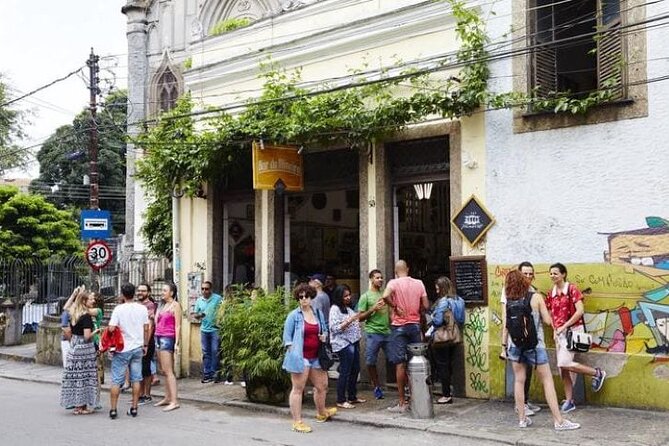
Reviewed · FOOD TOURS IN RIO DE JANEIRO
Rio Gastronomy: Culture & History Through The Art Of Food – Walking Group Tour
This kind of tour works in Rio because it ties food to place. You start on the beach, then you work your way inland to old-school downtown institutions and out to Santa Teresa, where the city starts telling its story in murals, steps, and viewpoints. The big win here is culture through what people actually eat and drink.
I especially like the small group size (max 15). It keeps things lively and practical, and it helps guides move at a human pace. I also like that you’re not stuck with one neighborhood, you sample across Copacabana, downtown Rio, and Santa Teresa in one day.
One consideration: it’s a full, active 6-ish hours with a lot of walking and stepping. If you don’t like hills, crowded sidewalks, or a tight schedule, you might want a slower sightseeing day.
Key things that make this tour worth your time

- Multiple neighborhoods in one day so you understand Rio beyond the postcard loop
- Tastings are the point, from juice stands to historic confectionary stops
- Santa Teresa adds the drama, with Selarón Steps, an artist studio, and a graffiti scene
- Historic downtown stops include Real Gabinete Português de Leitura and Confeitaria Colombo
- Guides matter a lot, and the best experiences I saw highlighted flexibility, safety care, and food adjustments
- You come away with a working map of Rio’s food culture, not just a list of dishes
A Copacabana start that turns into a real city day
If you want a Rio day that feels like the city, not like a checklist, this works. You begin in Copacabana, right by a major hotel on Av. Atlântica. From there, the tour strings together food stops and short sightseeing segments so you can connect flavors to the neighborhoods they come from.
The pacing is also designed to keep you fed. Even though it’s a walking tour, the tasting breaks are frequent enough that you’re not constantly searching for something to eat. And because the tour includes transport between areas (including taxi fees to Morro Dona Marta, plus a metro ride partway through), you can spend your energy on the street-level sights rather than transit logistics.
More Food Tours in Rio de Janeiro
- Eat, drink, and discover Rio like a local – with a local.
★ 5.0 · 179 reviews - Food Tour Rio de Janeiro – The Best Typical Brazilian Dishes
★ 5.0 · 82 reviews - Half-Day Rio Food Crawl with 15+ Traditional Brazilian Tastings
★ 5.0 · 32 reviews
Tasting list: what you actually get to try

The tour is built around real Rio snack foods and drinks, plus a few “drink like a local” moments. You’ll see menu themes repeat across stops, like sweet fruit juices and savory cheese-based bites.
Here’s what’s explicitly on the program:
- Açaí and soursop juice at the start in Copacabana
- A steak, cheese, and pineapple sandwich at Parada de Copa
- Custard apple juice at a juice house
- At Adega Pérola: a coconut cocktail and multiple snacks like octopus, goat cheese, codfish pearls, and codfish cakes, plus natural guaraná and mate
- In Santa Teresa: cheese bread (pão de queijo), açaí, cheese pastries, and beer from Complexo do Alemão
- Multiple local sweets and confections through the downtown and historic stops, including time at Confeitaria Colombo
The practical angle: you don’t have to decide where to eat or what to order. The tour handles the ordering and selection for you, and you get a spread that covers fruit, dairy, seafood, and classic street-style snacks.
Stop-by-stop: Copacabana to Adega Pérola and the juice rhythm
Copacabana sets the tempo. You’re starting at JW Marriott Hotel Rio de Janeiro (Av. Atlântica, 2600), so you’re in a clear landmark spot, not a guessing game. The first juice break is a smooth way to begin, because it’s refreshing and light enough to start the day without regret.
From there you move to the second food stop for a savory sandwich. It’s a good shift, because Rio’s food culture is not only about sweet fruit drinks and desserts. Then you hit another juice house for custard apple, which feels like a small local detour rather than a generic tourist tasting.
Adega Pérola is where the tour adds “sit-down snack energy.” You get a coconut cocktail and then a run of small bites, including seafood and cheese based options. This is also a good reality check stop. If you’re thinking a food tour means only fried street snacks, this shows a more layered food culture, with both drinks and a variety of textures.
Downtown Rio by metro: Real Gabinete Português de Leitura and Confeitaria Colombo
After Copacabana, the day turns more historical. There’s a metro ride included that sets you up for a key downtown landmark: Real Gabinete Português de Leitura, one of the world’s most stunning libraries.
This part of the tour is not just about food. It’s about context. When you see a place like Real Gabinete, you understand why Lisbon and Portuguese cultural influence matters in Rio’s institutions, not just in cuisine. You also get a chance to connect the dots between “old Rio” and how people built businesses and social spaces around reading, trade, and community.
Before or alongside the library moment, you also visit Confeitaria Colombo. That stop adds the sweet-sugar side of the day in a setting that feels historic, and it also lines up nicely with time to walk around Cinelândia, so you get a broader downtown feel rather than only one door-and-out stop.
More Historical Tours in Rio de Janeiro
- Rio de Janeiro Historical Center Walking Tour
★ 4.5 · 336 reviews - Private Walking and Cultural Tour Rocinha-Rio de Janeiro
★ 5.0 · 239 reviews - Discover Rio Little Africa: A Cultural and Historical Journey
★ 5.0 · 238 reviews - Rio de Janeiro: Historic Rio and Santa Teresa Half-Day Tour
★ 4.4 · 228 reviews
Santa Teresa: Selarón Steps, an artist studio, and the graffiti view
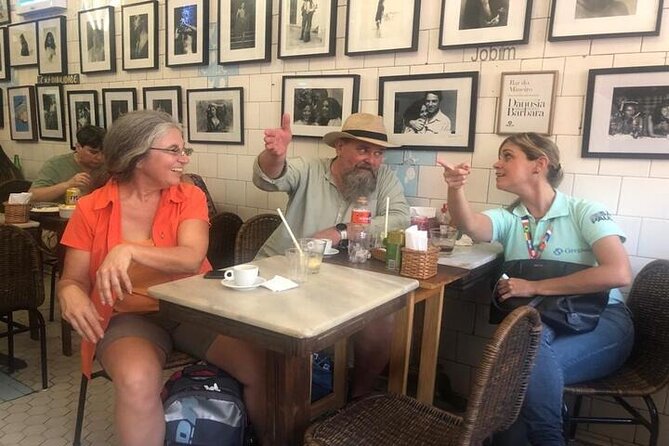
This is the neighborhood most likely to make you pause. Santa Teresa has that “Rio is vertical” vibe, with stairs, viewpoints, and lanes that feel like they were designed for wandering.
You’ll taste more local bites here, including cheese bread, açaí, cheese pastries, and even beer associated with Complexo do Alemão. That matters because it’s not just “look at a view” tourism. The tour ties the viewpoint neighborhood to the food culture people share in their daily lives.
Then comes the creative side:
- You meet a featured artist from the American magazine Our Planet and visit their studio
- You move through a graffiti scene, where you can observe artists working with iron
- You also get a spectacular view of Sugarloaf Mountain
This combination is a smart use of time. Food tours sometimes ignore the art that Rio uses to communicate identity. Here, the art stops support the food stops. You walk away with a stronger sense of what makes neighborhoods feel like themselves.
São Bento Monastery and the Museum of Tomorrow view
As the day winds down, you get a major architecture and viewpoint moment at Mosteiro de São Bento. The monastery is known for baroque and rococo architecture, and the timing works as a capstone, because by now you’ve already had several neighborhood shifts.
The tour also aims for a finish with a view of the Museum of Tomorrow from the monastery area. This kind of “last look” is useful. It gives your day a final visual anchor, especially when you’ve been moving between beach, downtown, and hill neighborhoods.
The final wrap at Rio Sul Shopping Center
The itinerary ends back at the meeting point, but there is also a final Rio Sul Shopping Center stop on the way. This is a practical choice. After a food-heavy day, it’s good to have somewhere predictable to refuel, regroup, and handle last-minute shopping.
If you’re the kind of traveler who likes to extend the day with one more coffee or a quick snack, this makes it easy without disrupting the rest of your evening plans.
Guides make or break this kind of tour
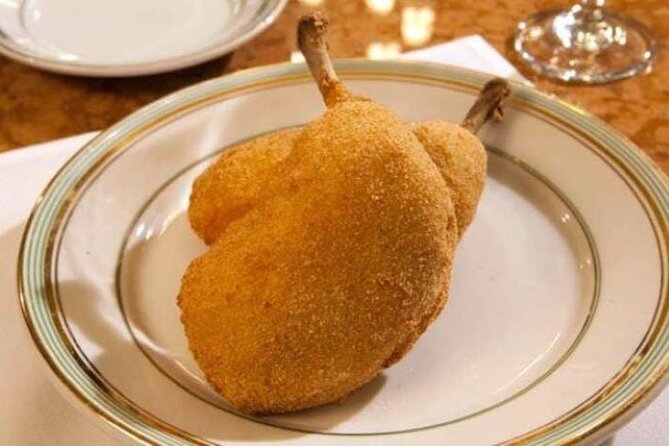
The strongest signal from the experiences I reviewed is simple: the guides are a big part of the value. Names that showed up with standout mentions include Camila, Sergio, and Eva.
What I’d pay attention to, if you care about comfort and flow:
- Flexibility on the spot. Camila was praised for adjusting the itinerary when something already seen came up, which prevents the day from feeling repetitive.
- Strong safety habits. One highlight was guidance that included careful crossing at busy intersections and reminders about keeping phones secure while walking.
- Weather-aware pacing. If Rio is hot or conditions shift, a guide who adjusts stops matters.
- Food preference handling. At least one tour experience specifically called out vegetarian friendliness, including an extended stop so an interested eater could try an extra item.
Also, group size helps here. Max 15 means the guide can actually talk to you, not just manage a herd.
Price and value: is $193 a fair deal?
$193 for about 6 hours is not a budget price. But look at what’s packed into it:
- All tastings and samples are included
- Entrance fees are included
- You get a professional bilingual private tour guide
- VAT and taxes are included
- Transport costs are partly covered, including taxi fees to Morro Dona Marta and at least one metro ride
- The tour is small group, max 15
That combination is what makes the price feel reasonable. Food tours get expensive when you’re paying for each bite and each entry separately. Here, the structure reduces decision fatigue and stops the day from turning into a pile of surprise costs.
The main “you pay extra” items are limited in the details you provided. Draft beer and beers are not included, and tips are optional.
So, if you like tasting lots of different types of food and want the historical framing without doing it all yourself, this price can pencil out well.
Who should book this tour, and who should skip it
This tour is a good fit if:
- You want a guided food-and-culture day instead of booking random meals
- You like variety across neighborhoods, not a single district
- You want historic settings like Confeitaria Colombo and Real Gabinete Português de Leitura included in the plan
- You’re comfortable walking and taking metro or short transports between stops
You might choose something else if:
- You struggle with hilly neighborhoods, steep steps, or lots of walking time
- You strongly dislike sweets, because the day includes confections and you may find the balance depends on the specific day and stops
- You want a slower, sit-down only day rather than a packed 6-hour itinerary
One extra scheduling note from the experiences shared: Monday can be trickier because some museums and restaurants may be closed. If you can pick dates, a non-Monday visit may be smoother.
Should you book this Rio Gastronomy food tour?
I’d book it if you’re heading to Rio for the first time and want a day that does three things at once: feed you, teach you what the city eats, and show you key neighborhoods without you running around alone.
I’d think twice if you hate walking, or if you want total control over every restaurant decision. This tour is structured, and that structure is the point. You’ll trade independence for convenience and a tightly planned sequence of tastings and sights.
If your goal is to leave Rio with more than photos, but with a real sense of how culture shows up in food, this is one of the more efficient ways to get there.
FAQ
Where is the meeting point for Rio Gastronomy?
You meet at JW Marriott Hotel Rio de Janeiro, Av. Atlântica, 2600, Copacabana.
Where does the tour end?
The tour ends back at the meeting point.
What time does the tour start, and how long is it?
It starts at 10:45 am and runs for about 6 hours.
How many people are in the group?
The group is limited to a maximum of 15 travelers.
What is included in the price?
The price includes all tastings and samples, entrance fees, a professional bilingual private tour guide, VAT and taxes, and taxi fees to Morro Dona Marta.
What are some of the food and drink items you’ll sample?
You’ll try items such as açaí and soursop juice, a steak, cheese, and pineapple sandwich, custard apple juice, and snacks at Adega Pérola including octopus and goat cheese, plus natural guaraná and mate. In Santa Teresa you’ll also taste cheese bread, açaí, cheese pastries, and beer.
Is beer included?
Draft beer and beers are not included, but beer tasting is listed as part of the Santa Teresa stop.
Is the guide bilingual?
Yes. The tour includes a professional bilingual private tour guide.
Can I get a full refund, and what if weather cancels the tour?
You can cancel up to 24 hours in advance for a full refund. If poor weather cancels the experience, you’ll be offered a different date or a full refund.
More Walking Tours in Rio de Janeiro
- Rio de Janeiro: Rocinha Favela Walking Tour with Local Guide
★ 4.8 · 3,052 reviews - Rio De Janeiro: Half-Day Rocinha Favela Walking Tour
★ 4.7 · 2,272 reviews - 3 Hour Rocinha Favela Walking Tour with a Local Guide
★ 5.0 · 833 reviews - Favela Tour Rio de Janeiro – Vidigal Walking Tour by Russo Guide
★ 5.0 · 377 reviews
Newest Rio de Janeiro reviews
- Maracanã Matchday Tour – Ticket + Guide + Transfer★ 5.0 · 14 reviews
- Private Tour with Churrasco in Vela Catamaran – Velas do Rio★ 5.0 · 14 reviews
- Angra & Ilha Grande From Rio: Boat Tour With Barbecue and Drinks★ 5.0 · 14 reviews
- Half-Day Private Tour:Rio de Janeiro Highlights by Bernard Moraes★ 5.0 · 14 reviews
- Tijuca Forest Adventure★ 4.5 · 14 reviews
- Rio de Janeiro: Join a Fluminense game at Maracanã with locals★ 5.0 · 15 reviews
- Rio de Janeiro: Join a Botafogo soccer game with transport★ 5.0 · 15 reviews
- Christ the Redeemer, Selaron Steps and Santa Teresa Half-day Tour★ 4.5 · 15 reviews
Food Tours in Rio de Janeiro, compared.

Eat, drink, and discover Rio like a local – with a local.
Read our review →
Food Tour Rio de Janeiro – The Best Typical Brazilian Dishes
Read our review →
Half-Day Rio Food Crawl with 15+ Traditional Brazilian Tastings
Read our review →
3 Day Food Tour in Rio Cook and Taste Authentic Flavors
Read our review →
Copacabana Food Tour with 7 Tastings and Local Flavors
Read our review →
Rio Carnival Parade from a Prime Box – With Shuttle, Tour Guide, Food & Drink
Read our review →

The Best Food Tour: Taste the Most Authentic Flavours of Rio
Read our review →Browse the lists this tour appears in