

Reviewed · HISTORICAL TOURS IN RIO DE JANEIRO
Discover Rio Little Africa: A Cultural and Historical Journey
Rio Little Africa is interesting because it turns Rio’s most famous soundtrack into a story you can actually see, from slave-arrival evidence at Cais do Valongo to the samba heartbeat of Saúde. I like that it is a small-group experience, with a maximum of nine travelers promised, so you get real back-and-forth with your guide. I also like how the route links joy and celebration to the hard parts of history, so you do not leave with facts only, you leave with context.
One possible drawback: expect walking and a few stair moments. It can also get hot, and the subject matter is serious, even when your guide keeps things light with humor and smart pacing.
Key things I’d watch for on this Rio Little Africa walk
- A small-group format keeps questions welcome and makes the museums feel less rushed (max nine promised, with a listed cap up to 15).
- Cais do Valongo is built into the route and included, so you see the most significant physical evidence of enslaved African arrivals.
- Museum time that connects dots at IPN and MUHCAB, both included, so the story does not stop at colonial history.
- Samba sites are not treated as trivia. Pedra do Sal is explained through salt unloading, carved steps, and the emergence of carnival traditions.
- Public art in the middle of history at the Boulevard Olímpico Ethnicities mural, created for the 2016 Olympics and designed to spotlight global diversity.
- Guides tend to go beyond facts. Several guides are praised for excellent English, patience, and answering lots of questions.
From Museu de Arte do Rio to Saúde: the smartest place to start
You meet at the Museu de Arte do Rio, MAR, in Centro, at Praça Mauá 5. Since the tour offers no hotel pick-up, this is actually a good thing. MAR is easy to reach using public transit, and it helps you get oriented before you head into the Saúde neighborhood.
The tour also includes an air-conditioned vehicle. That matters in Rio. Between stop to stop, you likely get breaks from the sun and traffic, which keeps the walk more doable for a half-day plan. Most of the tour is still on foot, but the AC ride helps the day feel less like a marathon.
This is priced at $86 per person for about 3 hours 30 minutes. In practice, the timing can stretch a bit if you ask questions and your guide gives longer answers. That is not a problem if you like learning, but if you have a tight schedule later, plan a little breathing room.
More Historical Tours in Rio de Janeiro
- Rio de Janeiro Historical Center Walking Tour
★ 4.5 · 336 reviews - Private Walking and Cultural Tour Rocinha-Rio de Janeiro
★ 5.0 · 239 reviews - Rio de Janeiro: Historic Rio and Santa Teresa Half-Day Tour
★ 4.4 · 228 reviews
Iglesia de São Francisco da Prainha: where dance, faith, and African-Brazilian life meet
The first stop is Igreja de São Francisco da Prainha, near Largo da Prainha. You will spend about 20 minutes here, and admission is free.
The key reason I think this stop works is that it introduces African-Brazilian presence through culture, not only through suffering. You will see the Mercedes Baptista Statue at Largo da Prainha. Mercedes Baptista was described as the first African-Brazilian ballet dancer to enroll in the Municipal Theater of Rio de Janeiro’s ballet group in the late 1940s.
That is a powerful start because it shifts your brain into the right gear. Before you hit Valongo and the slave wharf, you get reminded that African heritage in Brazil is not only about arrival stories and forced labor. It is also about talent, discipline, and the way people built new cultural spaces.
If you like photos, bring your camera up early. Statues and church exteriors are quick wins, and this is also one of the calmer moments before the day turns heavier.
Pedra do Sal: salt unloading, carved steps, and samba circles
Next you head to Pedra do Sal, another free stop for about 20 minutes. This is where Rio’s history starts to sound like Rio.
The story begins with enslaved Africans who unloaded imported salt from Portugal. Pedra do Sal gets its name from that salt trade. The explanation goes deeper than the origin label. You will hear that the steps and physical shaping of the area are tied to the labor of those enslaved people.
Then the tour connects that space to the growth of Afro-Brazilian music and public celebration. You will learn how the area became linked to the first ranchos carnival groups, afoxés processions, and sacred spaces that grew in the late 1800s. After labor, sambistas and longshoremen gathered in the homes of Bahian Aunts, forming samba circles.
A name you will likely hear in this stop is Pixinguinha, mentioned as a regular attendee. I like this detail because it anchors the story in artists you may actually recognize later when you hear Brazilian music anywhere else.
Practical tip: this is an outdoor hangout area and part of local life. Expect it to feel lively, and wear shoes that handle uneven pavement. The tour moves at a comfortable pace, but your feet will do some work.
Cais do Valongo: seeing a World Heritage arrival wharf up close
Cais do Valongo is the emotional center of the route. The stop is about 20 minutes, with admission included, and it is listed as a World Heritage site.
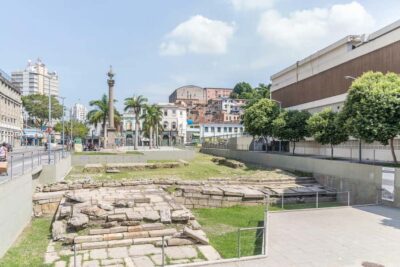
This is an old stone wharf built in 1811 to land enslaved Africans. The scale shared here is staggering. You will hear estimates of around 900,000 Africans arriving in South America via Valongo. The site also has multiple archaeological layers, and it is described as the most significant physical evidence of enslaved arrivals in the Americas.
I appreciate that the tour does not treat Cais do Valongo as a checkbox. It is explained as part of a bigger system, then tied to what came after: black affirmation, cultural development, and the ongoing realities people face in Brazil today.
If you want the maximum value, slow down for a minute. Look around. Ask your guide what to notice. It is the kind of place where your brain will try to rush, and your guide will help you stay present.
Another way to spend a day in Rio de Janeiro:
- Rio de Janeiro: 6-Stop Highlights of Rio with Lunch
★ 4.4 · 5,157 reviews - Christ the Redeemer Entry Ticket by Corcovado Train
★ 4.4 · 4,476 reviews - Rio’s City Tour – Tickets for Christ, Sugar Loaf & Lunch included
★ 5.0 · 4,389 reviews - Full Day: Christ Redeemer, Sugarloaf, City Tour & Barbecue Lunch
★ 4.5 · 3,142 reviews
Boulevard Olímpico Ethnicities mural: why public art belongs in this story
The next stop is at the Boulevard Olimpico, where the Ethnicities mural covers about 3,000 square meters in Rio’s Zona Portuária area. Admission is free, and you will get around 20 minutes here.
This mural was created for the 2016 Olympics. It includes five representatives from different groups, chosen as a way to show diversity across continents. The tribes named are the Huli, Mursi, Kayin, Supi, and Tapajós. The production details are also part of the tour’s explanation: the mural took two months, with 12-hour shifts, using over 3,000 spray cans and hundreds of liters of colored paint for both figures and background.
Is this stop “history” in the same way as Valongo? Not exactly. But I think it is valuable because it shows how memory and identity can be expressed in public space today. It also keeps the day from being only grief. You are still in the same neighborhood, still surrounded by traces of arrival and survival, but now you get a lens on representation.
Consideration: public art can feel like a quick photo moment if you do not listen. In this case, your guide’s context makes the mural more than a backdrop.
Instituto de Pesquisa e Memoria Pretos Novos: memory at the New Blacks Cemetery site
After the mural, the route brings you to the Instituto de Pesquisa e Memoria Pretos Novos, IPN. This stop runs about 1 hour, with admission included.
IPN is a museum and archaeological site dedicated to honoring the memory of Africans brought to Rio as slaves. The tour emphasizes the “New Blacks Cemetery” connection, since the museum sits on that site. It has been offering cultural activities and workshops on the history and culture of people of African descent since 2005.
There is also recognition behind the scenes. The site is described as being recognized by the state and designated as a Cultural Space since 2009. That matters because it signals that this place is not just a memorial display. It is an active cultural institution.
I like pairing IPN with Valongo mentally. Valongo shows the arrival point. IPN shows what happened after, and how memory is kept alive through education and programming.
MUHCAB: Afro-Brazilian culture through the Valongo era and beyond
The final major museum stop is MUHCAB, the Museu da História e da Cultura Afro-Brasileira. Plan about 1 hour 10 minutes, and admission is included.
MUHCAB is based around the Valongo Wharf, and the museum tells the story of Rio’s region as the largest arrival of enslaved Africans. It also covers milestones of black affirmation in Brazil and the development of Afro-Brazilian culture. Another important piece is contemporary issues faced by black people in Brazil.
This is where the tour does something that many history walks miss. It does not leave you at “then.” It connects to “now,” so you understand why the neighborhood still matters in daily life.
If you like reading at a museum pace, this is your window. Multiple guides are praised for patience, and for giving you time to read and absorb information. That is not common on short walking tours, so take advantage of it here.
Walking pace, weather reality, and what to pack for Saúde
The tour is about 3 hours 30 minutes, but it can run longer depending on questions. One review mentioned a group going closer to 4.5 hours. That gives you a clue: if you ask lots of questions, expect the guide to answer fully.
Also, expect heat. The neighborhood walk can be long and hot at times. Some guests also referenced steady rain without stopping the experience, and that matches the idea that the tour depends on weather but can still happen with real-life conditions.
Pack like you are going to be outside for a while: comfortable shoes are a must, and bring water. If you get motion-sick, the AC vehicle helps, but you will still be walking. If you have mobility limits, you might want to think twice about a walking-heavy route with stairs, even though the tour notes that most travelers can participate.
Price and value: what $86 buys you in real terms
At $86 per person, this tour costs less than many guided museum days, and more than casual walking tours. Here is why it can still be good value.
First, you are paying for a guide plus an air-conditioned vehicle. Second, key admissions are included: Cais do Valongo, IPN, and MUHCAB. Meanwhile, other stops are free, like Pedra do Sal, Igreja de São Francisco da Prainha, and the Ethnicities mural area.
Third, you get structure. Doing this on your own means tracking down multiple sites and then guessing how they connect. This route stitches them together into one story, so each stop lands with more meaning. I think that is where the value sits: less time figuring out what you are looking at, more time understanding why it matters.
Small-group size also matters for value. With fewer people, you tend to get better explanations and more flexibility for photos or questions.
Guides, storytelling, and the small extras that matter
One thing I would not ignore: the quality of guides is a major theme. Names that come up across excellent experiences include Damiana, Scarlet (also referenced as Escarlate), Larissa, Ana Julia, Carolina, Gabo, Natalia, and Nathalia S.
Common praise patterns include clear English, a warm personality, and patience for questions. Several guests specifically liked the way guides connected African history to Brazil, then connected it to the present day.
A small bonus detail you might get depending on your guide: one guest mentioned receiving a PDF of highlights from the tour. If that is offered, it is a nice way to remember names and key points after your walk is over.
Who this Rio Little Africa tour fits best
I would put this tour high on your list if you are:
- Visiting Rio for the first time and want more than beach-and-bossa impressions
- Interested in African diaspora history and how it shows up in music, religion, and public space
- Traveling with family or friends who appreciate structured learning, not just wandering
- Curious about how Afro-Brazilian culture grew after arrival, and how it shapes Rio today
I would hesitate if you:
- Want a light, entertainment-only day
- Have very limited mobility, since walking and stairs are part of the experience
- Hate museums or prefer fewer stops
Should you book Rio Little Africa with this $86 small-group plan?
Book it if you want a guided walk where the fun side of Rio, samba culture, and daily life are explained through the same neighborhood that holds the hardest colonial truths. If you are the kind of person who asks questions during a museum visit, this format should feel satisfying.
Skip it if you only have a short time and you need a simple checklist sightseeing route, with minimal walking and minimal emotional weight. This tour is built for people who want context.
If you book, do yourself a favor: wear comfortable shoes, bring water, and arrive at MAR ready to listen. That is how you turn a half-day walk into something you will remember.
FAQ
Where is the meeting point since there is no hotel pick-up?
You meet at Museu de Arte do Rio (MAR), Praça Mauá 5, Centro, Rio de Janeiro.
How long is the Rio Little Africa tour?
The duration is about 3 hours 30 minutes.
How much does the tour cost?
The price is $86.00 per person.
What admissions are included?
Admission is included for Cais do Valongo, Instituto de Pesquisa e Memoria Pretos Novos (IPN), and MUHCAB. The other listed stops have free admission.
What is included in the tour price?
The tour includes a guide and an air-conditioned vehicle.
How big is the group?
The tour is guaranteed small-group with no more than nine travelers, and the maximum number listed is up to 15 travelers.
What happens if the tour is canceled due to poor weather, or if I cancel?
The experience requires good weather. If it is canceled due to poor weather, you will be offered a different date or a full refund. You can cancel for a full refund up to 24 hours in advance; within 24 hours, you do not get a refund.
Newest Rio de Janeiro reviews
- Maracanã Matchday Tour – Ticket + Guide + Transfer★ 5.0 · 14 reviews
- Private Tour with Churrasco in Vela Catamaran – Velas do Rio★ 5.0 · 14 reviews
- Angra & Ilha Grande From Rio: Boat Tour With Barbecue and Drinks★ 5.0 · 14 reviews
- Half-Day Private Tour:Rio de Janeiro Highlights by Bernard Moraes★ 5.0 · 14 reviews
- Tijuca Forest Adventure★ 4.5 · 14 reviews
- Rio de Janeiro: Join a Fluminense game at Maracanã with locals★ 5.0 · 15 reviews
- Rio de Janeiro: Join a Botafogo soccer game with transport★ 5.0 · 15 reviews
- Christ the Redeemer, Selaron Steps and Santa Teresa Half-day Tour★ 4.5 · 15 reviews
Historical Tours in Rio de Janeiro, compared.

Private Walking and Cultural Tour Rocinha-Rio de Janeiro
Read our review →
Rio Gastronomy: Culture & History Through The Art Of Food – Walking Group Tour
Read our review →
Adventure & History at Tijuca Forest (small group or private)
Read our review →
From the Past to the Present: A Historical Walking Tour of Rio
Read our review →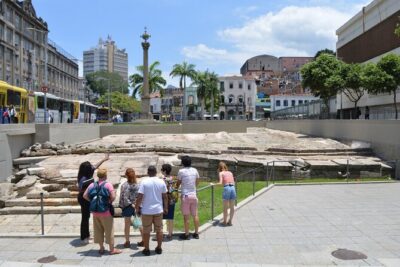
Explore Little Africa : Unveiling Afro Heritage in Rio de Janeiro
Read our review →Browse the lists this tour appears in