
Reviewed · HISTORICAL TOURS IN RIO DE JANEIRO
From the Past to the Present: A Historical Walking Tour of Rio
Rio’s Centro can feel like a collage, old courts next to new graffiti, churches beside port history. This walking tour makes that collage make sense by moving you, step by step, through how the city grew from early power centers to the port where enslaved Africans arrived.
I especially like two things: the small group size (up to 10) that keeps the pace thoughtful, and the way the route mixes famous sights with places that explain Rio’s “why,” not just its “what.” One thing to consider is that the Royal Portuguese Reading Room can have long lines, so you might only get time to see the outside.
Key Highlights You Will Feel on This Walk
- A 4 to 5 hour historical route through Rio’s Centro, starting in Cinelândia and finishing at Cais do Valongo
- Many stops are admission free, so your money goes to the guide and the walking time, not ticket math
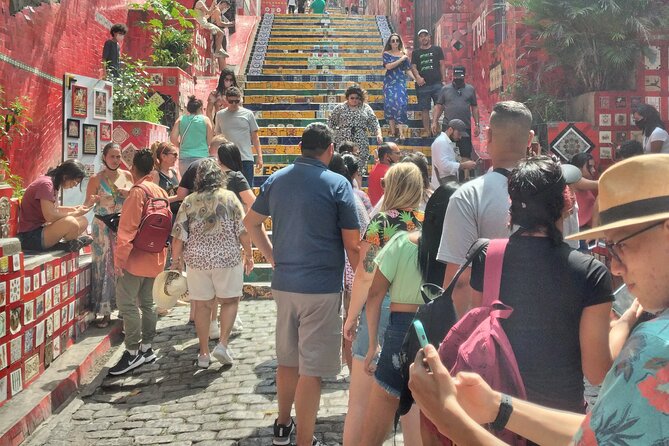
- Selarón Steps stretched over about 125 meters with 2,000-plus tiles
- An 1700s aqueduct still doing work today through the Bondinho de Santa Teresa cable ride
- Strong “timeline” storytelling, tied to architecture, religion, and the port history that shaped Brazil
Cinelândia Morning Start at Starbucks, Praça Floriano
The tour starts at 8:30 am at Starbucks in Praça Floriano, 7, in Centro. This is a smart meet-up point if you like structure, because the area is packed with landmarks and it is easy to orient yourself before you start walking.
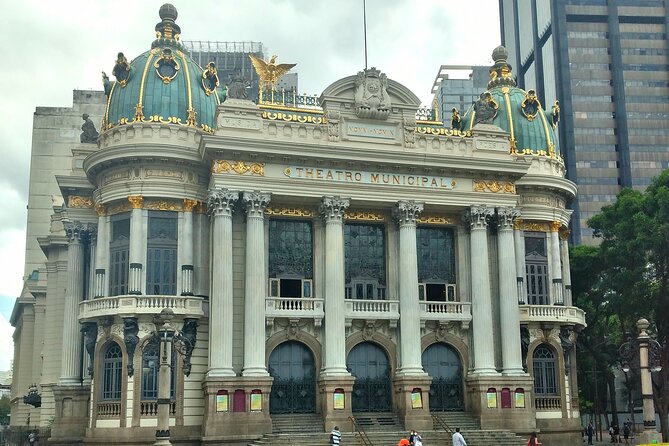
Cinelândia is where Rio flexes its early civic and cultural muscle. You will pass by some of the city’s best-known buildings: the Theatro Municipal, the Biblioteca Nacional, the Museu Nacional de Artes, and older government structures including the former Supremo Tribunal Federal buildings. Even if you never go inside, the architecture gives you context fast.
I also like that the first stop is short. Around 20 minutes here is enough to set the theme, then keep you moving before the day gets hot or busy.
More Historical Tours in Rio de Janeiro
- Rio de Janeiro Historical Center Walking Tour
★ 4.5 · 336 reviews - Private Walking and Cultural Tour Rocinha-Rio de Janeiro
★ 5.0 · 239 reviews - Discover Rio Little Africa: A Cultural and Historical Journey
★ 5.0 · 238 reviews
Passeio Público, Latin America’s First Public Park
Next comes Passeio Público, described as the first public park in Latin America. That detail matters because it frames this walk as more than scenery. You are looking at how Rio started to organize public space, not just how it built famous monuments.
Expect a quick stop, about 30 minutes. This is the kind of pause that helps you reset before you jump back into the city’s visual story. It also works well for people who want history but do not want to spend the whole half-day inside buildings.
If you are the type who likes to spot small details, watch for how the park setting changes the tone around you compared with the surrounding formal institutions.
Selarón Steps, a 125-Meter Tile Timeline
From classic institutions to street-art history, you will reach the Escadaria Selaron. The steps are famous for their scale, around 125 meters long, with more than 2,000 tiles creating the artwork across the staircase.
You will have about 20 minutes at this stop. That is the right length for taking photos and reading the scene visually, without turning it into a long detour.
Practical note: this is the Centro, so keep an eye on your footing and your phone. The steps are iconic, but you will be mixing people on a walkway with normal city movement.
The 1700s Aqueduct and Bondinho de Santa Teresa’s Reuse
After Selarón, the route shifts into engineering history. You will see an aqueduct from the 1700s, originally used to bring water to the city. Today, the same kind of infrastructure energy shows up again because it is used by Bondinho de Santa Teresa.
This is one of my favorite moments on the route because it shows a pattern: Rio keeps using older systems instead of starting from scratch every time. Even if your focus is history, this is a reminder that cities are practical machines, not only grand monuments.
The stop is short, just long enough to appreciate the structure and understand its role in Rio’s water story and modern transport through Santa Teresa.
More Walking Tours in Rio de Janeiro
- Rio de Janeiro: Rocinha Favela Walking Tour with Local Guide
★ 4.8 · 3,052 reviews - Rio De Janeiro: Half-Day Rocinha Favela Walking Tour
★ 4.7 · 2,272 reviews - 3 Hour Rocinha Favela Walking Tour with a Local Guide
★ 5.0 · 833 reviews - Favela Tour Rio de Janeiro – Vidigal Walking Tour by Russo Guide
★ 5.0 · 377 reviews
Metropolitan Cathedral of Saint Sebastian, a Sacred Shape
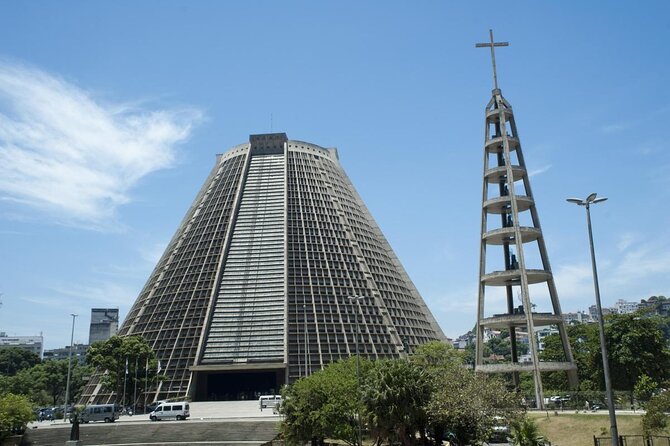
You will then visit the Metropolitan Cathedral of Saint Sebastian. It is described as a unique and different cathedral, and that uniqueness is part of what makes it useful in a “past to present” walk.
Plan for about 20 minutes here. You will likely have time to look around and notice how the cathedral’s design signals a different era of public life compared with the earlier civic buildings you saw in Cinelândia.
If you are used to churches that feel similar from city to city, this one is worth the mental comparison. It helps you see how religious architecture can also be a form of cultural change.
Royal Portuguese Reading Room, Stunning but Time-Sensitive
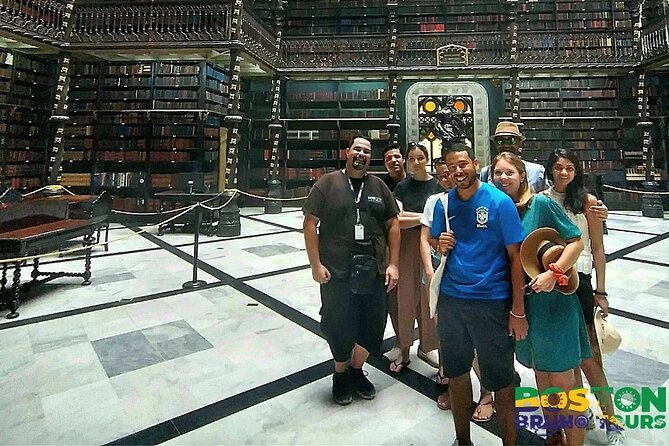
The Real Gabinete Portugues de Leitura is one of those places that sounds dramatic even before you see it. The Royal Portuguese Reading Room is described as truly stunning, but it can get incredibly busy with long lines.
Here is the practical part: to stay on schedule, you might only see the outside if queues are long. The stop is brief, about 10 minutes, so come ready to appreciate what you can see quickly.
I like that the tour team is upfront about this. It means you are not gambling on getting a full interior visit when the city decides to do what cities do, line up.
Paróquia de São Francisco de E G, a Big Church Stop

Next is a beautiful church stop: Paroquia De Sao Franciscofme De E G as listed on the itinerary. It is described as one of the most beautiful churches in the city, and also noted as the second-largest temple in Rio.
You will have around 10 minutes here. That short timeframe makes it a “look, absorb, move on” stop, not a slow sightseeing session.
If you enjoy stepping inside sacred spaces but you also like the pace of a structured walk, this stop fits well. If you prefer long church visits with time to sit, this might feel quick, but it still gives you a memorable impression.
São Bento Monastery and the Art of Colonial Time
The route then climbs you into one of the city’s colonial-art anchors: Mosteiro De Sao Bento, the Monastery of São Bento do Rio de Janeiro. It is described as a main monument of colonial art in the city and in the country, located on Morro de São Bento.
You will have about 15 minutes. For many people, this is the sweet spot: enough time to understand why it is important and enough time to keep the tour from turning into a long climb-and-wait session.
Then you will pass by Mauá Square on the way to Kobra Graffiti, specifically Panel Etnias. This is described as the largest graffiti in the world, so even a quick pass matters. You will have about 5 minutes, which is basically perfect for seeing scale and moving on without getting stuck in the crowd.
Cais do Valongo, the Port History That Still Matters
The walk ends at Cais do Valongo, the Valongo Wharf, an archaeological site in Rio’s port area. This stop is not just important, it is heavy in the best way, because it holds immense historical and spiritual significance.
You are looking at the main landing point and trading center for enslaved Africans brought to Brazil between 1811 and 1831. That timeline detail gives the site a very clear connection to Brazil’s formation, and it makes the entire tour feel like it is leading somewhere real.
The stop is short, about 5 minutes, and the tour ends here at Av. Barão de Tefé – Saúde. If you want a few extra minutes to stand and reflect, keep an eye on the pace and your group’s timing, then linger if you can.
Why the Guide Style Changes Everything, Bruno’s Story Focus
What makes this tour feel worth it is the way it is guided. The tour provider is Boston Bruno Tours, and the guide name that comes up again and again is Bruno. People describe him as patient, friendly, and safe to walk with, plus very strong in English.
The most praised aspect is not only facts, it is how those facts are organized into a clean timeline. There are comments about him being like an encyclopedia, but also about him adjusting based on your interests and questions rather than reading a script.
One review specifically mentions a book of vintage “now and then” photos. Even if you do not see that exact format on your day, it tells you what kind of approach this is: comparisons that make historical change visible instead of abstract.
There is also a practical safety benefit. Several comments emphasize that you will feel safe walking in the Centro with him. That matters because Centro can look straightforward until you realize how many turns and side streets there are.
Pace, Comfort, and What to Expect from a 4 to 5 Hour Walk
This is a walking tour of about 4 to 5 hours. Starting at 8:30 am helps, because you are often beating the worst heat and you are more likely to beat midday crowds.
The group size is capped at 10 travelers, which typically means less crowd pressure at each stop and a guide who can keep moving without rushing you. One comment also noted the walking time felt manageable for a wife who was 6 months pregnant, which suggests the pace is not extreme.
Still, it is a city walk in Rio. Wear comfortable shoes, bring water, and plan for some standing time outside. Also, because the tour requires good weather, you should check the forecast and be ready for a reschedule if rain hits.
Price and Value for a Centro Timeline Route
The price is $49.05 per person for a half-day tour. On paper, that is not a throwaway amount, so you should look at what you get.
You get three things that drive value. First, the route includes multiple major landmarks across different eras. Second, admission tickets are listed as free for each stop, so you are not paying to enter a bunch of buildings. Third, the guide adds the “glue” that connects everything into a story you can remember.
It also helps that the tour is booked fairly well in advance, with an average booking window around 57 days. That is usually a sign the experience is popular for a reason, especially for first-time or short-stay visitors who want a smart use of limited time.
Who This Tour Fits Best
This tour is a good fit if you want history you can walk through, not history you only read. It is also ideal if you like learning from a local guide who can explain how the city’s institutions, religion, and port history connect.
It is especially appealing for:
- First-timers who want a strong Centro introduction
- People who like street art and architecture as much as museums
- Couples and friends who want a small-group format
- Families with older kids and teenagers, since comments mention keeping younger visitors engaged
If you mainly want beach views and modern Rio nightlife, you might prefer a different tour. This one is about the city’s older core and the human story that shaped it.
Should You Book From Cinelândia to Cais do Valongo?
I would book this if you want a structured half-day that explains Rio’s past in a way you can literally see from place to place. The small group size, the free-access stops, and Bruno’s story-first approach make it feel efficient and memorable for the time you spend.
I would hesitate if you hate crowds or you strongly need indoor time at the Real Gabinete Portugues de Leitura. The tour itself warns you that lines could limit you to the outside view there, and that is the only clear “time pressure” point mentioned.
FAQ
How much does the tour cost?
It costs $49.05 per person.
How long is the Rio historical walking tour?
It runs about 4 to 5 hours.
What time does the tour start, and where do we meet?
The tour starts at 8:30 am at Starbucks, Praça Floriano, 7 – Centro, Rio de Janeiro – RJ, 20031-050, Brazil.
Where does the tour end?
The tour ends at Cais do Valongo, Av. Barão de Tefé – Saúde, Rio de Janeiro – RJ, 20220-460, Brazil.
How large is the group?
The maximum group size is 10 travelers.
Are entrance tickets included?
Admission ticket is listed as free for the stops on the itinerary.
What happens if the weather is bad?
This experience requires good weather. If it is canceled due to poor weather, you will be offered a different date or a full refund.
Newest Rio de Janeiro reviews
- Maracanã Matchday Tour – Ticket + Guide + Transfer★ 5.0 · 14 reviews
- Private Tour with Churrasco in Vela Catamaran – Velas do Rio★ 5.0 · 14 reviews
- Angra & Ilha Grande From Rio: Boat Tour With Barbecue and Drinks★ 5.0 · 14 reviews
- Half-Day Private Tour:Rio de Janeiro Highlights by Bernard Moraes★ 5.0 · 14 reviews
- Tijuca Forest Adventure★ 4.5 · 14 reviews
- Rio de Janeiro: Join a Fluminense game at Maracanã with locals★ 5.0 · 15 reviews
- Rio de Janeiro: Join a Botafogo soccer game with transport★ 5.0 · 15 reviews
- Christ the Redeemer, Selaron Steps and Santa Teresa Half-day Tour★ 4.5 · 15 reviews
Historical Tours in Rio de Janeiro, compared.

Private Walking and Cultural Tour Rocinha-Rio de Janeiro
Read our review →
Discover Rio Little Africa: A Cultural and Historical Journey
Read our review →
Rio Gastronomy: Culture & History Through The Art Of Food – Walking Group Tour
Read our review →
Adventure & History at Tijuca Forest (small group or private)
Read our review →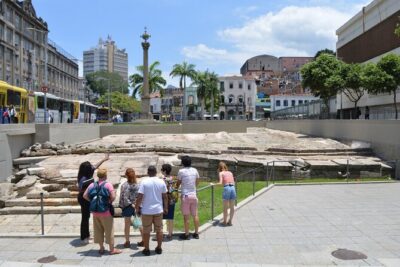
Explore Little Africa : Unveiling Afro Heritage in Rio de Janeiro
Read our review →Browse the lists this tour appears in