
Reviewed · HISTORICAL TOURS IN RIO DE JANEIRO
Explore Little Africa : Unveiling Afro Heritage in Rio de Janeiro
Little Africa is one of Rio’s most meaningful neighborhoods, even if it is not the postcard route. This tour stitches together churches, museums, and port-area landmarks into an Afro-Brazilian story told with a decolonial lens, and it moves at a human pace.
I particularly like the way you get both places and context. You spend real time at MUHCAB in Gamboa and at the Instituto de Pesquisa e Memoria Pretos Novos, so the story is not only emotional, it is also grounded in research and memory.
One thing to plan for: the topics can feel heavy, and there is a fair amount of walking plus a short VLT ride. Also note the New Black Institute is closed on Sundays, and during certain dates like Carnival and late December to early January, museums shut down.
Key things I’d watch for before you go
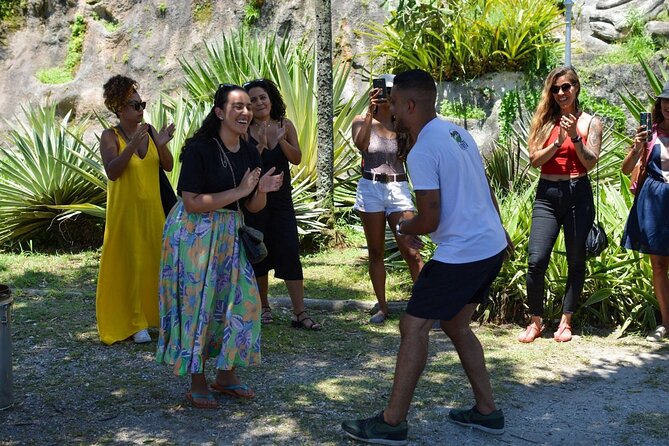
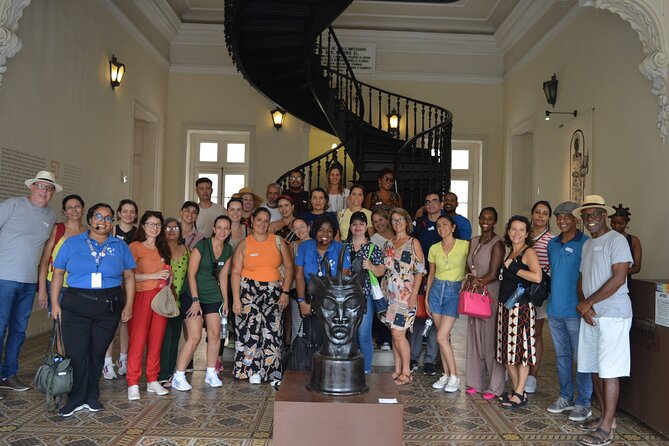
- Small group, max 20 people: easier for questions and pacing.
- Six focused stops across Centro, Gamboa, and Saúde: you see how the story stretches through neighborhoods.
- MUHCAB and Instituto de Pesquisa e Memoria Pretos Novos: research, memory, and Afro-Brazilian culture in one route.
- VLT public transport ride is included: saves energy and time between key areas.
- Guides get high praise for pacing and care: names you might meet include Raphael, Carolina, Rafael, Malu, Val, and Carol.
- Weather and closures matter: the tour requires good weather, and museums close on Sundays and during peak holiday periods.
Walking Rio’s Little Africa by feet and tram
You meet at Santuário de Santa Rita, in Largo de Santa Rita (Centro). From there, the tour threads together the city’s central streets, the port district area, and down into Saúde, ending at R. São Francisco da Prainha, 7, near Largo da Prainha.
The route is designed so you are not stuck in one museum room for the whole time. You get short external visits at several landmark stops, then museum time where it counts, like at MUHCAB and the Instituto de Pesquisa e Memoria Pretos Novos.
Duration is about 3 hours 30 minutes. For a city like Rio, that length is a sweet spot: long enough to feel like you learned something real, short enough to keep your day flexible.
More Historical Tours in Rio de Janeiro
- Rio de Janeiro Historical Center Walking Tour
★ 4.5 · 336 reviews - Private Walking and Cultural Tour Rocinha-Rio de Janeiro
★ 5.0 · 239 reviews - Discover Rio Little Africa: A Cultural and Historical Journey
★ 5.0 · 238 reviews
Price and what you actually get for $82.53
The price is $82.53 per person, and the tour includes all fees and taxes. You also get ticketing coverage for The New Black Institute, plus admission is included for the Instituto de Pesquisa e Memoria Pretos Novos stop.
What is not included is lunch and tips. That matters, because after a few hours of walking, you will likely want food soon after the tour ends in Largo da Prainha.
Value is strongest if you want more than a casual neighborhood stroll. You are paying for guided interpretation plus museum access where offered, not just viewpoints.
From Santuário de Santa Rita to a decolonial start
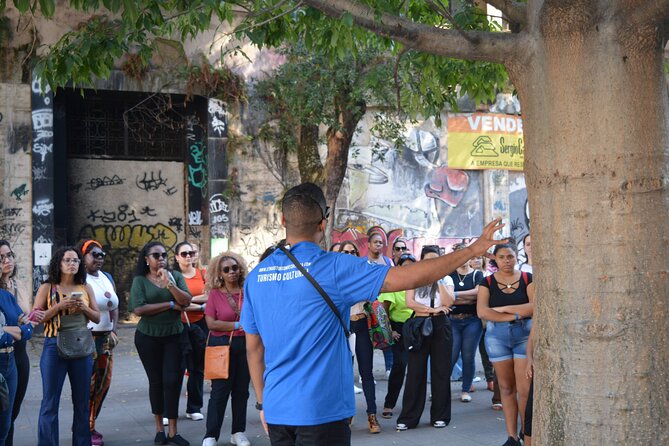
The tour begins with an external visit to Matriz da Paroquia de Santa Rita. You do not go inside on this stop, but you do get cultural and heritage-based interpretation that frames what you see through a decolonial narrative.
Why this start works: churches and historic religious landmarks often become invisible to visitors who are only looking at architecture. Here, you slow down and treat the place as a cultural document, not a backdrop for photos.
This is also a good moment to get your bearings. You will hear the themes the guide will keep returning to, so later stops make more sense when you connect the dots.
Instituto de Pesquisa e Memoria Pretos Novos, where research meets memory
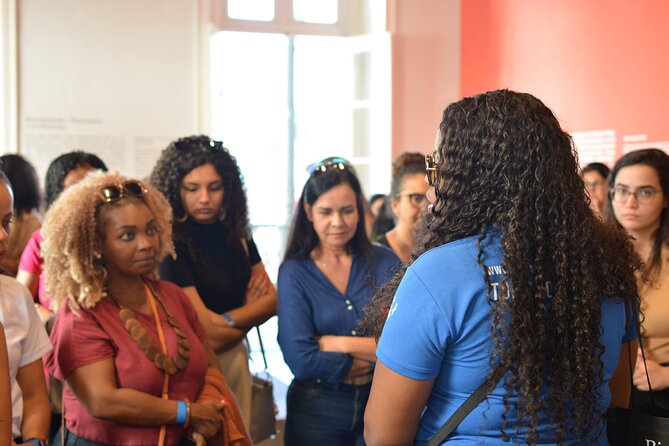
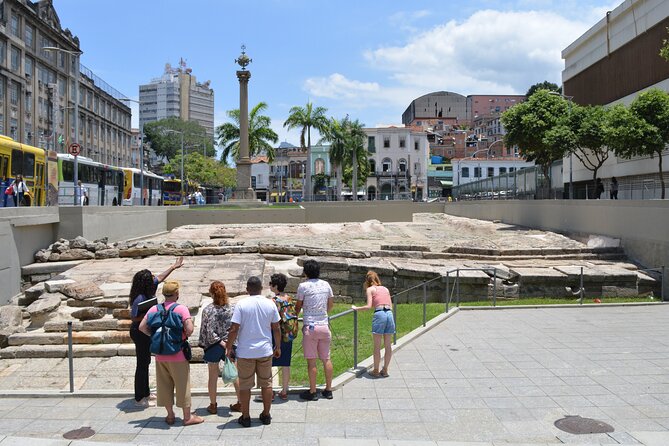
Next up is the Instituto de Pesquisa e Memoria Pretos Novos (IPN). This stop is an external visit with a focus on archaeology and memory, and admission is included (about 40 minutes).
This is one of the stops where the tour’s tone matters. The guidance aims to hold real historical weight without turning it into a lecture you tune out halfway through.
What you can expect in practice: you will likely spend time hearing how memory is preserved, and why the work is important for how Rio tells its own story today. The reviews back this up with consistent praise for guides who keep the information clear and human.
Another way to spend a day in Rio de Janeiro:
- Rio de Janeiro: 6-Stop Highlights of Rio with Lunch
★ 4.4 · 5,157 reviews - Christ the Redeemer Entry Ticket by Corcovado Train
★ 4.4 · 4,476 reviews - Rio’s City Tour – Tickets for Christ, Sugar Loaf & Lunch included
★ 5.0 · 4,389 reviews - Full Day: Christ Redeemer, Sugarloaf, City Tour & Barbecue Lunch
★ 4.5 · 3,142 reviews
MUHCAB in Gamboa: Afro-Brazilian history in museum form
At MUHCAB (Museu da História e da Cultura Afro-Brasileira), you shift into a museum focused on Afro-Brazilian history and culture, in the Gamboa region. This stop is also about 40 minutes, and the ticket is listed as free.
I like this mix because it gives your brain a place to rest for a moment. After you walk past landmarks tied to place and memory, you can sit with objects, explanations, and cultural context.
The Gamboa setting also helps. You start to see Little Africa not as a single street, but as a wider system of communities, neighborhoods, and cultural continuity.
If you are the type who normally speed-walks through museums, give yourself permission to slow down here. That is where the tour makes its strongest educational case for why these names and locations matter.
Cais do Valongo and Pedra do Sal, port district and sacred neighborhood
The route then reaches Cais do Valongo, described as a former wharf in Rio’s port district between present-day Coelho and Castro and Sacadura Cabral streets. This stop is about 30 minutes, and admission is free.
From there you move to Pedra do Sal, a historical and religious landmark in the Saúde neighborhood near Largo da Prainha. This is a 25-minute external visit, also free.
Two practical tips here. First, bring your patience for the kind of places where emotion runs high. Second, use your guide to connect meaning to the physical location, because these spots can look simple from the outside if you do not know what to ask.
What I like about putting these together is the contrast. You shift from a port district context to a religious landmark in a neighborhood that visitors often treat as a pass-through. The guide helps you see how everyday community life and broader historical forces overlap.
Largo São Francisco da Prainha, today’s Little Africa atmosphere
Your final neighborhood stop is Largo São Francisco da Prainha, a square that was formerly a symbolic territory of Little Africa marked by Black presence and zungus. Today, it is considered one of the cooler places by Time Out.
This is about 20 minutes, and it is also where the tour ends. If you want a smooth close to the experience, plan to linger here after your guide finishes, because this is the moment when the tour themes land in the real world you can still see.
One logistics note from real-world experience: depending on the time of day your tour runs, you may be dealing with fading light. If your start is later in the afternoon, plan for lower-quality photos by the end. Even just wearing brighter clothing or taking fewer wide shots helps.
Guides make or break a history tour, and this one has strong ones
The biggest pattern in the feedback is not just that the content is important, it is that the guides make it workable. Names that come up include Raphael, Carolina, Rafael, Malu, Val, and Carol.
Across those different guides, the tone stays consistent: clear explanations, room for questions, and a willingness to adjust pacing. One standout detail: some guides actively manage walking load for people who need it, so the experience still feels complete.
English ability also seems strong across the team, with one review noting it was a second language for their guide and still delivered well. That matters because you are spending hours on meaning, not just sightseeing.
If you are deciding between history tours in Rio, this is the one I’d prioritize if you care about context. A good guide helps you connect the dots without making you feel like you are failing a quiz about Brazilian history.
What to bring, and how to avoid common day-of problems
You should expect comfortable shoes. Several reviews specifically call this out because there is walking plus a short tram ride.
Bring water. Rio heat can be intense, and even if you are fit, you will feel it after a few stops. Also, plan snacks if you get hungry easily, since lunch is not included.
Timing is another real factor. The tour requires good weather, and during peak closures (like late December to early January and Carnival season), museum access can be affected. Also, the New Black Institute is closed on Sundays, so if you are traveling on a Sunday, check your dates before you lock it in.
If you care about photos, aim for better daylight. A couple of reviews point out that when the tour runs later, it starts getting dark toward the end, which makes pictures harder.
Who this tour suits best
This is best for you if you want Rio beyond the usual highlights. You are coming for Afro-Brazilian history and culture, and you want it in a place-based format, not a generic slideshow.
It also fits well if you like tours with a strong guide dynamic. The group is capped at 20, which helps with questions and pacing.
It is not the best fit if you have mobility limitations. The tour is listed as not recommended for disable people. If that is your situation, it is worth thinking hard about the walking and whether the team can accommodate your needs safely.
Should you book Little Africa in Rio?
I think you should book this tour if your goal is to understand Rio through Afro-Brazilian heritage, using real locations like MUHCAB, IPN, Cais do Valongo, Pedra do Sal, and Largo São Francisco da Prainha. The price feels fair because museum access and guided interpretation are part of what you are paying for, not extras you have to hunt down later.
You should skip or rethink it if you can only travel on days when museums are open, or if you are sensitive to heavy topics and long walks. Also consider doing it on a day with good weather and plan for water and snacks, since lunch is not included.
If you want one Rio experience that makes the city feel connected to lived history, this is one of the strongest ways to do it.
FAQ
How long is the Little Africa tour in Rio de Janeiro?
It runs for about 3 hours 30 minutes.
How much does the tour cost?
The price is $82.53 per person.
Where do you meet and where does the tour end?
You start at Santuário de Santa Rita in Centro, Rio de Janeiro, and you end at R. São Francisco da Prainha, 7 in Saúde (near Largo da Prainha).
What does the tour include in terms of tickets and transport?
It includes tickets for The New Black Institute, and admission is included for the Instituto de Pesquisa e Memoria Pretos Novos stop. A short ride on the VLT public transport is also included in the final price.
Are meals included?
No. Lunch is not included.
What should I expect regarding group size?
The tour has a maximum of 20 travelers.
Is the New Black Institute open every day?
No. It is closed on Sundays.
Are there times when museums close?
Yes. From 16th December to 5th January, and during Carnival season, all the museums will be closed.
Is it suitable for everyone with mobility needs?
It is not recommended for disable people. Service animals are allowed.
Newest Rio de Janeiro reviews
- Maracanã Matchday Tour – Ticket + Guide + Transfer★ 5.0 · 14 reviews
- Angra & Ilha Grande From Rio: Boat Tour With Barbecue and Drinks★ 5.0 · 14 reviews
- Private Tour with Churrasco in Vela Catamaran – Velas do Rio★ 5.0 · 14 reviews
- Half-Day Private Tour:Rio de Janeiro Highlights by Bernard Moraes★ 5.0 · 14 reviews
- Tijuca Forest Adventure★ 4.5 · 14 reviews
- Rio de Janeiro: Join a Fluminense game at Maracanã with locals★ 5.0 · 15 reviews
- Rio de Janeiro: Join a Botafogo soccer game with transport★ 5.0 · 15 reviews
- Christ the Redeemer, Selaron Steps and Santa Teresa Half-day Tour★ 4.5 · 15 reviews
Historical Tours in Rio de Janeiro, compared.
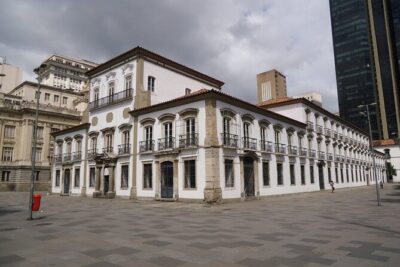

Private Walking and Cultural Tour Rocinha-Rio de Janeiro
Read our review →
Discover Rio Little Africa: A Cultural and Historical Journey
Read our review →
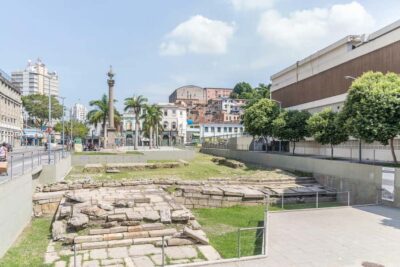
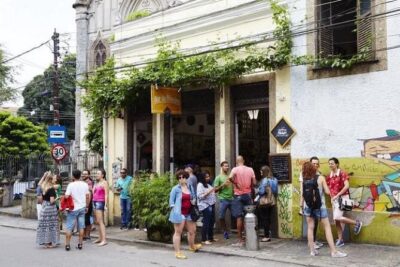
Rio Gastronomy: Culture & History Through The Art Of Food – Walking Group Tour
Read our review →
Adventure & History at Tijuca Forest (small group or private)
Read our review →
From the Past to the Present: A Historical Walking Tour of Rio
Read our review →Browse the lists this tour appears in