
Reviewed · HISTORICAL TOURS IN RIO DE JANEIRO
African Heritage and Docks Walking Tour
This African Heritage and Docks Walking Tour is interesting because it moves you from Rio’s present-day port edges into the stories of Afro-Brazilian culture. You trace the city’s connections to the docks and the African heritage that shaped modern Rio, stop by stop.
I like that the pace is practical and the sightseeing costs are low, with multiple stops marked free admission (no ticket hassles for the core route). I also like that this is a private format, so you get the kind of back-and-forth that makes details stick, including a guide named Rômulo, who was praised for pride in Rio and for making the experience feel life changing. One possible drawback: it is still a walking tour for about 2 hours 30 minutes, so plan comfortable shoes and weather-ready clothes.
Key highlights you will feel on this walk
- A focused, place-based route that connects Rio landmarks to Afro-Brazilian culture
- Cais do Valongo at the end, tied to where African slaves were disembarking in the 1800s
- Free admission stops at the main points along the walk (core sightseeing costs stay down)
- A private tour so your guide can answer questions and tailor the pacing to your group
- A guide who brings emotion and pride, with Rômulo specifically praised for his Rio storytelling
African Heritage and Docks: why this Rio walk is worth your time
Rio often gets sold as beaches, viewpoints, and party energy. This tour offers a different angle, one that helps you understand Rio society by looking at the spaces where history landed, moved, and transformed.
What makes it especially useful is that the story stays rooted in specific places you can stand in and look around at. You are not just hearing general background. You are walking through the same zones where Rio’s port life, faith, and community life grew together over time.
And for your planning, this is a straightforward commitment: about 2 hours 30 minutes, English-speaking, and guided the whole way. You start in the Centro port area and finish at Cais do Valongo.
More Historical Tours in Rio de Janeiro
- Rio de Janeiro Historical Center Walking Tour
★ 4.5 · 336 reviews - Private Walking and Cultural Tour Rocinha-Rio de Janeiro
★ 5.0 · 239 reviews - Discover Rio Little Africa: A Cultural and Historical Journey
★ 5.0 · 238 reviews
Price and what you truly get for $49.05
At $49.05 per person, this tour sits in the “good-value city experience” category, mainly because so much of the route is marked as free to access at the listed stops. Your included cost is the guide and the organized walking experience, not a stack of paid entries.
It also helps that you can use a mobile ticket. That means less scrambling right before your tour starts.
If you’re traveling with friends or family, the tour offers group discounts. That can make a private-style experience feel much more affordable, since you are splitting the guide cost rather than booking a bunch of separate options.
One thing to watch: there is an optional visit to Instituto dos Pretos Novos, and tickets for that optional stop are not included. If you want it, you may pay extra on the side. The good news is the main route you paid for is already designed to be complete.
Meeting point, route flow, and the 2.5-hour pacing
This tour starts near Praça Quinze de Novembro – Centro and ends at Cais do Valongo, Av. Barão de Tefé – Saúde. The end point matters because Cais do Valongo is tied directly to the docks where enslaved Africans arrived in the 1800s.
The order of stops also does a smart thing: it starts with present-day port structures and adjacent landmarks, then gradually moves toward sites that hold deeper cultural and historical weight. You get a slow build instead of a jump straight into the heaviest topic.
Stop times are short, which is practical. You are looking at each place with context, not spending all afternoon in one spot. Expect your time to be split roughly like this, based on the listed durations:
- Boulevard Olimpico: about 30 minutes
- Mauá Square: about 20 minutes
- Igreja de São Francisco da Prainha area: about 20 minutes
- Pedra do Sal: about 15 minutes
- Cais do Valongo: about 20 minutes
Boulevard Olímpico: from Olympic corridor to old colonial port memory
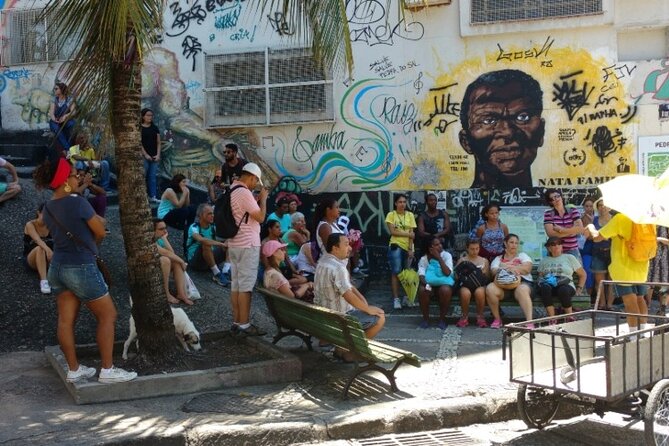
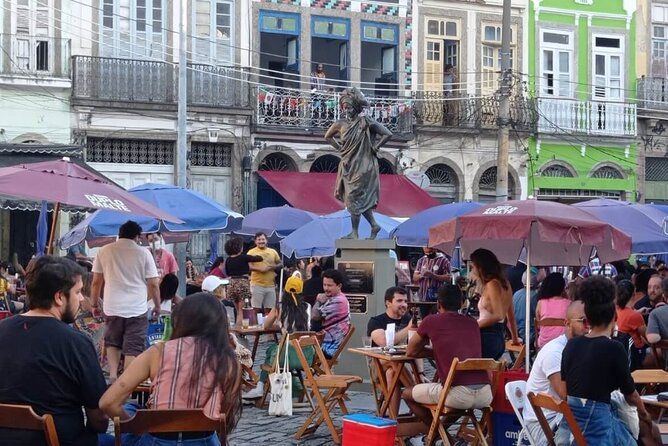
Your walk begins at Estátua do General Osorio, Praça XV, then heads toward Boulevard Olímpico.
This stop is interesting because it sits on top of a layered story. The corridor was built for the Olympics, and the description links it to where the old port area existed in colonial times. Even if you do not know the details yet, just standing there helps you understand how Rio reuses space, not just buildings. Old port life and later city reinventions overlap in the same physical zone.
What I like about this start for first-time visitors is that it gives you a mental map before the more specific cultural stops. You are not thrown into complex sites immediately. You are warming up your understanding of the area.
Potential drawback is also simple: the port-adjacent zones can feel more exposed to weather. Since this is an open-air walking tour, bring a cap or rain plan if the forecast looks rough.
More Walking Tours in Rio de Janeiro
- Rio de Janeiro: Rocinha Favela Walking Tour with Local Guide
★ 4.8 · 3,052 reviews - Rio De Janeiro: Half-Day Rocinha Favela Walking Tour
★ 4.7 · 2,272 reviews - 3 Hour Rocinha Favela Walking Tour with a Local Guide
★ 5.0 · 833 reviews - Favela Tour Rio de Janeiro – Vidigal Walking Tour by Russo Guide
★ 5.0 · 377 reviews
Mauá Square: Museum of Tomorrow and Rio Art Museum area
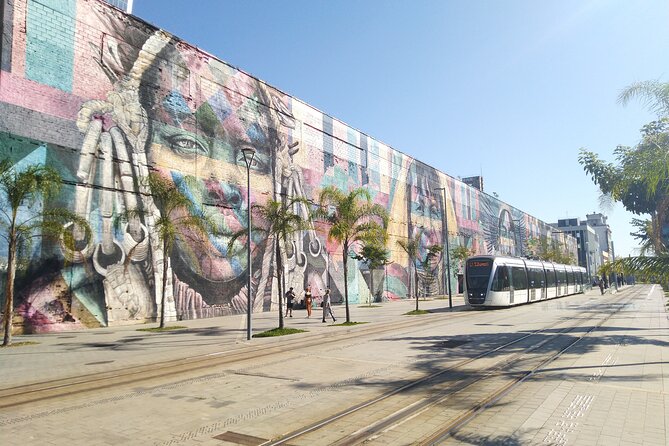
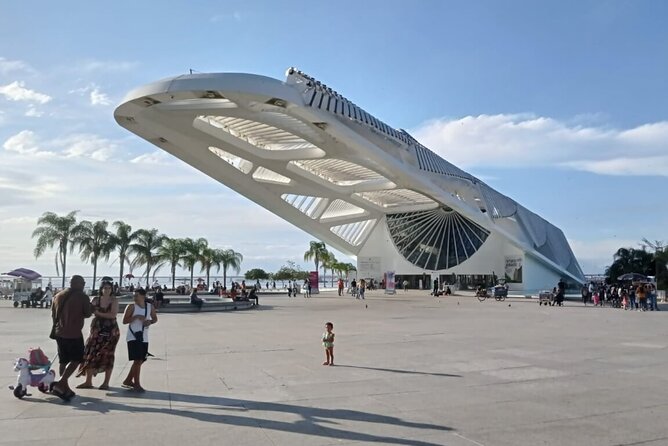
Next comes Mauá Square, a plaza by the Port where the Museum of Tomorrow and the Rio Art Museum are located.
Even though these are modern institutions, placing you here works. It lets you look at the contrast between what Rio builds now and what arrived here before. Your guide can connect the dots between “today’s Rio” and how the port environment shaped community identity and cultural development.
Mauá Square is also a good breather. The stop is around 20 minutes, which means you can orient, take photos, and reset your attention without losing the plot of the tour.
If you get tired easily, this is the kind of stop you will appreciate. It is open, and it gives you a chance to stand back, look around, and absorb what you’re being told.
Igreja de São Francisco da Prainha: bars in a buried former beach
Then you reach Igreja de São Francisco da Prainha in the Prainha area, described as a former beach that was buried, now a stronghold of local bars.
This stop is a great example of why a guided walk beats trying to piece everything together on your own. It is not just a church stop. It’s a “place changed over time” story, where the physical location shifted from beach to something else, and the social life moved in with local nightlife.
For you, that means you are learning how Afro-Brazilian culture connects to lived everyday Rio, not only museum-style history. When a neighborhood becomes known for bars and gathering, it is often because it kept community energy through changes.
A consideration here is that bar areas can mean more noise and activity. If you prefer quiet, go in expecting lively street atmosphere around the bars. Wear shoes you can move in comfortably, because the area is designed for people to mingle.
Pedra do Sal: where Carnaval and Afro-Brazilian religions spread
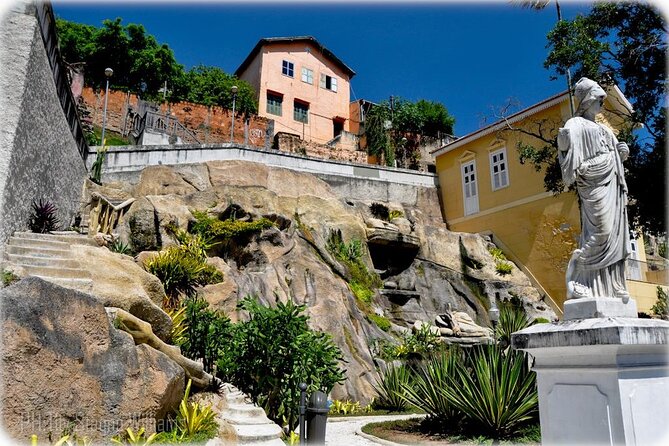
Next is Pedra do Sal, a historic site linked to where Carnaval and some African religions started to spread.
This is one of the stops that helps you understand Afro-Brazilian culture beyond a single label. Carnaval is not only a spectacle. It is also part of how communities express identity, memory, and belief systems. Tying that to African religions gives you a more complete picture of how culture travels and takes root.
I also like that the stop is short, about 15 minutes. It keeps the pace moving while the guide can focus on the key meaning of the site instead of turning it into a long lecture.
The main thing to plan for: treat this stop as a moment to listen. If you rush through just for photos, you miss the point. Your best payoff is the explanation you get while standing on that specific ground.
Cais do Valongo: the docks where enslaved Africans arrived
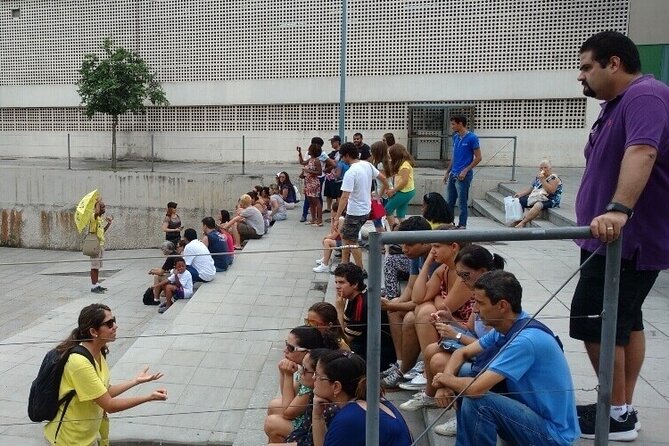
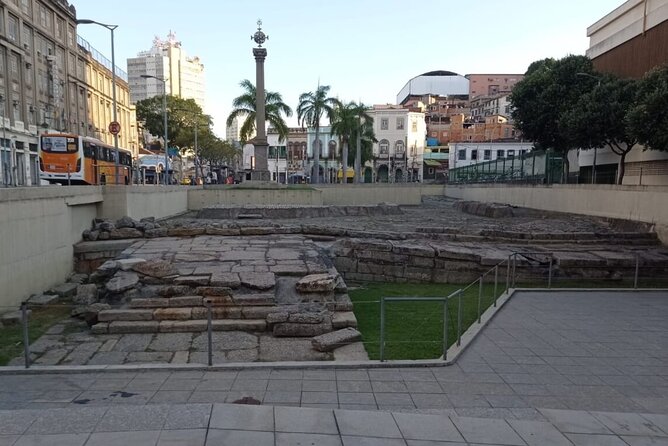
Finally, you end at Cais do Valongo, described as the last wharf where enslaved Africans disembarked in Rio. The stop is about 20 minutes.
This is the anchor of the whole tour. It is also the place where the title stops being marketing and becomes reality. The dock history here connects directly to the 1800s arrival of African slaves, and the site’s role in Brazilian history is the reason this tour exists.
You should go in with a respectful mindset. Even if you do not know all the details ahead of time, your guide can walk you through what the space represents and how it connects to Afro-Brazilian culture in Rio today.
Practical tip: Cais do Valongo has set opening hours listed as Monday to Saturday, 9:30 AM to 1:30 PM. Since the tour ends there, double-check that your tour time fits the operating window. If your schedule is tight, a mismatch could change what you can see at the end point.
Your guide, and why Rômulo’s storytelling is a big deal
The tour includes a tour guide, and one review singled out a guide named Rômulo with strong praise. The message was clear: his pride for Rio comes through in his presentation, and people felt emotionally moved by the way he connects history and culture to the places you walk through.
That kind of guide matters on this particular route. Without storytelling, a dockside walking tour can feel like a sequence of “interesting spots.” With the right guide, the same spots become a connected map of meaning.
Since this is a private tour where only your group participates, you have an advantage: you can ask follow-up questions without competing with a crowd. If you care about Afro-Brazilian culture, the private format can help you get answers that match what you are curious about.
What’s included, what’s not, and how to plan around it
Included:
- Tour guide
Not included:
- Transportation
- Food and drinks
- Tickets for the optional visit to Instituto dos Pretos Novos
So you should plan to handle your own getting to the start area near Praça Quinze de Novembro. Since the tour is near public transportation, you should be able to reach it without needing a car, but you still need to get yourself there.
For food, keep your stomach schedule in mind. Since the tour is about 2.5 hours, you might want a snack or a light meal before or after, especially if you plan to add the optional Instituto stop.
If you want to go for the optional Instituto dos Pretos Novos visit, budget extra for tickets. Also expect it might extend your overall time in the area, even if the core tour stays on track.
Who this tour is best for
This tour is a strong fit if you:
- Want Rio beyond the usual viewpoints and beach-only itineraries
- Care about Afro-Brazilian culture and want it tied to real places
- Enjoy walking tours where the guide gives context while you move
- Prefer a more personal experience with a private group format
It is also a good match for first-time visitors who feel overwhelmed by Rio’s size. The route is focused and the theme is consistent.
If you dislike walking, or if long stretches on your feet are tough for you, you might want a different type of tour. It is not listed as fully wheelchair tailored here, and “most travelers can participate” is the only accessibility note given. For any mobility concerns, it is worth checking directly with the provider before you book.
Quick practical tips before you go
A few simple things will make this tour smoother:
- Wear comfortable shoes since you will be on foot for about 2.5 hours
- Bring a hat or rain plan because the route is outdoors
- If you want the optional Instituto dos Pretos Novos visit, plan for extra ticket cost
- Since Cais do Valongo has hours (9:30 AM to 1:30 PM, Mon to Sat), try to match your tour time to that window
Should you book this African Heritage and Docks tour?
Book it if you want a guided, respectful walk that connects Rio’s port spaces to Brazil’s African heritage and Afro-Brazilian culture. The value is strong because so many of the core stops are free to access, and the private format helps the story land. The guide experience matters here too, and the praise for Rômulo is a clear signal that the tour can feel meaningful, not just informative.
Consider skipping or swapping if you want a casual, purely scenic stroll. This one is built for understanding. If you prefer light sightseeing with zero emotional weight, you might find the Cais do Valongo ending and the cultural themes heavier than expected.
FAQ
How long is the African Heritage and Docks Walking Tour?
It lasts about 2 hours 30 minutes.
What language is the tour offered in?
The tour is offered in English.
What is included in the price?
The tour includes a tour guide.
What is not included?
Transportation, food and drinks, and tickets for the optional visit to Instituto dos Pretos Novos are not included.
Where does the tour start and end?
It starts at Praça Quinze de Novembro – Centro, Rio de Janeiro (RJ) and ends at Cais do Valongo, Av. Barão de Tefé – Saúde, Rio de Janeiro (RJ).
Is there free cancellation?
Yes. You can cancel for a full refund up to 24 hours before the experience start time.
Newest Rio de Janeiro reviews
- Two Brothers Hike in Rio de Janeiro At sunrise★ 5.0 · 3 reviews
- Rio Paragliding Experience w/ Brazilian Female Champion video inc★ 5.0 · 3 reviews
- Tour 7 ( 4 hours ) : Tijuca National Park and Favela★ 4.5 · 3 reviews
- Tijuca Forest + Botanical Garden + Lage Park – by Alan Denis★ 5.0 · 3 reviews
- Rio de Janeiro by Yourself with English Driver by private Vehicle★ 5.0 · 3 reviews
- Personalized Tour in Rio. Main Attractions and Cultural Walk.★ 5.0 · 3 reviews
- Museum of Tomorrow – | Round Trip Transfer + 2 Tickets★ 4.5 · 3 reviews
- Stadium Stories & Food: Join a Maracanã stadium tour with a Local★ 3.5 · 3 reviews
Historical Tours in Rio de Janeiro, compared.

Private Walking and Cultural Tour Rocinha-Rio de Janeiro
Read our review →
Discover Rio Little Africa: A Cultural and Historical Journey
Read our review →
Rio Gastronomy: Culture & History Through The Art Of Food – Walking Group Tour
Read our review →
Adventure & History at Tijuca Forest (small group or private)
Read our review →
From the Past to the Present: A Historical Walking Tour of Rio
Read our review →Browse the lists this tour appears in