
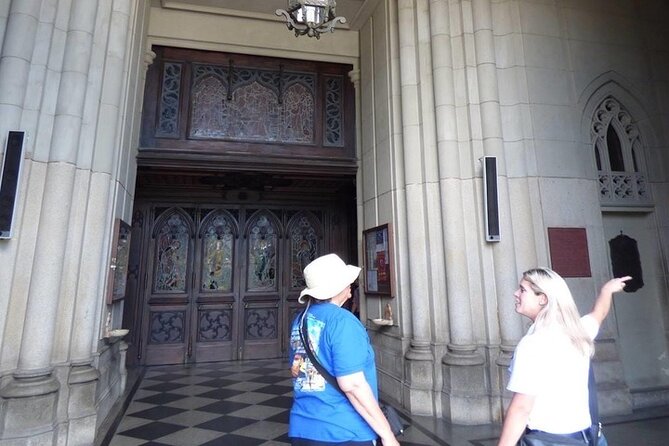
Reviewed · HISTORICAL TOURS IN RIO DE JANEIRO
Rio’s Downtown Walking Tour: Unveiling Rich History and Landmarks
What makes this tour interesting is how it strings together downtown Rio’s biggest photo stops into one easy route, starting in Copacabana and working toward Cinelândia Square. You’re not stuck deciding between landmarks, neighborhoods, and timing. It’s a focused 4-hour way to get your bearings fast and still learn what you’re looking at.
I love the flat walking route with short gaps for photos, restrooms, and coffee, so you can actually enjoy the day instead of racing your own legs. I also love the bilingual guide experience that brings places to life, including history coaching from guides such as Aldo, who gets praised for knowing his material.
One possible drawback is that the tour requires good weather, and some stops are exterior viewing or quick perimeter time. If you want long, sit-down museum-style visits, you may wish you had more hours on just one or two sites.
Key highlights to know before you go
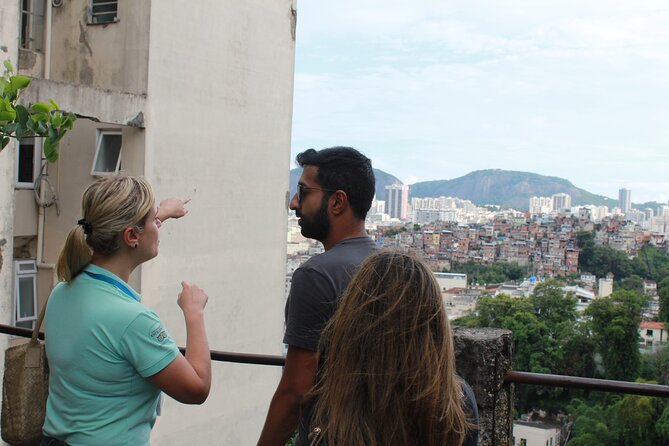
- UNESCO Cais do Valongo: a stop at the former arrival port linked to the story of enslaved Africans in Brazil
- Kobra’s Etnias mural: street art that spotlights key Black figures and cultural heritage
- Museum of Tomorrow: Santiago Calatrava architecture plus science and sustainability themes, mainly from the outside
- Royal Portuguese Reading Room: time set aside for the library that’s known for rare books and striking design
- Two classic pastry breaks: Confeitaria Colombo and the lesser-visited Casa Cavé for classic sweets and a reset
- A smooth end at Cinelândia Square: a central finish where lunch and major buildings are close by
Meeting at Copacabana, then a calm walk into downtown Rio
Your day starts at the JW Marriott Hotel Rio de Janeiro in Copacabana. The meeting point is at the hotel entrance, and the start time is 9:30 am, which is a smart way to beat some daytime crowds in the city center.
You’ll then head toward downtown, and the tour notes that transportation depends on traffic and group preference. Expect a practical mix, possibly including the subway, taxi, or ride-sharing to get you there without turning the start of your tour into a slog.
Once you’re in the downtown zone, the pacing is built around short, manageable walks. Distances are described as flat and not long between stops, with occasional breaks for restrooms, photos, and coffee. The group size is also capped at 10 travelers, which matters because it keeps the tour feeling more like a guided stroll than a chaotic sightseeing stampede.
More Historical Tours in Rio de Janeiro
- Rio de Janeiro Historical Center Walking Tour
★ 4.5 · 336 reviews - Private Walking and Cultural Tour Rocinha-Rio de Janeiro
★ 5.0 · 239 reviews - Discover Rio Little Africa: A Cultural and Historical Journey
★ 5.0 · 238 reviews
Valongo Wharf, Cais do Valongo, and the Afro-Brazilian memory you can see
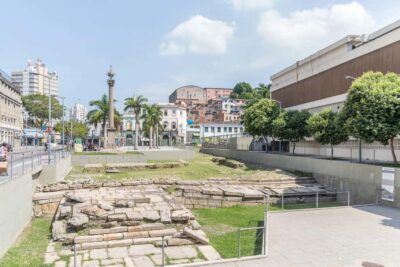
Stop 2 is Rio Wonder Cais do Valongo, also known as Cais do Valongo. This is one of the most emotionally powerful stops on the route because it’s a UNESCO World Heritage Site tied to the former arrival port for enslaved Africans.
What I like about placing this stop early is that it gives you a historical anchor before you start stacking architectural landmarks. Even if you only have a few minutes here, the location helps you connect what you’re seeing in the port area to the broader story of Afro-Brazilian history in Rio.
The tour keeps the visit short, around 10 minutes. That means you should come in ready to absorb the essentials, not to linger for a long deep reading. It’s still a meaningful stop, especially if your goal is to understand how different layers of Rio sit side by side.
Kobra’s Etnias mural, street art that names names
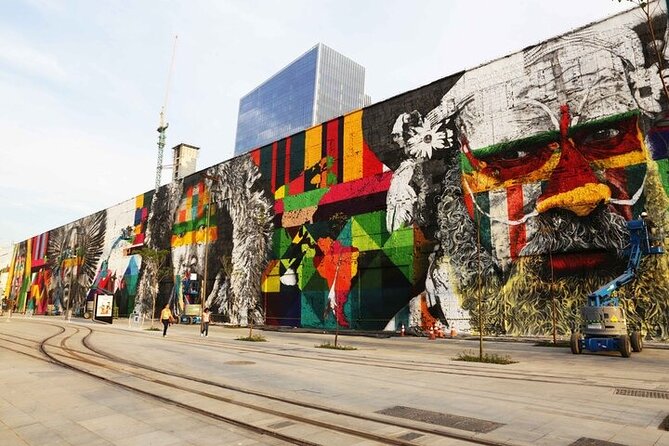
Next up is the Kobra Etnias mural by Eduardo Kobra. This is described as one of the city’s largest and most colorful murals, and the theme is very direct: honoring key Black figures and cultural heritage.
This stop does something useful for your brain during a long walking tour. After a heavy historical setting at Valongo Wharf, street art is a shift in tone, but it still connects to identity and memory. You get a visual landmark that you can remember on your way back through the city.
The time here is about 15 minutes, which is enough to look closely and take photos from a few angles. One consideration is that murals are best when you’re patient with details, so if you’re the kind of traveler who wants only wide overview shots, you may find yourself ready to move on quickly.
Museu do Amanhã and the Navy Cultural Center, science and maritime echoes
At Museu do Amanha (Museum of Tomorrow), you’ll spend around 10 minutes exploring the surroundings and taking photos from the outside. The museum is an architectural landmark designed by Santiago Calatrava, and the focus is science and sustainability.
Even without going deep into exhibits, this stop is worth it because the design is part of the story. It’s a clear example of how downtown Rio isn’t only preserved past, it’s also present-day thinking about the future.
Then you head to Espaço Cultural da Marinha, also known as the Navy Cultural Center. The tour description places it near the harbor and notes that it preserves Brazilian naval history, including old vessels and maritime exhibits, though the view is external.
Because it’s external viewing, you should think of it as a scenic and interpretive stop, not a full museum afternoon. The upside is you can keep momentum through the day without losing time to lines or internal browsing.
More Walking Tours in Rio de Janeiro
- Rio de Janeiro: Rocinha Favela Walking Tour with Local Guide
★ 4.8 · 3,052 reviews - Rio De Janeiro: Half-Day Rocinha Favela Walking Tour
★ 4.7 · 2,272 reviews - 3 Hour Rocinha Favela Walking Tour with a Local Guide
★ 5.0 · 833 reviews - Favela Tour Rio de Janeiro – Vidigal Walking Tour by Russo Guide
★ 5.0 · 377 reviews
Candelária and São José, baroque churches in the middle of modern life
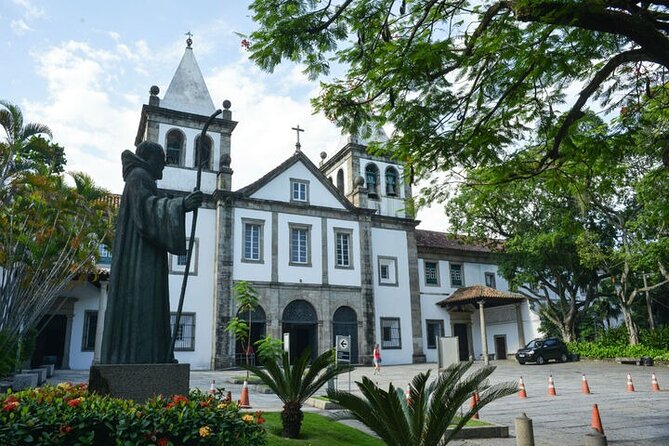
Stop 6 is Igreja de Nossa Senhora da Candelária (Candelária Church). You get about 10 minutes, and the key details are that it has a baroque façade and historical significance during colonial times, which makes it both visually striking and context-rich.
Stop 8 is Igreja do Glorioso Patriarca São José, a baroque church from 1608. The tour highlights a neat contrast here: it’s tucked between modern office buildings, which makes it easier to see old-world design sitting inside a working business area.
These churches are good “reset points” during a walking day. You pause, look up, and take in façades that tend to be covered in detail. If you like architecture and religious art styles, you’ll probably appreciate how much you can learn in short bursts when the guide connects each building to its era.
The trade-off is time. Both stops are brief, so you’re looking at exteriors and key features rather than settling in for an extended interior visit every time.
Centro Cultural Banco do Brasil and the republican-era architecture mood
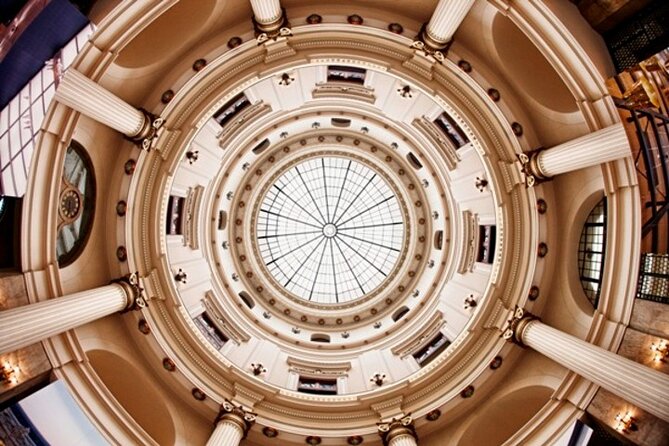
Stop 7 is Centro Cultural Banco do Brasil (CCBB Rio de Janeiro), a neoclassical building with rotating exhibitions and café space. The tour gives you about 20 minutes, and it also notes an optional break inside for coffee and restrooms.
This is a practical stop because downtown sightseeing can wear you down fast. Having a cultural center with a sit-down option helps you keep the tour enjoyable rather than “just checking boxes.”
After that, you’ll reach Stop 9: Assembleia Legislativa do Estado do Rio de Janeiro. The exterior focus here is described as an impressive early 20th-century building reflecting Brazil’s republican-era architecture.
Then the tour moves to Stop 10, Praça XV with the Pyramid Fountain (Chafariz da Pirâmide). This fountain dates to 1789 and is attributed to Mestre Valentim, and the stop is framed as one of the few remaining colonial monuments in the area.
Together, these stops form a nice arc. You’re seeing multiple eras in a compact area, and it helps you understand downtown Rio as a layered city rather than a single time period. If you prefer one era at a time, you might wish the tour slowed down, but the payoff is that you get the big picture quickly.
Arco do Teles, cobblestones, and Paço Imperial, the monarchy centerpiece
Stop 11 is Arco do Teles, a colonial alley known for its cobblestones, bars, and preserved architecture. The tour also notes it’s a popular filming location, which can add a fun extra layer if you recognize the look of old-styled streets in movies.
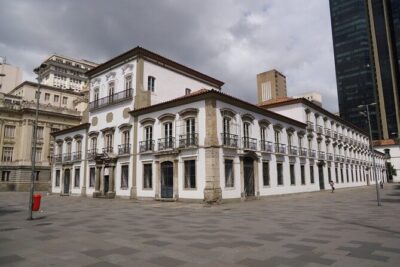
Stop 12 is Paco Imperial (Imperial Palace), a major highlight at about 15 minutes. The tour describes it as a former royal residence and political center during Brazil’s monarchy.
This is one of the easiest stops to “feel” because you can sense the importance just by how central and formal the imperial role is. It’s the kind of place that helps your guide’s storytelling click, especially if you’ve been picking up timeline threads all morning.
Since you only have limited time here, aim to take a quick look at key exterior features and then let the guide connect the dots. That’s where a guided tour adds value, instead of just being a photo walk.
São Bento Monastery, baroque interiors, and the chance for Gregorian chants
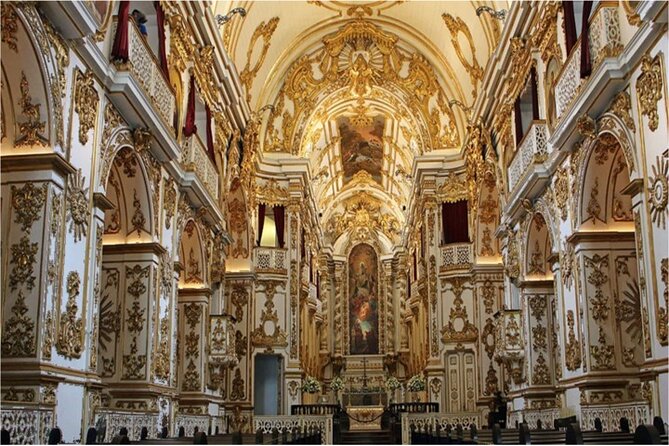
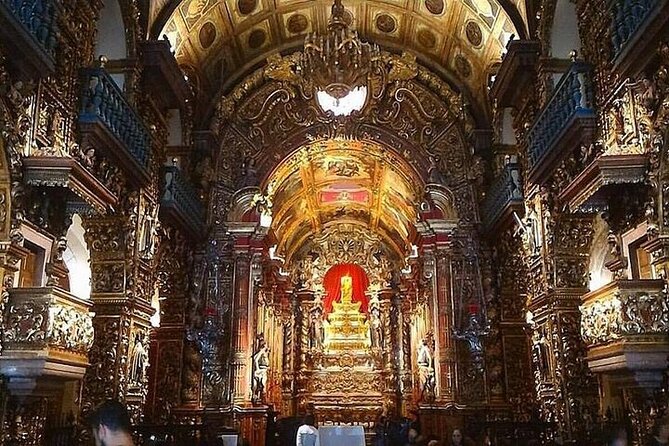
Stop 13 is Mosteiro De Sao Bento (São Bento Monastery). The tour calls it a masterpiece of Brazilian baroque, and it specifically points to richly gilded interiors. If time and the schedule allow, you may be able to visit inside to witness Gregorian chants.
This is the most “conditional” stop on the route, because the itinerary says an inside visit depends on time and the schedule. Still, even an exterior view and a guided intro can be worthwhile because the monastery is described as a standout for baroque detail.
The practical value is that it’s a shift from palaces and government buildings into a spiritual, artistic setting. You get a different kind of Rio, one that’s about sound, craft, and visual richness.
If inside access is available during your tour, it’s also a great moment to slow down your pace for a few minutes. If it’s not, don’t worry too much, because the route still gives you major architecture and a strong cultural finish.
The Royal Portuguese Reading Room and the two café stops that keep you going
Stop 14 is Real Gabinete Português de Leitura, the Royal Portuguese Reading Room. The tour frames it as one of the most beautiful libraries in the world, known for rare books and stunning Neo-Manueline architecture, and you get about 25 minutes.
If you love libraries, this stop is a big reason to book. A Neo-Manueline design already sounds like a feast for the eyes, and the rare book angle makes it feel like more than just a pretty building. Even if you don’t get long time inside, 25 minutes is enough to take in architecture and absorb what makes it special.
Then comes the day’s breathing moment: Stop 15, Confeitaria Colombo. You’re told it’s a 1894 Belle Époque café, traditional and elegant, and you’ll have time for a coffee break. This is the kind of stop that turns a walking tour into an enjoyable outing, not a endurance test.
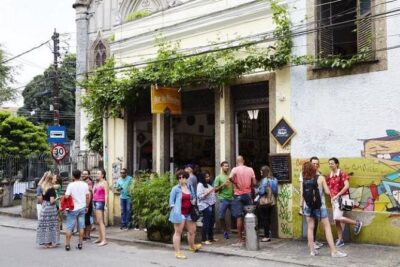
Stop 16 is Casa Cavé, another pastry shop. It’s described as smaller, less visited, and a historic option serving classic Portuguese sweets. This is a smart pairing with Confeitaria Colombo because it gives you a comparison between a major landmark café and a quieter option.
One consideration here is cost. The itinerary labels admission tickets as free at the sights, but café food and drinks are not stated as included. So bring cash or a card for pastries and coffee, and think of it as part of your personal budget.
Finishing in Cinelândia Square, where the next steps are easy
Stop 17 is Cinelândia, also written as Cinelândia Square. The tour ends in this iconic plaza surrounded by major landmarks including the Theatro Municipal, the National Library, and the Fine Arts Museum.
I like finishing here because it’s practical. You’re in a central, well-connected area, and lunch or extra sightseeing feels simple from here. The tour also notes that you get time, about 15 minutes, to settle the tour story in your head and take in the surrounding landmarks.
At the end, the activity notes that it ends back at the meeting point. So you’re not left figuring out how to get home, though the exact method isn’t spelled out in the details you were given. The main idea is that the experience is designed as a loop that returns you to where you started.
Price and value for a 4-hour downtown Rio walking tour
The price is $92.00 per person for about 4 hours. For that you’re getting a professional bilingual private tour guide, and the tour price includes VAT and taxes. There are also group discounts mentioned, and the group size limit of 10 travelers helps keep the guide interaction meaningful.
The value improves because so many stops are structured as free admission ticket time, including the UNESCO site and the major landmark locations. You also get a route that is described as flat, with short distances between attractions. That reduces the usual “what else can I fit today” headache.
If you’re comparing to a do-it-yourself plan, the biggest advantage is the pacing plus interpretation. Downtown Rio has a lot of places that look impressive from the outside, but a good guide helps you understand what each one represents. Guides like Aldo being praised for knowing history is a strong clue that this isn’t just a scenic walk.
If your goal is a long day of inside museum time, you might feel the tour is too tight. If your goal is getting the essentials, understanding what you’re seeing, and still having energy for lunch, the timing is well matched.
Who should book this tour
This is a strong fit if you want a first-time, downtown-focused introduction to Rio with guided context. It’s also a good choice if you appreciate architecture, churches, and major cultural institutions more than beach time.
The tour also seems manageable for most people because the walking is described as flat with short distances. Still, it requires good weather, so build some flexibility into your plans if you’re traveling during a rainy period.
Since it runs in English and is listed as offered in English, it’s well suited if you want guidance you can follow clearly without translation gymnastics. The cap of 10 travelers also means it should feel more personal than a big-bus style crowd tour.
Should you book this Rio downtown walking tour
I’d book it if you want a structured, guided way to see a lot of downtown Rio without the stress of route planning. The mix is especially good: UNESCO Valongo Wharf, major churches, an imperial palace stop, a baroque monastery option, and a top-tier library finish, all tied together by a bilingual guide.
Skip it if you’re the type who only likes long indoor museum hours and hates quick exterior photo stops. In that case, you might prefer to focus on one or two sites and spend more time on them.
If you’re deciding on timing, note that it’s commonly booked about 14 days in advance. If your schedule is fixed, I’d secure a spot early to avoid missing your preferred day.
FAQ
How long is the Downtown Walking Tour in Rio de Janeiro?
The tour runs for about 4 hours.
Where do I meet the guide, and where does the tour end?
You meet the guide at the JW Marriott Hotel Rio de Janeiro in Copacabana (Av. Atlântica, 2600). The tour ends back at the meeting point.
Is admission included for the sights on the itinerary?
The itinerary lists admission tickets as free at each stop.
Is the tour offered in English, and is it private?
It is offered in English and is guided by a professional bilingual private tour guide.
How many people are in the group?
The maximum group size is 10 travelers.
What happens if weather is bad?
This experience requires good weather. If it’s canceled due to poor weather, you’ll be offered a different date or a full refund.
Newest Rio de Janeiro reviews
- Two Brothers Hike in Rio de Janeiro At sunrise★ 5.0 · 3 reviews
- Rio Paragliding Experience w/ Brazilian Female Champion video inc★ 5.0 · 3 reviews
- Tour 7 ( 4 hours ) : Tijuca National Park and Favela★ 4.5 · 3 reviews
- Tijuca Forest + Botanical Garden + Lage Park – by Alan Denis★ 5.0 · 3 reviews
- Rio de Janeiro by Yourself with English Driver by private Vehicle★ 5.0 · 3 reviews
- Personalized Tour in Rio. Main Attractions and Cultural Walk.★ 5.0 · 3 reviews
- Museum of Tomorrow – | Round Trip Transfer + 2 Tickets★ 4.5 · 3 reviews
- Stadium Stories & Food: Join a Maracanã stadium tour with a Local★ 3.5 · 3 reviews
Historical Tours in Rio de Janeiro, compared.

Private Walking and Cultural Tour Rocinha-Rio de Janeiro
Read our review →
Discover Rio Little Africa: A Cultural and Historical Journey
Read our review →
Rio Gastronomy: Culture & History Through The Art Of Food – Walking Group Tour
Read our review →
Adventure & History at Tijuca Forest (small group or private)
Read our review →
From the Past to the Present: A Historical Walking Tour of Rio
Read our review →Browse the lists this tour appears in