
Reviewed · HISTORICAL TOURS IN RIO DE JANEIRO
Little Africa Unveiled: lively Afro-Brazilian Heritage in Rio
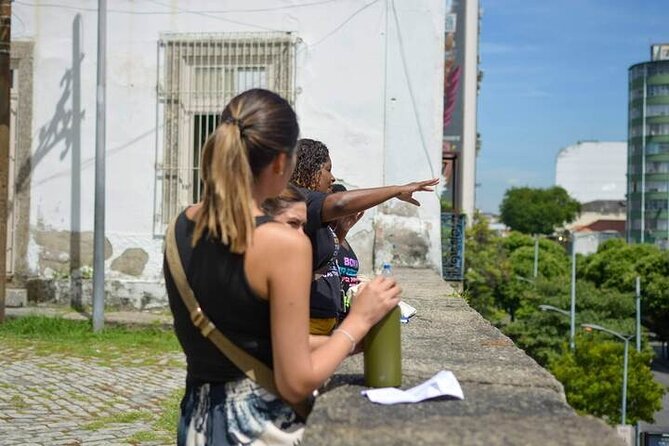
Little Africa Unveiled is interesting because it uses Rio’s streets as a living classroom, linking samba neighborhoods to the places where enslaved Africans arrived and were remembered. I love how the route moves from sacred memorial sites to museum stops, so you get both emotion and context. I also like the small group size, max 15, which keeps the pace human. One consideration: part of the tour is spent outdoors, so if the weather turns, the route can feel longer than the clock says.
The tour is especially strong if you want Afro-Brazilian history explained clearly, not just named. Guides such as Joyce and Carolina have been praised for making the story understandable and connecting it to broader experiences, including parallels with the US. Your drawback to watch for is the mix of heavy topics with fun street energy at the end, so it helps to come with a respectful, open mindset.
Key things to look for on this route

- A tight Centro route that connects churches, museums, and waterfront memory
- MUHCAB and IPN focused on Afro-Brazilian culture and the Pretos Novos Cemetery story
- Cais do Valongo as the major transatlantic slave port, scaled to roughly one million people passing through
- Valongo’s Hanging Garden showing how the city reshaped old spaces during the Belle Époque
- Pedra do Sal as a gathering place tied to the birth of samba music
- Small group, bilingual guide for better pacing and real Q and A time
Price and timing, and why $89 can still feel fair

This tour costs $89 per person and runs about 3 hours 30 minutes, starting at 2:00 pm. For Rio, that’s a mid-range price for a guided walk that also includes admissions at two key indoor stops. I think the value is in the structure: you are paying for a guide who can connect sites across time, from colonial burial memory to early 1900s urban changes, then end in a neighborhood where samba culture lives out loud.
Your schedule is also reasonable. A mid-afternoon start means you can still catch good daylight for the outdoor parts, and you’re not forced into an early wake-up. There is no lunch or drinks included, so if you tend to get hungry during walking tours, plan a snack stop on your own before or after. It also helps to wear comfy shoes. Lapa and the stone-paved street portions are not made for dress shoes.
Group size matters too. With a maximum of 15, you’ll usually get easier navigation, fewer bottlenecks, and more time for questions instead of the classic rapid-fire, no breathing tour style.
More Historical Tours in Rio de Janeiro
- Rio de Janeiro Historical Center Walking Tour
★ 4.5 · 336 reviews - Private Walking and Cultural Tour Rocinha-Rio de Janeiro
★ 5.0 · 239 reviews - Discover Rio Little Africa: A Cultural and Historical Journey
★ 5.0 · 238 reviews
Windsor Guanabara hotel start, Santa Rita Church, and getting the emotional map first

The tour begins back at the Windsor Guanabara Hotel in Centro. From there, you start close to Largo de Santa Rita and the Santa Rita Church, a place you can easily walk past without realizing what sits underneath the story. The church is built on the site of the first cemetery for enslaved people, and it blends colonial and baroque details with heavy historical meaning.
This first stop is smart. You get grounding early, before the route moves to museums and the port sites tied to transatlantic slavery. The church itself is free to enter on the tour, and the time allows you to take in both the architecture and the message without feeling rushed. If you like context, this opening gives you a mental map for everything you’ll see later, especially how memory is layered over the city.
Possible downside: if you prefer purely light sightseeing, the cemetery connection will hit with weight right away. For most people, that’s the point, and it makes the later samba stops feel earned rather than disconnected.
MUHCAB museum stop: learning Afro-Brazilian culture through objects and documents
Next up is MUHCAB, the Museum of History and Afro-Brazilian Culture. You’ll spend about 40 minutes here, and the admission is included. What I like about this stop is that it’s described in practical, evidence-based terms: you’re looking at artifacts, artworks, and documents that show experiences and contributions across history.
Museums can sometimes feel like big rooms of text. This one is positioned as a culture and history bridge, so you’re not only absorbing dates. You’re seeing how Afro-Brazilian life was recorded, shaped, and passed down. Even if your background is basic, the format should help you connect the dots between everyday culture and the historical forces that created it.
Because the tour is only 3.5 hours, this museum stop is short enough to stay focused. It’s long enough to feel like more than a photo stop, which is where many museum visits fail on walking tours.
Instituto de Pesquisa e Memoria Pretos Novos (IPN): the Pretos Novos cemetery story

Then you move to the Instituto de Pesquisa e Memoria Pretos Novos (IPN), also about 40 minutes, with admission included. This is dedicated to research and preservation tied to the African diaspora in Brazil, and its main focus is the history and memory of the Pretos Novos Cemetery.
This matters because a cemetery is not just about the past. It is about who gets remembered and how. In the colonial period, the Pretos Novos cemetery functioned as a burial ground for enslaved Africans and their descendants. With a guided stop here, you’re not treating the site like an abstract idea. You’re treating it like a real location in the city where lives were laid to rest.
A practical tip: if you’re the type who likes to ask questions, this is a good moment. The guide can usually explain how research organizations work with memory, and why preservation takes effort long after the original events.
Another way to spend a day in Rio de Janeiro:
- Rio de Janeiro: 6-Stop Highlights of Rio with Lunch
★ 4.4 · 5,157 reviews - Christ the Redeemer Entry Ticket by Corcovado Train
★ 4.4 · 4,476 reviews - Rio’s City Tour – Tickets for Christ, Sugar Loaf & Lunch included
★ 5.0 · 4,389 reviews - Full Day: Christ Redeemer, Sugarloaf, City Tour & Barbecue Lunch
★ 4.5 · 3,142 reviews
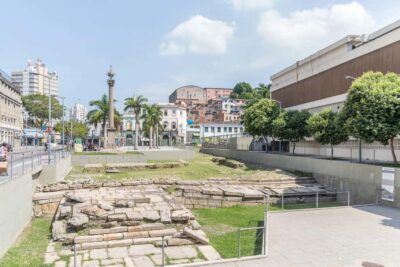
Cais do Valongo: where the port scale becomes real

The route then goes to Cais do Valongo, the port known as the largest for African slaves during the transatlantic slavery trade. The tour gives you about 20 minutes here, and it’s free to visit on this route. This stop is heavy, but also important, because it’s where the story becomes physical and measurable in scale.
The data provided for this site is stark: from the late 1700s into the early 1800s, an estimated one million enslaved Africans passed through this port. Hearing that number in a guided context helps you understand why Rio’s neighborhoods and cultural life cannot be separated from what happened on the waterfront.
The time is short, so you won’t get a long lecture. Instead, expect the guide to point out what the site means and how it connects forward to later memory work and cultural survival. If you want to photograph, do it carefully and respectfully, and give yourself a moment to just stand there before you start snapping.
Hanging Garden of Valongo and the Belle Époque makeover of old places

From Cais do Valongo, you head to the Hanging Garden of Valongo, sometimes described as the suspended garden. You’ll have about 20 minutes, and it’s a free stop on the tour.
What I find compelling here is the contrast. This garden came about in the early 1900s as part of Rio’s beautification efforts under the Pereira Passos administration, a period often called the Belle Époque. You’re seeing how the city reworked space, sometimes with a kind of selective attention to what was beneath or beside what got redesigned.
This stop helps you understand a tricky lesson: cities change, and sometimes the change is partly about hiding and partly about showing. A guided walk like this gives you language for that tension, so the garden doesn’t feel like a cute detour. It feels like a clue about how public memory can shift over time.
Largo de São Francisco da Prainha: samba, beer, and a social heartbeat

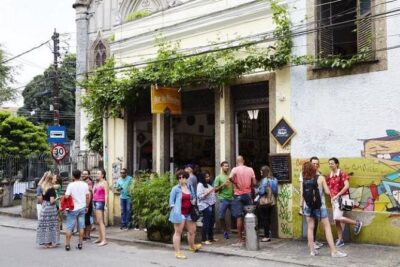
The tour then moves to Largo de São Francisco da Prainha, another roughly 20-minute stop, also free. Here, the tone shifts. This is a gathering place where you’ll find samba energy and ice-cold beer, plus a lively street atmosphere. It’s also described as one of the coolest spots in the world, noted by Time Out.
I like this stop because it shows continuity. Culture did not end with tragedy. Afro-Brazilian community life kept going, in music, in meeting places, and in everyday rituals. When you reach this point in the tour, you can feel how the earlier history frames the later street culture rather than swallowing it.
Practical note: this is where you might want to pause and watch. Even if you do not plan to join in, people-watching here can be useful. You’re looking at the living side of the heritage you learned earlier.
Beco João Inácio and Mosaico Hilário Jovino in Lapa

Next is Beco João Inácio in the Lapa neighborhood. You’ll spend about 20 minutes, and it’s free. This is a small, historic narrow street known for steep hills and stone pavement. The vibe is charming and old, with houses that have been around for over a century.
Then, the route includes Mosaico Hilário Jovino, a colorful tile mosaic that covers a long wall in that area. It’s the kind of street art element you can miss if you rush.
Why this stop works on this particular tour: it’s not only about looks. It’s about scale and texture. Narrow streets and old stone surfaces help you understand how neighborhoods evolve and how culture stays embedded in walkable spaces. It also gives your legs a change of scenery after the more reflective stops.
If you have mobility issues, the steep parts are worth keeping in mind. The tour says most travelers can participate, but the street terrain matters. Choose your shoe grip level wisely.
Pedra do Sal: where samba music and African-Brazilian gathering meet
The last major stop is Pedra do Sal, sometimes called Pedra do Sol or the Stone of the Sun. It’s another 20-minute free visit and is tied to Afro-Brazilian community gatherings. The site is also considered the birthplace of samba music.
This end point is well chosen. You’ve spent hours learning how history is preserved through churches, museums, research institutes, and port memory. Then you finish somewhere where music and community life are directly connected to that history.
If you’re taking family or friends with mixed interests, this is the moment that can bring everyone onto the same page. Even if you don’t know samba details, you’ll understand that this place is a cultural anchor, not just a viewpoint.
What the bilingual guide adds (and why it matters)
Included with the tour is a bilingual tour guide, and that’s a big deal for this subject. Afro-Brazilian history has layers, and small wording choices can change the meaning. The guide can help you connect the dots between sites, explain why certain places were chosen for remembrance, and keep the story understandable within a short time.
The feedback also points to guides like Joyce and Carolina making a difference through clear explanations and energy. One guide style mentioned was connecting the African diaspora story in Brazil to parallel experiences in the US. That kind of comparison can be helpful if you’re using your own knowledge as a starting point.
Also, with a max group size of 15, you’re more likely to get answers instead of just listening to a monologue while walking.
How to get the most out of this tour
Here are a few practical ways you’ll enjoy it more, especially if it’s your first time focusing on this part of Rio:
- Bring water, since meals and beverages are not included.
- Expect a mix of reflective history and lively street culture, plan your mood accordingly.
- Take notes on the names you hear, Santa Rita, Pretos Novos, Valongo, Pedra do Sal. They help you keep the story straight.
- If you like questions, ask early. The guide will have the best flow before the route speeds up.
- Dress for the weather. The experience requires good weather, and part of the tour is outdoors.
Should you book Little Africa Unveiled?
Book it if you want more than a sightseeing checklist. This tour is built to connect Afro-Brazilian culture to the physical sites tied to slavery memory in Rio, then end in neighborhoods where samba culture is alive. With admissions at MUHCAB and IPN included, plus a bilingual guide and a small group, it’s also a good value for what you’re seeing.
Skip it only if you strongly prefer light entertainment and avoid heavier historical subjects. The route includes port and cemetery related memory, and it does not treat those lightly. If that’s okay for you, then the balance of education and street culture makes it a standout way to understand Rio beyond the usual postcards.
FAQ
How long is the Little Africa Unveiled tour?
It runs for about 3 hours 30 minutes.
Where does the tour start?
The meeting point is the Windsor Guanabara Hotel at Av. Pres. Vargas, 392 – Centro, Rio de Janeiro – RJ, 20071-000, Brazil.
What time does the tour start?
The start time is 2:00 pm.
What is the tour price?
The price is $89.00 per person.
Is a guide included?
Yes. A bilingual tour guide is included.
Are museum or site admission fees included?
Admission is included for MUHCAB and the Instituto de Pesquisa e Memoria Pretos Novos (IPN). Other stops listed on the route have admission tickets marked as free.
Does the tour include lunch or drinks?
No. Lunch, meals, and beverages are not included.
How large is the group?
The tour has a maximum of 15 travelers.
Does the tour require good weather?
Yes, the experience requires good weather. If it is canceled due to poor weather, you will be offered a different date or a full refund.
Can I cancel for a full refund?
Yes, free cancellation is available. You can cancel up to 24 hours in advance for a full refund.
Is the tour suitable for most travelers?
The info says most travelers can participate.
Newest Rio de Janeiro reviews
- Two Brothers Hike in Rio de Janeiro At sunrise★ 5.0 · 3 reviews
- Rio Paragliding Experience w/ Brazilian Female Champion video inc★ 5.0 · 3 reviews
- Tour 7 ( 4 hours ) : Tijuca National Park and Favela★ 4.5 · 3 reviews
- Tijuca Forest + Botanical Garden + Lage Park – by Alan Denis★ 5.0 · 3 reviews
- Rio de Janeiro by Yourself with English Driver by private Vehicle★ 5.0 · 3 reviews
- Personalized Tour in Rio. Main Attractions and Cultural Walk.★ 5.0 · 3 reviews
- Museum of Tomorrow – | Round Trip Transfer + 2 Tickets★ 4.5 · 3 reviews
- Stadium Stories & Food: Join a Maracanã stadium tour with a Local★ 3.5 · 3 reviews
Historical Tours in Rio de Janeiro, compared.

Private Walking and Cultural Tour Rocinha-Rio de Janeiro
Read our review →
Discover Rio Little Africa: A Cultural and Historical Journey
Read our review →
Rio Gastronomy: Culture & History Through The Art Of Food – Walking Group Tour
Read our review →
Adventure & History at Tijuca Forest (small group or private)
Read our review →
From the Past to the Present: A Historical Walking Tour of Rio
Read our review →Browse the lists this tour appears in