

Reviewed · HISTORICAL TOURS IN RIO DE JANEIRO
Pedicab Tour of the Historical City Centre in Rio De Janeiro
Rio’s Centro can feel like a lot at once, but this pedicab tour keeps it human. You glide between big sights, hear the stories behind the buildings and street art, and spend less time fighting traffic on foot in the heat.
What I really like is how the route mixes major monuments with smaller, meaningful stops, so you come away with more than just postcard views. I also love the built-in photo timing, like the long views at Candelária Church and the dramatic waterfront feel near Cais do Valongo. One drawback to plan for: several attractions are outside the pedicab window only briefly, and a few key interiors require separate tickets, so you may want to decide in advance what you actually want to enter.
Key takeaways before you go
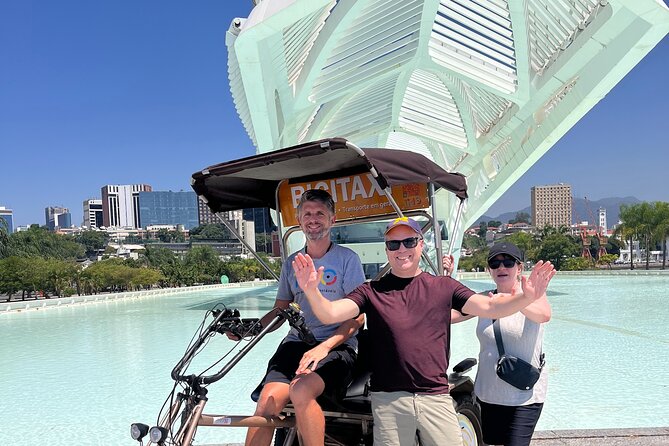
- A true “less walking, more seeing” format, ideal for hot, humid afternoons
- Centro to port area in one loop, with stops that range from theaters to UNESCO site
- Free exterior visits at many landmarks, with a few stops that need paid entry
- Up to 8 people, so the guide can steer pace and photo stops without rushing
- Strong narrative focus, including political buildings and Afro-Brazilian heritage sites
- Good-weather dependent, since the whole experience is outdoors
Why a pedicab tour works so well in Rio’s Centro

In Rio’s downtown, the streets and plazas are spread out just enough that walking can eat up your energy fast. A pedicab fixes that. You get the freedom to stop when something catches your eye, but without the constant start-stop of taxis or the sweat of long stretches on foot.
This is also a “big city, tight time” win. You have about 3 hours 30 minutes, and the tour’s rhythm is built around quick moves between places, not long ticket lines. That means more time looking, listening, and taking photos, and less time thinking about logistics every 10 minutes.
Finally, this style of tour feels personal. The group size is small, and the guides who run it tend to explain with stories, not just dates. In past rides, guides like Michael Gibson and Carlos were specifically called out for giving clear, enjoyable commentary and adjusting the pace for the group.
More City Tours in Rio de Janeiro
- Rio’s City Tour – Tickets for Christ, Sugar Loaf & Lunch included
★ 5.0 · 4,389 reviews - Full Day: Christ Redeemer, Sugarloaf, City Tour & Barbecue Lunch
★ 4.5 · 3,142 reviews - A Day in Rio – City Tour
★ 4.5 · 1,128 reviews
Theatro Municipal to Câmara Municipal, Rio’s grand avenue energy
Your tour starts right at the Theatro Municipal do Rio de Janeiro, one of Rio’s most recognizable showpieces. The stop is short, but it’s timed to get you looking at the façade and understanding why it sits at the star end of the first grand avenue of this part of town. It’s the kind of building where even if you skip the interior, you can still read the ambition in the architecture.
From there, you move to Palácio Pedro Ernesto, home to Rio’s Municipal Chamber. This one is quieter, more “official” feeling, with neoclassical details and a sense of old civic power. It’s the perfect contrast to the theater. One is culture at full volume, the other is governance, all columns and formal grandeur.
Practical note: the stop at Theatro Municipal is described as having an admission ticket that is not included, while Palácio Pedro Ernesto is free for this visit. So think of this segment as exterior viewing plus quick context, unless you decide to add any paid entry.
Cinelândia to Lapa, the staircase and aqueduct you cannot miss
After the formal buildings, the tour shifts into “street-level Rio.” You head through Cinelândia Square, including Amarelinho da Cinelândia, an old-school bar and restaurant that locals associate with downtown hangouts. The stop is brief, but it helps you anchor the sights in everyday life, not just monuments.
Then it’s over to Arcos da Lapa, the Carioca Aqueduct. This is one of those structures that makes you stop mid-ride. You get the scale right away, with the long series of arches and the idea that it started as water infrastructure and later became part of local transport history through the Santa Teresa tram connection.
Next comes Escadaria Selarón. This colorful staircase is famous for a reason. You get time to look at the tile mosaic details and notice how it works as a living art project, built from thousands of tiles from many countries. This stop is also one of the most “Rio in motion” moments because you can see people reacting, taking photos, and moving between neighborhoods.
The pedicab angle here matters. You’re seeing Lapa and Santa Teresa-related stops without hauling your feet up and down every section. You can enjoy the views and the art, then hop back on to keep moving.
Tiradentes Palace and Paço Imperial, where politics meets colonial architecture
Centro also includes the buildings that shaped Brazil’s political story. The tour hits Palácio Tiradentes next, a neoclassical structure tied to Brazil’s parliamentary past. Even if you keep it to the quick exterior or short look, the façade and columns communicate weight and authority.
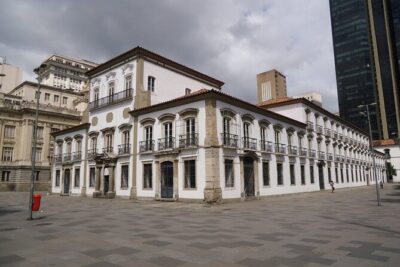
After that, you go to Paço Imperial, which changes the mood again. This 18th-century colonial complex has been a Portuguese governor residence, later used by the Portuguese royal court and then the imperial family. Today it’s a cultural center, but the point of the stop is how the building holds layers of power and time.
One thing I appreciate about including these two in the same ride is contrast. You don’t just get a list of landmarks, you get a sense of Rio’s roles over time, cultural stage and political stage in the same downtown space. Also, Paço Imperial is listed as free for this tour stop, while Tiradentes Palace is a stop where admission is not included, so you can decide whether paid entry fits your day.
More Historical Tours in Rio de Janeiro
- Rio de Janeiro Historical Center Walking Tour
★ 4.5 · 336 reviews - Private Walking and Cultural Tour Rocinha-Rio de Janeiro
★ 5.0 · 239 reviews - Discover Rio Little Africa: A Cultural and Historical Journey
★ 5.0 · 238 reviews - Rio de Janeiro: Historic Rio and Santa Teresa Half-Day Tour
★ 4.4 · 228 reviews
Praça Quinze de Novembro area, CCBB, and Candelária in one flowing day
This part of the tour is designed to help you read downtown like a map, not a set of isolated photos. Around Praça Quinze de Novembro, you enter and pass the Telles arch, then look at the narrow alley feel connected to old Rio. You also take in the area connected to the old municipal market and get a view angle toward Guanabara Bay and the Fiscal Island palace.
Then the tour goes to Centro Cultural Banco do Brasil (CCBB Rio de Janeiro). The building itself is a major draw, with a neoclassical style dating to 1906. The visit described here is free, and the value is that you get a sense of modern cultural life placed into older architecture. If you like art spaces, it’s an easy win because you don’t have to line up for a paid attraction to still enjoy the setting.
Next comes Church of Our Lady of the Candelaria. This is not a quick “pass by” type of stop. The tour gives enough time to appreciate the church’s colonial architecture mix, including Baroque, neoclassical, and Renaissance elements, and to notice the interior focus on paintings, sculptures, and the altar. It’s also tied to a key moment in Brazil’s political story, with the Proclamation of the Republic in 1889 noted as part of its historical significance.
If you’re thinking about keeping your day from feeling rushed, this is the segment where your energy needs to be steady. It’s one of the more important emotional stops on the route, and you’ll likely want a few extra minutes just to look slowly.
Museum of Tomorrow perimeter, Painel Etnias, and Olympic Boulevard photo moments
Not all highlights in Rio’s Centro are traditional. The tour includes modern icons that make the city feel like it has both history and future thoughts.
At Museu do Amanhã, you don’t go inside. You’ll pass the perimeter for views and a photo opportunity. That choice is smart for a half-day style tour, because it gives you the wow factor without adding paid time inside.
Then you reach Painel Etnias, described as the world’s largest graffiti mural. This one is long and visually specific, and you get a good chance to see the scale of 170 meters and the faces representing indigenous peoples from five continents. It’s a striking stop because it turns art into a large public statement about human identity and cultural connection.
Finally, at the end of the route you head to Rio Star at the end of the Olympic Boulevard area. Here, you get a quick look at the giant wheel and aquarium attractions, and the guide can offer a discount on Giant Wheel admission through a partnership. The key point: entrance is not included, so you’re choosing whether to buy time for the wheel.
This segment is ideal if you like variety. One moment you’re looking at church stone and façade details, the next you’re photographing a giant modern structure and street art on a long wall.
Cais do Valongo to Pedra do Sal, where you slow down and really notice
This is the part of the tour that carries real weight. The route heads to Cais do Valongo, the primary port for the arrival of enslaved Africans in the 19th century. You’re told it was discovered during urban redevelopment in 2011, and that it’s a UNESCO World Heritage Site (designated in 2017).
The visit described is important because you get remnants of the original stone wharf and related artifacts. This isn’t “entertainment history.” It’s a place for reflection, and the pedicab pacing helps here because you can keep moving without turning the site into a frantic checklist.
Next is Pedra do Sal in the Saúde neighborhood. If Cais do Valongo is about arrival and suffering, Pedra do Sal is about cultural endurance. The spot is described as connected to Afro-Brazilian heritage, a former gathering area tied to salt trade, and a place linked to the birth of samba and today’s rodas de samba gatherings.
It’s also one of those locations where street life and music overlap with history. Even in a short stop, you can feel why locals keep coming back.
If you want a tour that covers both the impressive and the difficult, this is where it becomes more than sightseeing.
Morro da Conceição, a calmer finish and your lunch options

The tour normally concludes around Morro da Conceição, another part of Saúde with preserved colonial architecture and narrow cobblestone streets. The visit includes a look at the neighborhood feel, and it’s tied to landmarks like Conceição Fort, mentioned as dating to the 18th century with panoramic views.
This final segment also includes practical value. The tour description says it ends near a corner with three excellent lunch options, including Italian, Mexican, and traditional Brazilian restaurants. You get the benefit of a built-in food decision without scrambling once you’re tired.
If you’re the kind of person who likes to end on something quieter and scenic, Morro da Conceição is a good way to wrap a packed half-day.
Price, pacing, and what you get for $70.57
At $70.57 per person for about 3 hours 30 minutes, this isn’t a “cheap and cheerful” add-on. But it also isn’t just a transport fee. In practice, you’re paying for:
- A small-group guided route across many major points of downtown
- Quick context at each stop so you understand what you’re seeing
- Pedicab riding that reduces walking, especially helpful for heat, humidity, and uneven sidewalks
- Time-saving compared to trying to taxi and self-route across Centro in a single afternoon
Most of the major exterior stops are listed as free for the tour experience, with a few exceptions where tickets are not included, such as Theatro Municipal do Rio de Janeiro, Palácio Tiradentes, Museu do Amanhã, and Rio Star. That mix helps you control your spend. If you skip paid entry, you still get the architecture, viewpoints, and key storytelling.
One more timing note: this tour is commonly booked around 40 days in advance. That’s a clue that the schedule fills up, especially in popular periods.
Who should book this pedicab loop, and who might prefer something else
This tour fits best if you want to:
- Cover a lot of Centro and port-adjacent sights without long walks
- Learn the stories behind monuments, not just take photos
- Enjoy a small-group pace with an attentive guide who can adjust stopping time
It’s also a good option if your group includes mixed ages or different stamina levels. Reviews you can build from highlight that the ride format made it easier for grandparents and kids to keep up without exhausting everyone.
Where it might not fit as well: if you’re the type who wants to spend 45 minutes inside museums or do deep interior visits at many stops. The tour includes meaningful exteriors and short stops, and only some locations include or allow paid entry.
Should you book this pedicab tour of Rio’s historical Centro?
I’d book it if your goal is a smart, efficient introduction to Rio’s downtown, with stops that range from famous architecture to street art and UNESCO-level heritage. The pedicab is not a gimmick here. It keeps the day comfortable while the guide’s narration turns the route into a clear story.
If you want to maximize value, plan your paid entries ahead of time. Since tickets are not included for specific places, you’ll get the best day when you decide what interiors matter most to you, and then treat the free stops as your payoff.
And if you’re coming from a cruise, it may be worth asking about drop-off convenience, because past riders reported smooth handling near their port.
FAQ
What is the price and how long is the tour?
The tour costs $70.57 per person and lasts about 3 hours 30 minutes.
Where does the tour start?
The meeting point is the Municipal Theater of Rio de Janeiro, Praça Floriano, S/N, Centro, Rio de Janeiro.
Where does the tour end?
The activity ends back at the meeting point.
Are admission tickets included for every stop?
No. Admission tickets are not included for Theatro Municipal do Rio de Janeiro, Palácio Tiradentes, Museu do Amanhã, and Rio Star. Other stops are listed as free.
Do we go inside Museu do Amanhã?
No. The tour description says you will pass the entire perimeter of the building for views and photo opportunities, but you won’t enter.
Are there many people on the tour?
It’s a small group, with a maximum of 8 travelers.
Is the tour dependent on weather?
Yes. The experience requires good weather. If it’s canceled due to poor weather, you’ll be offered another date or a full refund.
Are service animals allowed?
Yes, service animals are allowed.
What is the cancellation window?
Free cancellation is available up to 24 hours in advance for a full refund.
Newest Rio de Janeiro reviews
- Maracanã Matchday Tour – Ticket + Guide + Transfer★ 5.0 · 14 reviews
- Private Tour with Churrasco in Vela Catamaran – Velas do Rio★ 5.0 · 14 reviews
- Angra & Ilha Grande From Rio: Boat Tour With Barbecue and Drinks★ 5.0 · 14 reviews
- Half-Day Private Tour:Rio de Janeiro Highlights by Bernard Moraes★ 5.0 · 14 reviews
- Tijuca Forest Adventure★ 4.5 · 14 reviews
- Rio de Janeiro: Join a Fluminense game at Maracanã with locals★ 5.0 · 15 reviews
- Rio de Janeiro: Join a Botafogo soccer game with transport★ 5.0 · 15 reviews
- Christ the Redeemer, Selaron Steps and Santa Teresa Half-day Tour★ 4.5 · 15 reviews
Historical Tours in Rio de Janeiro, compared.

Private Walking and Cultural Tour Rocinha-Rio de Janeiro
Read our review →
Discover Rio Little Africa: A Cultural and Historical Journey
Read our review →
Rio Gastronomy: Culture & History Through The Art Of Food – Walking Group Tour
Read our review →
Adventure & History at Tijuca Forest (small group or private)
Read our review →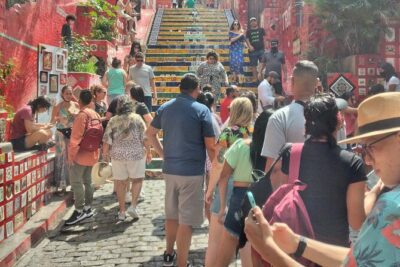
From the Past to the Present: A Historical Walking Tour of Rio
Read our review →Browse the lists this tour appears in