

Reviewed · SALVADOR & PELOURINHO
Salvador Essencial Private 6 Hour Tour
What makes the Salvador Essencial Private 6 Hour Tour interesting is how it strings together UNESCO sights with just enough time to actually understand them. I love the hotel pickup and door-to-door convenience, because Salvador’s traffic can turn a good day into a sitting day fast.
I also like the cultural mix, where your guide helps you connect the dots between Catholic traditions and the Afro-Brazilian belief system you’ll see referenced around the city, especially in places like Pelourinho. You get a private format, so the pace and photo stops feel like they fit your group, not a checklist.
The main thing to consider is cost creep. Several major stops have extra ticket fees, and lunch is not included, so you’ll want a simple plan for meals between the church stops and the old-city walk.
Key things I’d plan around before you go
- Private, door-to-door pacing that keeps you out of the chaos and gives you smoother timing for short visits
- A guide who can bring the city to life, with punctual historian energy highlighted by Vagner in past tours
- Afro-Brazilian culture in real landmarks, from Bonfim’s shared saint traditions to the orixas imagery at Dique de Tororo
- Pelourinho as the center of gravity, with a walking loop through colonial streets and five squares
- Elevador Lacerda plus top interiors, including a ticketed ride experience and major church stops
UNESCO Salvador in 6 hours, what it feels like
A 6-hour private tour in Salvador da Bahia is basically about choosing “the most important hits” without feeling rushed. This one is built around UNESCO-listed sights, with a mix of big churches, old colonial streets, and cultural markers that explain the city’s identity beyond postcard views.
In a group tour, you often spend time waiting. Here, the private transportation and your own guide’s flow mean you can get your bearings quickly. You’re not just hopping between famous names, you’re getting context for why those places matter, especially as you move from the waterfront area into the historic core.
You should expect a day that alternates between short stops and two larger blocks of walking. The heavy-lifting portion is the Pelourinho exploration on cobbled streets, so plan comfy shoes and a light water strategy. If you’re the type who likes architecture details, tile work, and church art, this schedule will feel very satisfying because you’ll see multiple “wow” interiors in one go.
More of Salvador and the Pelourinho:
- Round trip transfer, Salvador, Bahia, Brazil
★ 5.0 · 228 reviews - Salvador City Tour – Discover Brazil’s First Capital En, It, Es
★ 5.0 · 217 reviews - Cooking class in Salvador, an authentic dinning experience
★ 5.0 · 132 reviews
Door-to-door private transport and guide pace
This is a true private format, meaning only your group rides in the private vehicle and only your group gets the guide’s attention. The included hotel pickup and drop-off is a big deal in Salvador, because time spent finding meeting points is time you can’t use for the sights.
Your guide is not just along for the logistics. In past departures, Vagner stood out for being timely and excited to share Salvador’s history, which is exactly what you want on a short tour. When a guide has real energy, you get better explanations in the same number of minutes.
You also benefit from having the car do the “connector work” between neighborhoods. Some stops are walkable, others are photo stops from the vehicle, like the independence monument photo moment where you won’t get a drop-off and walk. That’s efficient, and it keeps the 6 hours from turning into “mostly travel time.”
Two practical tips. First, bring a small amount of cash or a payment method that works for Brazilian reals, because certain entrances are not included. Second, wear layers, since sea air and sunlight can change how warm you feel even on a single tour day.
Early history stops: Portuguese beach arrival and Santo Antonio da Barra
The tour starts with a beach location tied to the Portuguese colonizer’s arrival, which sets the stage for Salvador’s origin story. Even if you only get a quick moment there, it helps you understand why the city grew where it did, by the water.
Then you’ll head to Santo Antonio da Barra Fort and the Nautic Museum of Bahia. This stop is designed for photos and a quick walk around the area with your guide, with about 20 minutes scheduled. Importantly, the fort itself is not included in the standard visit time, so you can use that window for the views and surrounding area, and then decide if you want to pay to go inside.
If you want the interior experience, plan on an entrance ticket fee of R$12 per person for the fort visit. That’s a reasonable add-on if you care about nautical history and fort architecture, but it’s optional enough that you won’t feel forced.
A good way to think about this stop is as orientation plus atmosphere. You’re not spending all morning on one museum. Instead, you’re using it to get the “Bahia by the sea” mood and to understand how the city’s early power and trade stories took shape.
From local art to big faith: Casa de Prentice, Bonfim, Dique de Tororo
One of my favorite parts of this itinerary is that it doesn’t treat culture as only “buildings.” You’ll see creativity made by locals, and you’ll also see belief systems expressed in public space.
At Atelier Casa de Prentice, you’ll spend about 15 minutes visiting a studio where a local tiles painter works. Admission is listed as free, which makes it a low-cost, high-satisfaction stop if you like craft details. Tiles matter in Salvador for more than decoration, because they connect to the city’s Portuguese influence and its religious storytelling.
Next comes Basilica Do Senhor Do Bonfim, with around 30 minutes to explore. This stop is about understanding the religious aspect of local beliefs, including Catholic devotion alongside African saint traditions. Even if you’re not a religious traveler, this is one of those places where you can learn fast by watching how the space is used and how people talk about meaning.
After Bonfim, you’ll head to Dique de Tororo for about 20 minutes. This is where you’ll see orixas images and get a view from outside the football stadium. The practical takeaway here is that you’re getting Afro-Brazilian cultural iconography in an outdoor setting, not only in an indoor museum. It’s also a helpful change of pace before Pelourinho, because the scene opens up and you’re not stuck in a single corridor of church tours.
More days in Salvador:
- Tour to the Frades Islands and Itaparica, from Salvador – Ba
★ 4.0 · 130 reviews - Transfer Salvador Airport / Hotel Litoral Norte
★ 5.0 · 111 reviews - Private City Tour in Salvador
★ 5.0 · 110 reviews - From Salvador: Schooner Tour to Frades Islands and Itaparica
★ 3.9 · 98 reviews
Mercado Modelo and Pelourinho: shopping and the classic old-city walk
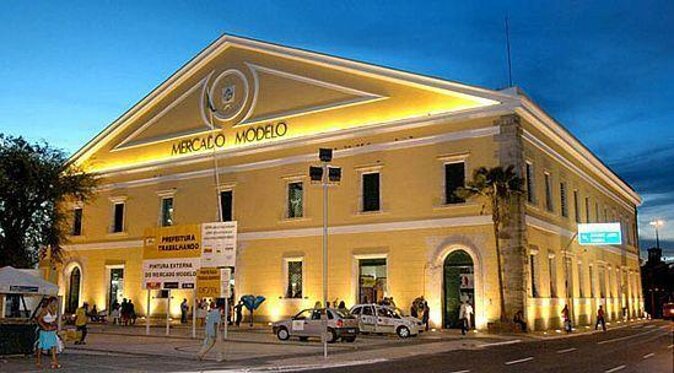
Mercado Modelo is a smart mid-tour break, with about 45 minutes for local crafts and souvenir shopping. Admission is listed as free, so your main spending is what you choose to buy. I like markets like this when the goal is to bring home something made locally, not another generic trinket.
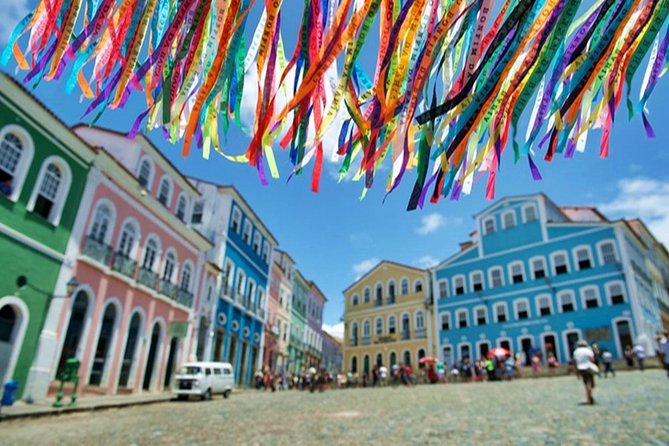
This stop also gives you a mental reset before the biggest walking block. Pelourinho is the heart of the old city here, with about two hours of walking and a guided loop through a complex of five squares and colonial buildings. Expect cobbled stone streets, classic historic facades, and the kind of atmosphere where you’ll feel like you’re moving inside a living story.
What makes your guide’s presence especially valuable during Pelourinho is that you can understand the “why” behind the architecture and the layout. Without context, Pelourinho can become just walking and photos. With context, you start to notice how the squares function, how the streets connect, and how the history is physically embedded in the streetscape.
Drawback to plan for: two hours on cobblestones can wear you out if you’re not used to uneven ground. You’ll still move at a comfortable private pace, but keep your feet in mind. If you’re traveling with someone who has mobility issues, this portion is the one that may require extra patience.
Elevator Lacerda plus Palacio Rio Branco: architecture and city views
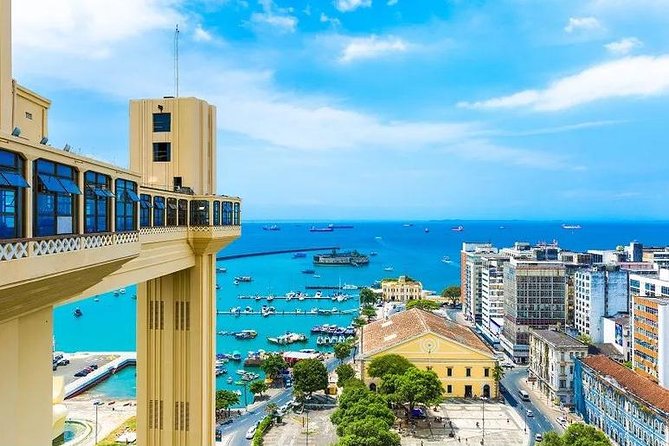
This part of the tour turns from old-city streets into major-city views and landmark design. Elevator Lacerda is scheduled for about 15 minutes, and the experience is listed as included, meaning you go in rather than just look from the sidewalk.
I consider this a great “energy” stop. It’s short enough not to steal time from the historic core, but it gives you a quick payoff that feels like something specific to Salvador. When you’re trying to fit a lot into 6 hours, that kind of high impact, short duration stop is exactly what you want.
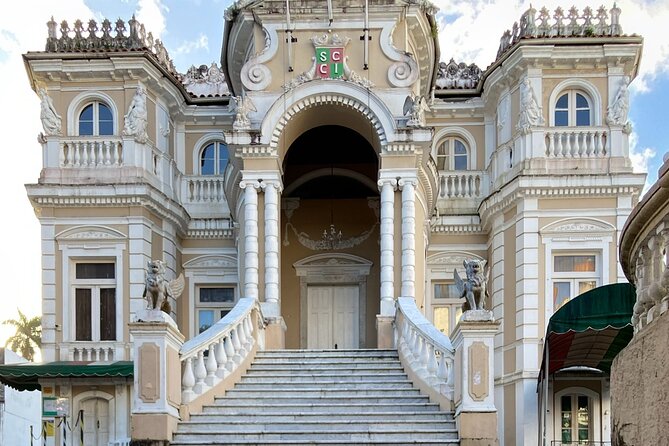
Then there’s Palacio Rio Branco, an optional stop. You’ll have about 15 minutes there if it works for your interests. The architecture is described as amazing, and today it’s a memorial related to the state’s governors of democracy in a republic period.
Here’s the caution: opening times are not regular, and entrance can’t be guaranteed. In practice, that means you should be mentally ready to admire the exterior and then move on if the building is closed when you arrive. Optional stops like this are still worth it if the exterior is striking to you, but you should not plan your expectations as if you’ll definitely get inside.
Between Elevator Lacerda and Pelourinho, you’ll likely feel the city shift. It’s a reminder that Salvador isn’t only “old streets and churches.” It’s also a modern city with iconic infrastructure and monumental architecture.
São Francisco and the Cathedral: tiles, gold leaf, and Jesuit art
If you care about church interiors, this itinerary gives you two major hits in one run. You’ll visit Igreja e Convento de Sao Francisco for about 30 minutes, with ticketed entry listed for the experience. The big draw is the Portuguese tile collection, described as one of the most beautiful in South America, plus gold leaf churches.
Then you’ll head to the Cathedral Basilica of Salvador for about 30 minutes, where you’ll explore ecclesiastical Jesuit art. This is presented as some of the most beautiful Jesuit work in South America, so if you like baroque-style religious art, you’ll likely feel like you hit the jackpot in a short time.
Now for the money part, because it matters. The tour data lists entrance fees for both the Cathedral Basilica and Igreja de São Francisco as R$20.00 per person. So even though these are included experiences time-wise, you should budget that entrance cost.
Practical tip: this is where you’ll want patience for details. The art and tiles are the whole point, so don’t rush your photos. Let your guide point out what to look for, and you’ll get more meaning out of the space than you would on your own in a quick walk.
If you only want one “big church” stop, this tour gives you two anyway. That’s efficient. It also means the total day is heavy on standing, looking up, and moving through interiors, so take a breather during the earlier market or ice cream stop.
Price, ticket add-ons, and what to bring
The tour price is $150.00 per person for about 6 hours. In my book, the value comes from the private vehicle plus hotel pickup and drop-off. In a city like Salvador, that convenience often saves you time and stress, and time is money you feel.
But you’ll also pay a few add-ons. The fort visit can cost R$12 per person if you choose to go inside Santo Antonio da Barra Fort. Ice cream at Sorveteria da Ribeira is extra, listed at R$10 per scoop for one flavor. For the big church interiors, entrance is listed at R$20 per person for the Cathedral Basilica and Igreja de São Francisco.
Lunch is not included. That’s the one place where you need to plan yourself, either by eating before you start or grabbing something after the tour ends. You will have a scheduled Sorveteria da Ribeira tasting stop, so if you like sweet breaks, you’ll get at least one “fuel moment” built in.
What to bring for an easy day:
- Comfortable shoes for Pelourinho cobblestones
- A hat and water, especially if you’ll be outside during photo stops
- Payment or cash for entrances and ice cream (all listed in R$)
- A charged phone or camera for quick photo stops and interior details
Should you book this private 6-hour tour?
Book it if you want a time-efficient way to see Salvador’s standout sights, especially if you like combining landmark photos with real explanations. The UNESCO focus makes this a strong choice for first-timers who want Pelourinho and the big churches, without building your own route from scratch.
Skip it or consider a shorter plan if you’re extremely budget-sensitive. The tour price is one thing, but you should expect ticket add-ons for the fort and the church interiors, plus a snack and possibly lunch elsewhere.
Also, if you hate walking on uneven ground, you’ll need to plan carefully for the Pelourinho two-hour portion. You can still enjoy the tour, but you may move slower, and that can affect the rest of the day.
Finally, this is a good fit for couples, solo travelers who want control over pace, and small groups who want a guide they can ask questions to. In other words, if you want Salvador to feel understandable in one half-day, this private tour is built for that.
FAQ
How long is the Salvador Essencial Private 6 Hour Tour?
The tour lasts about 6 hours, with the exact timing of transfers depending on the time of day and traffic conditions.
What’s included in the tour price?
The tour includes a driver/guide, a professional guide, hotel pickup and drop-off, transport by private vehicle, and the private tour format.
Which entrance fees are not included?
Entrance fees are not included for the Cathedral Basilica of Salvador and Igreja de São Francisco, listed at R$20.00 per person. Santo Antonio da Barra Fort can also require an additional R$12 per person if you choose to go inside.
Is lunch included?
No. Lunch and beverages are not included.
Is this tour private?
Yes. It is a private tour/activity, and only your group participates.
Can I cancel for a full refund?
Yes. You can cancel up to 24 hours in advance for a full refund.
Newest Salvador da Bahia reviews
- Cultural Folkloric Show and Dinner in Salvador★ 4.5 · 15 reviews
- Transfer Vila Galé Marés (Guarajuba) – Private★ 5.0 · 15 reviews
- Tour to Praia do Forte and Guarajuba★ 4.0 · 16 reviews
- Private City Tour of Salvador da Bahia★ 5.0 · 17 reviews
- 3-Hour Private Tour of Salvador Capital Afro-Brazilian★ 5.0 · 17 reviews
- Afro-Brazilian Roots city Tour in Salvador with lunch at Favela★ 5.0 · 17 reviews
- Salvador African Heritage Private City Tour Including Afro Museum★ 4.5 · 18 reviews
- Morro de São Paulo Tour, Leaving Salvador-Bahia.★ 5.0 · 18 reviews
Salvador & Pelourinho, compared.


Salvador City Tour – Discover Brazil’s First Capital En, It, Es
Read our review →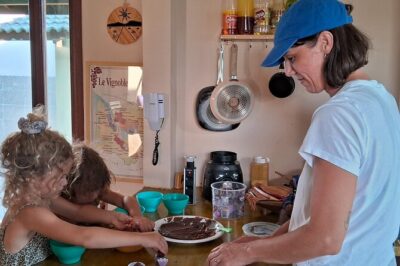
Cooking class in Salvador, an authentic dinning experience
Read our review →
Tour to the Frades Islands and Itaparica, from Salvador – Ba
Read our review →
Transfer Salvador Airport / Hotel Litoral Norte
Read our review →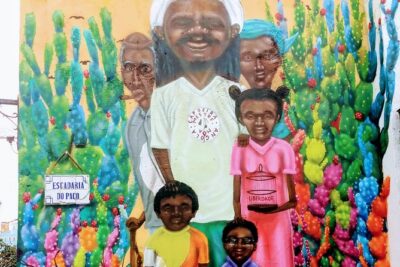


Tour Praia do Forte and Guarajuba, Leaving Salvador-Bahia.
Read our review →Browse the lists this tour appears in