
Reviewed · WALKING TOURS
Private Walking Tour of the Historical Center of São Luís do Maranhão
São Luís is one of those places where the streets do the talking. This private walking tour threads the UNESCO historic center together with museum time, so you understand what you are seeing instead of just snapping photos. I especially like that the guide brings the culture to life, and in one great example, Wagner clearly knows how to connect monuments and facades to traditions like Bumba Meu Boi and Tambor de Crioula.
You will also get a smart mix of architecture and indoor stops, including Teatro Arthur Azevedo and two guided segments at the Museu da Gastronomia Maranhense. One possible drawback: like any small, guide-led tour, the whole experience depends on the guide showing up on time at the meeting point and keeping communication clear.
Key highlights
- UNESCO Centro Histórico on foot with construction stories tied to real buildings and names
- Palácio dos Leões as your quick orientation stop, with free entry planned
- Teatro Arthur Azevedo (the third theater built in Brazil) with admission included
- Museu da Gastronomia Maranhense twice for both context and the typical dishes of Maranhão
- Archaeology and natural history research center to connect the region’s prehistory to today
- Private, certified guide for 2 to 3 hours, with moderate walking
Walking São Luís like a story, not a checklist
São Luís do Maranhão earns its reputation because the old streets feel cohesive. Instead of scattering your time across separate attractions, this route keeps you moving through the Centro Histórico while the guide explains why each place matters. That is the real value here. You start seeing patterns in the architecture, the religious mix, and the way the city was built.
The pace is also intentional. You do walk, but you are not forced into a full-day endurance march. The itinerary builds in museum stops that help you recharge while learning. And because it is private, the guide can shape the explanations to your interests, like focusing more on performance traditions or architectural details.
If you hate waiting, keep one thing in mind. In at least one case, a guide delay and poor responsiveness turned a planned visit into a headache. So I treat this as a tour you should confirm ahead of time, not something you casually wander into.
Palácio dos Leões: a quick, high-impact first look
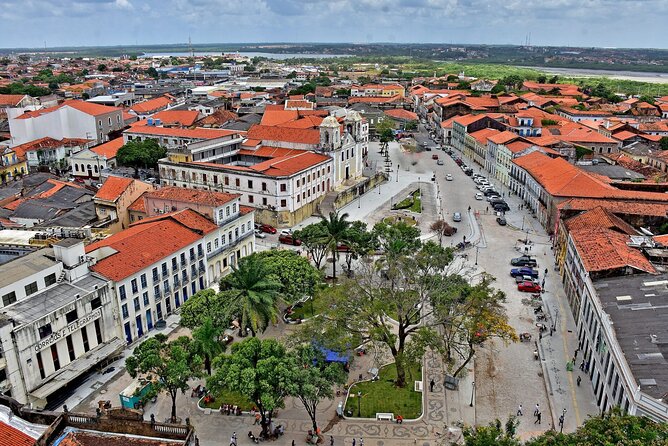
The tour starts with a planned visit to Palácio dos Leões, with about 30 minutes on the clock and free admission. This is a good opener because a government palace tends to sit at the center of a city’s civic identity. Even with a short stop, you can get oriented fast.
Here is how I would use this time: pay attention to the building as a backdrop for the guide’s larger points. It is not just a pretty facade. It is a marker of how the city organizes power and public life. If you like learning through visual anchors, this opening stop does its job.
A practical note: the palace is listed with free tickets in the plan, but these kinds of sites can have access rules that change. If you arrive and it looks closed, you will still have a strong tour ahead, since the route heavily relies on museums and the UNESCO streets.
Centro Histórico UNESCO: streets, façades, and the people behind them
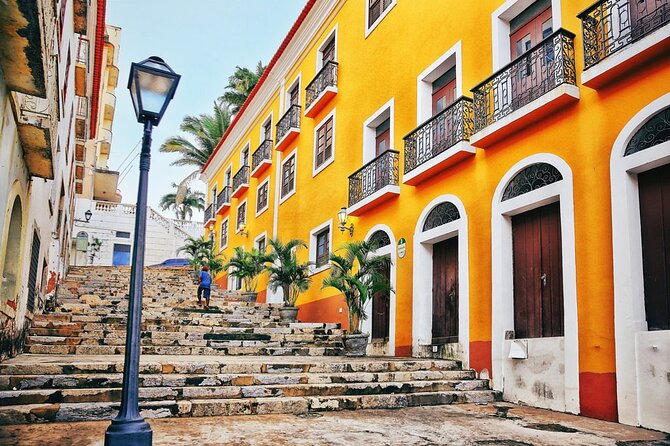
Next is the big outdoor chunk: the Centro Histórico de São Luís. Expect about 50 minutes, with the guide explaining stories and important characters connected to the city’s construction. This is where the UNESCO status starts to feel real, because you are not just looking at buildings, you are learning what shaped them.
This is also where the tour earns its cultural credibility. You can expect explanations that connect colonial and European influences to what you see in town, including the role of French, Dutch, and Portuguese arrivals. The guide also ties local cultural practice into the built environment, which helps explain why religious syncretism is such a visible part of Maranhão life.
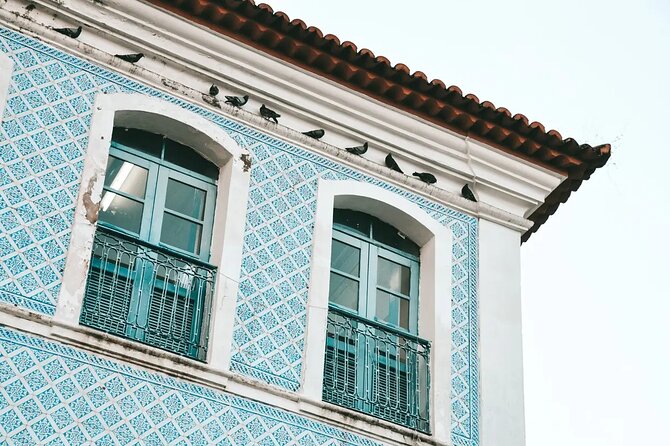
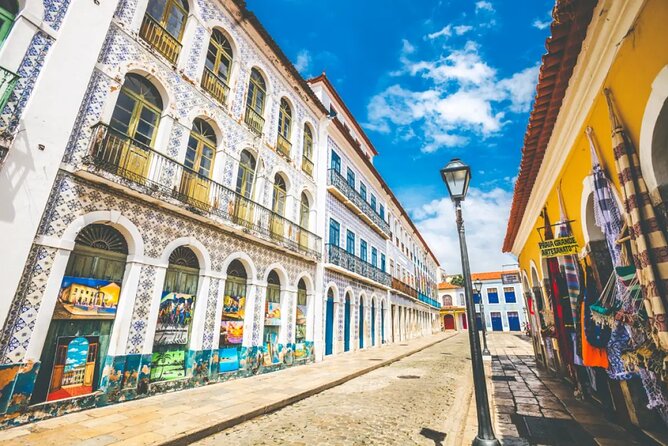
Keep your eyes up as you walk. These areas reward slow glances at tilework, doorways, and facade proportions. If your goal is to understand why the streets look the way they do, this is your main payoff moment.
Museu da Gastronomia Maranhense: two visits with different purposes
The itinerary includes the Museu da Gastronomia Maranhense twice, and both stops have admission included. That sounds repetitive until you realize why it works. The tour uses the museum in two stages: first as context, then as dish-focused learning.
Stop 3: quick cultural grounding (about 20 minutes)
The first museum visit is about 20 minutes and is designed to teach you a little more about the rich local gastronomy. Rather than turning it into a lecture marathon, this is a primer. You walk out with a clearer sense of what Maranhão cuisine is trying to express, and what kinds of dishes or ingredients are tied to regional identity.
Stop 7: typical dishes and how they formed (about 20 minutes)
Later, you return for another 20 minutes at the same museum, this time focused on main typical dishes and their historical foundation. This second stop is useful if you want to translate the tour into real life after you go. It is the part that helps you order with confidence, because you know what is typical and why it is typical.
Even if you are not a foodie on paper, this section helps in a broader way. Food history is social history. It reflects trade, migration, and local adaptations. So the museum stops give you more than a list of dishes, they give you a lens.
Teatro Arthur Azevedo: why Brazil’s old theaters matter
The tour then heads to Teatro Arthur Azevedo for about 30 minutes, with admission included. The highlight here is straightforward and specific: it is described as the third theater built in Brazil.
That fact matters because it anchors São Luís in a larger national story about public culture and performance. Even if you do not care about theater as a hobby, a historic venue is a doorway into how people gathered, what was valued, and which styles of public life took root in Maranhão.
This stop also balances the walk. You get a more still, indoor experience where the guide can connect architecture to performance and cultural identity. It is an excellent mid-tour reset.
Sao Luís Historical House and the research center that looks back further
After the theater, the route shifts from performance and cuisine to two shorter stops that widen the time scale.
Sao Luis Historical House (about 10 minutes)
You get about 10 minutes at a Sao Luis Historical House described as a heritage of humanity. That short duration means you will not be stuck. Instead, you get a quick shot of mansion-style heritage and the sense that the city preserves everyday grandeur, not just monumental landmarks.
If you like architecture, this is a quick chance to spot the differences between types of colonial-era buildings. If you are more culture-first, it still matters because it reinforces that history here lives in ordinary-looking streets, not only in museum rooms.
Archaeology and Natural History Research Center of Maranhão (about 20 minutes)
Next is the Archaeology and Natural History Research Center of Maranhão, with about 20 minutes. This is the tour’s left turn, and it is a welcome one. You learn a bit about the prehistory of the region and how the original population formed.
That change of topic is more than filler. It prevents the tour from becoming only about the colonial era. It helps you understand that the story of São Luís starts long before the European arrival that shapes the city’s later look.
Price and value: what $71 buys you in São Luís
The price is $71 per person and the tour runs roughly 2 to 3 hours. For a private guide, this is a reasonable rate because you are not just paying for walking instructions. You are paying for certified historical guidance and planned access.
Admission structure is part of the value math:
- Palácio dos Leões and the outdoor UNESCO center segment are planned as free entries
- Museums and the theater are planned with admissions included, including the Museu da Gastronomia Maranhense (twice) and Teatro Arthur Azevedo
So you are buying a concentrated block of guided learning, with less guesswork on ticket costs. If you are traveling as a small group and you want a coherent route, the private format can feel like better value than piecing together tickets and self-guided walking with zero context.
Timing, meeting point, and how to keep the day smooth
The tour starts at Cais da Praia Grande, near Avenida José Sarney (Av. Sen. Vitorino Freire, S/N, Rampa Campos Melo, São Luís, MA). It ends at Av. Sen. Vitorino Freire, 40, Centro.
Two practical tips based on how these tours usually play out:
- Arrive early enough to spot your guide and confirm the plan before the walk starts. If your guide is late, you may need time to sort it out.
- Bring basic comfort items. I recommend sunscreen and a water bottle, because the route includes an outdoor UNESCO walk and standing time near several stops.
This tour is listed as requiring moderate physical fitness, which usually means you can expect steady walking and time on your feet. There is no private transportation included, so you are fully responsible for any transfers before and after.
Also, it runs best in good weather. If weather is poor, you will be offered another date or a full refund, so plan around that if you are flexible.
Who this tour fits best (and who should skip it)
This private walking tour is a strong choice if you want:
- A culture-focused route that explains São Luís through architecture, religion, and local traditions
- More meaning than you get from a self-guided walk
- Museum stops that connect gastronomy and performance to history
It may not be your best match if you:
- Want a long, purely outdoor experience with no museum time
- Are traveling with very strict timing and cannot tolerate any guide delay
- Prefer to roam independently without a structured route
If you are okay with a guided plan and you like learning on foot, you will probably appreciate how the tour keeps returning to themes, first street identity, then cuisine, then theater, then deeper roots through prehistory.
Should you book this private walking tour of São Luís do Maranhão?
I would book it if your goal is to understand the Centro Histórico as a living story. The combination of the UNESCO walk, Teatro Arthur Azevedo, and two well-timed segments at the Museu da Gastronomia Maranhense makes this feel like more than sightseeing. It is a practical way to connect the city’s look to the culture behind it.
The one reason to pause is simple: guide-led logistics can go wrong. If you book, do yourself a favor and confirm the meeting point and timing ahead of time. Then you can relax and enjoy the learning.
If you want my quick decision rule: book it for cultural context and museum variety, skip it only if you cannot handle the small uncertainties that come with any private guide appointment.
FAQ
How long is the Private Walking Tour of the Historical Center of São Luís do Maranhão?
The tour lasts about 2 to 3 hours.
Is this a private tour?
Yes. It is a private tour/activity, and only your group participates.
How much does it cost?
It costs $71.00 per person.
What is included in the tour?
The tour includes certified historical guides. Admission tickets are included for the Museu da Gastronomia Maranhense (listed stops) and Teatro Arthur Azevedo.
Are admission tickets included for all stops?
Not for all stops. Palácio dos Leões, Centro Histórico de São Luís, Sao Luis Historical House, and the Archaeology and Natural History Research Center of Maranhão are listed as free admissions, while the Museu da Gastronomia Maranhense (twice) and Teatro Arthur Azevedo have admission included.
Where do I meet the guide and where does the tour end?
You start at Cais da Praia Grande near Avenida José Sarney, and the tour ends at Av. Sen. Vitorino Freire, 40 in Centro.
Do I need good weather?
Yes. This experience requires good weather. If it is canceled due to poor weather, you will be offered a different date or a full refund.
Can I bring a service animal?
Yes. Service animals are allowed.
Is the tour suitable for everyone physically?
The tour requires moderate physical fitness level.
What is the cancellation policy?
You can cancel for a full refund up to 24 hours in advance. If you cancel less than 24 hours before the experience, the amount paid is not refunded.
More Walking Tours in Sao Luis do Maranhao
- Rio de Janeiro: Rocinha Favela Walking Tour with Local Guide
★ 4.8 · 3,052 reviews - Rio De Janeiro: Half-Day Rocinha Favela Walking Tour
★ 4.7 · 2,272 reviews - Walking Tour Alleys of Tiradentes
★ 5.0 · 1,685 reviews - 3 Hour Rocinha Favela Walking Tour with a Local Guide
★ 5.0 · 833 reviews
More Historical Tours in Sao Luis do Maranhao
- Rio de Janeiro Historical Center Walking Tour
★ 4.5 · 336 reviews - Maria Fumaça – Wines and History
★ 4.0 · 242 reviews - Private Walking and Cultural Tour Rocinha-Rio de Janeiro
★ 5.0 · 239 reviews - Discover Rio Little Africa: A Cultural and Historical Journey
★ 5.0 · 238 reviews
Walking Tours, compared.



3 Hour Rocinha Favela Walking Tour with a Local Guide
Read our review →
Favela Tour Rio de Janeiro – Vidigal Walking Tour by Russo Guide
Read our review →

Private Walking and Cultural Tour Rocinha-Rio de Janeiro
Read our review →
Browse the lists this tour appears in