
Reviewed · WALKING TOURS
Walking Tour Alleys of Tiradentes
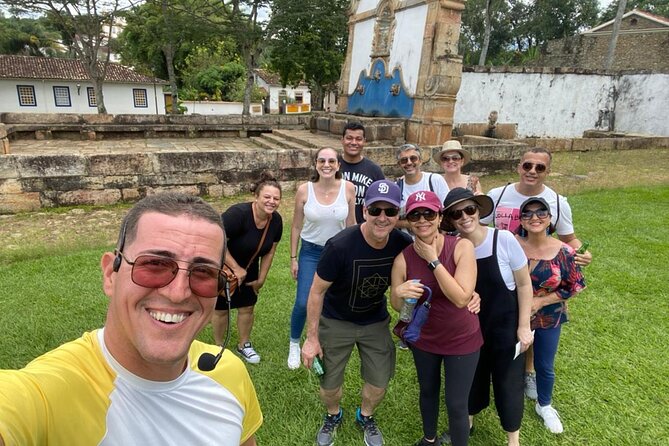
Getting to know Tiradentes is easiest when you walk its tight streets, from little church squares down into alleys that feel like a maze. This tour is interesting because it turns a compact town into a clear route you can follow on foot, starting and ending back at the same meeting spot on R. Custódio Gomes.
I really like the all-the-way-around coverage. Tiradentes is small, and the tour is paced so you can understand the whole city in about 3 hours, not half a day. It is the kind of walk that helps you connect the dots fast, so later you know where you are even if you wander off.
My other favorite part is the Museu Casa Padre Toledo stop. You get historical, artistic, and architectural context for what you are seeing from the outside, plus guidance on when to go inside to check out collections. One possible drawback is weather, since the experience requires good conditions, and you will likely feel it when the route goes stone to stone.
Key things that make this walking tour worth your time
- A full town orientation in about 3 hours, useful even if Tiradentes is a stop between bigger places
- A long list of named sights, so you do not just see streets, you see specific places like Largo das Forras and the Chapel of the Rosary
- Free-entry experiences built into the route, keeping the price low
- Museu Casa Padre Toledo contextualization, with tips so you can plan any inside visits on your own
- Small groups up to 40 people, which helps with pacing on alleys and in church areas
A 3-hour Tiradentes route that actually helps you navigate later
Tiradentes in Minas Gerais is the kind of town where first impressions can be confusing. The streets curve, the squares appear out of nowhere, and everything feels close until you try to trace your steps back. This walking tour solves that by giving you a guided path that links churches, chapels, museums, fountains, and alley corners into one logical loop.
The tour lasts about 3 hours 5 minutes, and it is built around the idea that Tiradentes is small enough to understand in roughly 2.5 hours. That matters because you are not paying for a long slog. You are paying for focus, with time to stop, look, and take photos without needing to rush.
The group size is capped at 40, which usually makes a difference in narrow areas. Even so, think of this as a walking tour. You will want comfortable shoes, because the whole point is the alley-to-alley feel, not a relaxed stroll on a flat promenade.
More Walking Tours in Brazil:
- Rio de Janeiro: Rocinha Favela Walking Tour with Local Guide
★ 4.8 · 3,052 reviews - Rio De Janeiro: Half-Day Rocinha Favela Walking Tour
★ 4.7 · 2,272 reviews - 3 Hour Rocinha Favela Walking Tour with a Local Guide
★ 5.0 · 833 reviews
Where the walk starts, what time it runs, and why that matters
The meeting point is R. Custódio Gomes, 13, in the Centro area of Tiradentes, MG, Brazil. The tour starts at 9:30 am and ends back at the same place.
Starting in the morning is practical in a historic town. Many of the sights on the route include religious spaces, and morning tends to be easier for lighting and for general day flow. Also, you will have more daylight afterward if you want to return to places you liked most, since Stop 2 includes guidance on when to visit interiors on your own.
Because the tour ends where it begins, you do not have to plan an extra return trip. That is a quiet but real value point when you are budgeting your day.
What you will see first: squares, a bridge, and the religious core
The route begins in Tiradentes with the church and Largo das Mercês. This type of first stop is important. A square like Mercês gives you the big-picture layout, so the streets you walk immediately after do not feel random.
From there, you cross to the Bridge of Forras and move through Largo das Forras. Bridges in towns like Tiradentes are more than photo spots. They help you understand how the built environment and movement channels work, especially when the town is threaded with alleys that do not always look connected from a distance.
Then comes the Bom Jesus da Poverty Chapel. Name alone signals the devotional character of this route, and you should expect a change in atmosphere compared with the open squares. Chapels and church interiors can also be where you notice small details most, like how entrances and spaces relate to the street.
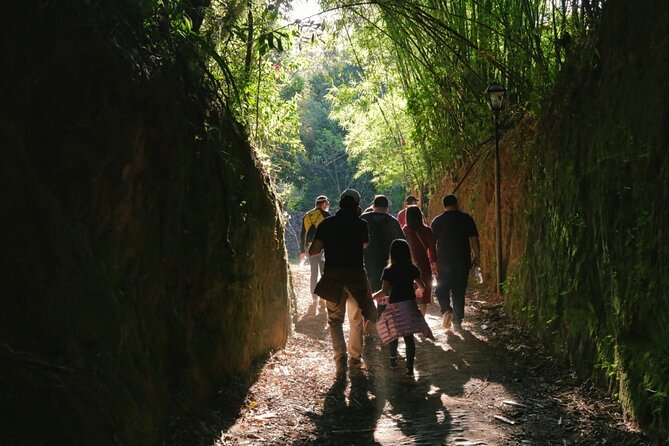
The next cluster includes the Chapels of the Passinhos. After that you walk through the Quarry Alley. Together, these stops are the tour’s early lesson in how Tiradentes holds its identity: religious sites, tight passageways, and named corners that locals use like landmarks.
Chapels, corridors, and the Quarry Alley rhythm
After the first religious landmarks, the tour leans into what you came for: alleys with character. The Chapels of the Passinhos keep the focus on small sacred spaces, and you get a sequence of places that feel connected, not scattered.
Then you pass Quarry Alley. Even without being a long museum stop, this kind of place is useful for context. Alleys like Quarry Alley are part of how historic towns function, where daily movement and practical access to buildings shaped the streets you still walk today.
This is the moment to take your time. If you rush through the alleys, you miss why the tour is so popular. Slow down for the small changes, like how an alley opens into a square or how a chapel entrance lines up with the street.
Another way to spend a day in Brazil:
- Nugali Chocolates Tour – Factory
★ 5.0 · 1,533 reviews - Adventure 4×4 Bombinhas
★ 5.0 · 166 reviews - Group Balloon Flight
★ 5.0 · 73 reviews - Transfer from Jeri JJD Airport to Jericoacoara Village
★ 5.0 · 69 reviews
Padre Toledo Museum stop: what you get inside vs outside
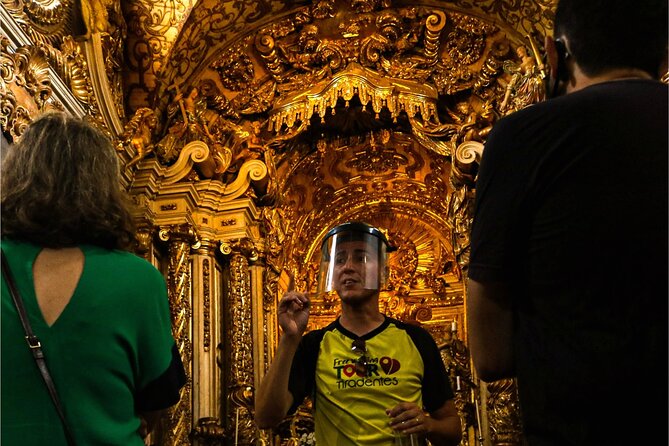
Stop 2 is the Museu Casa Padre Toledo. Here is the key detail: you do get context. The tour focuses on the exterior of museums and churches, with a historical, artistic, and architectural framing so you understand what you are looking at from the street.
You also get practical tips on the collection and the best times for internal visits. That is a smart format for travelers who want flexibility. Instead of locking you into an interior schedule that may or may not match your interests, you learn what to look for and when to go back.
As for inside access, this is not a blanket promise. The chapels that do not charge a visiting fee and are open during the tour will be visited internally. The rest is handled with tips so you can decide after the walk.
Also note the pricing detail: the internal visit ticket for this portion is not included. In other words, you are paying for orientation and guidance, then you pay any entry fees separately if you choose to go inside afterward.
Stop 2 is only about 5 minutes in the walking flow, so do not expect it to replace a museum hour. It is meant to set you up to visit on your own with better focus.
The alley-and-chapel midsection: Matrix Alley, Wells, and Saint Anthony
Once you move past Padre Toledo, the tour keeps threading religious and civic details through the old town. You will reach the Chapel of Saint John the Evangelist, then continue to Matrix Alley and Matrix Well.
Matrix Alley and Matrix Well are a good pair because they remind you that these towns were designed around daily life, not just big buildings. A well in particular is a real clue to how people lived, gathered, and built routines into the urban fabric.
Next comes Saint Anthony’s Headquarters. Names like that help you map the town mentally. They act like anchors while you are walking between alleys, so when you later think about your day, you can place what you saw.
Then the route includes Pacu Alley and Sun Watch. You will also pass Chamber Street and reach the town hall. That sequence is doing more than checking boxes. It is showing how civic space and religious space interlock in Tiradentes, with side streets bridging both worlds.
If you like history as lived experience, this midsection is the payoff. It helps you see Tiradentes as a system, not just a list of pretty structures.
Rosary Alley, the Santana Jail, and the 4 corners effect

As you keep walking, the route turns toward ceremony and everyday symbolism. You will visit the Alley of the Rosary and then the Chapel of the Rosary. This is one of those times when the tour is worth it even if you are not obsessed with architecture, because the naming pattern tells you what people prioritized and how worship shaped movement through town.
Next comes Right Street, then the Jail (Museum of Santana). A museum in a former jail is always a contrast moment in a walking tour like this. Instead of only seeing devotional spaces, you also see how the town recorded other parts of life, including punishment and local governance.
Then the route includes the Ramalho townhouse and the 4 corners. When a tour includes a 4 corners kind of stop, it is usually a good cue for perspective. You get a sense of how streets converge, so the map in your head starts to click.
After that you reach the Museum of Liturgy. That is a fitting continuation, since you have already been in chapels and rosery-related spaces. If you pay attention here, you can connect ritual spaces with the objects and storytelling that museums typically preserve.
Water stops and the optional Alto São Francisco
The later part of the tour includes Street Ball Game, San Jose Fountain, and Mother Water Forest. These stops break up the church-heavy rhythm and add a more lived, human feel to the walk. Fountains and water-related places are especially valuable because they remind you that daily needs helped shape the town.
Street Ball Game is the kind of name that makes you pause, even if you only know it is tied to local play or gathering. It gives the route a softer side, where the town is not only about monuments.
Finally, there is an optional stop: Chapel and Alto São Francisco. Optional stops are useful if you have energy. If you want the fuller finish and you like viewpoints and higher corners, take it. If you are tired, you can treat it as a chance to shorten the route without losing the core experience.
Price and value: why $16 feels fair here
At $16 per person, this walking tour is priced for access, not for luxury. The value comes from how many specific places you cover in about three hours, plus the fact that the admission ticket is free for the main walking experience.
That is the headline reason it works. You are not paying a stack of entry fees to see named sights. You are paying for a structured route that helps you understand a whole compact town quickly.
The main exception to keep in mind is Stop 2. The internal visits connected to Museu Casa Padre Toledo are not included. You can still benefit a lot from the exterior context and planning tips, but if you want to go inside, you should budget possible admission.
Group size and route length also affect value. With up to 40 people, the tour does not feel like a mass event. It stays closer to the walking pace needed to see details without turning into a rush.
Who this walking tour suits best
This tour is a great fit if you:
- Want a first-day orientation to Tiradentes without spending half a day planning
- Like religious architecture and small historic spaces, especially chapels, wells, and symbolic corners
- Prefer a structured route, so you do not end up walking in circles (it happens fast in old towns)
- Are on a budget and want a lot of named sights for one low price
It might be less ideal if you hate walking, because the entire point is moving from alley to alley and pausing often. Also, if the weather is poor, this tour can be canceled because it requires good conditions.
Should you book the Alleys of Tiradentes walking tour?
Yes, I think you should book it if you want an efficient way to understand Tiradentes on foot. The main draw is the route itself: it links a long list of real places, from Largo das Mercês to the Jail (Museum of Santana), then through water spots and museum context.
It is also a smart booking when you have limited time. At about 3 hours, you get the whole-town orientation feeling, plus guidance for any add-on interior visits at Museu Casa Padre Toledo. The cost is low enough that you can take it and still have money left for a self-guided return to your favorite corners.
If you are deciding based on one thing, decide based on your walking tolerance and the forecast. When the weather is good, this is a practical, rewarding way to see Tiradentes without missing the places that define the town.
FAQ
Where is the meeting point for the Walking Tour Alleys of Tiradentes?
The tour starts at R. Custódio Gomes, 13 – Centro, Tiradentes – MG, 36325-000, Brazil.
What time does the tour begin?
The start time is 9:30 am.
How long is the tour?
It lasts about 3 hours 5 minutes.
How much does the tour cost?
The price is $16.00 per person.
Is admission included in the tour price?
For the main tour experience, admission ticket is free. For Stop 2 (Museu Casa Padre Toledo), admission ticket is not included for internal visits.
Does the tour include going inside churches and museums?
Stop 2 includes historical, artistic, and architectural contextualization of exteriors and tips for internal visits. Chapels that do not charge a visiting fee and are open during the tour will be visited internally.
What is included at Museu Casa Padre Toledo?
You get contextualization focused on the exterior of museums and churches, plus tips on the collection and the best times for internal visits.
How large are the groups?
The tour has a maximum of 40 travelers.
What happens if the weather is bad?
This experience requires good weather. If it is canceled due to poor weather, you will be offered a different date or a full refund.
Are service animals allowed?
Yes, service animals are allowed, and most people can participate.
Newest Brazil reviews
- Private Hike Morro – Gamboa with Fonte do Ceu Waterfall★ 5.0 · 23 reviews
- Valparaiso Acqua Park Admission Ticket★ 4.0 · 36 reviews
- Official Ticket: Oceanographic Museum Univali – Piçarras – SC★ 4.5 · 45 reviews
- 4 beaches plus waterfall★ 5.0 · 54 reviews
- Great Central Gold Mine★ 5.0 · 56 reviews
- Photo Tour★ 5.0 · 63 reviews
- Transfer from Jeri JJD Airport to Jericoacoara Village★ 5.0 · 69 reviews
- Group Balloon Flight★ 5.0 · 73 reviews
Walking Tours, compared.



3 Hour Rocinha Favela Walking Tour with a Local Guide
Read our review →
Favela Tour Rio de Janeiro – Vidigal Walking Tour by Russo Guide
Read our review →

Private Walking and Cultural Tour Rocinha-Rio de Janeiro
Read our review →

Sunrise and Sunrise Walk Two Brothers with Local Guide
Read our review →Browse the lists this tour appears in