
Reviewed · MUSEUMS
Official Ticket: Oceanographic Museum Univali – Piçarras – SC
Univali Oceanographic Museum is interesting because it turns marine science into a walkable story. You go from ancient life and fossils to sharks, sea turtles, penguins, and whales, all while seeing animals in tanks along the way. It is the kind of place that feels made for both kids and adults who like to learn in motion, not just read.
I especially like the museum’s 7-wing layout, which keeps the information organized by marine life type. I also like that the collection is built around scale and variety, with 1,400+ pieces plus live animals in aquariums so you get both specimens and real behavior.
One consideration: some rooms can feel dimly lit, and a few exhibit labels may not give the level of detail you want everywhere. If you care a lot about captions, plan to slow down and read what is there.
Key highlights before you go
- 7 themed wings that follow a clear path through marine life and habitats
- 1,400+ pieces that cover biodiversity across major marine groups
- Aquariums with live animals paired with fossils and preserved specimens
- A hands-on sensory experience where you can make real contact with marine life
- A standout outside exhibit with a full-scale blue whale model (33 meters)
- A rare shark-routine detail, including a white shark jaw on display in Brazil
Why Univali Oceanographic Museum Is Worth Your Afternoon
If your idea of a great museum day is calm walking plus real animals, this one fits. The Univali Oceanographic Museum is set up like a species guide you can actually follow. Instead of one long hallway of stuff, you move through themes that build on each other.
I also like how the museum uses both science and story. One wing focuses on ocean exploration history and technology. Another shows anatomy and jaw structure. Another focuses on ecology and how animals survive in specific habitats. You leave with the sense that marine life is connected, not just “cool creatures in boxes.”
Timing matters here. The visit is typically about 1 to 1.5 hours, so treat it like an outdoor stroll for your brain. If you rush, you will miss some of the best moments, especially the aquariums and the areas with the strongest explanation panels.
More Museums in Brazil:
- Ticket MAI – Museum of Indigenous Art – Curitiba
★ 5.0 · 385 reviews - Combo: Platform Entrance, Abusado Adventure, Ferro Passar Museum
★ 3.5 · 314 reviews - Platform Entrance, Including Iron Museum
★ 3.5 · 226 reviews
Ticket Price, Opening Hours, and Timing That Works
The ticket price is $15.68 per person, which is solid value for a museum built around a large collection and multiple themed wings. You are paying for time in a full indoor circuit plus live animal viewing. For many visitors, the “extra value” comes from the hands-on sensory component, which is included.
Plan around the hours. The museum runs Tuesday through Sunday, 2:00 PM to 5:30 PM, and that schedule spans 12/01/2025 to 02/28/2027. This means you are not looking at a full day commitment. It fits neatly between beach time and dinner if you are staying in the area.
A practical tip: aim to arrive near the start of the open window. That gives you room to take breaks and spend extra time with the tanks. If you only have a late arrival, you might feel the urge to skim, and the museum rewards slower pacing.
The 7 Wings You Can Follow Like a Marine Life “Choice Board”
The museum is divided into seven wings, each centered on a major group. The museum also includes an outside panel area with full-scale marine giants. Here is how to think about the circuit so you do not get lost or stuck.
You can mentally group the wings into three styles of learning:
- Origin and structure (fossils, geology, anatomy)
- Live animals and habitats (aquariums and habitat tanks)
- Behavior and ecology (reproduction, survival, endangered species)
That structure helps you stay oriented even when the rooms change. If you are visiting with kids, this is also great because they can “pick a favorite category” rather than being dragged through everything in a line.
Now, walk through the wings in the order you encounter them, or pick the order that matches your interests. The museum’s theme labeling makes it easy to steer yourself.
Blue Wing to Red Wing: From Ocean Origins to Living Invertebrates
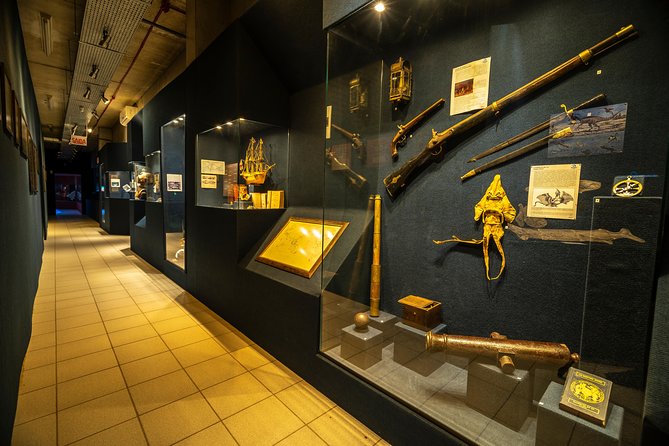
The Blue Wing starts with emergence of life and oceanography. It uses fossils from different geological ages to show how ocean life developed over time. You also get context on why humans were drawn to the sea long before modern science, plus the story of ocean exploration and the technologies behind it.
This wing works well when you want “why it matters.” Marine life is not just a set of animals. It is a history written in rock, evolution, and discovery.
From there, the Red Wing turns toward marine invertebrates. This is a strong section if you like shapes and colors. The design pairs calcareous skeletons, including porifers and corals, with aquariums that show the same types of animals alive. You get shell and specimen displays that make it easier to connect what you see in nature with what is preserved.
You will also notice how the wing covers multiple invertebrate groups in a structured way. Echinoderms (stars, sea urchins, sea cucumbers) are represented clearly. Crustaceans show up too, from shrimps to crabs and lobsters. If you enjoy “micro world to big system” learning, this is one of the best stops.
A few more Brazil options
- Valparaiso Acqua Park Admission Ticket
★ 4.0 · 36 reviews - Christ the Redeemer Entry Ticket by Corcovado Train
★ 4.4 · 4,476 reviews - Rio’s City Tour – Tickets for Christ, Sugar Loaf & Lunch included
★ 5.0 · 4,389 reviews - Rio de Janeiro: Sugarloaf Cable Car Official Ticket
★ 4.6 · 2,873 reviews
Green Wing and Bone Fish Wing: Sharks, Rays, and Deep-Sea Talent
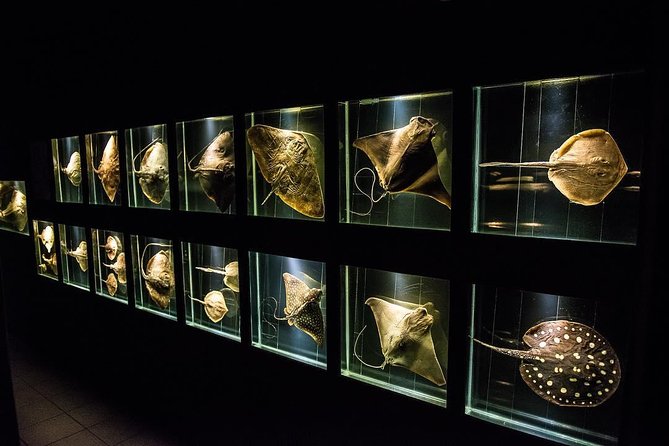
The Green Wing is all about cartilaginous fish: sharks and rays. The museum includes a variety of species, including coastal, deep-sea, and even endangered animals. The displays are not just pretty. You get teeth and jaw presentations, including a white shark jaw that is highlighted as the only one displayed in Brazil.
That jaw-focused approach is genuinely useful. It helps you understand how feeding works and why these animals are built the way they are. It also avoids the common museum problem of only showing “a name tag.” Here, you get structure.
This wing also includes sections on reproduction and adaptation to different marine habitats. And it finishes with four aquariums designed to represent the habitats these animals live in. If you like seeing animals in context, you will appreciate that habitat framing.
Next is the Bone Fish Wing, centered on bony fish. You see major families and how their forms and adaptations vary. Large fish get space too, including tarpon and swordfish. There is also a focused aquarium section with fish from the Indian Ocean and Pacific Ocean, so it feels like a small cross-section of the world’s seas.
The biggest “wow for science nerds” moment here is the deep-sea fish exhibit. It is described as a rare showing of deep-sea fish living in the abyssal zone over 2,000 meters deep. Even if you do not know the species, you will understand the idea: deep water life is built for extreme conditions.
Gray, Beige, and Black Wings: Sea Turtles, Penguins, Whales, and Local Sea Giants
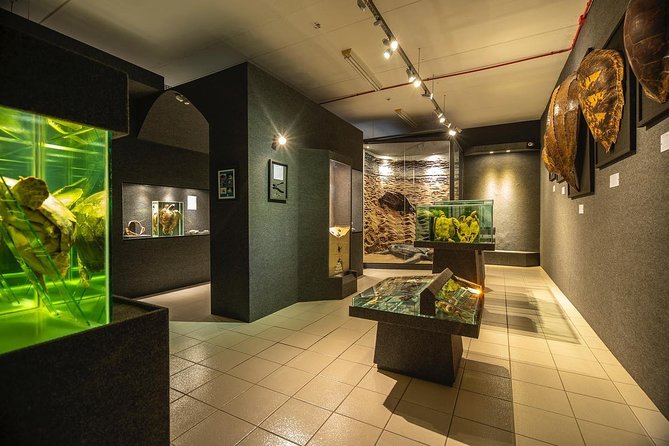
The Gray Wing covers marine reptiles. The museum keeps this section focused: only 14 species are represented, and most come from sea turtles. Since Brazil has five sea turtle species, all five are presented here. This wing is built for biology and ecology, not just identification.
A nice detail in the theme is the range of life stages. The wing contemplates the animals from small juveniles up to giant turtles, so you see how survival changes as animals grow. If you like learning how an ecosystem functions, this is one of the wings that can make you think beyond the animal on display.
If you are visiting with kids, the Beige Wing is a likely winner. It focuses on seabirds, including penguins. All penguin species are presented, with distribution across the southern hemisphere. The centerpiece is a diorama of an oceanic island connected to wandering albatrosses, including the note about their endangered status.
The Black Wing turns to marine mammals. It begins with a historical look at whaling and commercial exploitation in Santa Catarina. That context matters because it connects biology to human history, and it also helps explain why conservation thinking is so important.
After that, the museum presents dolphin and whale species found in southern Brazil, with details about biology. It also includes other mammals present in Brazil, including sea lions and manatees found in northeastern Brazil, and it features South American wolves as part of the overall mammal theme.
Ocean Giants Outside, Plus the Touch Lab Moment
One thing I recommend you plan for: do not skip the outside stop. The Ocean Giants panel is outside the museum and shows the largest marine animals of each group full-scale. The highlight is a blue whale model described as 33 meters long and weighing 170 tons, billed as the largest animal that ever lived on Earth.
This outside element changes the whole visit. Inside, you learn in categories. Outside, you get scale. It is also a great photo break that helps reset your eyes after reading and looking at specimens.
Inside, the museum also includes a sensory experience with marine animals. In practice, this is the part people often remember most, including a hands-on touch lab concept. It can be a standout for kids because it turns learning into physical experience, and adults often find it surprisingly satisfying too because it reduces the feeling of the museum being abstract.
But there is a balance to think about. If you dislike hands-on activities or only want “pure viewing,” you may find your favorite moments are the aquariums and the anatomy displays instead. In other words, treat the touch moment as a bonus, not the whole mission.
What to Watch For Inside Each Wing (So You Do Not Miss the Good Stuff)
If you want to maximize your time, focus on the museum’s “high signal” details rather than trying to read everything at once.
Here are a few things worth prioritizing:
- In the Blue Wing, look for the fossil progression and the way the ocean exploration story is connected to modern tools.
- In the Red Wing, match skeleton displays with the aquariums that show the same types alive.
- In the Green Wing, spend time with the jaw and tooth presentations, especially the white shark jaw detail mentioned as unique in Brazil.
- In the Bone Fish Wing, give the deep-sea fish exhibit your attention first if it interests you. It is described as rare and tied to life over 2,000 meters.
- In the Gray Wing, focus on the sea turtle life stage concept and the idea of ecology, not just species names.
- In the Beige Wing, take your time with the penguin distribution framing and the wandering albatross diorama.
Also, keep in mind one practical downside you might run into: some exhibits may have explanations that feel incomplete or uneven depending on the item. So if you care about context, slow down and read what you can. Use a phone translation tool if you need it for quick understanding.
Finally, note the lighting. Some people find parts of the museum dim. If you want easier reading, bring your phone flashlight mode for short checks, or plan to take your time when you see areas that feel dark.
Who This Museum Visit Suits Best
This is a good fit if you like structured learning and want a clear museum circuit. It is especially good for:
- Families with kids who enjoy animals and hands-on moments
- Marine life fans who want more than one or two tanks to look at
- Adults who like science themes like reproduction, adaptation, and anatomy
- Visitors who want a short, meaningful activity that is not too time heavy
It might be less ideal if you only want a super bright, label-heavy museum experience. Also, if you are the type who hates hands-on activities, you can still have a full visit, but you may not value the sensory part as much.
Should You Book This Univali Oceanographic Museum Visit?
I think you should book this if you want a low-commitment, high-learning museum stop that gives you both specimens and live animals. For $15.68, the combination of a large collection, themed wings, aquariums, and an included sensory component is strong value for an afternoon.
Book it when you:
- Are traveling with kids or teens who love animals
- Want a structured indoor activity with a clear flow
- Like ocean science topics like sharks, sea turtles, and habitat adaptation
Skip it or go with lower expectations if you:
- Need exceptionally bright rooms and very consistent label detail everywhere
- Want only passive viewing and would rather spend your money on another type of attraction
If you decide to go, aim for earlier in the open window, take a slow pass through the wings that match your curiosity, and do not forget the outside Ocean Giants scale moment. That combination is what makes the visit feel complete.
FAQ
How long does the Univali Oceanographic Museum visit take?
Plan on about 1 hour to 1 hour 30 minutes for the exhibition circuit.
What does the ticket include?
Your ticket includes access to the exhibition and a sensory experience with marine animals.
Are there aquariums with live animals?
Yes. The museum includes live animals in aquariums as part of the exhibition experience.
What are the museum opening hours?
It is open Tuesday through Sunday from 2:00 PM to 5:30 PM.
Where is the Ocean Giants panel?
The Ocean Giants panel is located outside the museum.
Is there educational programming included?
An educational package is available for groups, but it is not included with the standard ticket.
What is the cancellation policy?
Free cancellation is available up to 24 hours in advance for a full refund. If you cancel less than 24 hours before the start time, there is no refund.
Is the experience suitable for most people and service animals?
Service animals are allowed, and most travelers can participate.
Newest Brazil reviews
- Private Hike Morro – Gamboa with Fonte do Ceu Waterfall★ 5.0 · 23 reviews
- Valparaiso Acqua Park Admission Ticket★ 4.0 · 36 reviews
- 4 beaches plus waterfall★ 5.0 · 54 reviews
- Great Central Gold Mine★ 5.0 · 56 reviews
- Photo Tour★ 5.0 · 63 reviews
- Transfer from Jeri JJD Airport to Jericoacoara Village★ 5.0 · 69 reviews
- Group Balloon Flight★ 5.0 · 73 reviews
- Adventure 4×4 Bombinhas★ 5.0 · 166 reviews
Museums, compared.
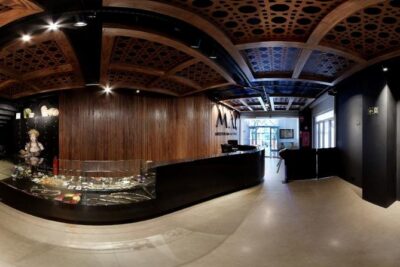
Ticket MAI – Museum of Indigenous Art – Curitiba
Read our review →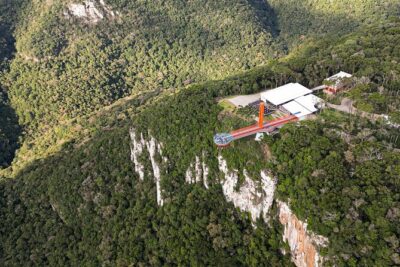
Combo: Platform Entrance, Abusado Adventure, Ferro Passar Museum
Read our review →

Petrópolis Day Trip from Rio de Janeiro including Imperial Museum and Crystal Palace
Read our review →Petrópolis Day Trip from Rio de Janeiro including Imperial Museum and Crystal Palace
Read our review →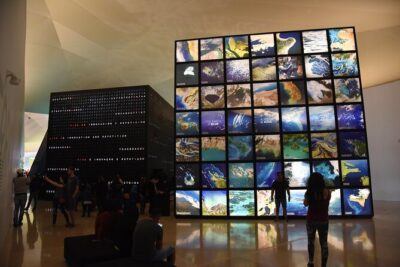
Museum of Tomorrow, AquaRio & Olympic Boulevard in Rio de Janeiro
Read our review →
7-Hour Shared Group Santos Tour : Mont Serrat, Coffee Museum and Sightseeing
Read our review →
Olympic Boulevard, Museum of Tomorrow & Historical Rio
Read our review →Browse the lists this tour appears in