Reviewed · TOURS
Half-timbered route tour
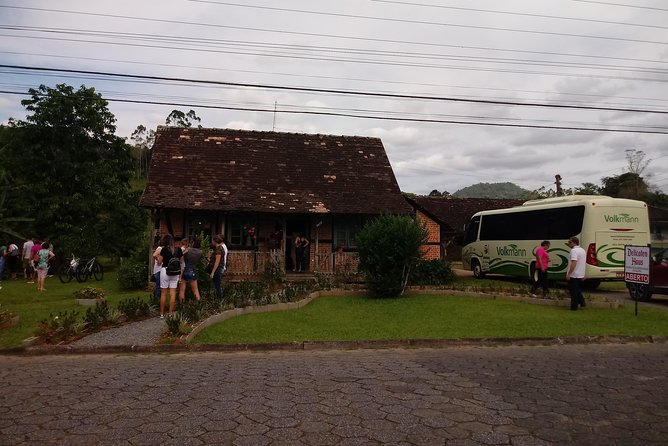
Pomerode is one of those places where old-world German building shows up in real life, not just photos. This half-timbered (Enxaimel) route tour takes you past about 60 of these famous houses, with a guided story that links the architecture to the people who arrived in the 1860s.
I especially love the stop at the Siewert House (1868). A family still lives there, so the visit feels grounded, not museum-only. And I like the way the route is done by car with strategic panoramic stops, so you actually see the details without turning it into a long hike.
One consideration: it’s a mobile, stop-and-look kind of tour, so you will want to plan your appetite. There’s no lunch included, and the best food moment is its own short break, not a full meal.
Key things I’d book this for
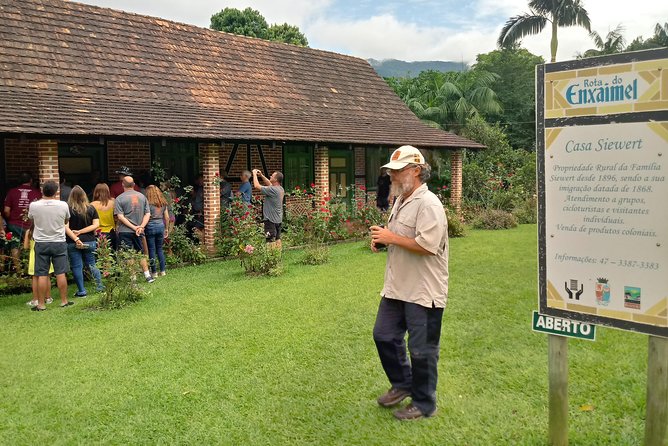
• Siewert House entry included, with a family explaining how the house was built and how residents lived since immigration
• About 60 Enxaimel houses in the region, said to be the largest concentration outside Europe
• Panoramic driving stops that help you spot details fast, instead of only seeing facades up close
• Stops that go beyond houses, including hunting and shooting clubs, plus cemeteries and churches
• Guidance in English, and reviews point out that having the right guide changes the whole experience
• A practical food break, with cuca that can become the highlight of the day
Why Pomerode’s Enxaimel Route Feels Like a Living Story
Pomerode, in South Brazil, is known for Enxaimel houses, that half-timbered style associated with German immigration. What makes this tour interesting is that it connects three things that usually get separated when you travel: the buildings, the people, and the community that formed around them.
You start with the big picture, then get guided into the specifics. The Enxaimel Route has about 60 houses, and you’ll learn why the technique mattered, how it shaped daily life, and how the story moved forward from immigration in the 1860 era through the two World War period and into modern times.
The architecture itself is the hook, but the real payoff is understanding what you’re looking at. Half-timbered houses are visually distinctive, yet easy to misunderstand if no one explains what those timbers and the structure were doing. This tour gives you that missing layer.
Booked alongside this in Brazil:
- Walking Tour Alleys of Tiradentes
★ 5.0 · 1,685 reviews - Nugali Chocolates Tour – Factory
★ 5.0 · 1,533 reviews - Adventure 4×4 Bombinhas
★ 5.0 · 166 reviews
Where You Start, How You Move, and How Much Time You Actually Have
The meeting point is at Pórtico de Pomerode, on Ac. Jorge Lacerda, 821 – Centro, Pomerode – SC. The tour runs about 3 hours 45 minutes, and it ends back at the same place.
Transportation is handled in an air-conditioned vehicle, which matters in Brazil when the weather decides to be dramatic. This is also a route tour, not one single stop. You’ll spend time driving between points, then pause for viewing and short moments to take it all in.
Because it’s a private tour, your group travels together and your guide can keep the pace aligned with your questions. That’s a big deal for this type of architecture tour. Enxaimel details reward patience, and the guide can slow down when you want to look longer.
Your ticket is mobile, so you can skip the paper hunt. You’ll also get an English-speaking guide, and confirmation comes at booking.
The Siewert House (1868): The Stop That Makes the Whole Tour Click
If you only remember one thing from this half-timbered route, make it the Siewert House of 1868. It’s registered by IPHAN, Brazil’s heritage authority, and it has been reformed according to established criteria. What you’ll feel immediately is that this is not a generic show house.
The family still lives in the Siewert House, and during the visit they explain both the construction story and the life story. You’re not just learning the technique, you’re hearing how the house supported residents over time, from immigration-era experiences onward.
That home-life angle is what turns architecture into human travel. Instead of thinking of Enxaimel as a postcard style, you start thinking of it as shelter, work, and adaptation. The guided explanation also helps you see the house’s features as functional choices, not just decoration.
One small practical note: this is a true visitation stop with an included rate. Plan to arrive ready to look closely, ask questions, and listen. If you rush, you’ll miss the details that the guide is trying to point out.
Spotting Enxaimel Details Across About 60 Houses
The Enxaimel Route in Pomerode is famous because of density. You’ll hear the claim that it’s the largest concentration of Enxaimel houses outside Europe, and the route itself has about 60 houses.
You won’t see every one of those homes up close. Instead, you’ll pass around 10 other houses in a panoramic way. That approach is smart. From a car and at viewing points, you can get the overall proportions and the relationship between the structure and the surrounding area.
During the tour, you’ll also learn about the oldest examples, and you’ll understand how the style evolved as generations changed. Some homes have been affected over time, and the tour connects that reality to how heritage protection and preservation decisions show up in real streets, not just in reports.
A detail you’ll likely hear about is that Enxaimel construction is often described as being done without nails, using joinery and framing methods that depend on craftsmanship. Even if you don’t identify every joint, the guide helps you “read” the structure, so it stops looking like a simple pattern and starts looking like engineering.
Another way to spend a day in Brazil:
- Group Balloon Flight
★ 5.0 · 73 reviews - Transfer from Jeri JJD Airport to Jericoacoara Village
★ 5.0 · 69 reviews - Photo Tour
★ 5.0 · 63 reviews - Great Central Gold Mine
★ 5.0 · 56 reviews
Past Houses: Hunting and Shooting Clubs, Cemeteries, and Churches
This tour doesn’t treat architecture like a standalone hobby. It places the houses inside the broader fabric of the German immigrant community.
You’ll pass hunting and shooting clubs, and while you might not expect that to connect to half-timbered buildings, it actually does. These clubs represent how people organized leisure, identity, and community ties. The point is not sport for its own sake. It’s the culture around shared life.
You’ll also see cemeteries and churches. That can sound like the itinerary filler category, but in this case it helps you understand continuity. Houses tell you where people lived. Cemeteries and churches help you understand where the community gathered, what it valued, and how it carried traditions across generations.
If you like travel that connects buildings to everyday meaning, this is a strong part of the route. It also breaks up the stops so the tour stays varied, instead of becoming only a series of building facades.
How the Guides Turn Architecture into Something You Can Explain
One of the best surprises from this kind of tour is realizing how much you miss without guidance. Here, guides matter.
In English, you might get a guide like Valdir Bonickoski, who comes up as exceptionally professional. Another name you may hear around this route is Ronald, who has explained the script with lots of specifics, sometimes in a Jeep format or aboard a vehicle referred to as Bruttus. The details vary by operator and day, but the theme is consistent: the guide’s explanations make Enxaimel feel logical instead of random.
What I’d do on this tour: ask your guide what to look for first. For example, ask which features signal the technique, and which features reflect the period of the family’s life. You’ll get much better photos too, because you’ll know where the “story points” are.
Also, don’t be shy about asking about the two World War period references. The tour connects that era to the immigrant community’s evolution, and those answers make the architecture feel less frozen in time.
The Food Break: Cuca, Coffee, and Why No Lunch Matters
This is not a lunch-included tour. That’s not a flaw, but it is something you should account for.
You will get a stop tied to food. One standout moment is the cuca stop, including a review describing nata with cinnamon and a cuca that tastes so good it starts you planning a second round before the tour ends. Another person noted this as one of the best cucas they’ve ever had.
So here’s the practical move: if you’re hungry, don’t treat food like a side quest. Time your expectations. Bring water. If you can handle it, have a small snack before you start, then let the cuca stop be your treat, not your rescue.
Because there’s no lunch, you should also think about what you’ll do after the tour. Plan an easy meal nearby the Pórtico area once you’re back.
Price and Value: Is $27.70 a Good Deal?
At $27.70 per person, this tour can feel like a bargain, especially because it includes:
- Air-conditioned vehicle
- Visitation rate for the Siewert House
- A guided route in English
- A private-group format
For Enxaimel tourism, the Siewert House component is the anchor. Many half-timbered experiences stop at photos or general viewpoints. Here, you get a true visit to a specific protected house, with the family explanation as part of the experience.
The one reason your total day cost might rise is simple: no lunch included. If you want a sit-down meal, you’ll need to cover that separately. If you’re okay with a snack and the cuca break, the price stays very competitive.
Also, the tour duration is about 3h45, which is long enough to feel like you saw more than one neighborhood. You get movement, stops, and a structured story.
Who This Tour Is Best For
This tour is a great fit if you like travel that is hands-on with meaning. You’ll probably enjoy it most if you:
- Care about architecture beyond surface beauty
- Like seeing how communities organized themselves, not just how buildings look
- Want a structured way to explore Pomerode without guessing where to go
- Prefer a paced route by vehicle, with short stops for photos and questions
It’s also useful if you’re traveling with mixed interests. Even if someone isn’t obsessed with timber framing, the churches, cemeteries, and club stops give the day a broader cultural track.
For families, it’s described as something most travelers can participate. Still, treat it like a sightseeing day with stop-and-look moments. Wear comfortable shoes, because you will be getting in and out and moving briefly at each viewing point.
Practical Tips to Make Your Enxaimel Route Tour Smoother
Bring a question for your guide. Something like: which detail shows the construction technique most clearly? That question usually leads to a better explanation than just asking what the house is.
Take your photos in two rounds. First, a quick wide shot to capture the whole facade. Then a second round when the guide points out what matters. You’ll end up with better images, not just more images.
Plan food smart. Since there’s no lunch, treat the cuca stop as the moment you’ll likely remember. Hydrate before you head in, especially if the weather is warm.
And when you’re at the Siewert House, slow down. The family explanation is the kind of thing that is hard to replicate later from a photo. If you’re chatting, keep the important listening bits in focus.
Should You Book This Half-Timbered Route Tour?
Book it if you want Enxaimel houses with real context, not a photo walk. The Siewert House (1868) visit plus the guided route that ties architecture to immigration-era life through later periods is the main reason this tour works.
Skip it or rethink if you’re looking for a long, food-centered day with lunch included. This is a guided heritage route with a smart snack-style food break, not a full meal experience.
If you like learning while you look, and you want a practical way to see Pomerode’s famous half-timbered style, this is a strong choice.
FAQ
What is included in the half-timbered route tour?
The tour includes an air-conditioned vehicle and the visitation rate for the Siewert House.
Is lunch included?
No. Lunch is not included.
How long is the tour?
The duration is about 3 hours 45 minutes.
Where does the tour start and end?
It starts at Pórtico de Pomerode (Ac. Jorge Lacerda, 821 – Centro, Pomerode – SC) and ends back at the same meeting point.
What language is the tour offered in?
The tour is offered in English.
Is this tour private?
Yes. It is a private tour or activity, with only your group participating.
What should I know about tickets?
You’ll receive a mobile ticket.
Is the Siewert House included in the visit?
Yes. The visitation rate for the Siewert House is included.
What is the cancellation policy?
You can cancel for free up to 24 hours in advance for a full refund. If you cancel less than 24 hours before the start time, the amount paid is not refunded.
Newest Brazil reviews
- 7 Days in Chapada das Mesas Nature and Culture★ 5.0 · 3 reviews
- Visit the 18th Century Cachaça, Brazil’s oldest invention!★ 5.0 · 3 reviews
- Parachute jump in Boituva with 360o Vision★ 5.0 · 4 reviews
- Shared Transfer from Navegantes Airport to Balneario Camboriu★ 4.5 · 6 reviews
- Bird Park & Iguassu Brazilian Side – Private Tour★ 4.5 · 6 reviews
- Private Transfer Navegantes Airport to Balneário Camboriú★ 5.0 · 7 reviews
- Tour of the 4 beaches and waterfalls in Itacaré★ 5.0 · 13 reviews
- Private Hike Morro – Gamboa with Fonte do Ceu Waterfall★ 5.0 · 23 reviews
Tours, compared.

Rio’s City Tour – Tickets for Christ, Sugar Loaf & Lunch included
Read our review →
Full Day: Christ Redeemer, Sugarloaf, City Tour & Barbecue Lunch
Read our review →


São Paulo’s Full Day City Tour: Main City Sights in 7 Hours – (Shared Group)
Read our review →