
Reviewed · MUSEUMS
Olympic Boulevard, Museum of Tomorrow & Historical Rio
Downtown Rio moves fast, and this half-day tour gives you a smart way to understand the city without getting stuck in full-day logistics. I love how it strings together the big themes of Rio, the Port Zone’s redevelopment, the Olympic legacy, and the historic center, in one 4-hour loop. I also like the built-in pacing, with a long, ticketed Museu do Amanhã visit plus shorter stops so you do not feel shoved from place to place.
The one thing to consider is that this is still a walking day. You will cover a lot of ground over a few hours, and the mix of stops can feel like a highlight reel rather than a slow, deep study of any single site.
Why this tour works so well
- A tight downtown loop that connects Porto Maravilha, Praça Mauá, Museu do Amanhã, and Praça XV in one go
- Museu do Amanhã is fully planned with an internal, interactive visit (ticket included)
- Hotel pickup and drop-off from major South Zone areas and Barra da Tijuca means less stress
- Olympic Boulevard and the Olympic cauldron give you a direct link to Rio 2016 in a very walkable setting
- Praça XV landmarks and colonial leftovers help you piece together Rio’s older story quickly
- Confeitaria Colombo stop adds a classic taste-and-stroll option if you want snacks (food not included)
Downtown Rio in 4 Hours: What You’re Actually Buying
This is a half-day “get oriented fast” tour, aimed at people who want a downtown Rio overview without spending half their trip figuring out buses or finding meeting points. With an air-conditioned van for the move-ins and a guided walking route for the sightseeing, you get a structured introduction to parts of Rio that many visitors only see from a distance.
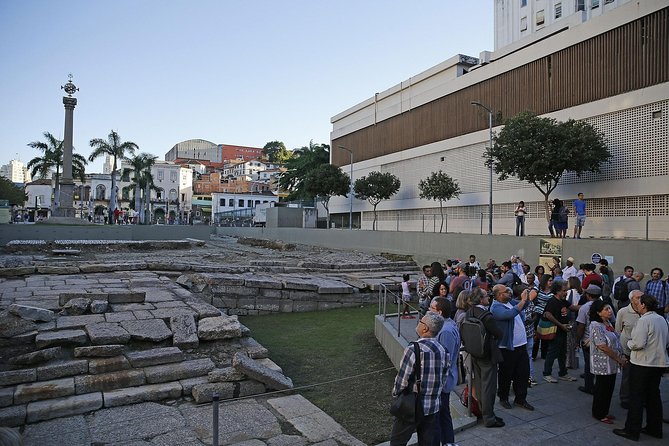
The real value here is the way the itinerary blends modern Rio with older layers. You start near Cais do Valongo, a place with deep historical weight, then move toward the revitalized Port Zone and end up back in the historic center around Praça XV. If you like seeing how a city evolves in real space, not just from a museum plaque, this format makes sense.
Price-wise, at $72 per person for about four hours, you are not just paying for a guide. You are also paying for hotel transport in a small vehicle, plus admission to Museu do Amanhã and an internal visit at Mosteiro de São Bento. That combination is what keeps it feeling like more than a basic “walk and talk.”
More Historical Tours in Rio de Janeiro
- Rio de Janeiro Historical Center Walking Tour
★ 4.5 · 336 reviews - Private Walking and Cultural Tour Rocinha-Rio de Janeiro
★ 5.0 · 239 reviews - Discover Rio Little Africa: A Cultural and Historical Journey
★ 5.0 · 238 reviews
Hotel Pickup and Van Timing: Less Headache, More Walking
Your day begins at 9:00 am. The tour includes roundtrip transportation from main hotels in the South Zone (Copacabana, Ipanema, Leblon, Leme, Leme) and also from the West Zone (Barra da Tijuca). You do not need to hunt down a meeting point, and that matters because downtown Rio can be tricky to navigate efficiently.
The van is comfortable and capped at a maximum group size of 19 passengers, which is small enough to keep the pace manageable. Still, the format is a shared-group experience, meaning you may wait briefly while other pickups happen.
In practical terms, this tour is a good choice if:
- You want a guided route that avoids decision fatigue
- You prefer a fixed start time and a clear end time
- You are comfortable with comfortable shoes for a walking portion
If you arrive in Rio tired and jet-lagged, do expect the day to feel active. The tour is short, but it is not a sit-down sightseeing crawl.
Cais do Valongo and Painel Etnias: The Start Has Meaning
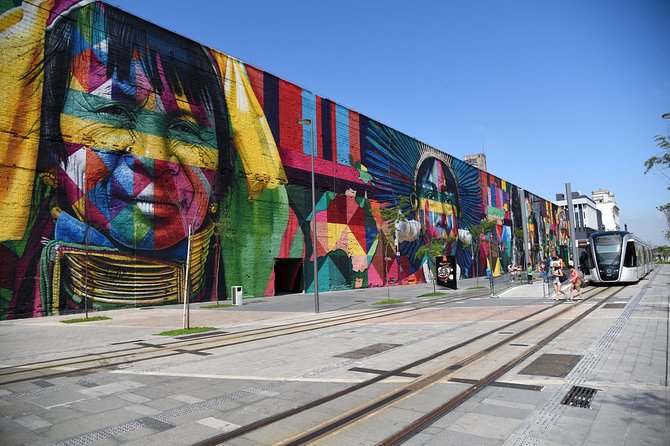
The first stop is Cais do Valongo, where you walk by with live commentary. This is not a quick photo-only halt. It sets the tone for the rest of the tour by anchoring you in the human history of the waterfront area.
Next up is Painel Etnias, with time for photos. This stop is brief, but it helps you connect Rio’s present-day cultural identity to earlier chapters. For me, the best tours do this early, before you’ve been staring at impressive architecture for hours.
Why this matters for you: downtown Rio can look like a collection of attractions if you only focus on visuals. Starting with context means you start recognizing themes as you move, like trade routes, migration, and cultural mixing.
Porto Maravilha and Praça Mauá: Olympic City Meets the Waterfront
As you move on, you walk through Porto Maravilha, the revitalized Port Zone. This part of the route is all about “why it looks different now.” The area has attractions that make it a serious tourist circuit, especially for people interested in culture, art, and history.
Then you get a quick visit to Mauá Square, revitalized for the 2016 Olympics. The timing is short, but it gives you a snapshot of how Rio used the Olympics to reshape public space and how that legacy still shows up in the city.
From there, you stroll along the Orla Conde. This is a useful intermission. After walking through heavier history and landmark stops, the waterfront stretch gives you a calmer moment to breathe and orient yourself for what comes next.
A note on pacing: this section can be where you feel the “half-day” speed the most, because you are stacking multiple micro-stops. It’s still a fair trade-off if you like seeing the breadth of downtown Rio.
More Museums in Rio de Janeiro
- Petrópolis Day Trip from Rio de Janeiro including Imperial Museum and Crystal Palace
★ 4.0 · 101 reviews - Petrópolis Day Trip from Rio de Janeiro including Imperial Museum and Crystal Palace
★ 4.0 · 101 reviews - Museum of Tomorrow, AquaRio & Olympic Boulevard in Rio de Janeiro
★ 4.5 · 69 reviews - Rio: Olympic Boulevard, AquaRio and Museum of Tomorrow Tour
★ 4.5 · 54 reviews
Museu do Amanhã: The One Stop That Can Anchor Your Whole Trip
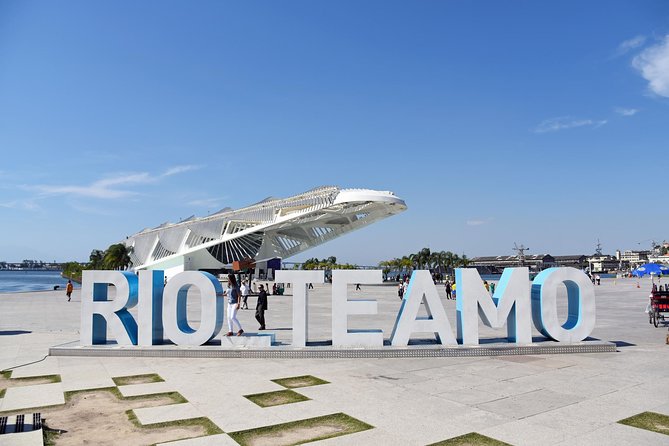
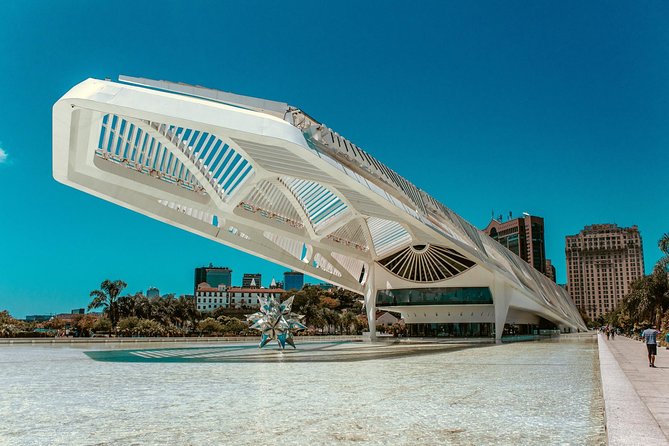
If you remember only one highlight from this tour, make it Museu do Amanhã (Museum of Tomorrow). You get an internal and interactive visit of 1 hour 30 minutes, and the ticket is included.
This museum is special for one simple reason: it is not trying to be a quiet, old-world museum. It is built around interaction and modern storytelling. In a city where you can feel history everywhere, this museum gives you a forward-looking counterpoint.
Practical expectations:
- Plan to spend the full time inside. The museum is the time cushion of the tour.
- If you like hands-on exhibits, this is the stop that feels worth the price.
- If you do not like interactive museums, you might want to mentally frame it as an important architectural and design experience, not just content.
In past groups, guides such as Alexia have been praised for being informative and helpful during this kind of visit. In other cases, guides like Sandra have handled rainy days smoothly so the museum time still feels satisfying.
Mosteiro de São Bento and the Church of Candelária Area
Next is Mosteiro de São Bento, with an internal visit and admission included. This stop gives you a chance to shift from modern Rio back into older religious architecture and long-standing cultural rhythms.
You also pass by the area around the Church of Our Lady of Candelária, a major nineteenth-century artistic work in Brazil. The tour does not turn it into a long sit-down stop, but it still gives you a meaningful sightline to one of the most famous churches you will hear about in Rio.
What you gain from pairing these: you see how Rio’s spiritual landmarks are not just separate attractions. They fit into a wider downtown story, where art, power, and community all overlap.
If you prefer quiet over crowds, go in with realistic expectations. Downtown’s famous churches can be busy, but the guided explanation helps the noise feel less random.
Olympic Cauldron, Colonial Alleys, and the XV Square Area
Now you start moving into Olympic and colonial layers at the same time.
You see the Pira Olímpica, the 2016 Olympic cauldron, with a brief stop. It is quick, but it works as a visual marker. Even if you are not an Olympics superfan, it is a fast way to place a recent global event into Rio’s street-level geography.
Then the tour walks through alleys from Travessa do Comércio, where you can spot preserved traits from colonial times. This is the part of the route that often feels like discovering Rio’s “in-between” spaces. You are not always at the biggest postcard location. Instead, you catch the textures that make a historic center feel lived-in.
You also observe an architectural landmark connected between XV Square and Travessa do Comércio. The tour frames it as what remains of the former residence of the Telles de Menezes family, which helps you understand why certain buildings and edges matter in the city layout.
The Master Valentine Fountain, also known as the Colonial Fountain, is at Praça XV. It is designed by Valentim da Fonseca e Silva and built during the colonial period. If you like details, this is a stop where the guide’s storytelling is what turns a structure into a scene.
Paço Imperial and Praça Quinze de Novembro: Where Rio’s Old Center Tightens
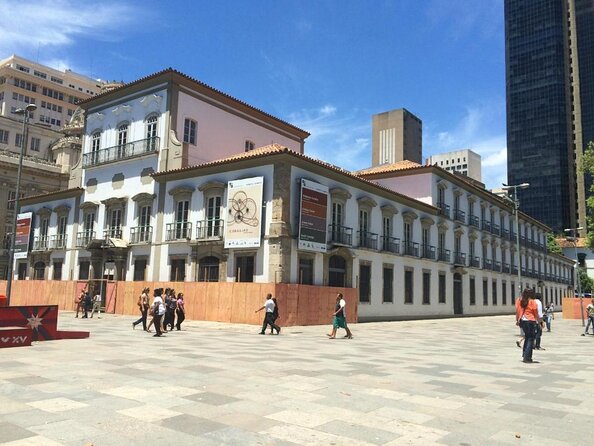
As you continue around the historic center, you pass by Paço Imperial, an 18th-century colonial building originally built for governors’ residence, now used as a cultural center. This stop matters because it connects architecture to governance and the city’s central role through time.
Then you have a guided walk by Praca Quinze de Novembro with live commentary. This is one of those “short but useful” moments. A plaza is a stage in a city like Rio. Even if you do not stop long, you learn how it fits into the bigger walk.
A practical tip: if you take photos, do it on the move rather than standing still at every corner. The route is designed to keep momentum without making you feel rushed, but it still adds up if you stop repeatedly.
Confeitaria Colombo: A Classic Finish Without Forcing Food
The last major attraction on the route is Confeitaria Colombo, with an internal visit. The time here is 20 minutes, and it is a great moment to reset with something sweet.
Food and drinks are not included, but the tour offers a little extra time if you choose to eat. If you are thinking about pastries, this is usually where the day turns from “history walk” into “I want a snack now.”
One key detail: Confeitaria Colombo is closed on Sundays. If your trip hits Sunday, you may want to avoid planning your food stop there and instead treat it as a bonus, not a guarantee.
Guides Make the Day: What You Can Expect from the Human Side
This tour runs with live commentary in English, Spanish, and Portuguese, and the small group size helps the guide manage questions.
You can also look for signs that you will enjoy the experience based on how other guides have handled different days. Carlos has been described as enthusiastic and knowledgeable, and Newton was praised for clear explanations without rushing. Gabriella stood out for being informative even when the itinerary felt focused on one neighborhood area. Sandra was especially helpful during downpours and kept the experience relaxed.
The takeaway for you: the route is structured, but the guide’s tone changes the whole day. If you care about context and storytelling, pay attention to the guide’s strengths when you book.
Who This Tour Is For, and Who Might Feel It’s Too Much
This tour is a strong match if you want:
- A half-day downtown Rio overview
- A mix of waterfront modern Rio and historic center landmarks
- A guided approach that reduces guesswork, with hotel pickup and drop-off
- An included major stop at Museu do Amanhã
It is less ideal if you:
- Prefer slow travel, minimal walking, and one or two sites max
- Do not enjoy interactive museums, since Museu do Amanhã takes a big chunk of time
- Want total control over timing, because this is a scheduled route and a shared group
Also, if you are sensitive to crowds, downtown can still feel busy at major landmarks. The tour helps with crowd planning by focusing on a smart circuit rather than random wandering, but it does not turn Rio into an empty city.
The Price Check: Is $72 Worth It?
For $72, you are paying for:
- Guided downtown Rio walking with live commentary
- Roundtrip hotel transport by air-conditioned van for the pickup areas listed
- Admission included for Museu do Amanhã
- Admission included for an internal visit at Mosteiro de São Bento
- A guided structure that covers multiple themed zones in just 4 hours
If you already planned to visit Museu do Amanhã on your own, adding a guided route around it usually makes the day feel more productive. You get orientation, explanations, and a route that connects spots you might otherwise treat as separate outings.
If you were only interested in one or two downtown attractions, then a shorter, more focused option might feel cheaper per hour. But if you want the most understanding per day, this is a reasonable value.
Should You Book Olympic Boulevard, Museu do Amanhã and Historical Rio?
Book it if you want a fast, guided hit of downtown Rio, with the payoff of an included interactive museum and a route that covers the Port Zone and Praça XV area in one morning. I especially recommend it for first-timers, time-pressed travelers, and families who like learning through interactive exhibits.
Skip it or adjust expectations if you hate walking, dislike interactive museums, or are looking for a slow, deep dive into just one site. For most people, the sweet spot is clear: you will get your bearings fast, see major landmarks, and leave with a better sense of how Rio’s Olympic-era modern changes connect to older street-level history.
FAQ
How long is the tour?
The tour lasts about 4 hours.
What is included in the price?
The price includes a guided half-day downtown Rio walking tour, taxes and fees, a professional guide with live commentary (English, Spanish, Portuguese), roundtrip hotel pickup and drop-off, air-conditioned van transportation, entry to Museu do Amanhã, and entry for the internal visit at Mosteiro de São Bento. Admission for other stops listed is free.
Do I need to buy tickets for Museu do Amanhã?
No. The Museu do Amanhã admission is included in the tour.
Is food included at Confeitaria Colombo?
No. Food and drinks are not included. You can purchase items, and there is a little extra time if you choose to eat.
Where does hotel pickup happen?
Pickup is available from main hotels in the South Zone (Copacabana, Ipanema, Leblon, Leme) and Barra da Tijuca in the West Zone. You arrange pickup by calling and confirming your reservation with your hotel or a nearby location.
Does the tour run in bad weather?
Yes, the tour operates rain or shine. Wear comfortable shoes since it is a walking tour.
Newest Rio de Janeiro reviews
- Maracanã Matchday Tour – Ticket + Guide + Transfer★ 5.0 · 14 reviews
- Angra & Ilha Grande From Rio: Boat Tour With Barbecue and Drinks★ 5.0 · 14 reviews
- Private Tour with Churrasco in Vela Catamaran – Velas do Rio★ 5.0 · 14 reviews
- Half-Day Private Tour:Rio de Janeiro Highlights by Bernard Moraes★ 5.0 · 14 reviews
- Tijuca Forest Adventure★ 4.5 · 14 reviews
- Rio de Janeiro: Join a Fluminense game at Maracanã with locals★ 5.0 · 15 reviews
- Rio de Janeiro: Join a Botafogo soccer game with transport★ 5.0 · 15 reviews
- Christ the Redeemer, Selaron Steps and Santa Teresa Half-day Tour★ 4.5 · 15 reviews
Museums, compared.
Ticket MAI – Museum of Indigenous Art – Curitiba
Read our review →
Combo: Platform Entrance, Abusado Adventure, Ferro Passar Museum
Read our review →

Petrópolis Day Trip from Rio de Janeiro including Imperial Museum and Crystal Palace
Read our review →Petrópolis Day Trip from Rio de Janeiro including Imperial Museum and Crystal Palace
Read our review →
Museum of Tomorrow, AquaRio & Olympic Boulevard in Rio de Janeiro
Read our review →
7-Hour Shared Group Santos Tour : Mont Serrat, Coffee Museum and Sightseeing
Read our review →
Olympic Boulevard, AquaRio and Museum of Tomorrow Tour
Read our review →Browse the lists this tour appears in