
Reviewed · SALVADOR TOURS
Candomblé: Religious,social Focus and Community visits
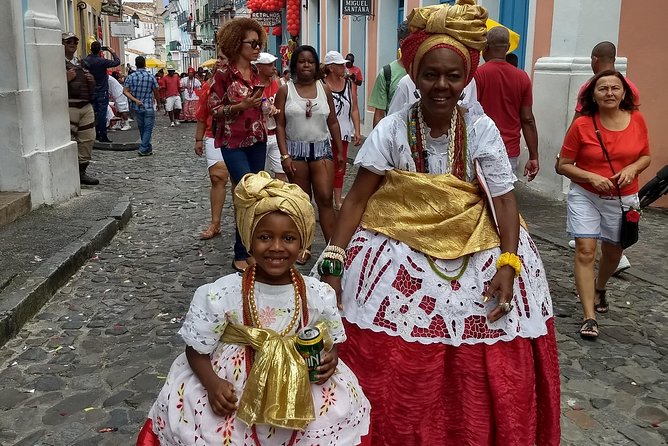
This experience is interesting because it turns a big spiritual tradition into something you can actually see, ask about, and understand in Salvador da Bahia, through Candomblé and the surrounding community spaces. I like how it is built around real locations tied to orixás, not generic history talk.
I also love that Olafemi Tours brings a personal, warm approach, with guides like Josuel and Aline known for being punctual and attentive. For me, that matters, because Candomblé is not a museum subject, it is lived religion.
One consideration: this is a short, focused morning visit, so if you want a long, ceremony-style experience with lots of time inside, you may feel a bit time-limited.
Key highlights you should know
- Rio Vermelho at the casa de Yemanjá, with free admission to start your morning
- Dique de Tororo orixá sculptures, where you get a guided explanation plus time for photos
- A traditional Yoruba Candomblé terreiro at Casa de Oxumare, with included admission for about an hour
- Private format, just your group, with pickup offered
- Mobile ticket for easier check-in and a smooth start
- Olafemi Tours guides like Josuel and Aline bring punctuality and real patience
Candomblé in Salvador: what you are really seeing
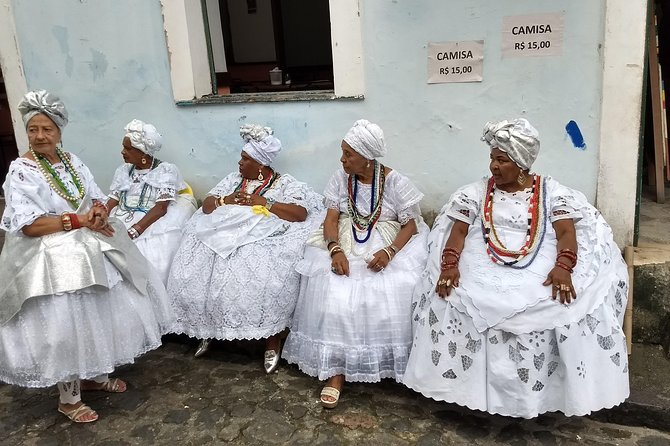
Salvador da Bahia is famous for music, beaches, and color. But the place I like to go next is religion, because it explains how people make sense of life here. This tour focuses on Candomblé, and it does it the practical way: you visit three different stops tied to orixás and the community rhythms that surround them.
The biggest win is that you do not just hear about symbolism. You stand in front of it. At one stop you are at a casa de Yemanjá, another spot centers on orixá sculptures you can photograph while your guide explains what you are looking at, and the final stop is a traditional Yoruba Candomblé terreiro. That combination helps you connect spiritual ideas to real physical places.
If you care about respectful context and clear answers, this is the kind of tour that makes you feel guided rather than rushed through a checklist.
More days in Salvador:
- Round trip transfer, Salvador, Bahia, Brazil
★ 5.0 · 228 reviews - Salvador City Tour – Discover Brazil’s First Capital En, It, Es
★ 5.0 · 217 reviews - Cooking class in Salvador, an authentic dinning experience
★ 5.0 · 132 reviews
What you pay, how long it takes, and who it suits
The price is $150 per person, and it is sold as a private tour. Even though the listing says 9 to 13 minutes, the itinerary stop times add up to about 2 hours of scheduled site time: 30 minutes at Rio Vermelho, 30 minutes at Dique de Tororo, and 1 hour at Casa de Oxumare. In other words, plan on a short morning out, not a half-day.
For value, I like that admission is handled in a straightforward way. Rio Vermelho has free admission, while the Dique de Tororo stop and the Casa de Oxumare visit include admission. You also get a mobile ticket, so you are not scrambling for paper.
This tour fits best if you:
- want a guided introduction to Afro-Brazilian spiritual tradition
- prefer a private group over a large shared bus day
- like learning from a patient guide who can answer follow-up questions
- are visiting on a tight schedule and want meaningful stops without a marathon
It may not be your best choice if you are looking for a long ceremony timeline, or if you want a more purely entertainment-focused experience. This is about understanding and community context first.
Rio Vermelho and the casa de Yemanjá stop
You begin in Rio Vermelho, and the first experience is a visit to a casa de Yemanjá. This is the kind of start that sets the tone. Instead of jumping straight to a viewpoint or a statue, you start in a place connected to an orixá, with an on-site explanation from your guide.
The time here is 30 minutes, and admission is free. That makes the opening stop feel low-stress. You can arrive, orient yourself, listen, ask questions, and take in the atmosphere without thinking about an extra paid entry fee.
Practical tip: because this is a religion-based stop, you should come with your questions ready. If you are confused about basic terms, write them down on your phone before you leave. A good guide can translate ideas fast when you know what you want to understand.
Also, if you are sensitive to environments that feel active and spiritually meaningful, this is where you will notice it most. You are not meant to treat it like a photo stop only, so keep your camera use respectful and follow your guide’s pace.
Dique de Tororo orixá sculptures: where photos meet explanations
Next you head to Dique de Tororo. Here the focus is on sculptures of the orixás. This stop is also 30 minutes, and admission is included.
What I like about this format is the balance. The sculptures give you something concrete to look at. The guide gives you context, so your photos are not random images. You should leave with clearer mental labels for what you saw and why it matters.
This is a good stop to slow down for a minute. Walk a bit, check angles, and do at least one photo from close enough to notice details. Then step back for a wider shot that shows the setting. Your guide’s explanation helps, because it turns visual shapes into meaning.
One small drawback to consider: because the stop is short, you might feel the urge to take too many photos at once. If you want better results, pick a few key orixás to focus on, rather than trying to photograph everything. That also keeps you from blocking other visitors.
Another way to spend a day in Salvador da Bahia:
- Tour to the Frades Islands and Itaparica, from Salvador – Ba
★ 4.0 · 130 reviews - Transfer Salvador Airport / Hotel Litoral Norte
★ 5.0 · 111 reviews - Private City Tour in Salvador
★ 5.0 · 110 reviews - From Salvador: Schooner Tour to Frades Islands and Itaparica
★ 3.9 · 98 reviews
Casa de Oxumare: a traditional Yoruba Candomblé terreiro visit
The final stop is at Casa de Oxumare, and this is the heart of the tour. You visit a traditional Candomblé terreiro of Yoruba tradition, with admission included, and you get about 1 hour here.
For many people, this is the most meaningful part. A terreiro is not just a building. It is a living religious community space where tradition and social life overlap. Even if you only get an hour, a good guide can help you understand what you are seeing and where it fits in the larger Afro-Brazilian story.
This is also where you can pick up those extra connections people often care about in Bahia, like how spiritual tradition relates to dance and culture. In a past experience with this tour provider, the link between Candomblé and cultural dance traditions such as maculelê and capoeira came through as part of the broader explanation. You might not see a full performance packed into the hour, but the guide can help you place these arts in the same cultural ecosystem.
Because this is a religious community setting, let your guide lead. Ask questions, but do it at a respectful pace. If you are trying to learn the terms, pay attention to pronunciation and ask for a simple repeat. It is one of those places where clarity beats speed.
Private tour energy with Olafemi Tours and guides like Josuel and Aline
This is a private tour, meaning it is only your group. That matters more than people expect. In a topic like Candomblé, you do not want to shout over a crowd or compete for a chance to ask what something means. The private setup gives your guide room to tailor explanations to your comfort level.
Olafemi Tours is behind the experience, and the reviews you hear about them are consistent: punctuality, warmth, and attention to detail. Names that come up include Josuel and Aline. Aline is described as prepared, patient, and smiling, which is exactly what you want when you are learning a tradition that has its own structure and language.
For you, the practical benefit is simple: you get better learning. If you ask a follow-up question, you likely get a real answer, not a quick brush-off. That is how the tour becomes more than sightseeing.
How to plan your morning window in Salvador
The activity runs daily, Monday through Sunday, between 9:00 AM and 1:00 PM during 2025. The tour ends back at the meeting point, so you do not have to worry about getting stranded across town.
Pickup is offered, and that is a big quality-of-life factor in Salvador. Even if you are staying central, being picked up and dropped back keeps the day calm and helps you stay on time for each stop.
Because this type of tour is time-focused, I suggest planning your schedule tightly. Eat something light beforehand, bring water, and avoid booking another major activity right on the edge of the end time. If you run late, it will usually cost you your best chance to ask questions at the final terreiro stop.
One more planning detail: this experience is commonly booked about 57 days in advance. That is a sign that people treat it as a priority, not a last-minute filler. If Candomblé is high on your list, lock in your date early.
What to bring and how to get better photos
You do not need fancy gear, but you do want to be practical. Bring:
- a charged phone or camera (and enough memory)
- water, especially if you run warm in the morning sun
- a light layer, because temperatures and breezes can shift
- a short list of questions you want answered
For photos, the stops that help most are Dique de Tororo for orixá sculptures. That is where you will get the “photo plus explanation” combination. Rio Vermelho and the terreiro are meaningful spaces, so treat photography as guided and secondary. Your guide can help you figure out what is appropriate and where you can stand without disrupting the community feel.
If you want better learning, avoid multitasking. Put your phone away for the guide parts, then take photos after the explanation when you know what you are aiming at. It makes your images more intentional and makes your brain remember more.
Is this tour the right fit for you?
If you are coming to Salvador specifically to understand Afro-Brazilian religious tradition, I think this tour deserves a spot in your plans. It is short, private, and structured around three sites that build a logical path from orixá space to orixá symbols to a traditional Yoruba terreiro.
Book it if:
- you want real context and not just street-level sightseeing
- you like the idea of a private guide who can stay patient with questions
- you value admission included for two of the three stops
- you prefer a morning window that still leaves time for the rest of your day
Skip it or consider alternatives if:
- you expect a long, ceremony-style visit with lots of time inside
- you want a purely entertainment-heavy program
- your schedule cannot fit a focused 2-hour visit in the 9:00 AM to 1:00 PM window
My bottom line: this is one of those tours that gives you something you can carry home, a clearer understanding of how belief, community, and place connect in Salvador.
FAQ
Where is this Candomblé tour located?
It takes place in Salvador da Bahia, Brazil, and the activity ends back at the meeting point.
How much does the tour cost?
The price is $150.00 per person.
How long is the tour?
The scheduled stop times total about 2 hours: 30 minutes at Rio Vermelho, 30 minutes at Dique de Tororo, and 1 hour at Casa de Oxumare.
What stops are included?
You visit a casa de Yemanjá in Rio Vermelho, the sculptures of the orixás at Dique de Tororo, and the traditional Yoruba Candomblé terreiro at Casa de Oxumare.
Are admission tickets included?
Admission is free for the Rio Vermelho stop, and admission is included for Dique de Tororo and Casa de Oxumare.
Is pickup available?
Yes, pickup is offered.
Is this a private tour?
Yes. It is private, and only your group participates.
What are the operating hours?
It runs daily from 9:00 AM to 1:00 PM.
Can I cancel for a full refund?
Yes. You can cancel up to 24 hours in advance for a full refund. If you cancel less than 24 hours before the experience starts, the amount paid is not refunded.
Newest Salvador da Bahia reviews
- Transfer Salvador to Barra Grande Round Trip★ 5.0 · 3 reviews
- Cruise Ship Special Private Tour Salvador da Bahia Historic Old Town Bonfim and Barra★ 5.0 · 3 reviews
- Airport Transfer-Grand Palladium Imbassai 1 to 4 people by Salvador Receptivo★ 5.0 · 3 reviews
- Exclusive Salvador City Tour with Beachtime Swim Stop★ 5.0 · 3 reviews
- Private Bike Tour Circuit Along the Beach★ 5.0 · 3 reviews
- Private Capoeira Class in Salvador★ 5.0 · 4 reviews
- Bahia By Night: Dinner and Folkloric show★ 5.0 · 4 reviews
- Privat Salvador City Tour with hotelier Markus★ 4.0 · 4 reviews
Salvador Tours, compared.


Salvador City Tour – Discover Brazil’s First Capital En, It, Es
Read our review →
Cooking class in Salvador, an authentic dinning experience
Read our review →
Tour to the Frades Islands and Itaparica, from Salvador – Ba
Read our review →
Transfer Salvador Airport / Hotel Litoral Norte
Read our review →


Tour Praia do Forte and Guarajuba, Leaving Salvador-Bahia.
Read our review →Browse the lists this tour appears in