
Reviewed · SALVADOR & PELOURINHO
Salvador: 4-Hour Candomblé Mysteries Tour
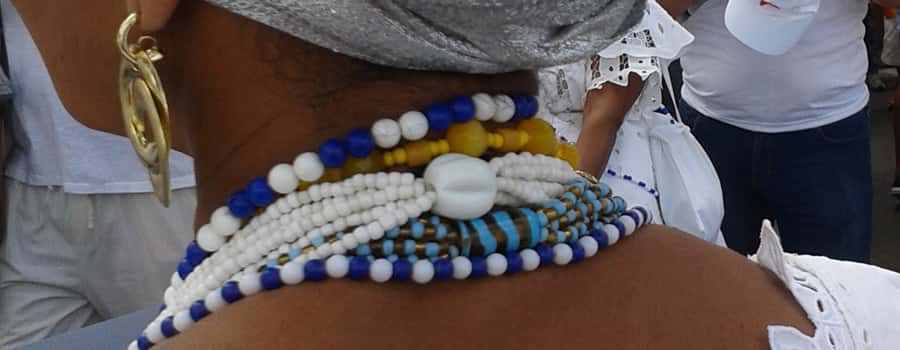
Salvador has a way of mixing sacred, everyday, and street-level history, and this Candomblé Mysteries Tour helps you read the city through African-root spirituality and local storytelling. I like how it ties together museum context, photo stops, and guided walking so the day feels like one connected lesson, not a checklist.
I also like the small-group feel, capped at 6 people, plus the chance to hear from a community guide with initiation in these traditions. One thing to watch: a dress code is enforced at places of worship and some museums, so if you show up in shorts or a sleeveless top, you can be turned away.
Key reasons this tour works
- Small group access (max 6) keeps the questions coming and the walk comfortable.
- A clear theme from slavery to Candomblé so you know what you are looking at.
- Photo stops built in, so you get views without sprinting between sites.
- Local, community-based perspective, including a guide initiated in the tradition.
- Candomblé terreiro visit with an optional oracle consultation (extra cost).
- Hotel pickup and drop-off, plus air-conditioned transport, which makes the half-day easy.
Why Salvador’s Candomblé stories feel practical, not performative
If you only see Salvador as postcard scenery, you miss the point. This tour treats the city like a living map of memory, where religion, resistance, and everyday life overlap. You start with context, then you walk into neighborhoods and spaces where that context still shapes how people relate to place.
What I like best is that you do not just get facts. You also get a sense of how people interpret those facts. The tour’s approach tries to correct misconceptions that have floated around for centuries about African-origin religions, and it does so with museum collections, careful explanations, and hands-on guidance in real community settings.
And yes, you still get the kind of Salvador views you want on your camera. The difference is you will know what you are looking at, and why it matters.
More of Salvador and the Pelourinho:
- Round trip transfer, Salvador, Bahia, Brazil
★ 5.0 · 228 reviews - Salvador City Tour – Discover Brazil’s First Capital En, It, Es
★ 5.0 · 217 reviews - Cooking class in Salvador, an authentic dinning experience
★ 5.0 · 132 reviews
The value you actually get for $110 in 4 hours
This tour costs $110 per person for a 4-hour day, and the price makes more sense when you look at what is included. You get hotel/port pickup and drop-off, air-conditioned transport, entrance fees, and a live multilingual guide. On a short day, that matters. You are not spending your time negotiating taxis, hunting for meeting points, or guessing which places need tickets.
The small-group cap at 6 people is also part of the value. In a larger group, you might get a rapid-fire stop. Here, the guide can slow down, answer questions, and adjust based on what you want to focus on. In one case, a guide named Nilson reportedly adapted the tour to personal needs and interests, and that kind of flexibility tends to happen when the group stays small.
Still, I’ll flag one realistic consideration. One past guests mentioned that not every entry was included, and an extra payment of about 20 reais per person came up. I cannot tell you what your day will require, but I do recommend you confirm what is covered before you go, especially for any special access items.
What the schedule really feels like once you’re in motion
A 4-hour format sounds quick, because it is quick. You will have breaks and photo stops, but you should expect mostly guided walking and short site visits rather than long stays. This is ideal if you want a meaningful overview without losing half the day to travel time.
You will start in Salvador, then move through several different parts of the city. The day is structured to build meaning in layers: history in museums and galleries, then spiritual and community geography, then street-level perspective in Pelourinho.
Because you are dealing with places of worship and museums, the dress code also affects the pace. If you need to adjust clothing on the spot, that eats time. Plan for that upfront.
Stop 1: Afro-Brazilian Museum, where the story starts
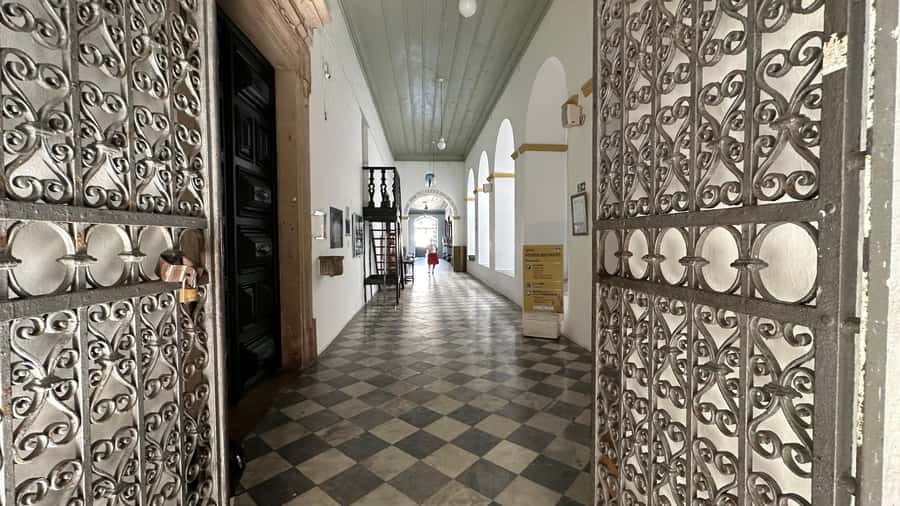
Your first major stop sets the foundation. The tour begins at the Afro-Brazilian Museum, a starting point that frames enslaved Africans and the transatlantic slave trade, along with how identities changed and reshaped over time.
This is not just a museum-brain dump. The key idea is that the collection traces multiple regions of Africa, so you can see that African culture in Brazil was not one single thing. It includes distinct artistic, intellectual, and religious expressions that traveled, changed, and survived in new conditions.
I like the way this stop helps you later. When you reach sacred spaces and community stories, you will recognize the broader themes instead of feeling like you are entering the unknown.
Practical tip: wear comfortable walking shoes. Museum areas can mean standing and reading, even if you are only there for a short guided segment.
More days in Salvador:
- Tour to the Frades Islands and Itaparica, from Salvador – Ba
★ 4.0 · 130 reviews - Transfer Salvador Airport / Hotel Litoral Norte
★ 5.0 · 111 reviews - Private City Tour in Salvador
★ 5.0 · 110 reviews - From Salvador: Schooner Tour to Frades Islands and Itaparica
★ 3.9 · 98 reviews
Dique do Tororó: a photo stop that actually has meaning
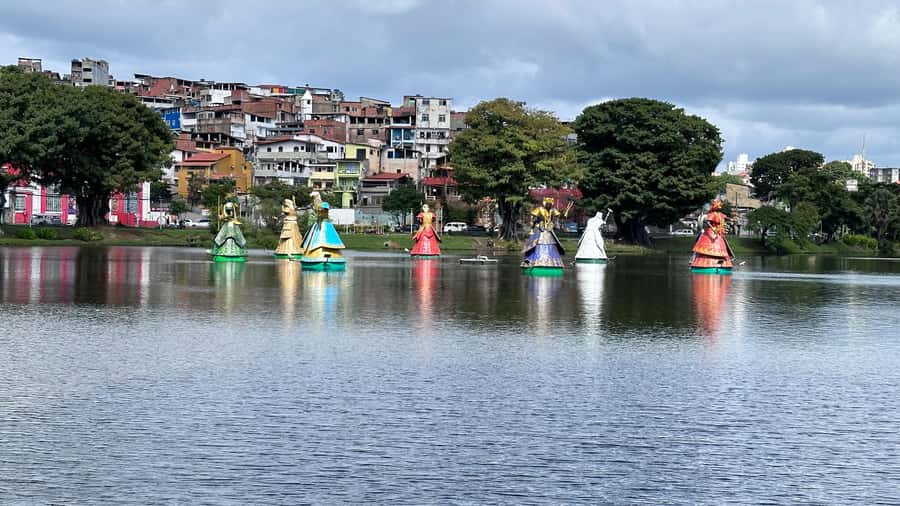
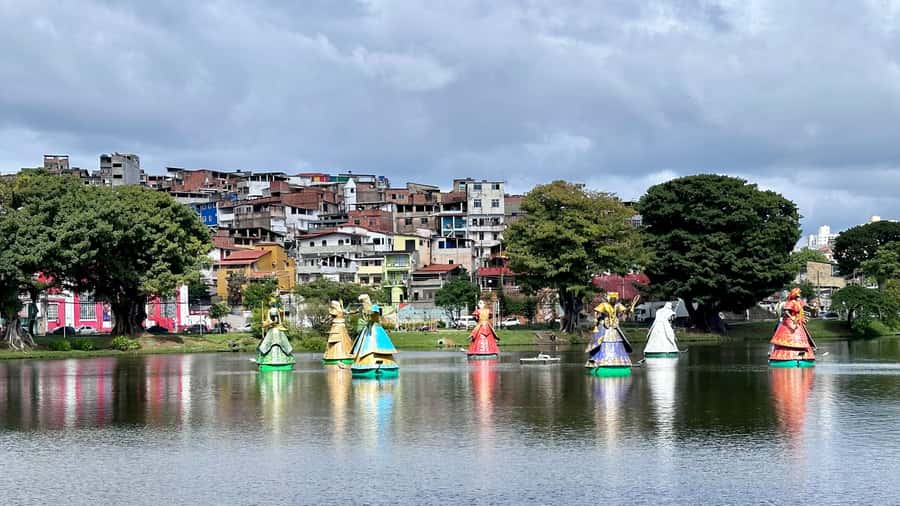
Next comes Dique do Tororó, with time for a photo stop and a guided introduction. This is the kind of Salvador spot that people recognize visually, but the tour pushes you to see it as more than scenery.
From what you learn early, the “why” becomes clearer. You are learning how African-origin spirituality shaped place names, practices, and sacred relationships to the environment. In other words, you are not just snapping a pretty view. You are learning the spiritual geography behind it.
This stop also breaks up the day nicely. You get a reset before the next cluster of cultural sites.
Pierre Verger Gallery: seeing slavery’s history through images and records
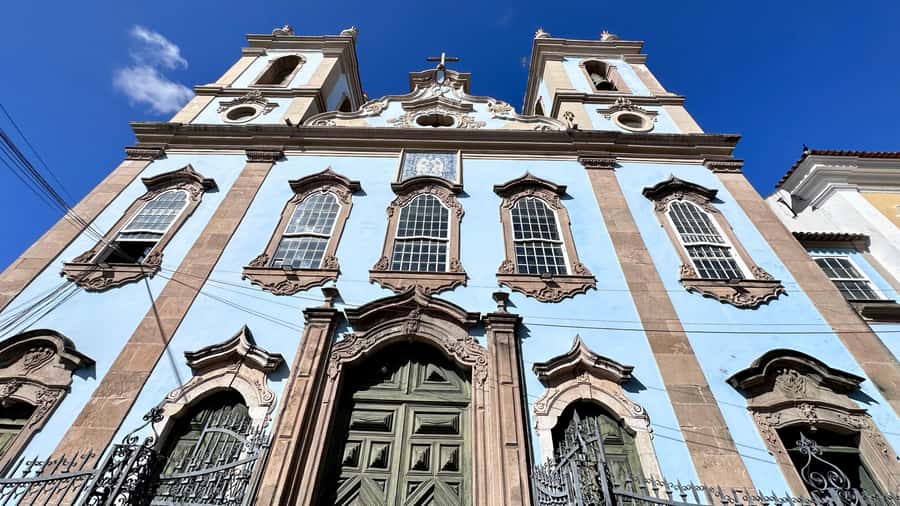
After the initial context, the tour moves you toward the Pierre Verger Gallery. Verger was a French anthropologist who helped build literary and photographic records of slavery’s history, and this stop leans heavily on visual documentation.
I like this angle because photos and audio-visual materials can feel easier to hold in your head than a timeline. You start connecting how people lived, how communities formed, and how memory traveled across generations.
If you are the type who likes to “get it” fast, this stop tends to work. It keeps the learning grounded. You can look at what is in front of you, then place it into the broader narrative you started building at the Afro-Brazilian Museum.
Maroon communities and the city’s edges, seen with a local guide
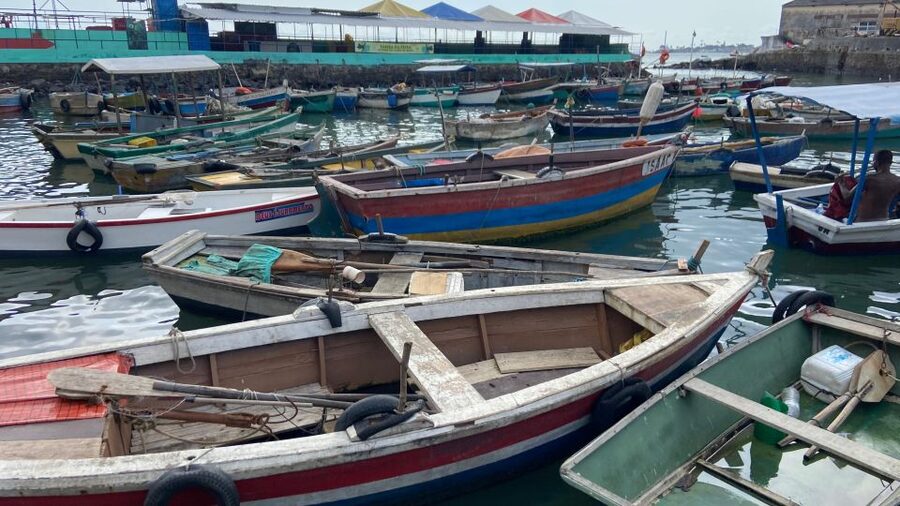
One of the most interesting parts of the day focuses on a maroon community, spaces that became havens for Black people and their African gods during colonial and post-abolition periods. You are not just hearing the term. You are seeing how those histories connect to later neighborhood formation.
Then you walk through streets where you can notice how an urban community developed over time, including how a slum originated from maroon roots. This is where the tour’s small group size pays off again. You can ask questions in real time instead of trying to catch the guide at the end.
The guide here is important. One review highlighted Nilson’s ability to show spots people would not visit alone, and that local know-how is exactly what you want for this section. You are looking at layers of settlement and survival, not just “old buildings.”
Candomblé terreiro visit: the sacred space portion (and dress code reality)
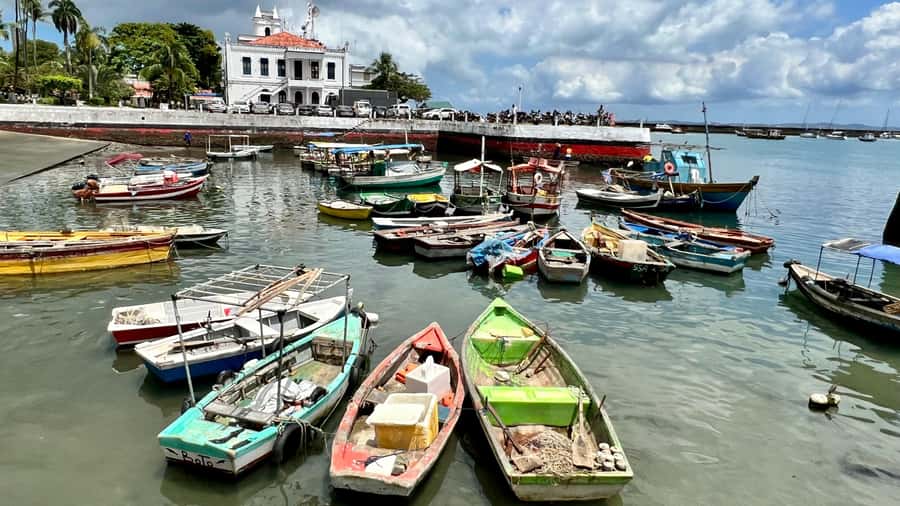
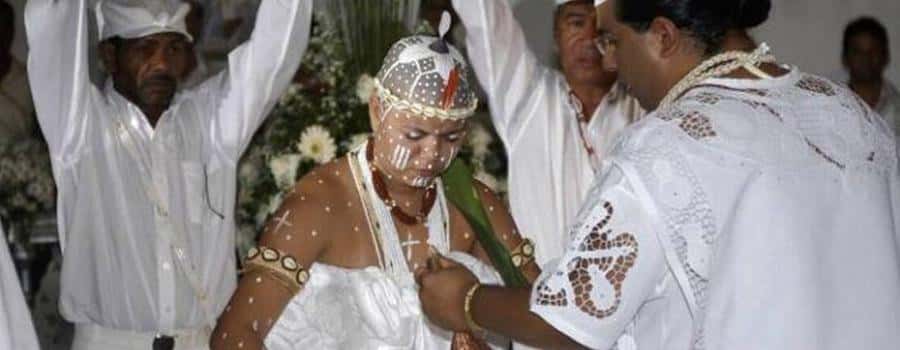
This is the core moment. You visit a Candomblé terreiro linked to the ewe-fon nation of daomeniana origin. The tour also offers a chance to consult the sacred oracle as an optional activity with an extra cost.
A terreiro visit is not a normal sightseeing stop. Even when the time on-site is limited, this is where you must follow the rules. The dress code is strict: no shorts or sleeveless tops, and knees and shoulders must be covered for both men and women. If you ignore this, you risk being refused entry.
So here is my practical advice: plan clothes that you would also feel comfortable wearing to a church or temple at home. Light layers help, because Salvador can feel warm.
Also, keep your tone respectful. You are entering a living religious community, not a staged set.
Optional oracle consultation: worth it, only if it fits your comfort level
The oracle consultation is optional, and there is an extra cost. That means you do not have to do it to get value from the tour, but if you want a deeper experiential moment, it is the place to consider it.
The main thing is to go in with a clear head. If you are uneasy about participating in rituals, you can skip it and still come away with the context from the guided portion. If you are curious and respectful, it can be one of those moments that makes the learning feel real.
Pelourinho: where the last walk ties the day together
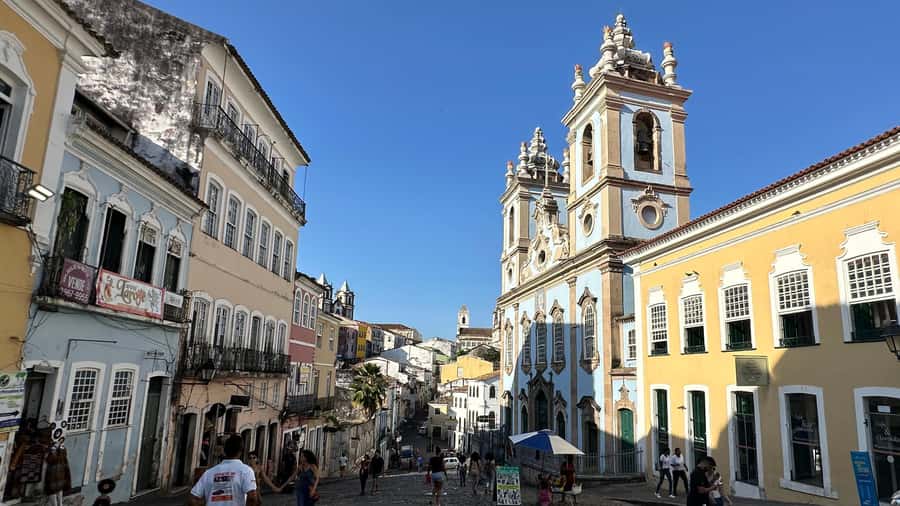
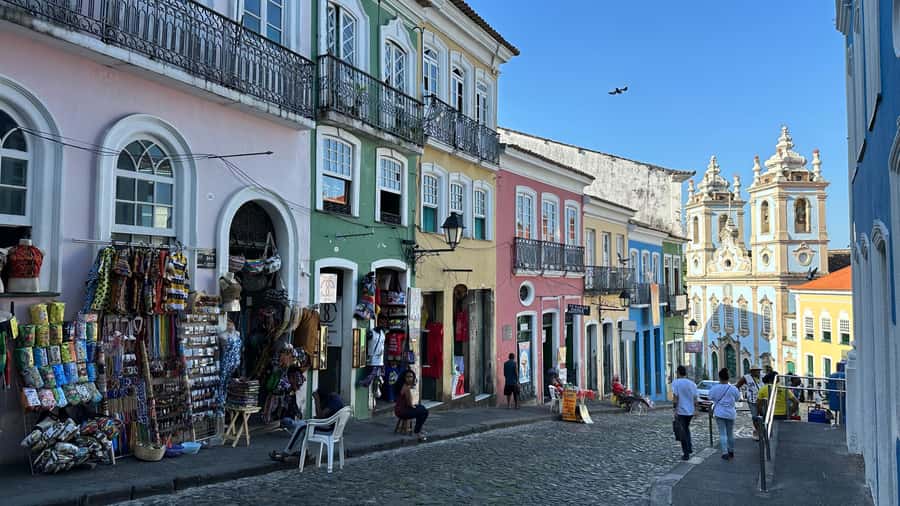
You end with Pelourinho, including a photo stop and a guided walk. Pelourinho often draws visitors for its architecture and street scenes, but on this tour it plays a different role. You are connecting how the city’s layered histories show up in public spaces.
By this point, you should recognize patterns. You have learned about slavery, cultural survival, community havens, and sacred practice. So Pelourinho is not just “pretty streets.” It becomes a place where you can compare what you saw earlier with what you see now.
Time-wise, the guided portion here is about 45 minutes, which is enough to get orientation and notice details without rushing you out.
Guides matter: examples from past days
A tour like this lives or dies on the guide. In the reviews you can see the difference. A guide named Monia reportedly brought strong knowledge and a great day. Another guide, Fernando, was praised for making the tour fantastic. Maria Nunes was described as wonderful and detailed. Nilson was singled out for adapting the tour and pointing out places a solo visitor might miss.
You do not need the exact guide name to know what to look for. I recommend you go with an open question or two, like how the guide connects what you see today to the histories you heard earlier. A good guide will steer you toward the answers.
Small-group comfort and transport: an underrated part of the experience
Logistics can either support a thoughtful day or wreck it. Here you get pickup and drop-off in Salvador City and transport in an air-conditioned vehicle. That is a relief in a half-day tour because you do not spend energy planning routes between scattered stops.
The small group cap at 6 also makes the driving and transitions easier. Less waiting, fewer people to wrangle, and less time wasted repeating instructions.
Price check and what you should budget for
Your base cost is $110 per person, with listed inclusions covering entrance fees, transport, and the guide. For most people, that means you show up, ride, walk, and learn.
But do two small things to avoid surprises:
- Confirm which entrances are included at the moment you book.
- Have a little extra cash or payment option for any optional add-ons, including the oracle consultation.
As mentioned earlier, at least one traveler reported an extra payment of about 20 reais per person for an entry item.
If you want the smoothest day, treat that as your “just in case” buffer, not a sign you will definitely pay more.
Who this tour is best for
This tour is a strong fit if you want a guided introduction to Salvador that is tied to real African-origin religious practice and the historical forces behind it. It is also a good match if you like photo opportunities but hate tours where the photos replace understanding.
You will especially like it if:
- you want context before you explore on your own afterward
- you care about how communities formed and survived over time
- you prefer small groups where questions are welcome
If you only want casual sightseeing, you might find the religious and historical content requires a bit more attention than a pure street-tour.
Should you book this Salvador Candomblé Mysteries Tour?
I’d book it if you value a structured tour that connects museums, spiritual places, community history, and street-level visuals in a short 4-hour window. The small group size, hotel pickup, and guided expertise are practical wins, not fluff.
Skip it or think twice if you are not willing to follow the dress code or if you are uncomfortable entering worship settings. Also, if “every single entry fee is guaranteed included” is a hard requirement for you, confirm details before you go.
If you get those basics right, this tour is one of the better ways to understand Salvador beyond the obvious views, and you’ll leave with a clearer mental map of how faith, resistance, and daily life show up on the ground.
FAQ
How long is the Salvador Candomblé Mysteries Tour?
The tour lasts 4 hours.
Is the group size limited?
Yes. It is a private group with a maximum of 6 people.
What languages are offered for the live guide?
The guide is available in Spanish, English, French, Italian, and Portuguese.
Is hotel pickup and drop-off included?
Yes. Pickup and drop-off are included from your hotel lobby in Salvador City.
Is the oracle consultation included?
The sacred oracle consultation is optional and has an extra cost.
What dress code is required?
You need to cover your knees and shoulders. No shorts or sleeveless tops are allowed, and entry can be refused if you do not meet the dress requirements.
Are food and drinks included?
No. Food and drinks are not included.
Newest Salvador da Bahia reviews
- Cultural Folkloric Show and Dinner in Salvador★ 4.5 · 15 reviews
- Transfer Vila Galé Marés (Guarajuba) – Private★ 5.0 · 15 reviews
- Tour to Praia do Forte and Guarajuba★ 4.0 · 16 reviews
- Private City Tour of Salvador da Bahia★ 5.0 · 17 reviews
- 3-Hour Private Tour of Salvador Capital Afro-Brazilian★ 5.0 · 17 reviews
- Afro-Brazilian Roots city Tour in Salvador with lunch at Favela★ 5.0 · 17 reviews
- Salvador African Heritage Private City Tour Including Afro Museum★ 4.5 · 18 reviews
- Morro de São Paulo Tour, Leaving Salvador-Bahia.★ 5.0 · 18 reviews
Salvador & Pelourinho, compared.


Salvador City Tour – Discover Brazil’s First Capital En, It, Es
Read our review →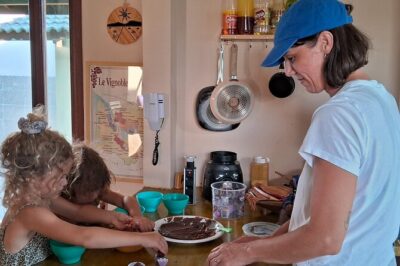
Cooking class in Salvador, an authentic dinning experience
Read our review →
Tour to the Frades Islands and Itaparica, from Salvador – Ba
Read our review →
Transfer Salvador Airport / Hotel Litoral Norte
Read our review →


Tour Praia do Forte and Guarajuba, Leaving Salvador-Bahia.
Read our review →Browse the lists this tour appears in