
What makes the Afro Sampa Walking Tour interesting is that you are not just sightseeing downtown. You are walking through São Paulo landmarks that connect Afro-Brazilian identity to culture, resistance, religion, and education, step by step.
I love that the route has a clear arc, from cultural preservation to modern opportunity. I also like that your guide works in English and keeps the time practical, about 3 hours with short stops at major sites.
One possible drawback: the themes are heavy at times, including slavery and racism. If you want a lighter, purely scenic walk, this may feel intense.
Key highlights you will feel fast
- Mário de Andrade Library as a gateway to Afro-Brazilian cultural preservation
- Theatro Municipal de São Paulo and the founding of the MNU in 1978
- Igreja Nossa Senhora do Rosário dos Homens Pretos, faith, mutual aid, and sanctuary
- Largo da Memória, a concrete place of remembrance for enslaved Africans
- Casa Preta Hub, where Black entrepreneurship and culture meet
- Educafro, 1 hour focused on anti-racism and education inclusion
A 3-hour walk through Afro-Brazilian history in central São Paulo
This is a guided downtown São Paulo walking tour built around six landmark stops. It runs about 3 hours and is offered in English, with a private group format, meaning only your group goes with the guide.
The best part is how the tour uses familiar city buildings and makes you see them differently. You will connect the cultural power of literature and arts, the political fight against racism, and the everyday work of building access to education.
Stops are mostly around 20 minutes each, with one longer moment at Educafro that runs about 1 hour. That pacing is good for a morning walk, especially if you want meaningful context without turning the day into a full museum marathon.
More Walking Tours in São Paulo
- Sao Paulo: Downtown-Center History Walking Tour – in English
★ 5.0 · 91 reviews - Sao Paulo: Downtown-Center Walking Tour | 2 Hours – English
★ 4.9 · 84 reviews - Ecological walk in sao paulo
★ 5.0 · 61 reviews
Start at Mário de Andrade Library, where culture is the mission
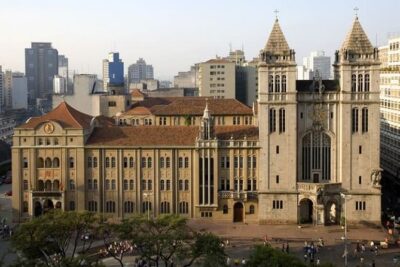
You begin at the Mário de Andrade Library in República, located at R. da Consolação, 94. The library is more than a pretty historic building. It is a centerpiece tied to São Paulo’s cultural identity, and it sets the tone for what you will keep seeing throughout the tour.
You will learn about the contributions of the modernist writer Mário de Andrade and his dedication to preserving Brazilian culture. The point here is not abstract. The guide ties this preservation to Afro-Brazilian identity and the way culture survives, even when society tries to erase it.
This stop is scheduled for about 20 minutes, and an admission ticket is included. Even if you are not a museum person, libraries like this matter because they represent who gets stored in public memory, and who gets studied and protected.
Practical tip: arrive with your phone charged. You will likely want to capture names and details as the themes roll forward quickly.
Theatro Municipal de São Paulo, resistance shaped in public view
Next you head to the São Paulo Municipal Theater, a building with real political weight. This is where the story reaches a major turning point tied to the founding of the Unified Black Movement (MNU) in 1978.
You will hear how the theater played a significant role in resistance against racism during the military dictatorship. The tour also highlights how young Black individuals from the periphery helped shape cultural movements, even when economic and racial barriers were pushing them to the margins.
You are not just hearing a date. You are seeing how culture and organizing can share the same stage. That is an important lesson in São Paulo, where art, public gatherings, and activism often share space.
This stop runs about 20 minutes, and the admission ticket is included. If you like architecture, you will have something to look at while the guide explains the social context. If you do not, the guide’s focus on the people behind the movement is still the point.
Igreja Nossa Senhora do Rosário dos Homens Pretos, sanctuary and syncretism
Then the tour turns to faith at Igreja Nossa Senhora do Rosário dos Homens Pretos. This church is one of São Paulo’s oldest Black brotherhoods, and that single fact carries a lot of meaning.
You will learn how the site was crucial for mutual aid and Black resistance, while also helping preserve Afro-Brazilian religious traditions. The tour brings in the idea of sanctuary, including the church’s role as a refuge during slavery.
You also get the religious syncretism that emerged over time. In plain terms, this is where history shows up in daily practice, not just in documents. People held onto beliefs, adapted under pressure, and kept community strong.
This stop is about 20 minutes and is scheduled as free admission. For many visitors, this is one of the most moving points on the walk because it connects survival, community care, and spiritual life in one place.
Gentle reminder for you: respect the tone. Even on a tour, a church setting calls for quieter behavior and a slower mental pace.
Another way to spend a day in São Paulo:
- Skydive Tandem – São Paulo – Brazil
★ 5.0 · 1,840 reviews - São Paulo’s Full Day City Tour: Main City Sights in 7 Hours – (Shared Group)
★ 5.0 · 1,691 reviews - 5-hour Private Tour Of São Paulo With Its Main Sights – Optional Airport Pickup
★ 5.0 · 643 reviews - São Paulo: Main City Sights in 7 Hours – Shared Group Tour
★ 4.9 · 587 reviews
Largo da Memória, a reminder built into the city
From the church, you move to Largo da Memória. This is a place of remembrance tied to suffering under slavery, where enslaved Africans were stripped of heritage and forced into a brutal system.
You will hear the story framed around what gets erased when people are treated as property, and how memory becomes a form of repair. This stop matters because it acknowledges oppression in a very direct way.
The tour gives you about 20 minutes here, and the admission is free. You might think a short stop would feel too quick for such a topic, but the guide keeps it focused and purposeful.
If the topic hits hard, take a few seconds before you move on. Then look at the details the guide points out, because memorial spaces often work like open-air lessons.
Also, wear shoes you can stand in comfortably. This is one of the times you may want to slow down and actually watch your surroundings.
Casa Preta Hub, cultural pride and entrepreneurship today
After remembrance, you shift to the present at Casa Preta Hub. This stop gives the tour its forward-looking energy, without pretending history is gone.
You will learn that Casa Preta is a collaborative space for Black entrepreneurs. The tour explains how it supports the community through art, business, and culture, with a focus on real-world opportunity.
This is one of the smarter choices on the route. It prevents the walk from becoming only a study of harm. You still keep the historical context, but you also get to see where people are creating and building now.
The stop lasts about 20 minutes, and it is free admission. If you like modern institutions, this part will feel especially relevant. If you do not usually care about co-working spaces, the tour framing helps you understand why this matters culturally and economically.
Practical tip: if you are curious, jot down the name Casa Preta Hub on your phone. Even after the walk, you might want to look up what events or programs they support.
Educafro, 1 hour on anti-racism and access to education
The final stop is Educafro, and it is the longest: about 1 hour. The meeting point ends at Rua Riachuelo, 342 – Sé, which is very close to the subway/metro station Anhangabaú on the red line.
Educafro is a non-governmental organization founded by Frei David dos Santos. The tour focuses on the organization’s mission to combat racial discrimination and promote educational inclusion for Black and low-income populations.
You will hear how Educafro supports access to public and private universities through scholarships, preparatory courses, and psychological support. That combination is key, because getting into university is only part of the story. The tour also describes how Educafro advocates for affirmative policies like racial quotas and promotes ethnic diversity in the job market.
What I like about ending here is that it connects your walking tour to action. You are not leaving with only memories of the past. You leave with a clear example of how communities are working on education as a path to fairness.
Since the tour includes admission ticket for this stop, plan to stay present. This is the moment where the guide’s explanations may feel more personal and more direct, because the program aims at changing outcomes, not just preserving stories.
Price and value: what $89 buys you in real terms
The price is $89.00 per person, and it is scheduled for about 3 hours. For a central São Paulo walking route, that can be a solid value, mainly because a big part of your time is supported by structured, guided context plus entry fees at multiple stops.
An important part of the value is what is included: entrance fees are covered where needed, with admission included for the Mário de Andrade Library, the Theatro Municipal de São Paulo, and Educafro. Other stops on the route are listed as free, including the church, Largo da Memória, and Casa Preta Hub.
You are also getting a private group format, which often means a better Q and A flow than large open join tours. If you like asking questions, this matters.
One more practical value point: you can download and use a mobile ticket. That reduces hassle in a city where you do not want to waste time figuring out paperwork.
Also, average booking happens about 50 days in advance, so if this is a date you care about, I would not wait until the last minute.
Timing, route flow, and comfort for the morning start
The tour starts at 9:00 am. That early start is helpful for São Paulo’s heat and light, and it gives you space later in the day for other plans.
The route runs through central areas tied to República and Sé. You will start at the library and end near Anhangabaú on the red line, which makes it easier to hop onto the metro for your next stop.
Because the tour is a walking experience, comfort matters. I suggest comfortable shoes and a light layer, since mornings can shift in temperature. Bring water if you feel like you need it, since meals are not included.
One more note: the experience requires good weather. That means you should be flexible if rain changes the schedule, since the tour provider plans for weather disruptions.
Who this walk is best for, and who should think twice
This tour is a strong match if you want a meaningful São Paulo history experience without spending the day in one museum. You will get cultural, political, religious, and educational angles tied to Afro-Brazilian life and identity.
It is also a great pick if you like walking tours that give context to real places. The stops are all specific, named, and connected by a story.
You might think twice if you are looking for purely scenic downtown sightseeing. The slavery and racism themes are unavoidable at Largo da Memória and in the broader framing around resistance.
Finally, since most travelers can participate, this is not presented as a strenuous hike. Still, you should expect some walking and standing, especially at the sites where the group gathers and listens.
Final verdict: should you book Afro Sampa?
If your goal is to understand São Paulo beyond postcard landmarks, I think this is a smart booking. The tour stays structured, explains why each stop matters, and ends at a place focused on real access and anti-racist education.
It is also good value for your time. You get a tight 3-hour format in English, a private group experience, and entry support at multiple major stops.
Book it if you want your downtown walk to carry meaning, and if you are okay with the emotional weight of the story. Pass if you want a light, purely visual day.
FAQ
How long is the Afro Sampa Walking Tour?
The tour is about 3 hours long (approx.).
What language is the tour offered in?
The tour is offered in English.
Where does the tour start, and where does it end?
It starts at Mário de Andrade Library, R. da Consolação, 94 – República, São Paulo. It ends after the Educafro visit at Rua Riachuelo, 342 – Sé, near the Anhangabaú red line metro station.
Is admission included for the stops?
Entrance fees are included. The itinerary also notes admission included for the Mário de Andrade Library, Theatro Municipal de São Paulo, and Educafro, while some other stops are listed as free.
Is this tour private?
Yes. Only your group will participate.
What time does the tour start?
The start time is 9:00 am.
Is the tour dependent on weather?
Yes, it requires good weather. If canceled due to poor weather, you will be offered a different date or a full refund.
Is cancellation free?
You can cancel up to 24 hours in advance for a full refund.
Newest São Paulo reviews
- Roundtrip Private Transfer from Sao Paulo Airport (GRU)(CGH)★ 3.5 · 3 reviews
- São Paulo Nightlife: Pub Crawl in the City that Never Sleeps!★ 5.0 · 3 reviews
- Shopping Tour In São Paulo: Best Deals In The Company Of A Local Expert Guide★ 5.0 · 3 reviews
- Private Helicopter Tour – Romantic Lunch or Dinner At Itália Terrace Restaurant★ 5.0 · 3 reviews
- Football Tour – Great Stadiums of Brazilian Football★ 5.0 · 3 reviews
- Full-Day Private Tour of Santos with Boat Tour and Viewpoints – Tickets Included★ 5.0 · 3 reviews
- Beach Town Of Bertioga – Relaxing Day At One Of The Coolest Beaches In The Coast★ 5.0 · 3 reviews
- 5h City Tour (pick up & delivery within SaoPaulo city)★ 5.0 · 3 reviews
Walking Tours in São Paulo, compared.
Downtown-Center History Walking Tour – in English
Read our review →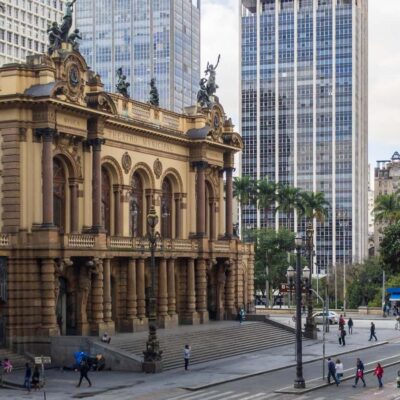
Downtown-Center Walking Tour | 2 Hours – English
Read our review →

Night Walking Tour through the Bars of São Paulo
Read our review →
Free Walking Tour – São Paulo History in the city center
Read our review →
Walking Tour São Paulo Center: Historical Process Of The Largest City in Brazil
Read our review →
Walk to the Big Rock in Cantareira State Park: Optional airport pick-up
Read our review →Browse the lists this tour appears in