
Reviewed · SãO PAULO HIGHLIGHTS
Sao Paulo: Downtown-Center History Walking Tour – in English
São Paulo’s downtown can feel confusing on first arrival, so I like tours that give you the mental map fast. This English-language small-group history walk connects major landmarks with the stories behind how the city grew, including architecture, culture, and the founding of the city at Pátio do Colégio. In practice, it is also just a nice way to get out for 2 hours without overplanning.
Two things I really love about it: the way the route mixes big-name buildings like Copan and the Sé Cathedral with street-level stops such as the Gallery of Rock corridors, and the fact that the guide, often Giuliano, answers questions in a way that feels personal and lived-in. One drawback to consider is simple but important: the tour starts exactly at 10:00 am, and late arrivals can miss the group.
Key Points to Know Before You Go
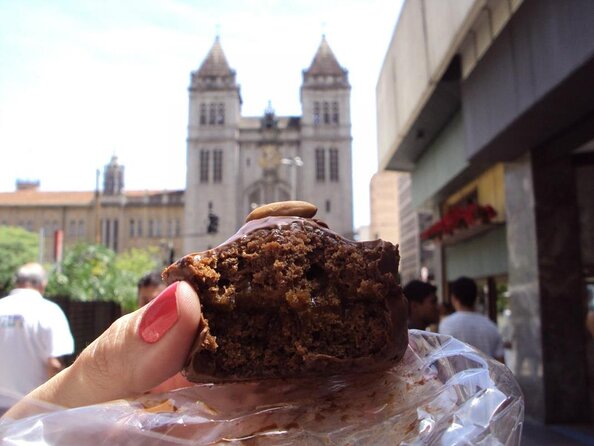
- 10-person maximum keeps the pace human, with room to ask questions
- About 3 km on foot makes it doable for many travelers without a full marathon morning
- Landmarks plus everyday culture, from big monuments to pop-culture shopping streets
- Architecture stories you rarely hear tying design to social change in São Paulo
- Guide energy matters, and Giuliano is repeatedly praised for being friendly, attentive, and multi-language capable
- Good for your first days in town, because it helps you understand where to go next
A Morning Walk Through São Paulo’s Downtown Layers
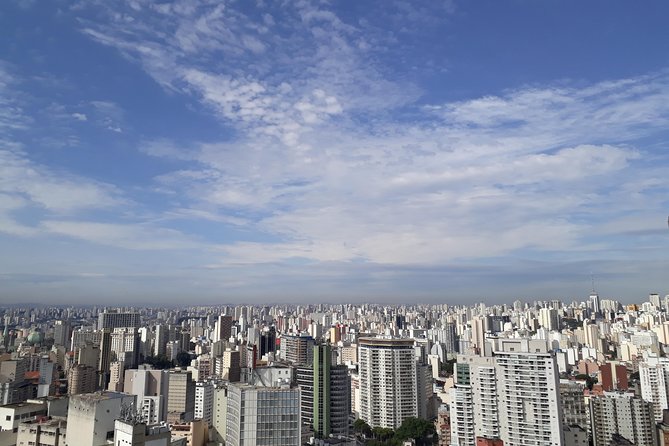
If you want a shortcut to understanding São Paulo, this tour works because it does not treat the city center like a museum. It connects what you see today, the buildings, the plazas, the markets, to why those places exist. You finish with a clearer picture of how modernization, immigration, and political shifts shaped daily life.
The format is also practical. It is about 2 hours, with a walk around 3 km. That is a manageable distance, especially because the stops are frequent and the group is small enough that the guide can slow down when people want photos or extra explanations.
You should know the vibe is built around conversation. Guides like Giuliano are often described as keeping things light and fun while still packing in details you would not find by skimming a guidebook. If you like history but also enjoy talking back, this tour fits that style.
And yes, it is downtown, which means you should use normal big-city common sense. Wear comfortable shoes, keep your phone secure, and stay alert in busy areas. The good news is that many people do feel fine during the walk when they stick with the group and keep awareness switched on.
More Historical Tours in São Paulo
- São Paulo: Downtown Historical Bike Tour
★ 4.9 · 191 reviews - Gastronomic Tour São Paulo – Culture & History Through The Art Of Food – Private
★ 5.0 · 50 reviews - Full Day Private Beach Tour Santos – Culture, History & Beach (Pickup São Paulo)
★ 5.0 · 47 reviews
Small-Group Pace and the 10:00 am Start Rule
This is a maximum of 10 travelers, which changes everything about a city walk. With a bigger crowd, you end up weaving through people while the guide rushes ahead. Here, you can actually look at the details on the facades, ask what you are seeing, and get real answers.
The tour starts at 10:00 am at Av. Ipiranga, 344, Centro Histórico de São Paulo. The meeting point is right in the historical core, so you are not trekking across town before you even begin. People who arrived a bit late ran into the problem that the group can leave on time, so plan to get there early and give yourself cushion for traffic and city navigation.
You will move at a steady walking pace, but the schedule is stop-heavy. That helps you manage energy and weather. One review even mentioned the guide tried to keep the group in shade when possible, which is exactly what you want in a warm city.
Starting at Edifício Itália, Then Reading the City’s Big Ambitions
Your morning begins at Edifício Itália, a landmark that still holds status in São Paulo’s skyline story. It is a smart starting point because the building is easy to recognize, and it is close to where the city’s modern center took shape.
From here, you get your first set of context clues. São Paulo is not one single era. It is a stacking of eras: commercial growth, cultural reinvention, and waves of change tied to the economy. The guide uses the route to show those layers without turning the walk into a lecture.
Also, Edifício Itália being free for you to admire from the outside matters. There is no ticket cost needed at that first stop, and it sets a relaxed tone for the rest of the route.
Copan and Brutalism at Human Scale
The walk continues to the Edifício Copan, designed by Oscar Niemeyer. This is one of the stops that makes the tour feel different from the usual church-and-plaza style. You are not just looking at a building. You are learning why its form represents the mid-century optimism and chaos of São Paulo’s vertical growth.
Copan’s famous curves make it easy to spot. The bigger value is what the guide connects to the city’s development. You start to understand that architecture here is not only about aesthetics, it is also about bold social confidence and the tension of building quickly in a metropolis that keeps evolving.
The stop is brief, but it is the kind of brief that makes you walk away noticing more. After Copan, you will likely look at other buildings in the city center differently, noticing how design is a response to ambition and pressure.
More Walking Tours in São Paulo
- Sao Paulo: Downtown-Center Walking Tour | 2 Hours – English
★ 4.9 · 84 reviews - Ecological walk in sao paulo
★ 5.0 · 61 reviews - Night Walking Tour through the Bars of São Paulo
★ 5.0 · 51 reviews - Free Walking Tour – São Paulo History in the city center
★ 5.0 · 42 reviews
Gallery of Rock: Pop Culture Corridors Under the City’s Surface
Next you hit Gallery of Rock, a shopping zone where subcultures meet commerce. This is where you move from monumental architecture to the daily, contemporary São Paulo that younger visitors and collectors often love.
The corridors are known for things like vinyl records, antiques, and manga and pop culture items. It sounds niche, and it is, but that is why it is useful. São Paulo has always been good at mixing communities and tastes, and this stop shows how that mixing looks on the ground.
One reason this stop earns strong marks in people’s memories is that the guide ties it back to city identity. You are not just browsing. You are hearing how consumer culture and resistance can sit side by side in one place. You leave with a better sense of why the city feels creative even when the streets look tough at first glance.
If you like photo stops, this is also a good place to pause and capture the atmosphere. The tour is not a shopping spree, but the area gives you that street-level color you often miss when you only visit official landmarks.
Teatro Municipal: When European Style Meets a Brazilian Turning Point
At the Theatro Municipal de São Paulo, the tour shifts tone. The building’s classical elegance is hard to miss, but it is the cultural story that matters most.
The guide explains how Brazil shaped the theater’s identity, especially through events tied to the 1922 Week of Modern Art. That moment is important because artists broke with tradition to express something that felt more Brazilian. You can see the influence in the way the theater is described, the way the city frames art as something both refined and rebellious.
This stop works for two kinds of travelers. If you love architecture, the exterior and setting will satisfy you. If you like cultural history, the Modern Art reference helps you connect São Paulo to broader Brazilian shifts, not just local anecdotes.
A practical note: the stop is around 15 minutes. You get enough time to look, take a few photos, and ask questions without turning it into a long detour.
Centro Cultural Banco do Brasil: Coffee-Age Grandeur and Social Contrast
Then you move to Centro Cultural Banco do Brasil, another stop where the setting teaches you the city’s economics. The guide connects the area to São Paulo’s coffee golden age, when wealth and progress funded infrastructure and cultural ambition.
It is a smart storytelling angle because you start linking buildings and institutions to the money flows that shaped them. You also start noticing contrasts: opulence on one side of a street story, inequality on the other. Downtown São Paulo carries that contrast in the architecture and the atmosphere.
This is also a stop that many people find grounding. After walking through modern and pop-culture spaces, you get a clear historical “why” for the monumental facades around you.
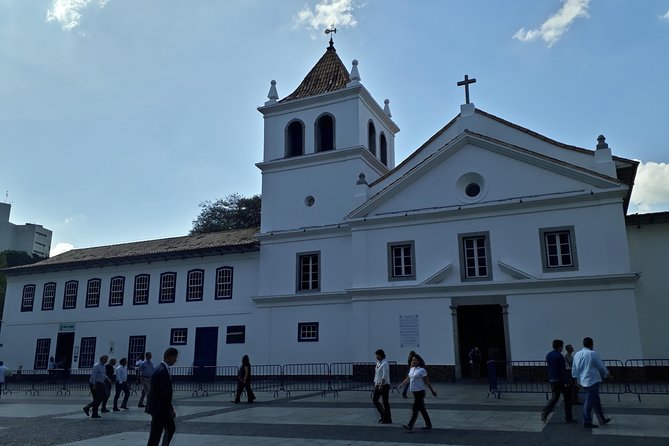
Pátio do Colégio: São Paulo’s 1554 Founding in One Plaza
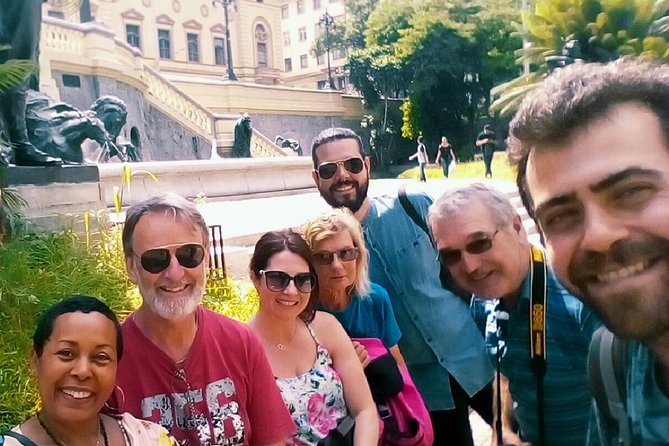
The tour’s emotional center arrives at Pátio do Colégio, where São Paulo was officially founded in 1554. This is where the walk becomes more than urban scenery.
You learn about Jesuit missionaries and the Tupi-Guarani peoples, and you hear the tension between colonization and resistance. That does not mean the guide turns the stop into a grim history lecture. It is presented in a way that helps you understand why that plaza became such a symbolic starting point for the city story.
What I like here is the grounding effect. Many tours focus only on what is visible now. This one gives you the “where it began” piece, so the rest of your downtown exploring makes more sense. When you later walk or ride through the center, you can connect present-day streets to the origin point.
Sé Cathedral: Neogothic, Protest, and the Symbolic Ground Zero Feeling
At Catedral da Sé de São Paulo, you stand near a kind of symbolic ground zero. The Sé Cathedral is described as one of the world’s largest neo-Gothic churches, and it is big enough that it changes the soundscape around it. Even if you only see the outside, you feel the scale.
But the tour does not focus only on religion as architecture. The guide explains it as a space of protest, gathering, and identity. That point matters, because it reframes what you are looking at. You start seeing the cathedral as part of the city’s public life, not just a landmark you check off.
This is one of the stops where small-group format pays off. With 10 people or fewer, you can ask questions about symbolism without feeling rushed. If your trip includes other churches and memorials, this stop helps you compare how places can hold different social roles.
Ending in Praça da Liberdade, the Japanese Neighborhood Outside Japan
The walk ends in Liberdade, at Praça da Liberdade. This neighborhood is widely known as the largest Japanese area outside Japan, and the tour uses that to explain how São Paulo keeps redefining itself through immigration.
You finish in a street-market atmosphere with lanterns, food, and multicultural energy. The guide highlights the Liberdade street market and what you might find there, including produce and authentic foods. Even if you do not eat on the spot, you get a clear sense of where the flavors and community life are concentrated.
This end point is valuable because it gives you something to do right after the tour. If you want to keep exploring the city center, Liberdade is an easy place to turn the afternoon into real local time.
And because the tour is about 3 km total, you are not wiped out afterward. You still have energy for a meal, a snack, or a quick additional wander through market streets.
Price and Value: Why $31.24 Can Actually Make Sense
At $31.24 per person for roughly 2 hours, this tour sits in the “good value for your first day” category. The price feels fair mainly because the experience blends multiple types of stops that cost time and effort to arrange on your own: major monuments, pop-culture corridors, and culturally important sites.
Another value factor is that admission tickets are listed as free for the scheduled stops. That matters because your money goes to the guide and the structure of the walk, not to paying separately at each point.
Most importantly, reviews repeatedly praise the guide’s ability to explain not just what you are seeing but why it matters. Giuliano is often described as friendly, attentive, and good at answering questions, and that is the real value. If you have ever walked around a city center thinking, I am looking but not understanding, you will feel the difference here.
Is It Safe and Comfortable Enough for Your Morning?
You should plan for downtown conditions. One review noted that people had been warned the area might not be safe, but they still felt the area was fine during the tour, with common-sense vigilance. That matches how I’d frame it for you.
This tour is small and guided, which helps. You are moving in a group, stopping often, and spending time in known landmarks and public areas. Still, treat São Paulo like any big city, keep your wits about you, and avoid drifting away from the group for long photo detours.
Comfort-wise, the walking distance is manageable. You are dealing with about 3 km, and the stop schedule helps you rest your legs. Bring water if you can, and wear shoes you trust.
Tips From Giuliano That Extend Past the Walk
What makes some tours stick is what the guide gives you after the last stop. In this case, Giuliano is mentioned as offering food and coffee recommendations. One person even shared that they dined at El Pablo Juan and later enjoyed a show at Teatro Oficina after those suggestions.
That is the kind of advice you only get from a guide who pays attention to what you like. If you tell Giuliano you enjoy coffee, live music, or a specific kind of meal, you might get a follow-up plan you would not find just by searching the internet.
Also, the guide is described as multi-language capable. That can help if your group includes different language backgrounds, and it usually means you will not get stuck with awkward translation gaps when you ask questions.
Should You Book This São Paulo Downtown History Walk?
Book it if you want a first-day-friendly orientation that connects landmark architecture to the social and cultural forces behind the city. You will likely enjoy it if you like history but also want street-level color in places like Gallery of Rock and Liberdade’s market zone. The small group size is a big plus, and the guide quality, often Giuliano, is a strong reason people recommend this walk.
Consider skipping it if you are very short on time, dislike guided walks with frequent stops, or cannot commit to arriving a bit early for a 10:00 am start. The experience needs the group to move on time, and missing that start can mean you do not join the tour once it begins.
If you are planning your São Paulo route and you want downtown to make sense fast, this one is a solid bet.
FAQ
What is the duration of the Sao Paulo Downtown-Center History Walking Tour?
The tour lasts about 2 hours.
How long is the walk?
It is about a 3 km walk.
What is the group size?
The tour has a maximum of 10 travelers.
What time does the tour start?
The start time is 10:00 am.
Where does the tour meet and end?
It meets at Av. Ipiranga, 344 – Centro Histórico de São Paulo, and ends at Base da PM – Praça da Liberdade, 125 – Liberdade, São Paulo.
Is the tour in English?
Yes, it is in English.
More of São Paulo
- Skydive Tandem – São Paulo – Brazil
★ 5.0 · 1,840 reviews - São Paulo’s Full Day City Tour: Main City Sights in 7 Hours – (Shared Group)
★ 5.0 · 1,691 reviews - 5-hour Private Tour Of São Paulo With Its Main Sights – Optional Airport Pickup
★ 5.0 · 643 reviews - São Paulo: Main City Sights in 7 Hours – Shared Group Tour
★ 4.9 · 587 reviews
Newest São Paulo reviews
- Private Tour: Santos & Guarujá Beaches (8H) – São Paulo Pickup★ 4.5 · 15 reviews
- Body Massage – by Venus’ Secret Spa – Sao Paulo★ 5.0 · 15 reviews
- Private Arrival Transfer: Guarulhos International Airport★ 4.5 · 15 reviews
- Taxi from Guarulhos airport to São Paulo capital★ 5.0 · 15 reviews
- Historical and Cultural Tour of the Center DE São Paulo★ 5.0 · 16 reviews
- São Paulo Coffee Tour: Farm, Culture & Lunch Included – 6h★ 4.5 · 16 reviews
- Private Half-Day Tour of São Paulo Highlights★ 5.0 · 17 reviews
- Private Transfer São Paulo Airport to Hotels with Quick City Tour★ 5.0 · 17 reviews
São Paulo Highlights, compared.

São Paulo’s Full Day City Tour: Main City Sights in 7 Hours – (Shared Group)
Read our review →
5-hour Private Tour Of São Paulo With Its Main Sights – Optional Airport Pickup
Read our review →
Main City Sights in 7 Hours – Shared Group Tour
Read our review →
6-Hour Classic Half-Day Private Tour of São Paulo – Optional Airport Pickup
Read our review →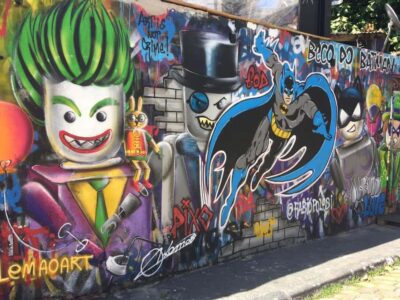
Amazing São Paulo overview in 4 or 5 hours with a private guide
Read our review →
Browse the lists this tour appears in