
Reviewed · SãO PAULO HIGHLIGHTS
São Paulo Highlights Walking Tour with a Guide
São Paulo is a city of layers, and this walk helps you spot them fast. You start at the Jesuit-era roots, then move through big-city landmarks that explain how São Paulo grew from colonial beginnings to modern height and culture. I like the tight 3-hour format and the way the stops connect into a clear story, not random photos.
I also love that the guide keeps it interactive and question-friendly, with a pace that feels organized instead of rushed. One thing to consider: it is a city walk focused on highlights, so you will not get a long, inside-only museum day, and food or drinks are not included.
Key highlights you will feel on the street
- A focused 3-hour route with short, efficient stops (about 20 minutes each) in the historic core
- Free-admission stops listed across the main landmarks you would otherwise piece together yourself
- 360º perspective at Farol Santander, plus cultural stops that keep the walk interesting
- A guide who shapes the day, from clear explanations to a fun, easygoing tone
- First-time friendly orientation for São Paulo’s Centro, with practical suggestions after the tour
Sé to 3 Hours of “I Get It Now” São Paulo
This tour is built for orientation. You meet in Sé, at R. Dr. Bitencourt Rodrigues, 31. You also end back at that same meeting point, which matters because Centro can be confusing on your first day, especially if you plan to use your afternoon and evening for other things.
The walking time is about 3 hours (approx.), with around 20 minutes per stop. That structure is a big deal. It keeps you from getting stuck in one place too long, and it helps you absorb the city through a sequence instead of one building at a time.
It is also offered in English, with guides that can speak English, Spanish, French, and Italian in person. If you care about getting your questions answered, this format is usually the sweet spot because you are not trapped inside for hours. You can actually ask, react, and move on.
One more practical note: wear comfortable shoes. Centro sidewalks are fine, but you are still walking for most of the tour. Also, the meeting point is near public transportation, so you are not forced into expensive taxi hopping just to start.
More Walking Tours in São Paulo
- Sao Paulo: Downtown-Center History Walking Tour – in English
★ 5.0 · 91 reviews - Sao Paulo: Downtown-Center Walking Tour | 2 Hours – English
★ 4.9 · 84 reviews - Ecological walk in sao paulo
★ 5.0 · 61 reviews
Price, Value, and What $39.95 Really Covers
At $39.95 per person, you are paying for something practical: a guided loop through major landmarks in a compact time window. For a short visit, that can be a strong deal because you skip the “how do I connect all these places” planning headache.
The stops include several sites that list free admission. Even if you are not going deep inside every monument, the value comes from having context while you are standing in the right place. You also get help to book tickets for the specific visits you want, even though entry to monuments and museums is listed as not included.
What is not included is straightforward:
- Food and drinks
- Tips (optional)
- Entry to monuments and museums
- Transportation costs during the tour (you cover public transit yourself)
If you want a guided highlights walk with low friction, this pricing can make sense. If you want a day packed with paid museum tickets and long interior time, you may feel constrained by the “highlights, not a deep-dive” focus.
Also, it tends to be booked ahead (the average lead time is about 31 days). If your schedule is fixed, I would not leave this until the last minute.
Pateo do Collegio, 1554 Origins That Explain Everything Else
The walk starts at Pateo do Collegio, a historic site tied to the Jesuits who founded São Paulo in 1554. This is one of those stops that changes how you read the rest of the city. When you hear the Jesuit mission and understand the early days of the settlement, later landmarks start to feel less random.
The best part is how quickly you get orientation. Within the first half hour, you are not just seeing old buildings. You are learning why this place mattered and how the early city took shape. That makes the rest of the tour more satisfying, because you know what you are looking at.
Timing-wise, you spend about 20 minutes here. That is enough for the main ideas and a few photos, but not for a long, study-like museum session. If you are the type who loves reading wall text for an hour, plan to return later on your own.
A small bonus: admission is listed as free, which keeps the start easy and low-stress.
Catedral da Sé: Why This Cathedral Feels Like a City Landmark Magnet
Next is Catedral da Se de São Paulo, located at the heart of the city center. The tour description highlights its medieval European architecture, and that is exactly what makes it so noticeable. Even if you know nothing about church architecture, you can usually spot the scale and the “grand landmark” feel right away.
This stop works well for two reasons. First, it anchors the walk geographically because it is at the core of Centro. Second, it gives you a sense of how major civic and religious institutions shaped the city’s center.
You only have about 20 minutes. So I would treat it like this: look at the overall structure, take a few steady photos from different angles, then listen to the guide’s explanation about how it became such a central landmark.
Admission is listed as free, so you can focus on the experience rather than budgeting time for tickets.
More of São Paulo:
- Skydive Tandem – São Paulo – Brazil
★ 5.0 · 1,840 reviews - São Paulo’s Full Day City Tour: Main City Sights in 7 Hours – (Shared Group)
★ 5.0 · 1,691 reviews - 5-hour Private Tour Of São Paulo With Its Main Sights – Optional Airport Pickup
★ 5.0 · 643 reviews - São Paulo: Main City Sights in 7 Hours – Shared Group Tour
★ 4.9 · 587 reviews
Edifício Martinelli: The First Latin American Skyscraper Moment
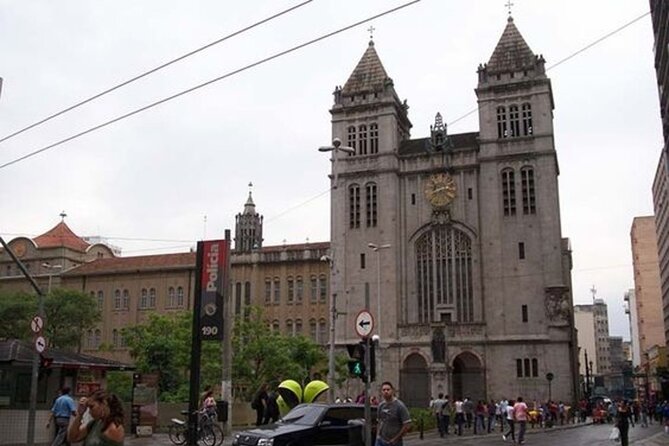
Then you hit a turning point in the city story: Edifício Martinelli, described as the first skyscraper in Latin America and completed in 1929. This is the stop where São Paulo starts showing its ambition in a very physical way.
I like how this fits into a walking route, because you can see the contrast right away. At a street-level pace, the shift from older institutions to modern height feels real. It is one thing to read about early urban expansion, and another to stand near a building that signaled a new era.
You spend about 20 minutes here. Use that time to notice details on the exterior, but also notice the surrounding urban texture. The guide’s context helps you see why the building mattered beyond just being tall.
Admission is listed as free, and the overall tour style is highlights-focused, so do not expect a full architectural tour or extended interior time.
Farol Santander: 360º Views That Make the Route Click
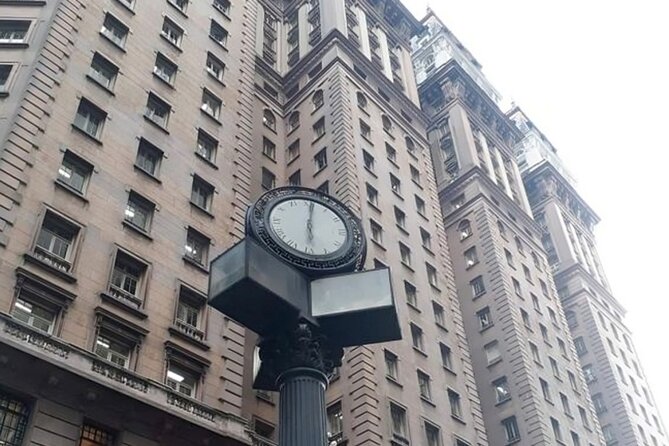
If you want the “wow” moment that also helps you understand geography, Farol Santander is it. The stop includes panoramic 360º views from the top of the building, plus the fact that it hosts cultural exhibitions and events.
Even with a 20-minute time slice, this is the kind of view that makes the whole walk feel more coherent. After you look out over São Paulo, you suddenly understand why Centro landmarks appear where they do. The city stops being a set of separate photos and becomes a map you can mentally place.
Practical tip: if weather is hazy, the view can still be worth it, but you might get less sharp detail. If it is clear, bring your phone or camera and plan to take a few photos, not dozens.
Admission is listed as free in the tour outline, but remember the tour is described as a city walk focused on highlights, so you are mainly there for orientation and the view.
CCBB Centro Cultural Banco do Brasil: Old Building, Live Culture Feel
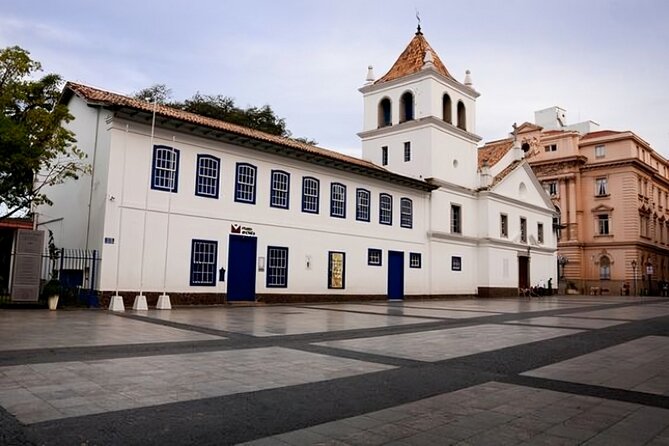
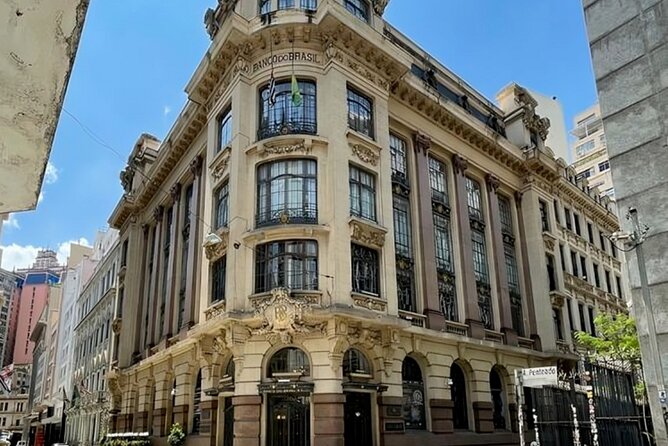
The next stop is Centro Cultural Banco do Brasil (CCBB), noted as a neoclassical building from 1901. The key idea here is that the tour connects architecture to what the building supports today, not just what it used to be.
This is where you get a break in tone. Instead of only monumental landmarks, you shift into a space built for cinema, theater, and exhibitions. Even if you are not going inside, the sense of “this building still has a job to do” lands well during a short tour.
You spend about 20 minutes, which means you should use it to notice the building’s style and to listen for the guide’s explanation of why CCBB matters in the cultural rhythm of the city.
Admission is listed as free, but entry to monuments and museums is generally listed as not included. Translation: expect orientation and outside looks at minimum, and treat any interior time as something you may or may not do depending on the site flow.
Mosteiro de São Bento: The Monastery Stop That Smells Like Memory
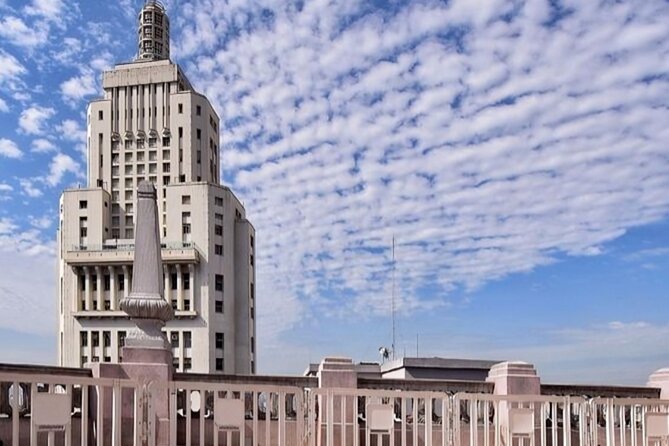
Mosteiro de São Bento brings in a different kind of São Paulo flavor. It is a Benedictine Monastery known for Gregorian chants and for monastic products like breads and jams made using age-old recipes.
This is a great stop if you like culture that is practical and everyday, not only formal and ceremonial. Even on a brief visit, the concept of a working monastery tied to food traditions is memorable.
You get about 20 minutes. That is enough to understand the role of chants and the monastery’s production tradition, but it is not enough to turn this into a long, sensory tour. If you are hoping to taste products, keep your expectations realistic and plan to buy if available at your own expense.
Admission is listed as free in the tour notes, but again, this is a highlights walk, not a full, slow monastery experience.
Vale do Anhangabaú: Where Politics and Public Life Leave Marks
Next up is Vale do Anhangabaú, described as a focal point for cultural and political demonstrations. The tour highlights a major VOTING NOW movement for direct elections during the military regime.
This is one of those places where you learn something you can carry beyond the tour. When you understand how people have used public spaces for political life, you see the city differently. You start noticing the “stage” a square or avenue provides, not just the buildings around it.
It is also a useful energy reset in the route. After several architectural landmarks, an open public area helps you look around and re-center.
You spend about 20 minutes. In that time, you will not become a political historian, but you will get the key context that turns the location into a meaningful stop instead of a quick photo.
Admission is listed as free, which fits the tour’s overall low-cost feel.
Theatro Municipal: Architecture Plus a 1922 Modern Art Connection
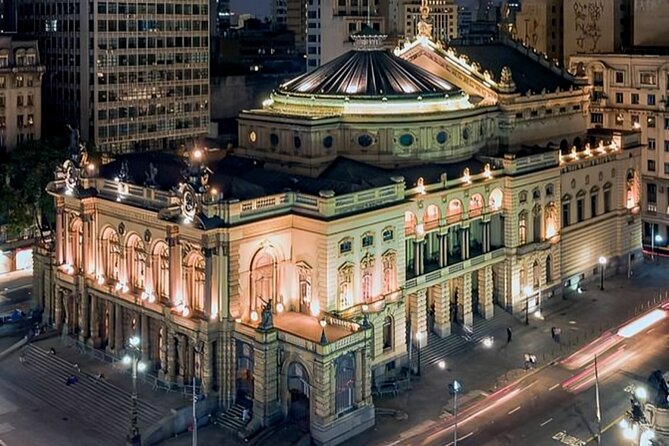
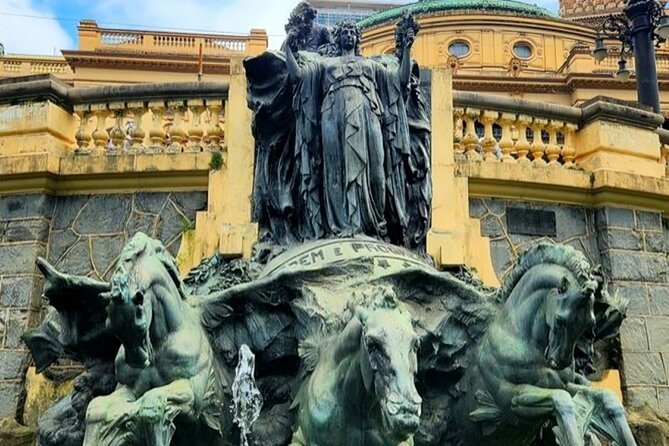
Theatro Municipal de São Paulo is one of the most iconic cultural landmarks you can hit in a short walk. This stop is famous for its architecture, but it also ties directly to a big cultural moment: the 1922 Week of Modern Art.
I like this stop because it connects two things I think you should care about while traveling: how the arts show up in physical spaces, and how moments in time echo through the city. If you like modern art or Brazilian cultural history, this will feel especially satisfying.
You get about 20 minutes, so keep it simple:
- look at the exterior and the overall form
- listen to the guide’s framing of why it is a key institution
- take a couple of photos that show the building’s scale
Admission is listed as free in the tour outline. Still, entry to museums and monuments is not included, so plan for a highlights-oriented experience rather than a long performance or interior tour.
Matarazzo Building City Hall: Industrial Grandeur with a Political Shadow
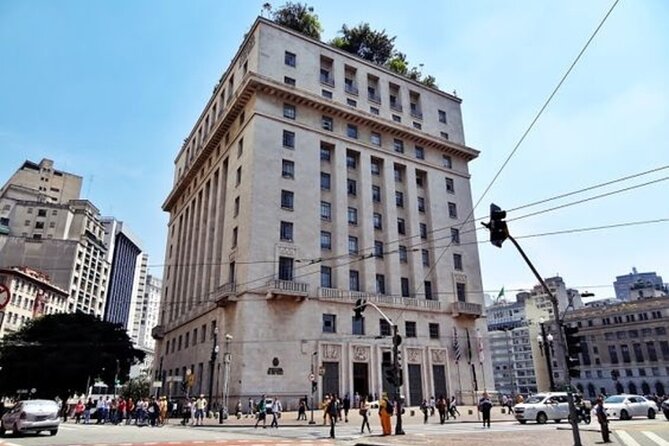
The final major architecture stop is the Matarazzo Building City Hall of São Paulo. The description says it now serves as City Hall and that it was designed by Mussolini’s preferred architect. That alone gives the building a complicated historical layer.
This is not a stop to rush past. The tour frames it as industrial grandeur and architectural sophistication, and it is easy to see why. A building like this signals power, modernization, and a desire to look impressive in stone and steel.
You spend about 20 minutes. That should be enough for the essentials: why it looks the way it looks, and what that design communicates about its era.
Admission is listed as free, but remember the tour is highlights-focused, so treat it as a guided orientation stop and not a full government-building visit.
How the Guide Changes the Day, Roberto and Faical Included
What makes this walk feel worth it is not just the buildings. It is the guide. In the experience, the guides show up as active storytellers who can handle questions and keep the pace friendly.
One guide named Roberto is described as very knowledgeable, with answers that cover both São Paulo and broader Brazilian context. Another guide named Faical stands out for being hospitable, easy to talk to, and even funny, with a route chosen so you see places you might not pick on your own. Faical also helped people who found the original meeting point difficult, including meeting at a hotel instead.
I also like that the tour comes with suggestions afterward. If you ask for ideas for what to do next, you are more likely to leave with a sensible plan for the rest of your day.
One more bonus that can be part of the route depending on your guide’s choices: an art area known as Batman Alley is mentioned as a highlight. Even if it is not the same for every group, it signals something important about the day: the guide is not only pointing at big-ticket monuments, they are also steering you toward interesting neighborhood energy.
Practical Tips for a Smooth Centro Walk
This is a walking tour, so small things matter. Here are the points that help you enjoy it more:
First, start with shoes you can handle for hours on city sidewalks. The guidance you get fits a route where stops are short and walking time adds up.
Second, bring a plan for hydration. Food and drinks are not included, so if you get thirsty, you will need your own water or a purchase nearby.
Third, transportation during the tour is on you. The start point is near public transport, which helps you get there easily, but once the tour begins, you are responsible for your own transit costs.
Fourth, if you have a specific interest, ask. This tour includes customization of the tour. That means if you care more about architecture, politics, or cultural institutions, you can steer the guide toward what matters to you.
Finally, consider how you will use the knowledge you gain. This route is perfect for building a mental map. Afterward, you will likely find it easier to choose where to wander next on your own.
Who Should Book This Highlights Walk, and Who Might Want Something Different
This tour is recommended for all travelers, and the notes say most people can participate. That makes sense because you are spending short blocks at each landmark, with a guided pacing that helps you keep moving.
It is especially good for:
- first-time visitors who want to understand Centro quickly
- people who like architecture and city growth stories
- travelers who want a culture mix, from monasteries to theaters to modern skyline moments
- anyone with limited time who still wants a guide’s context
You might want a different format if:
- you are hoping for a long museum-focused day with paid interior tickets
- you want a slower pace with extended sitting time in each venue
- you need a lot of flexibility to stop for food regularly, since drinks and snacks are not included
Should You Book This São Paulo Highlights Walking Tour?
If you want a first-day feel for São Paulo’s core without spending your entire day doing research, I think this is a smart pick. The time is tight, the route covers major landmarks, and the best part is the guide-led context that helps you understand what each stop means.
If your trip includes only one short guided experience in the city center, this is the kind that can make your self-guided wandering afterward much easier. Just plan for shoes, water, and the fact that it is a highlights walk, not a full interior museum marathon.
Newest São Paulo reviews
- Roundtrip Private Transfer from Sao Paulo Airport (GRU)(CGH)★ 3.5 · 3 reviews
- São Paulo Nightlife: Pub Crawl in the City that Never Sleeps!★ 5.0 · 3 reviews
- Shopping Tour In São Paulo: Best Deals In The Company Of A Local Expert Guide★ 5.0 · 3 reviews
- Private Helicopter Tour – Romantic Lunch or Dinner At Itália Terrace Restaurant★ 5.0 · 3 reviews
- Football Tour – Great Stadiums of Brazilian Football★ 5.0 · 3 reviews
- Full-Day Private Tour of Santos with Boat Tour and Viewpoints – Tickets Included★ 5.0 · 3 reviews
- Beach Town Of Bertioga – Relaxing Day At One Of The Coolest Beaches In The Coast★ 5.0 · 3 reviews
- 5h City Tour (pick up & delivery within SaoPaulo city)★ 5.0 · 3 reviews
São Paulo Highlights, compared.

São Paulo’s Full Day City Tour: Main City Sights in 7 Hours – (Shared Group)
Read our review →
5-hour Private Tour Of São Paulo With Its Main Sights – Optional Airport Pickup
Read our review →
Main City Sights in 7 Hours – Shared Group Tour
Read our review →
6-Hour Classic Half-Day Private Tour of São Paulo – Optional Airport Pickup
Read our review →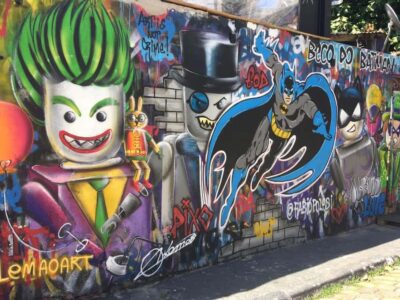
Amazing São Paulo overview in 4 or 5 hours with a private guide
Read our review →
Browse the lists this tour appears in