
Reviewed · HIKING IN RIO DE JANEIRO
Hiking in Little Africa
This hike through Rio’s Little Africa is interesting because it traces African arrival and influence through real streets, squares, and landmarks you can actually stand in front of. I love the Saude and Valongo Pier storyline and how it connects to UNESCO-level history, and I also like that you end up at Pedra do Sal, where samba’s roots are part of the conversation.
One thing to plan for: this is not casual sightseeing. The route passes sites tied to slavery and remembrance, so the mood is serious, and good walking weather really matters since the tour is weather dependent and can run shorter depending on local events like Carnival.
Key highlights worth your attention
- A concentrated Little Africa route: Saude to Gamboa to Pedra do Sal to Prainha, all in one walking format.
- Pretos Novos and Valongo Pier context: you’ll connect a cemetery discovery to the broader Atlantic slave trade story.
- Gamboa’s Hanging Garden and Morro da Conceição: the tour reads the city’s “whitening” narrative through place.
- Pedra do Sal’s samba legacy: you get the cultural why behind the music, not just where to take photos.
- Afro-Brazilian food nearby at the finish: you’ll wrap up in an area built for eating and hanging out.
- Guide energy that keeps it moving: Wellington, from Guia Wellington/Berimbautour, is highlighted for humor, flexibility, and strong communication.
Entering Rio’s Little Africa on Foot, Not From a Bus Window
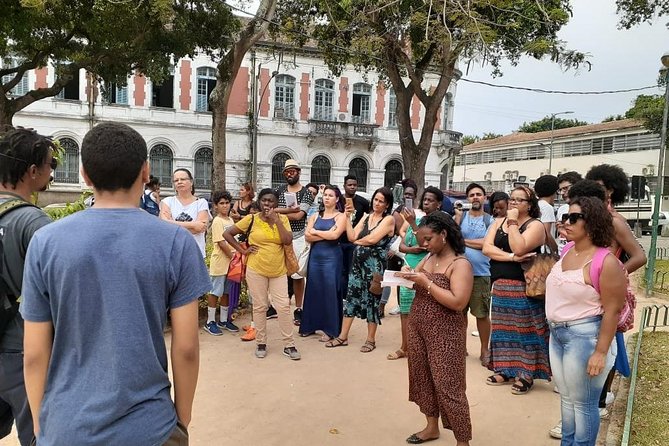
Hiking in Little Africa is a way to see Rio as a layered city. You’re walking through neighborhoods that hold memory in plain sight, where history is not locked behind glass. And because the itinerary is tight, you’re not spending your time just getting from one far-away stop to another. You get a sequence, and that makes the story easier to follow.
The backbone of the experience is African heritage across Rio’s urban history. You’ll hear about specific landmarks tied to the African presence in the city, including a clandestine black enslaved cemetery site and the Valongo area linked to the slave trade. If you like tours that respect the subject and still keep things human, this one tends to fit.
You should also know the emotional tone is serious. Even if the guide keeps the pace friendly, you’re near places connected to suffering and remembrance. Bring the right mindset. This is “learn with your feet,” not a carefree stroll.
More Hiking in Rio de Janeiro
- Rio de Janeiro Tijuca Rainforest Hike with Waterfalls and Caves
★ 5.0 · 1,082 reviews - Explore the Best of Tijuca Forest – Hike to Peaks, Caves & Falls
★ 5.0 · 713 reviews - Rio: Tijuca Forest Small Group Hike to Caves and Waterfalls
★ 4.9 · 536 reviews
AquaRio to Museu do Amanhã: Where Your Walk Starts and Ends
This route moves you across central Rio without making you play metro shuffle for hours. The starting point is AquaRioPraça Muhammad Ali, Via Binário do Porto, s/n in Gamboa. The end is Museu do Amanhã, Praça Mauá 1 in Centro, with the meeting point instruction saying you should be in front of the main entrance of the museum.
That start-to-finish pairing matters for two reasons. First, it helps you plan the rest of your day, especially if you’re aiming to connect to other sightseeing downtown. Second, it reduces the “what now?” problem. You’re not going back to the exact same street corner at the end, you’re finishing by a major waterfront area where food and evening walks are easy to add on.
If you’re relying on public transportation, this tour is described as near public transit, which is what you want for a walking experience that depends on timing.
Stop 1 in Saude: Health District Landmarks and the Valongo Pier Connection
The tour begins in the Saude area, framed as the Health District. The route threads through places that help you understand how Rio’s African history shows up in the city’s geography and institutions.
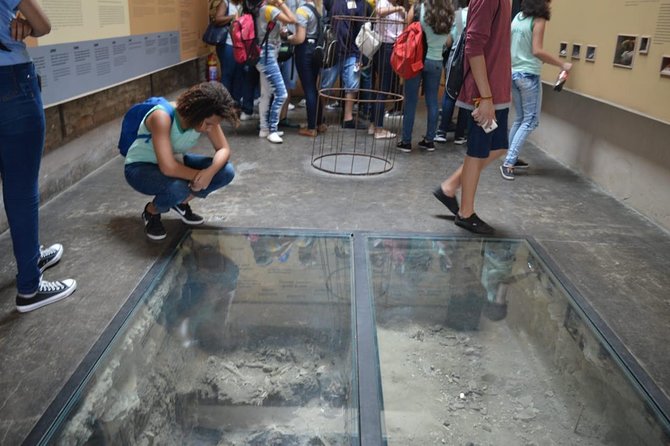
You’ll pass through Harmony Square, which sets a city-scene tone right at the beginning. From there, the focus turns to Museos dos Pretos Novos. This is where a clandestine black enslaved cemetery was found. That detail is key. The stop isn’t just about a “museum visit,” it’s about what happens when a city’s hidden past is uncovered and given visibility.
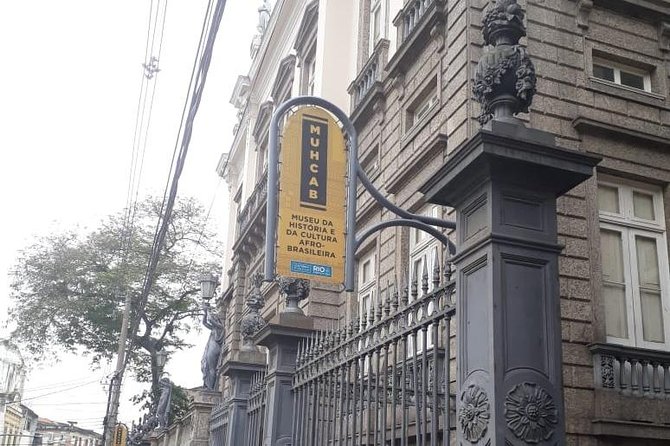
Next you go to the Museo de Arte e Cultura Afrobrasileira. Even without getting lost in architectural terms, you’ll feel the shift from discovery to interpretation. This part helps connect memory and identity, not just dates and events. Then the route heads to the pier of Valongo.
The pier of Valongo is where the story becomes internationally significant. The description links the site to UNESCO World Heritage recognition in 2016 and even compares it in the same breath as other World Heritage sites such as Auschwitz and Hiroshima. The comparison is heavy, and you should expect the guide to treat it that way. This is the stop where the Atlantic slave trade story is placed in the global language of remembrance.
Timing here is about 1 hour, and admission is listed as free at this stop. For you, that means a lower “extra cost” factor compared to tours where museum tickets quietly pile up.
A practical note: because this is history with weight, you’ll likely want a bit slower attention at this point. If you rush, you’ll miss what makes this section matter.
Stop 2 in Gamboa: Hanging Garden, “Whitening” History, and Morro da Conceição
From Saude, the tour continues to Gamboa. This stretch is about how the city changed over time and how power shows up in city planning and ideology.
You’ll visit the Hanging Garden, described as tied to the process of whitening the City. That phrasing is important. It signals you’re going to talk about race as something that was actively managed through policy and urban life, not just something people experienced socially. The location becomes a lesson tool: you can look around and understand how places gain meaning based on who had control.
After that, the tour moves to Morro da Conceição. This spot is described as a place that delimits the City Center from the suburb of Rio de Janeiro. That boundary idea helps you grasp how Rio’s geography shaped opportunities and segregation. You start to see the city not as one flat grid, but as a set of edges and transitions.
This stop is also about 1 hour, with admission listed as free. That keeps the day’s cost predictable and lets you focus on learning and walking instead of counting tickets.
If you like photos, this area will give you plenty of angles. But the real value is the commentary. The views are a bonus, the interpretation is the point.
Another way to spend a day in Rio de Janeiro:
- Rio de Janeiro: 6-Stop Highlights of Rio with Lunch
★ 4.4 · 5,157 reviews - Christ the Redeemer Entry Ticket by Corcovado Train
★ 4.4 · 4,476 reviews - Rio’s City Tour – Tickets for Christ, Sugar Loaf & Lunch included
★ 5.0 · 4,389 reviews - Full Day: Christ Redeemer, Sugarloaf, City Tour & Barbecue Lunch
★ 4.5 · 3,142 reviews
Stop 3 at Pedra do Sal: Why Samba’s Cradle Matters
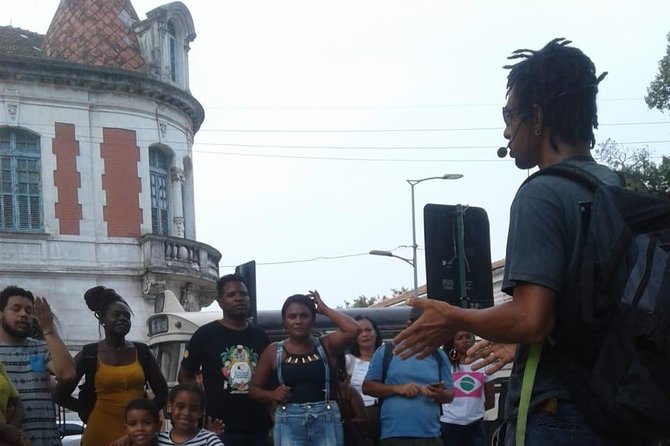
Pedra do Sal is one of those names you might have heard. The difference here is that you’re not just told it is important. You’re positioned at the site with context, and you learn why it matters in Rio’s African cultural influence.
This stop is described as the cradle of Rio’s samba and a place of immense historical collection. Whether you’re a samba superfan or someone who just likes music when it feels honest, you’ll get a better connection than “this is where it happened.”
Timing is about 30 minutes, with admission listed as free. That short window works well because it doesn’t turn the day into museum overload. Instead, it acts like a cultural reset. After the heavier Saude and the more structural Gamboa discussion, Pedra do Sal brings rhythm and community back into the narrative.
If you’re thinking ahead to what to do after the tour, this is the stop where you can start planning a music-and-food evening, because it reinforces that Afro-Brazilian culture is not only about history. It’s alive in public life.
Stop 4 at Igreja de São Francisco da Prainha: Finishing With Food and Atmosphere
The tour ends at Igreja de Sao Francisco da Prainha, specifically at Largo São Francisco da Prainha. This is where the day shifts from explanation to everyday life.
The route description points you toward great restaurants and bars of typical Afrobrasileira food in the area. That matters because you finish at a place designed for the next step: eating, relaxing, and continuing the cultural experience without needing another big plan.
The stop time is about 30 minutes. Think of it as a landing zone. You get one final cultural and spatial anchor, then you’re free to choose how to spend the rest of your time.
This is also a good point to take a breath and reflect on the arc you just walked. The day moves from discovery and remembrance to city ideology to musical roots, and then it hands you a neighborhood where food and community are the natural follow-through.
The Guide Experience: Wellington and the Tone of the Story
Your guide matters on a tour like this because you’re moving through sensitive topics and still keeping a walking pace. In the experience feedback, Wellington from Guia Wellington/Berimbautour is praised for knowledge about Little Africa and the Afro-Brazilian experience, plus a mix of honesty, humor, and energy.
There’s also a practical note from the feedback that I think you should take seriously. When someone had a tight schedule, Wellington was willing to accommodate. That’s not guaranteed for every traveler every day, but it signals the guide style is flexible, not rigid.
At the same time, one reported issue in the feedback was a no-show on a date, with a response stating a refund would be issued. That doesn’t mean this happens routinely, but it does suggest you should treat the tour like any timed service: arrive on time, confirm, and keep your booking details handy. If anything looks off, act quickly.
If you want a tour that feels respectful but still lively, this is the kind of day where the guide can make the difference between “I learned facts” and “I understood the city.”
How Long You Really Need (2 to 4 Hours on Foot)
The tour is listed as 2 to 4 hours, approximate. That range is your clue that the pacing can shift. Weather is one factor because the experience requires good weather. Another factor mentioned in the feedback is that Carnival can shorten the tour.
So how should you plan your day? If you have a major reservation right after, you should give yourself cushion time. A realistic approach is to treat it as a half-day block rather than a tight 2-hour slot.
Also, because this is a walking route through multiple sites, you’ll want comfortable shoes. You’re going to be on your feet, and the stops are close enough to keep momentum, but long enough that you’ll likely stand and look around.
If you’re traveling with older family members or someone who prefers minimal walking, the “most travelers can participate” line is encouraging. Still, do be honest with your group about stamina, because this is a route-based hike, not a short museum circuit.
Price and Value: What $54.93 Covers and Why It Feels Fair
At $54.93 per person, this is not a budget free-for-all. But it also isn’t priced like a high-ticket attraction day. The value comes from three things.
First, it’s a private tour. That means you’re not sharing the guide with strangers, so the pace and tone can match your group. Second, the itinerary lists admission tickets as free at each stop. When admission is included at multiple stops, it protects your wallet and keeps the price from climbing mid-day. Third, the guide provides the connective tissue between locations. You’re paying for interpretation, not just walking.
This is also a smart “culture and history” choice if you already did the big-name Rio landmarks and want something with more meaning per minute. The route is built like a story, and you walk it in order.
If you’re solo, it’s still reasonable for a guided half-day. If you’re traveling with one or two companions, the private format can feel even better because you’re buying a shared experience without crowding.
Getting More Out of Each Stop (Practical Tips That Matter)
Because the day balances serious sites and cultural landmarks, you’ll enjoy it more if you prepare your expectations.
Wear shoes you trust. You’ll be doing a real walking circuit, even if the stops are not huge. Bring sunscreen and water, since the tour depends on good weather and you’ll likely be in sun at points.
Arrive early to the meeting point. The start is at AquaRioPraça Muhammad Ali in Gamboa, and the end is at Museu do Amanhã. Easy access helps, but early arrival gives you time to find the right spot and settle.
Have your camera ready, but don’t turn everything into a photo sprint. At Pretos Novos and the Valongo pier, the value is in the context, so give yourself a minute to look first, then shoot.
Finally, if you’re sensitive to heavy themes, plan a gentle buffer after the tour. The day can stick with you because the sites are connected to real suffering and remembrance.
Should You Book This Little Africa Hike?
Yes, if you want a guided walking tour that explains Afro-Brazilian history through specific Rio locations, not vague background. This is especially a good pick if you care about the connection between place, identity, and culture, and you like tours where the guide uses humor without losing respect.
I’d be cautious if you hate emotionally heavy subject matter. You will pass through sites linked to slavery and remembrance, including the clandestine black enslaved cemetery discovery at Pretos Novos and the Valongo pier area.
I’d also book with a little extra common sense if your schedule is tight. The tour requires good weather and can shorten around Carnival. And while the feedback is mostly strong, there is at least one reported no-show issue, so keep your confirmation details close and plan to show up on time.
If that sounds like your kind of day, this Little Africa hike is a solid way to see Rio with sharper eyes.
FAQ
How long does the Little Africa hiking tour take?
The experience runs about 2 to 4 hours.
Is this tour private or shared?
It is a private tour/activity, with only your group participating.
What language is the tour offered in?
The tour is offered in English.
Where is the meeting point and where do we end?
You start at AquaRioPraça Muhammad Ali, Via Binário do Porto, s/n, Gamboa. You end at Museu do Amanhã, Praça Mauá 1, Centro, in front of the main entrance.
Is admission included at the stops?
Admission tickets are listed as free for the stops included in the itinerary.
Does the tour run in any weather?
No. The experience requires good weather. If it is canceled due to poor weather, you will be offered a different date or a full refund.
What is the cancellation refund window?
You can cancel for a full refund up to 24 hours in advance. If you cancel less than 24 hours before the start time, the amount paid is not refunded.
Are service animals allowed and is it near public transportation?
Service animals are allowed, and the meeting area is described as near public transportation.
Newest Rio de Janeiro reviews
- Two Brothers Hike in Rio de Janeiro At sunrise★ 5.0 · 3 reviews
- Rio Paragliding Experience w/ Brazilian Female Champion video inc★ 5.0 · 3 reviews
- Tour 7 ( 4 hours ) : Tijuca National Park and Favela★ 4.5 · 3 reviews
- Tijuca Forest + Botanical Garden + Lage Park – by Alan Denis★ 5.0 · 3 reviews
- Rio de Janeiro by Yourself with English Driver by private Vehicle★ 5.0 · 3 reviews
- Personalized Tour in Rio. Main Attractions and Cultural Walk.★ 5.0 · 3 reviews
- Museum of Tomorrow – | Round Trip Transfer + 2 Tickets★ 4.5 · 3 reviews
- Stadium Stories & Food: Join a Maracanã stadium tour with a Local★ 3.5 · 3 reviews
Hiking in Rio de Janeiro, compared.

Rio de Janeiro Tijuca Rainforest Hike with Waterfalls and Caves
Read our review →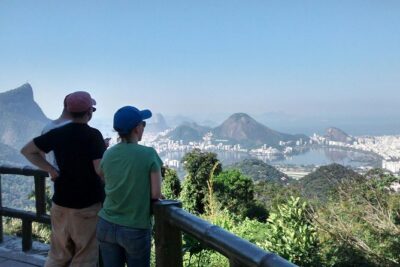
Explore the Best of Tijuca Forest – Hike to Peaks, Caves & Falls
Read our review →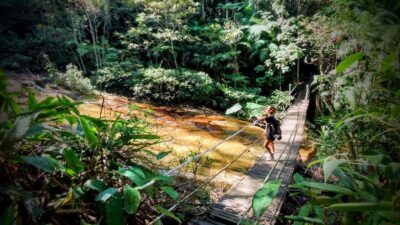
Tijuca Forest Small Group Hike to Caves and Waterfalls
Read our review →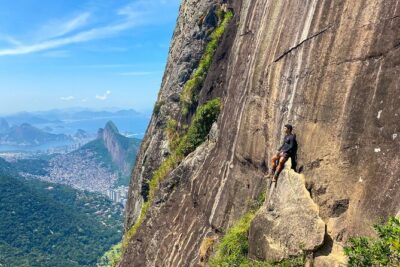
Pedra da Gávea hike, your best experience in Rio
Read our review →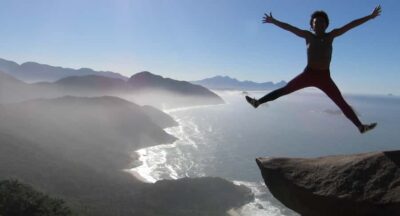
Pedra do Telégrafo Hike and Beach Full-Day Tour
Read our review →
Jeep tour 18 beaches, Telegraph Stone hiking & amazing sunset + photographer
Read our review →
Hiking Tour to Pedra do Telégrafo (Telegraph Rock/Stone)
Read our review →
Browse the lists this tour appears in