
Reviewed · CURITIBA
Full-day tour in Curitiba
Curitiba has a special talent for making a big city feel organized. This full-day tour strings together the most recognizable viewpoints and neighborhoods, so you get orientation fast, without spending half the day figuring out routes.
I especially like how much you cover in 7 to 8 hours, mixing short guided walks with smart driving between areas. I also love the human, story-driven stops, from immigrant memories in the Bosques to the Italian food-and-wine rhythm in Santa Felicidade.
One drawback to keep in mind: this is a long day on your feet. If you want lots of slow museum time or minimal walking, you may feel a bit rushed, especially after the Jardim Botânico.
Key things to know before you go
- Historic Centro, on foot, with Largo da Ordem and Praça Tiradentes for a quick reality check on how Curitiba started
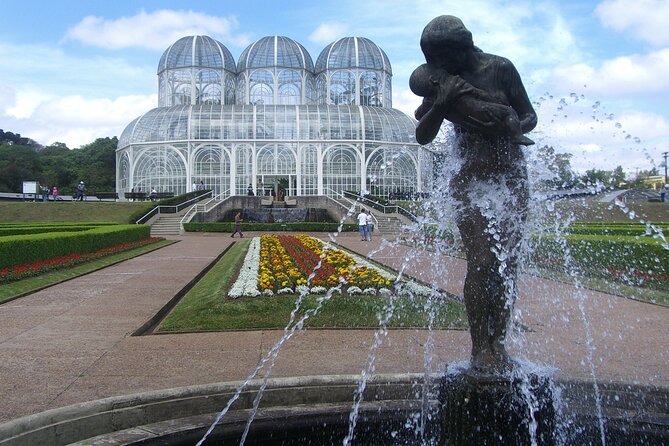
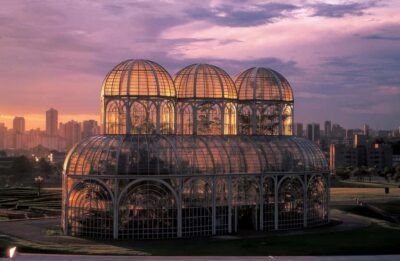
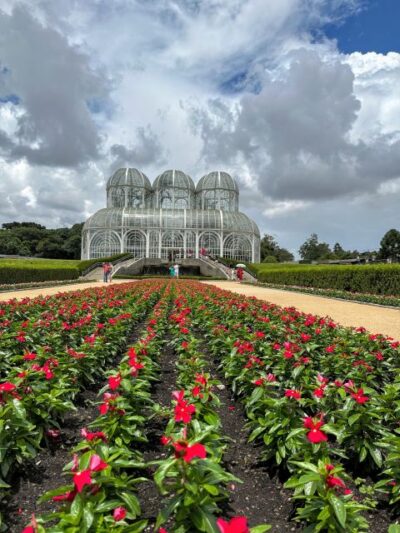
- Jardim Botânico is the postcard, plus the Galeria das 4 Estações soundtrack detail with Vivaldi playing
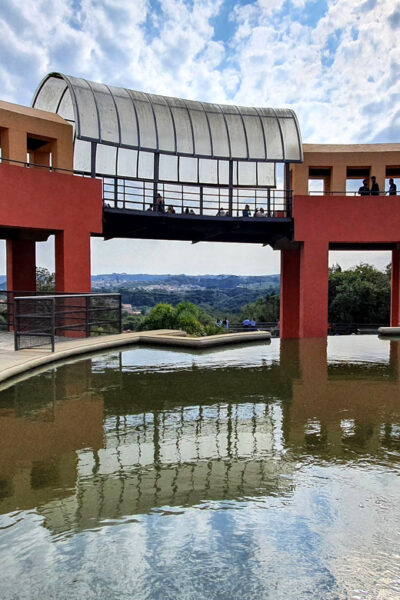
- Oscar Niemeyer’s Eye Museum is mostly an exterior moment, so you can still see the architecture without paying museum entry
- Bosques are not random parks, they are curated memory places, including Polish and German-themed corners
- Santa Felicidade gives you time to choose lunch, and you also get a colonial wine cellar tasting
- Opera de Arame is optional in cost, with entry not included and visits not possible on event days
Why Curitiba feels easier with a guided loop
If Curitiba is new to you, the biggest challenge is not the sights. It is the spacing. The city’s highlights are spread across zones that make sense once you see the pattern. This tour helps you get that pattern in a single day.
You start in the central area and then build outward toward Curitiba’s famous parks and architecture landmarks. Expect a mix of walks and air-conditioned vehicle rides, so you are not just shuffling between stops in the heat or traffic. The itinerary is also paced with time blocks that include breaks built into the transitions.
There is also a practical social benefit: the tour is capped at 10 travelers. That usually keeps the day feeling more like a conversation than a parade line.
Finally, the guide makes a real difference. In past trips, guides such as Juliana, Guia, and Eugenio have been praised for being kind, adjusting to interests, and bringing clear English to the story behind each place. Your experience may vary by guide, but you should expect a strong explanation style.
More of Curitiba:
- Ticket MAI – Museum of Indigenous Art – Curitiba
★ 5.0 · 385 reviews - Bar-hopping and Food Tour in Curitiba
★ 5.0 · 295 reviews - Morretes: Full Day Colonial Town Tour from Curitiba
★ 4.4 · 36 reviews
Is the $79.39 price fair for a 7 to 8 hour day?
At $79.39 per person, this tour looks like good value if you compare it to doing the same day solo. You are paying for three things that would cost you separately: guided interpretation, an air-conditioned vehicle for inter-area travel, and the time saved by having stops pre-planned.
A big value point is that most stops have free admission. That includes Largo da Ordem, Praça Tiradentes, Sesc Paco da Liberdade, Jardim Botânico, and the Bosques and parks. The main extra cost you should budget for is Opera de Arame.
Plan on skipping lunch from the package. Lunch is not included, but the Santa Felicidade segment gives you free time to eat where you prefer. That means you can choose a restaurant style that fits your budget and tastes.
So the trade-off is simple: you get a guided, high-coverage day for a solid price, but you may pay small add-ons (mainly Opera de Arame) and you should be ready for a full day.
Historic Centro essentials: Largo da Ordem and Praça Tiradentes
The day starts in Curitiba’s Historic Sector, where the character of the city is easy to read. You begin at Largo da Ordem, a compact area with major landmarks like the Belvedere, the Rosário Church, the Curitiba Memorial, and the Order Church.
Even if you do not slow down to every detail, this is a strong start because it gives you context. Largo da Ordem is also a social hub. On Sundays, it hosts the Feira do Largo, with over 1000 artisans and a wide variety of goods. If you happen to go on a Sunday, the atmosphere can completely change what feels like a quick stop into a sensory market morning.
After that, you head to Praça Tiradentes, a place tied to Curitiba’s founding legend. You will hear the story about chief Tindiquera guiding pioneers and describing the area as having a lot of pine nuts, Coré etuba. The point of the story is not trivia. It is how Curitiba tells itself who it is, and why people settled here.
This stop is short but effective: you get the cathedral setting and that grounding sense of place, right at the city’s ground zero.
Sesc Paco da Liberdade, Praça Santos Andrade, and UFPR energy
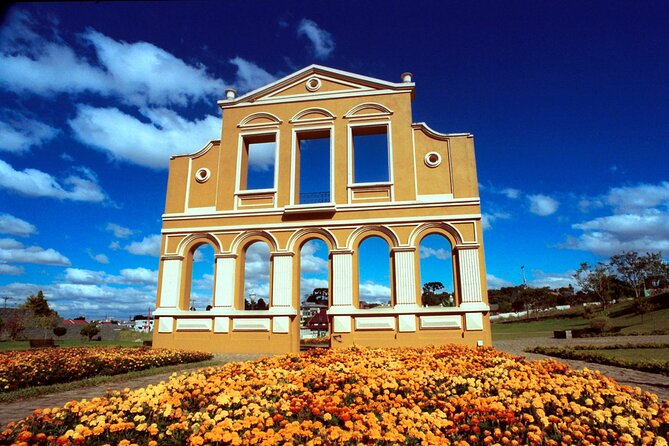
Next you move to Sesc Paco da Liberdade, which used to be Curitiba’s old city hall. The building dates back to 1915 and has an eclectic style. Today it functions as a cultural center and a café, so you can view the architecture and also get a comfortable pause if you want one.
From there, you reach Praça Santos Andrade, where the city mixes education, performance, and older downtown life. You will see the UFPR building from 1915 and the Guaíra Theater from 1953. This square also carries a sharper, older memory: it was used for events, and even bullfights took place here in the past. That contrast is part of Curitiba’s charm, old traditions tucked into modern streets.
If you like cities that do not pretend the past was always pretty, this zone helps you understand Curitiba’s transformation.
A few more Curitiba options
- From Curitiba: Vila Velha State Park Full-Day Group Tour
★ 4.9 · 4 reviews - Full Day: Christ Redeemer, Sugarloaf, City Tour & Barbecue Lunch
★ 4.5 · 3,142 reviews - Rio’s Full Day: Selarón Steps, Christ & Sugarloaf – Tickets & Lunch Included
★ 5.0 · 2,724 reviews - São Paulo’s Full Day City Tour: Main City Sights in 7 Hours – (Shared Group)
★ 5.0 · 1,691 reviews
Rua das Flores, shopping arcades, and the Praça do Homem Naked
Curitiba’s downtown shopping style is part of why it feels livable. One highlight is Rua XV de Novembro, popularly called Rua das Flores. You learn why this street matters: it was the first pedestrian mall in Brazil (1972), yet it has always stayed a shopping street.
You can also spot the iconic landmarks linked to this corridor, like Boca Maldita, Palácio Avenida, and Bondinho da XV. Even if you do not ride anything that day, knowing where these features are puts you on the map for exploring later.
The tour also includes a covered shopping arcade with shops and cafés, which operates during the day and stays busy. It is the kind of place where you can quickly grab a snack or a cool drink without breaking the flow of the day.
Then comes Praça do Homem Naked, named after the statue representing Paraná’s proud identity and its push toward the future. The statue was built to celebrate 100 years of Paraná’s emancipation, and the story is a bit rebellious: it was moved because the population disagreed with where it should go, specifically in relation to the court of justice.
This is one of those stops that feels like art lesson plus civic history, and you do not need to be a museum person to appreciate it.
Jardim Botânico plus the Oscar Niemeyer Eye Museum moment
Now you hit one of the big reasons people put Curitiba on their Brazil plan: Jardim Botânico. This is described as Curitiba’s main postcard, and when you are standing there, the gardens make sense. It is also the place where you hear about the Galeria das 4 Estações, known for playing Vivaldi.
That detail matters because it makes the garden feel designed, not random green space. It is Curitiba being Curitiba: thoughtful, planned, and a little quirky in the best way.
After Jardim Botânico, you get an exterior look at Museu Oscar Niemeyer, including the famous so-called Eye Museum impression from the architecture. The visit here is external, with museum entry not included. That is a good setup if you want the iconic design without spending more time inside or paying extra ticket costs.
If you do want museum time, you might need to plan it separately. But for most first-timers, the exterior stop is enough to connect the building’s look to the city’s reputation for bold modern architecture.
Polish memory at Bosque João Paulo II
Next is Bosque João Paulo II, a memorial connected to Curitiba’s Polish community. What makes this stop more meaningful than a standard park is that it includes reassembled immigrant houses.
This is the type of place where you can slow down a bit and let the guide’s explanations do their work. It is not only about scenery. It is about how communities translate themselves into buildings, neighborhood routines, and lasting memory.
Also, it is a useful counterbalance after the architecture-focused Oscar Niemeyer stop. Gardens plus stories equals a calmer mental reset before the food neighborhood.
Santa Felicidade: the Italian quarter with wine cellar time
After that, the tour shifts into taste mode at Bairro de Santa Felicidade, Curitiba’s famous Italian neighborhood. The focus here is on the restaurant culture and the idea of staying for a while.
You will hear that Santa Felicidade was founded in 1878, and today it is loved by Curitiba residents and tourists. The typical food reputation is clear: lots of all-you-can-eat pasta experiences, plus a connection to colonial wine production.
The schedule gives you structure without forcing one lunch choice. You visit a wine cellar with a tasting of colonial wines, then you get free time to have lunch wherever you prefer. That free time is 1 hour 20 minutes, which is long enough to eat without stress.
One caution: if you are sensitive to scheduling, remember that lunch time depends on how you choose to move through the wine tasting and how your group eats. If you want the simplest lunch plan, decide your budget and restaurant style before you sit down.
This is the portion of the day where the tour feels most like a local rhythm rather than a checklist.
Bosque Zaninelli: quarry turned lake and a sustainability school
Once you leave Santa Felicidade, you head to Bosque Zaninelli. Here the story is about place-making. It used to be a deactivated quarry. Now it has a lake, plus a School of Sustainability that offers courses for municipal employees.
Even if you are not enrolled in those courses, it changes how you view the water and the grounds. You are seeing how Curitiba reframes industrial scars into usable public space, and it is the kind of idea that makes the rest of the city’s park system feel logical.
This stop is shorter, about 20 minutes, so use it as a breather rather than a deep linger. Think of it as a palate cleanser before the German-themed Bosque storytelling.
Bosque Alemão: Hansel and Gretel trails and a Casa Milá facade
Next comes Bosque Alemão, located in a more residential, upper-area feel of Curitiba. The fun part is that this is not just a walking path. It includes a trail that tells children’s story elements connected to Hansel and Gretel.
You also see a children’s library and a storytelling setup. And there is a surprising architecture reference: the facade of Casa Milá, which represents architecture connected to German influence in the tour’s framing.
Even as an adult, this one works because it turns a park walk into a narrative route. It is the kind of stop where kids might love it, but adults also get a kick out of how play and place collide.
If you are traveling solo or as a couple, this stop can still feel refreshing because it is different from the monumental sights. It is lighter, more playful, and it keeps your day from turning into only photos and monuments.
Parque Tingui and the river protection story
You then move to Parque Tingui, a linear park that protects the waters of the Barigui River from flooding. That is an important Curitiba concept, because it shows the practical side of the city’s green spaces.
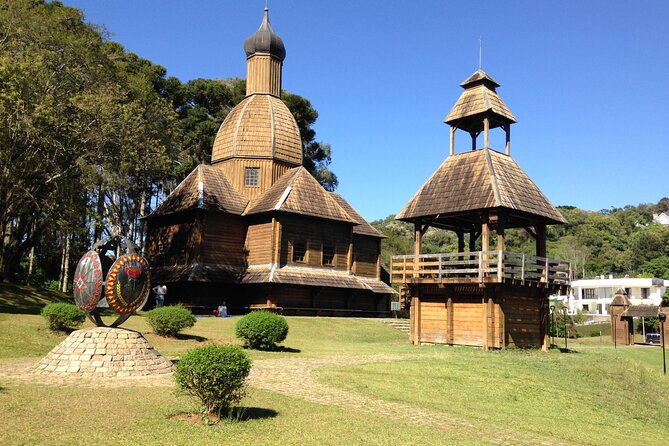
You also visit the Ukrainian Memorial, which adds another layers of immigrant memory to the day. By now, you have already seen Polish memory and Italian food culture, so the Ukrainian element makes the pattern clearer: Curitiba uses public space to hold many identities at once.
This segment is about 20 minutes, so it stays readable and not overwhelming. It is also a good moment to take a photo, grab a breath, and regroup before you reach the two most famous postcards of the afternoon.
Opera de Arame: the metal, glass, and lake theater payoff
At Opera de Arame, you get one of Curitiba’s most iconic architecture visuals. It is a theater built with metal and glass on top of a lake. The site also has a restaurant and live music on a floating stage.
The tour includes time where you can visit the inside and even go on stage, but with an important condition: visiting is not possible on event days. That means the day you go might look a bit different depending on what is scheduled.
Tickets here are not included, listed at R$25 per person, roughly USD 5. If you want the full experience, budget for that extra. If you are photo-first and do not care much about entering, you can decide how much value you personally place on stage time.
Either way, Opera de Arame is the kind of stop that makes Curitiba feel like it has personality. The lake location plus the modern structure gives you that cinematic postcard feeling without trying too hard.
Tangua Park for the waterfall and the viewpoint finish
To wrap up the day, you hit Tangua Park. This is another famous Curitiba postcard, anchored by an artificial waterfall and a viewpoint looking over a heavily wooded area.
This is smart as a final stop for two reasons. First, it gives you a calmer final scene after the architecture intensity of Opera de Arame. Second, viewpoints are easier on your legs at the end. You can spend a few minutes enjoying the perspective without needing to power through a long walk.
If you want a last set of photos, prioritize Tangua Park. It is also a good spot to check in with your guide for any last-minute recommendations for dinner near your return point.
A realistic pacing tip for your feet and photos
This is a full-day loop, with many short stops. That is good for first-timers, but your body will still count every block and step.
Wear comfortable shoes and bring water. Also, think about your photo strategy. Jardim Botânico and Opera de Arame are the two biggest “spend time” moments. Everything else is strong, but it is timed. If you try to photograph every stop equally, you might feel rushed by the end.
On the positive side, you are not left alone to figure things out. Having the guide’s explanations helps you see why each place matters, which makes the time feel more useful than just passing through.
Should you book this Curitiba full-day tour?
Yes, I think this is a smart booking for most first-time visitors to Curitiba. You get a high coverage day built around iconic architecture, meaningful Bosques, and the Italian neighborhood that makes Curitiba’s dining culture easy to understand.
Book it if you want:
- A guided way to see Historic Centro, Jardim Botânico, and Opera de Arame in one day
- A plan that includes colonial wine tasting and time to eat in Santa Felicidade
- A smaller group feel, with up to 10 travelers
I would pause before booking if you:
- Want lots of long museum entry time, since at least one big museum stop is described as exterior-focused
- Hate long walking days, because the itinerary includes many short segments that add up
If your goal is to get oriented in Curitiba, and then decide what you want to explore more deeply on your own, this tour does that job well.
FAQ
How long is the full-day tour in Curitiba?
The tour runs for about 7 to 8 hours, including travel time between attractions.
What is included in the price?
The price includes an air-conditioned vehicle and an accredited tourist guide.
What is not included, and do I need extra tickets?
Lunch is not included. Entrance to Opera de Arame is also not included (listed as R$25 per person, approximately USD 5). The Oscar Niemeyer museum stop is described as an external visit, with entrance not included.
Where is the meeting point, and what time does the tour start?
The tour starts at Hotel Centro Europeu, Praça Gen. Osório, 61 – Centro, Curitiba – PR, 80020-010, Brazil, and it starts at 8:00 am. It ends back at the meeting point.
Is lunch provided during the day?
Lunch is not included. In Santa Felicidade, you get free time for lunch wherever you prefer.
How big is the group, and can I bring a service animal?
The tour has a maximum of 10 travelers. Service animals are allowed, and the pickup location is near public transportation.
Newest Curitiba reviews
- Experience the Best of Curitiba: City Tour Highlights★ 4.0 · 24 reviews
- Bar-hopping and Food Tour in Curitiba★ 5.0 · 295 reviews
- Ticket MAI – Museum of Indigenous Art – Curitiba★ 5.0 · 385 reviews
- Half-Day Tour of Curitiba City★ 4.1 · 5 reviews
- Morretes: Full Day Colonial Town Tour from Curitiba★ 4.4 · 36 reviews
- From Curitiba: Vila Velha State Park Full-Day Group Tour★ 4.9 · 4 reviews
- Curitiba: 4-Hour City-By-Night Tour with Dinner★ 3.2 · 7 reviews
- Curitiba: A private 4 hour city tour★ 5.0 · 5 reviews
Curitiba, compared.
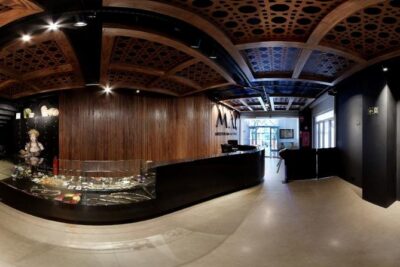
Ticket MAI – Museum of Indigenous Art – Curitiba
Read our review →
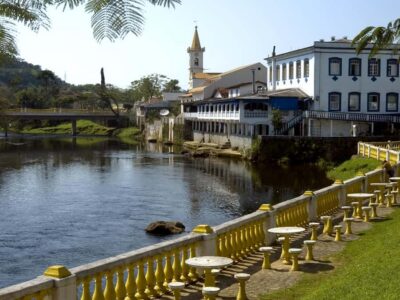
Morretes: Full Day Colonial Town Tour from Curitiba
Read our review →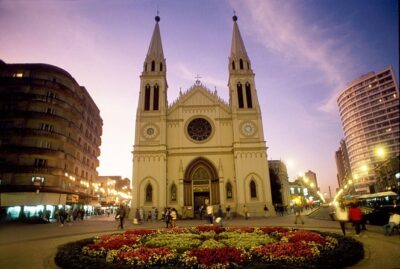
Experience the Best of Curitiba: City Tour Highlights
Read our review →
Browse the lists this tour appears in