
Reviewed · TIJUCA RAINFOREST
Birdwatching tour to Tijuca National Park with Pica-pau Tours
Tijuca National Park turns Rio from city noise into serious bird territory fast. I like that this tour is built around finding specific birds, not just wandering. I also like that you go out with guides such as Ricardo or Francisco who focus on how to locate birds quickly, using bird calls.
The main thing to consider is weather. This experience depends on good conditions, and if the forest turns wet and slippery, the plan may change to protect the day.
Key Things You’ll Notice Right Away

- Target species, with a route that keeps you moving
- Bird calls and call recordings used to improve sighting chances
- Easy-access trails with short walks between viewpoints
- Coffee included during the morning break
- Private group up to 4 people, so it feels personal
- Hotel-area start and finish with a practical half-day pace
Tijuca Birding in Half a Day: Target Species, Not Random Walking
This is the kind of tour you book when you want results, not just scenery. You head into Tijuca for a focused morning, then work your way through key areas where birds are more likely to show themselves.
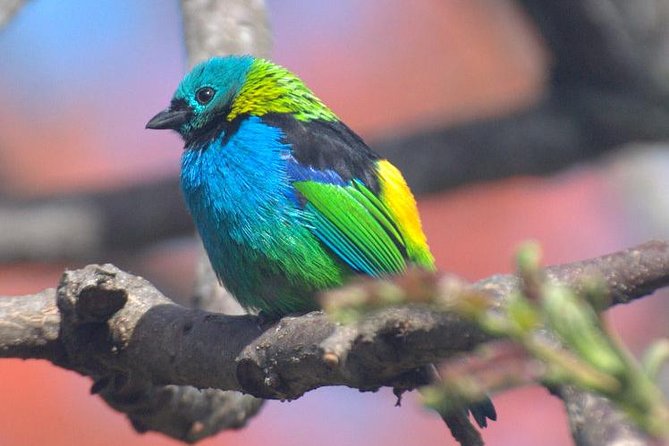
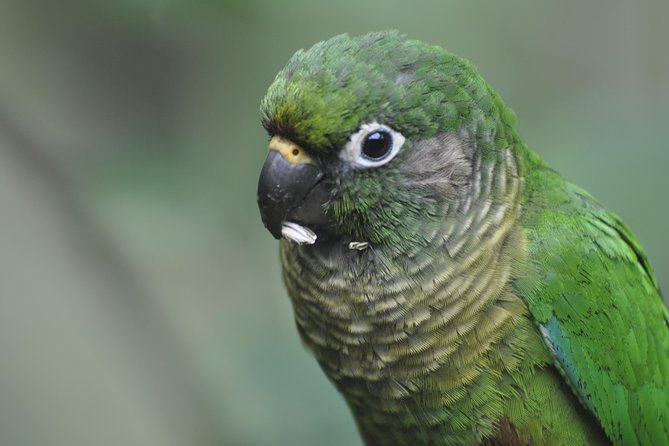
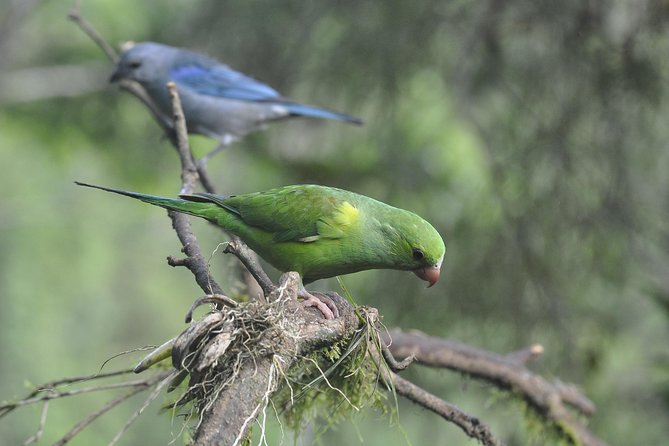
I love the way the tour is planned like a birding checklist. You’re not guessing blindly. You’re searching for specific species such as Green-headed Tanager, Red-necked Tanager, Plain Parakeet, and Maroon-bellied Parakeet, plus other local birds that come along with them.
The short version of the philosophy is simple: short car rides, short walks, then scan again. If you like your birding active and organized, you’ll probably feel right at home.
More of the Tijuca forest:
- Rio de Janeiro Tijuca Rainforest Hike with Waterfalls and Caves
★ 5.0 · 1,082 reviews - Rio de Janeiro: Christ, Selaron Steps, and Tijuca Park Tour
★ 4.7 · 857 reviews - Rio de Janeiro: Guided Jeep Tour through Tijuca Rainforest
★ 4.3 · 740 reviews
Meeting Point, Timing, and How the Morning Flows
You start early. The activity runs within a window of 6:30 AM to 1:00 PM, and the goal is to get you back around 1 PM.
The meeting point is the police station on Av. Atlântica, 4206 in Copacabana. The tour is described as leaving your hotel in Rio’s South Zone, so in practice you should expect a smooth start from the areas most visitors stay.
It’s also a private tour, so it’s only your group. With a max of 4 people per group, the pace and attention feel adjustable instead of rushed.
Plan for a half-day rhythm: you’re up early, moving through forest stops, then you’re back before lunch gets fully chaotic.
Stop 1 Floresta da Tijuca: Where Sound Leads the Way
Your morning begins around the first forest stop, Floresta da Tijuca. This is where birdwatching in Tijuca really starts to feel like a skill game. Many birds are easier to locate by sound first, then sight follows.
What I think makes this stage work is the method. You’re not just looking. You’re searching with bird calls and recordings, and your guide uses whatever tools they have on hand to bring birds into view.
If you’ve never birded by call before, don’t worry. The tours are set up so you can learn as you go. You’ll likely get tips on what to listen for and how to position yourself when a bird answers back.
And yes, you can still get the “wow” moments here. One of the best highlights tied to this kind of approach is seeing toucans and watching male swallow-tailed manakins perform their mating display when conditions line up.
Stop 2 Cascatinha Taunay: Water, Motion, and Bird Timing
Next you head to Cascatinha Taunay. This stop adds a different feel to the morning, because water and airflow can change how birds behave. It also gives you a natural pause point when your eyes have scanned for a while.
From a practical point of view, this is a smart stop type. You get time to regroup, reset your scanning, and then head back out with fresh attention. Birding can feel slow if you treat it like a single long stare. The tour breaks that up.
You’ll typically do short walks on easily accessible trails between viewpoints. That’s important here, because it keeps you from burning your energy too early. You want to save your stamina for the moments when a bird finally shows up.
A few more Rio de Janeiro options
- Tijuca Peak Hiking – The Highest Summit in Tijuca National Park
★ 5.0 · 94 reviews - Tijuca National Park and all its wonders
★ 5.0 · 88 reviews - Rio de Janeiro: Tijuca National Park Tour
★ 4.7 · 85 reviews - Rio: Tijuca National Park Small-Group Hike to Pedra Bonita
★ 4.9 · 79 reviews
Stop 3 Vista Chinesa: Scanning from Higher Points
Vista Chinesa is the stop where your birding brain shifts from “forest close-up” to “scan and listen.” Higher viewpoints make it easier to spot movement across the canopy and to check for calling birds from a distance.
If you like the mix of action and calm, this stage fits well. You’ll be standing, looking, and waiting for that exact moment when something flashes through the leaves. It’s not just about seeing birds. It’s about learning how to read the environment around them.
This is also a good stop for practicing patience. Even with call recordings, birds decide when they want to reveal themselves. Vista Chinesa gives you the setting to do that well.
Stop 4 Alto da Boa Vista: Final Chances for Tanager and Parakeet
Alto da Boa Vista appears as part of the route in more than one way. You start searching for birds there early, and you also return there later for another round of chances.
This matters, because birds don’t always cooperate in a neat, linear timetable. A second time near the same zone can mean a different set of species, or just better timing for the birds you already heard.
This is where your targeted species list becomes real. The tour specifically calls out birds like Green-headed Tanager and Red-necked Tanager, plus parakeets like Plain Parakeet and Maroon-bellied Parakeet. Even if you miss one, you’re still searching in a way that keeps your odds strong.
If you’re the type who wants a “best shot” finale, this is one of the reasons the half-day format works. You’re not wandering until you run out of time. You’re cycling through high-chance areas and ending with another search window.
The Included Coffee Break: Small Detail, Big Sanity Saver
Between trails, you stop for Brazilian coffee, and it’s included. This is more than a snack break. It’s a reset.
Birding can be tiring because your eyes and attention are constantly switching between listening and scanning. A warm drink plus a short pause helps you stay sharp for the final push toward lunch.
If you’re bringing your own binoculars, this is also a good time to clean lenses and do a quick gear check before your guide signals the next move.
What You’ll See: Species Targets Plus Real-World Surprises
The tour’s target list is clear, and that’s a big part of the value. You go after birds such as Green-headed Tanager, Red-necked Tanager, Plain Parakeet, and Maroon-bellied Parakeet.
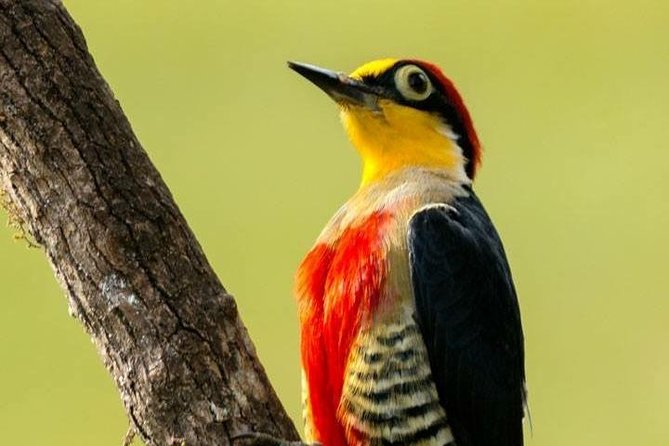
But Tijuca also has room for surprises. A couple standout moments from the kind of day this tour is built for include toucans and swallow-tailed manakins doing courtship behavior. You may not see every highlight, but the method improves your odds.
One more smart element is that guides help with naming. You should expect English bird names alongside what you’re seeing. That matters because it turns fleeting sightings into something you can take home and remember.
Guides, Bird Calls, and Why English Names Help
What really separates this kind of bird tour is not just species spotting. It’s communication.
Guides such as Ricardo and Francisco use call recordings and even an app or speaker approach to attract birds. They also help you connect what you hear with what you’re looking at, which is the difference between a walk in the park and actual birdwatching progress.
I also appreciate when a guide can explain how to locate indigenous birds and how bird calls work in the real world. When you understand the “why,” you start seeing patterns instead of random flashes.
On top of that, the guides can offer practical suggestions for your remaining time in Rio. It’s a nice extra when you’re trying to make the rest of your trip feel effortless.
Price per Group: Is $236.57 Worth It?
The price is $236.57 per group, up to 4 people. That structure is where the value math gets interesting.
If you book with a full group of 4, you’re effectively paying about $59 per person for a private guide, transportation within the morning route, targeted birding stops, and an included coffee break. If you book as fewer people, the per-person rate rises, but you still get the benefits of a private setting and focused attention.
It’s also good to remember what you’re buying: time in the right habitats, a guide who uses bird calls strategically, and a plan that prevents “waste time” between sightings. In a place like Tijuca, those factors can matter more than you’d think.
The tour also carries a strong satisfaction level, with a 4.8 out of 5 rating based on 23 reviews. That’s not a guarantee, but it’s a real signal that the format usually works.
Pacing and Fitness: You’re Walking, But It’s Not a Grind
The itinerary is built around easily accessible trails with short walks. That’s a good fit for most visitors, including people who want forest time without committing to a long hike.
You’re still on your feet, scanning and pausing. So bring comfortable footwear and expect some uneven ground. The day is designed to be manageable, but it is still in a rainforest environment, which means humidity and footing matter.
Also, service animals are allowed, which is useful to know if you travel with one.
Logistics That Make the Day Easier
You’ll be out for about 6 hours 30 minutes. You start in the morning and return around early afternoon, which pairs nicely with the rest of your Rio plans.
The tour is private and limited to your group, which keeps things calmer than crowded group tours. Fewer people also makes it easier for a guide to help everyone line up for a sighting, rather than dealing with a long queue.
Because the activity is dependent on good weather, you’ll want to stay flexible. Rain and mist can change visibility and ground conditions, and the provider needs decent conditions to run the plan as intended.
Who This Tour Suits Best
This is a strong pick if you:
- Want birds in a short time instead of a slow, open-ended walk
- Care about learning birds by sound and sight
- Travel with up to 3 friends or family members and like private pacing
- Prefer a guide who gives English bird names along the way
It’s also a good match for first-time birders. If you’ve never used bird calls before, the tour method gives you a practical starting point.
If you’re an experienced birder, you might still enjoy it for the targeted stops and the use of call recordings to trigger activity.
Should You Book This Tijuca Birdwatching Tour?
If your goal is to see birds in Tijuca without wasting half your day guessing, I think this is a smart booking. The combination of targeted species, call-based locating, short trail segments, and a private group format is exactly how you turn time into sightings.
Book it if you’re excited by the idea of hearing a bird first, then spotting it. Also book it if you like knowing what you’re looking at, thanks to English names.
Skip it only if you’re not comfortable with early mornings or you hate the idea of rain affecting outdoor plans. In a rainforest, weather matters.
FAQ
How long is the Tijuca birdwatching tour with Pica-pau Tours?
The duration is about 6 hours 30 minutes, with an expected return around 1:00 PM.
Where do I meet, and where does the tour end?
You meet at the police station on Av. Atlântica, 4206 in Copacabana, Rio de Janeiro. The tour ends back at the meeting point.
What time does the tour operate?
The activity operates within hours of 6:30 AM to 1:00 PM, Monday through Sunday.
What birds are you looking for on this tour?
The tour description highlights species such as Green-headed Tanager, Red-necked Tanager, Plain Parakeet, and Maroon-bellied Parakeet, among others.
Is this a private tour, and how many people can be in a group?
Yes. It is private, and only your group participates. The price is per group up to 4 people.
Does the tour require good weather?
Yes, it requires good weather. If it is canceled due to poor weather, you will be offered a different date or a full refund.
Newest Rio de Janeiro reviews
- Maracanã Matchday Tour – Ticket + Guide + Transfer★ 5.0 · 14 reviews
- Private Tour with Churrasco in Vela Catamaran – Velas do Rio★ 5.0 · 14 reviews
- Angra & Ilha Grande From Rio: Boat Tour With Barbecue and Drinks★ 5.0 · 14 reviews
- Half-Day Private Tour:Rio de Janeiro Highlights by Bernard Moraes★ 5.0 · 14 reviews
- Tijuca Forest Adventure★ 4.5 · 14 reviews
- Rio de Janeiro: Join a Fluminense game at Maracanã with locals★ 5.0 · 15 reviews
- Rio de Janeiro: Join a Botafogo soccer game with transport★ 5.0 · 15 reviews
- Christ the Redeemer, Selaron Steps and Santa Teresa Half-day Tour★ 4.5 · 15 reviews
Tijuca Rainforest, compared.

Rio de Janeiro Tijuca Rainforest Hike with Waterfalls and Caves
Read our review →


Explore the Best of Tijuca Forest – Hike to Peaks, Caves & Falls
Read our review →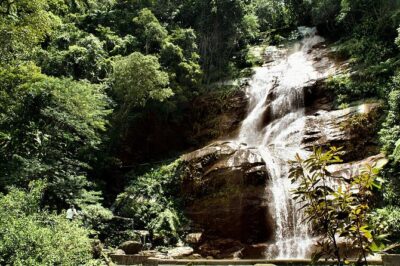
Jeep Adventure: Guided Tour through Tijuca Rain Forest
Read our review →Jeep Adventure: Guided Tour through Tijuca Rain Forest
Read our review →
Tijuca Forest Small Group Hike to Caves and Waterfalls
Read our review →
Browse the lists this tour appears in