
Reviewed · BRASíLIA TOURS
Bike Tour of the 4 Scales of Lucio
Brasília by bike is one of those rare plans that makes the city’s ideas click fast. This route takes you through Lúcio Costa’s thinking in motion, from monumental architecture to the residential superquadras that shape daily life. I especially like the easy rhythm of the stops and how you get real context for what you are seeing, not just a photo-op. One thing to consider: the bikes and sizing can feel a bit hit-or-miss if you are small-framed, so fit checks matter.
What makes this tour feel like good value is the mix of big-name buildings and everyday design, and the fact that most stops have free admission. Your guide also keeps things organized, including crossing points and timing, which matters a lot when you are on wheels in a city built for cars as much as bikes.
What makes Lucio Costa’s four scales fun on two wheels
This is not a “drive-by monuments” outing. It is built around the way Brasília works: monumental axes, planned neighborhoods (superquadras), and public spaces that tie everything together.
You’ll ride through a carefully sequenced set of highlights, with lots of short stops where you can look, read details, and get back on the bike. I like that the pace is designed for seeing architecture from multiple angles, not just standing still. And because the route uses city streets and planned areas, you get a sense of how people actually move through Brasília.
A practical heads-up: it runs about 7 hours, and the stop list is long. That means you should treat it as an active day, with downtime mostly used for photos and quick orientation, not long museum-style wandering.
Torre de Televisão, craft fair views, and Clube do Choro
You start at Torre de Televisão, right at the pilotis area of the Television Tower. The first 30 minutes are a smart warm-up. You get oriented early, and you also set the tone: Brasília is full of structure-as-a-symbol, and this tower is one of its easiest icons to feel in person.
After that, the group typically passes by the Television Tower craft fair. It is a low-pressure chance to scan for souvenirs and local crafts without breaking the flow of the ride.
Then comes one of the most culture-forward stops: Clube do Choro, a Niemeyer project that functions as a concert hall and a music-school hub. The building’s role is part of the story. You’re looking at a space designed for performance, and also for training, with the Choro School teaching a wide range of instruments. The stage is especially memorable after the historic Paul McCartney surprise show on November 28, 2023, which turned the venue into a more personal, intimate kind of landmark.
Right after, the route also includes the Ulysses Guimarães Convention Center, described as one of the most modern facilities in Brazil. It has a big capacity, a large total area, and the useful detail that it sits close to government headquarters, major hotels, and about 15 minutes from the airport. Even if you are not attending an event, it helps you understand how Brasília’s monumental government core connects to real-world logistics.
What I like here is the “two-step” learning: you see a modern landmark, then you see how it works as a space for people and events, not only architecture.
More Cycling Tours in Brasília:
- Monumental Axis Bike Tour – Brasilia
★ 5.0 · 133 reviews - Secrets of Downtown São Paulo Bike Tour
★ 5.0 · 240 reviews - São Paulo: Downtown Historical Bike Tour
★ 4.9 · 191 reviews
Parks and music venues that show Brasília’s human scale
Next you head to Parque da Cidade Sarah Kubitschek, a huge urban park that works as a kind of lung for the Plano Piloto area. This is a welcome change of pace after the more symbolic structures. Even if your stop is about 25 minutes, the park gives you a sense of scale: Brasília is enormous, and its planning makes nature and open space part of the design, not just an afterthought.
The route then connects the park area to Renato Russo Hall. This is one of those stops that helps you understand the cultural layer of the city, since Brasília is not only government and monuments. It’s also music, venues, and public life.
A small note from a practical angle: park stops are usually photo-friendly, but they can also mean more wind. Brasília weather can change how comfortable you feel on a bike, so dress for motion and plan to take water seriously.
Superquadra life at SQS 308 model, plus Fátima’s tile work
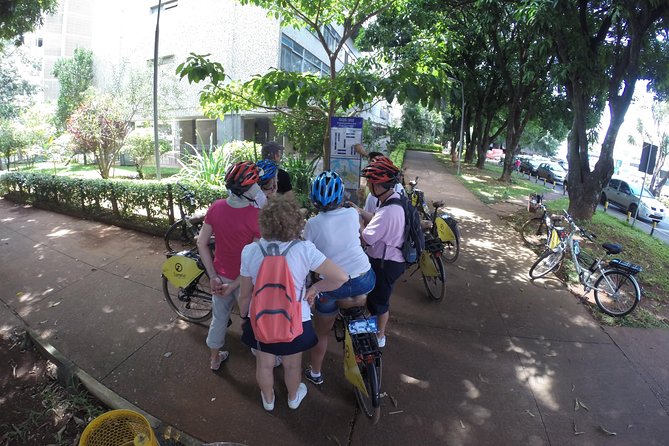
One of the most important parts of this tour is when it turns from monuments to neighborhoods. The route includes SQS 308 Quadra modelo, a model superblock in Asa Sul. You are not just looking at a pretty street grid. You are seeing a built example of Brasília planning: Lúcio Costa designed the court-like layout, Burle Marx handled urbanism and landscaping, and Banco do Brasil helped build it. It was inaugurated on February 19, 1962.
This is where the tour name makes sense. You start to see how Brasília’s idea of daily life is organized: lots of green space planning, residential balance, and convenient placement of services.
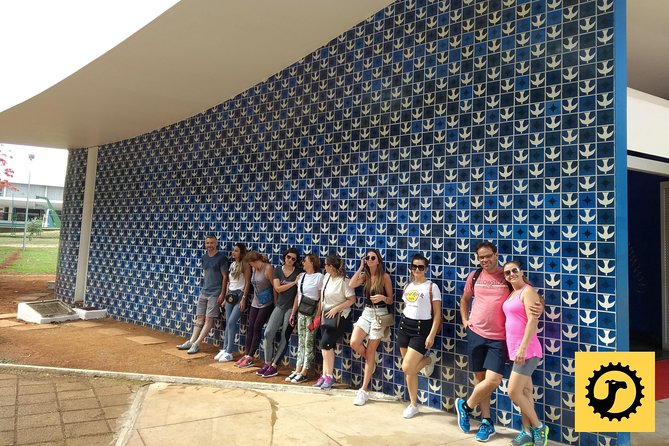
From there, you visit Igrejinha Nossa Senhora de Fátima, inaugurated in June 1958 and noted as the first church located in the residential sector. The tiles by Athos Bulcão are a key detail. They line the outer walls with stylized figures, including the Dove of the Divine and the Star of the Nativity. Even if you are not a religious visitor, the tile design is worth slowing down for, because it shows how Brasília art integrates into ordinary buildings.
Then you ride onward through Superquadra Sul 302, another residential superquadra described as similar in configuration to the earlier model. This stop is a good way to compare without needing any extra research. You can see what stayed consistent in the planning logic, and what changes when the superblock is lived in longer term.
A drawback to keep in mind: these neighborhood stops can be visually rewarding but time-limited. If you enjoy studying details, plan to take quick notes and photos, then come back later on your own.
Itamaraty, St. John Bosco, and the Niemeyer trio: modern state meets modern faith
As the route moves back toward monumental architecture, you pass Palácio Itamaraty, the headquarters of the Ministry of Foreign Affairs, also known as Palácio dos Arcos. Itamaraty is one of Oscar Niemeyer’s best-known works, and it is placed in the larger story of Brasília’s government identity.
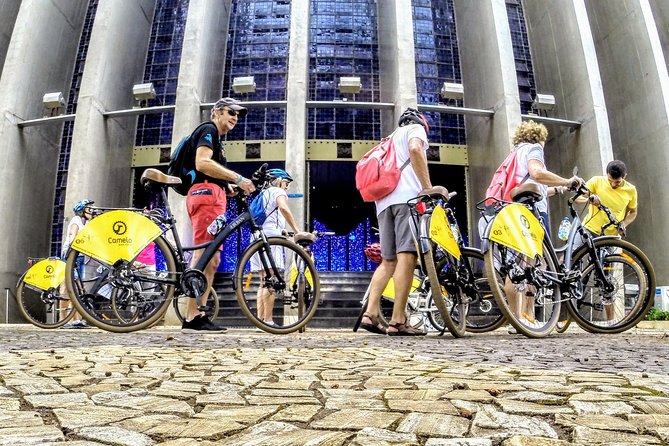
Next you visit Santuario São João Bosco, built in honor of the city’s patron saint, St. John Bosco. Then you continue to Catedral Metropolitana, authored by Oscar Niemeyer. This cathedral is a milestone in modern architecture and one of Brasília’s most recognized forms.
Even if you have visited other Niemeyer buildings, this sequence helps you connect dots: you are seeing the same design era influencing diplomacy and religion, not just official office buildings.
One small practical consideration: religious and ceremonial buildings can have quiet rules. The itinerary keeps stops relatively short (around 10 to 20 minutes depending on the site), so you get a respectful look without lingering too long. If you prefer long interior time, use your photos and then consider a return trip later.
A few more Brasília options
- Brasilia : Private Custom Tour with a Local Guide
★ 4.7 · 30 reviews - Brasilia Sightseeing
★ 3.0 · 23 reviews - Brasilia City Highlights Tour with Guide
★ 3.5 · 8 reviews - Brasilia Private Custom Walking Tour With A Guide (Private Tour)
★ 4.5 · 6 reviews
Comércio, plazas, and the city’s side streets: pharmacies and Praça do Povo
Brasília’s center is not only grand spaces. It also has a practical street-level economy, and this tour includes that side.
On the way you pass Rua das Farmácias, where commerce is heavily pharmacy-based due to proximity to the South Medical and Hospital Sector. It is a quick but meaningful contrast: big government, big planning, and then the ordinary daily services that make the city function.
You also stop at Praça do Povo in the South Commercial Sector (SCS). The renovation is recent (inaugurated in October 2021), and the project was selected as a regional winner in the Urbanism, Planning and Cities category by the Instituto de Arquitetos do Brasil (IAB). The real value of this stop is that it shows how public space gets reused: skateboarding practice, small events, kiosk areas, and multifunction design.
The tour also heads through the Setor Comercial Sul, described as central and one of the main pedestrian flows on weekdays, with institutions and the bus station nearby, plus access toward Esplanada dos Ministérios. You’re getting the sense of Brasília as an active city, not a museum piece.
A bonus detail included on the route is the design logic behind human-centered healthcare: the itinerary notes the first unit of the Sarah Hospitals Network, focusing on rehabilitation and locomotion or orthopedic diseases. The description emphasizes airy, multicolored spaces, natural ventilation and lighting, and construction rationalization that helps with flexibility. You get to see how modern architecture can be about comfort, not only form.
If you are traveling with limited time, this is one of the better places to learn how Brasília’s design supports daily needs.
Three Powers Square, Congresso, theatre, and the plan underground at Espaço Lúcio Costa
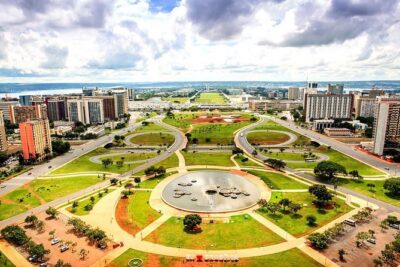
Now you hit the core of the Brasília identity. The route includes Praça dos Três Poderes, inaugurated on April 21, 1960, created by Lúcio Costa and designed by Oscar Niemeyer. This is a large civic space at the federal capital’s inauguration day. It helps you see how architecture is used for political meaning and public scale.
You then visit Espaço Lúcio Costa, an underground construction inaugurated on February 27, 1992, built to house both the Brasilia Model and the Plano Piloto Tactile Model. This is a strong stop for anyone who wants to understand how the city was planned, not only what it looks like.
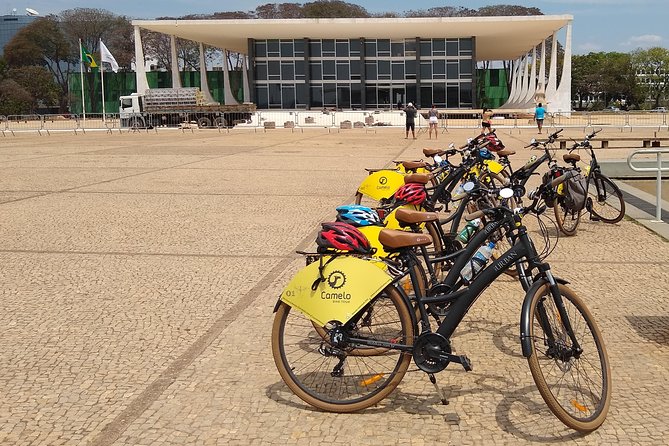
After that, the route includes Supremo Tribunal Federal, located on the third vertex of Praça dos Três Poderes and opposite the Planalto Palace. It’s described as designed by Oscar Niemeyer with original design by Lúcio Costa.
Then you have a short stop at the Claudio Santoro National Theatre, also by Niemeyer. It’s one of the most beautiful works in Brasília, and the time is brief, so treat it as a look-and-reset stop on a ride that still has more to cover.
The itinerary also includes National Library of Brasília and a reference to the place where the President of the Republic dispatches. The key point for you is that you are not just ticking boxes. The route keeps the “who governs here, who speaks here, who performs here” idea in view.
You finish this civic run with Pantheon of the Fatherland (Panteão da Pátria), then Jardim Burle Marx, and finally the Ministries Esplanade area.
There’s a quiet pattern here that I appreciate: even when you are standing in the most iconic places, the stops are short and timed so you keep moving and keep seeing new angles.
Practical value: price, bikes, water, and how long to mentally pack
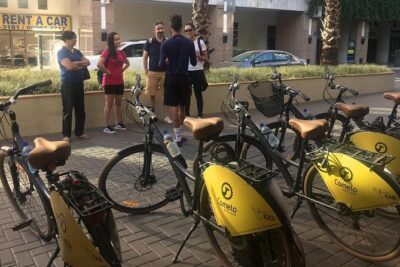
The price is $97.03 per person for about 7 hours. That is easier to swallow when you notice the structure: bike use is included, helmets are offered, and you get two bottles of mineral water (500 ml). Most stops are free admission, so you are mostly paying for guidance, route management, and access via the itinerary.
Lunch is not included, so plan a strategy. Either bring snacks, or know you will need to eat soon after. Also assume you will be moving for most of the day.
About the bikes: the general impression is positive, and some people praise the organization and the way the guide manages crossings and semaphores. But at least one experience flags that bikes could be better maintained, and fitting can be tricky for shorter riders. If you fall into that category, do the fit check early. Ask for a quick adjustment before you really settle into the route.
Night riding matters too. One note suggests adding lights for visibility, because the tour can extend into evening. If your day runs late, ask what is available and use it. Safety first.
Group size is kept to a maximum of 15 travelers, which helps keep things smooth. The meeting point is at Camelo Bike Tour Brasília in Asa Sul (SHS Quadra 06, Conjunto A, Bloco A, Loja 17, Centro Empresarial Brasil 21). The tour ends back at the meeting point.
Who should book the 4 Scales of Lúcio Costa bike tour

This tour is a great fit if you want an efficient way to understand Brasília’s logic, not just its photo backdrops. It is especially good for people who:
- like architecture and design details, including Athos Bulcão tile work and model superblock planning
- want a guided day with free-entry stops, so you are not paying for ticket after ticket
- enjoy seeing cities from multiple perspectives, and you do not mind a packed route
It is also a smart choice if you want a balance of monuments and daily city texture, like Rua das Farmácias and Praça do Povo, plus cultural anchors like Clube do Choro and the National Theatre.
My only “pause” is for riders who are very sensitive to bike fit. If you have specific sizing needs, ask what options exist before you go.
FAQ
How long is the Bike Tour of the 4 Scales of Lúcio Costa?
It runs about 7 hours.
What is included in the price?
Bike use is included, plus helmets are offered, and two bottles of mineral water (500 ml) are provided. Most sites listed have free admission.
Is lunch included?
No. Lunch is not included.
Where does the tour start and end?
It starts at Camelo Bike Tour Brasília SHS Quadra 06 Conjunto A, Bloco A, Loja 17, Centro Empresarial Brasil 21, Asa Sul, Brasília. It ends back at the meeting point.
Are tickets or admissions required for the stops?
The itinerary notes free admission for the stops listed, and no paid tickets are indicated in the schedule you provided.
Is good weather required?
Yes. This experience requires good weather. If it is canceled due to poor weather, you will be offered a different date or a full refund.
Do I need to bring a helmet?
No. Helmets are available and offered. In Brazil, helmet use is not mandatory.
How big is the group?
The tour has a maximum of 15 travelers.
What if I want a child to ride?
There is an articulated tandem passenger trailer for children from 4 to 10 or 12 years old. You need to ask in advance.
Newest Brasília reviews
- Transfer Brasilia Pirenópolis★ 5.0 · 3 reviews
- Brasilia Private Custom Walking Tour With A Guide (Private Tour)★ 4.5 · 6 reviews
- Private Tour of the Federal District in Brasilia★ 4.5 · 4 reviews
- 3h Cooking Class in Brasília with 9 Recipes & Bottomless Drinks★ 5.0 · 4 reviews
- Brasilia Sightseeing★ 3.0 · 23 reviews
- Brasilia City Highlights Tour with Guide★ 3.5 · 8 reviews
- Monumental Axis Bike Tour – Brasilia★ 5.0 · 133 reviews
Brasília Tours, compared.
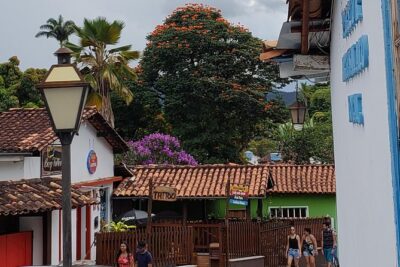
Pirenópolis, the charming baroque city inaugurated in 1723 in the gold cycle
Read our review →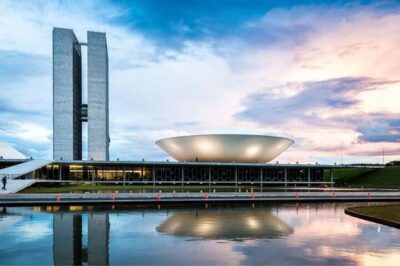
Airport pick up services Same day booking. Driver speak English, Spanish and Portuguese.
Read our review →
Browse the lists this tour appears in