
Reviewed · SãO PAULO HIGHLIGHTS
Walking Tour along Paulista Avenue – The most Famous Avenue in Brazil
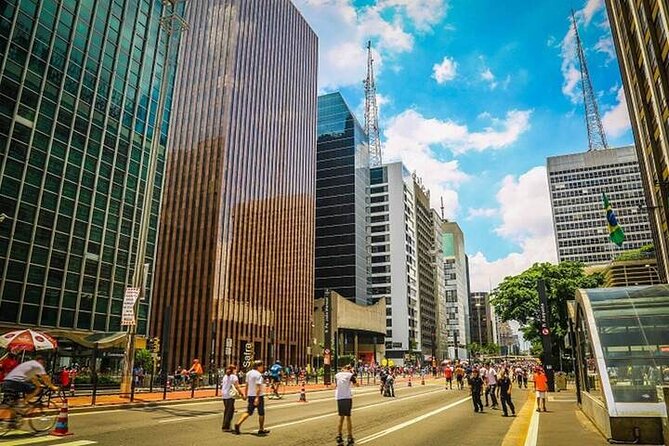
Paulista Avenue is one of those places that looks like just another big-city boulevard, until someone explains what it has driven in Brazil for 130 years. This 3-hour private walking tour turns the sidewalks into a story, with a licensed guide who can connect the buildings to big themes like coffee, industry, and city life.
I love the mix of art, architecture, and culture packed into one walk, especially the free stops that range from Japanese culture to French-style mansions to modern cultural centers. One heads-up: it’s still a walking tour, and the experience requires good weather, so plan for comfy shoes and be ready to adjust if conditions are poor.
Key highlights before you walk Paulista Avenue
- A guide who ties streets to real Brazilian history, including the coffee story and late industrialization that shaped São Paulo
- Free entry at most major stops, so your money goes to the guide and time, not tickets
- Great city views from Sesc Paulista’s observation deck and other vantage points along the route
- Street art scale-up, including Eduardo Kobra murals on prominent buildings
- Modern São Paulo meets older layers, from classic mansions to institutional landmarks and 1950s architecture
- A walk that ends near the metro, making it easier to keep moving after IMS Paulista
Walking Paulista Avenue like you actually understand it
If you’ve only seen Paulista Avenue from a distance, you’re going to be surprised at how much changes block to block. One moment you’re in a cultural zone. The next, you’re seeing architecture that reflects an era when São Paulo grew fast and changed its own rules.
The best part of this tour is the way it frames what you see. You’re not just reading plaques and taking photos. You’re getting the “why.” Coffee mattered for Brazil’s socio-economic development, and São Paulo became a central stage for that shift. As the city industrialized later on, Paulista kept acting like the public face of that transformation. The walk helps you notice how those forces show up in the buildings.
And yes, the avenue can feel visually busy. That’s why a real guide helps. When your guide points out what to look for, the route stops being a random grid of towers and turns into a coherent walk.
More Walking Tours in São Paulo
- Sao Paulo: Downtown-Center History Walking Tour – in English
★ 5.0 · 91 reviews - Sao Paulo: Downtown-Center Walking Tour | 2 Hours – English
★ 4.9 · 84 reviews - Ecological walk in sao paulo
★ 5.0 · 61 reviews
Price and what $90 buys you for 3 hours
At $90 per person for about 3 hours, you’re paying for a private, licensed bilingual guide plus guided access through a concentrated slice of Paulista. That can be excellent value if you like structure and want to get more out of your time than a self-guided stroll.
A few value points that matter:
- You’re not paying for meals, and you’re not stuck buying snacks on the tour. You can plan your own break.
- Most stops on the route list free admission, so again, you’re paying for interpretation and pacing.
- The tour offers mobile tickets, which reduces friction on the day.
- There are group discounts, which can be a win if you’re traveling with friends and you can join the same booking group.
If you’re the type who hates group timing, private is a big deal here because only your group participates.
Start at Japan House, then build context fast
You begin at Japan House São Paulo at Av. Paulista 52 in Bela Vista. Japan House is a smart starting point because it immediately signals the “international” side of Paulista’s story. The stop features rotating art exhibits and also talks and classes related to Japanese culture.
Practical tip: since the time here is short, use it to get your bearings. Stand back, take a quick look at the surroundings, and let your guide set the theme for the day. Once you understand the idea of Paulista as a long-running corridor of culture and power, the rest of the walk clicks faster.
This stop lists free admission, so you can enjoy it without worrying about ticket headaches.
From a European-style private hospital to Casa das Rosas
Next, the route moves you to a major early building theme: the first European-style private hospital founded by religious women. Even without a long museum visit, the point is clear. Paulista has always been more than leisure. It has provided services, institutions, and infrastructure as the city expanded.
From there, you’ll go to Casa das Rosas, described as a classic French-style mansion dedicated to cultural manifestations with a focus on literature and poetry. It also connects to the early occupation of Paulista, so it helps you see how the avenue shifted from earlier land use toward the dense urban corridor it became.
What I like about these two stops together: you get an education in different kinds of “culture.” One is cultural care, the other is cultural expression through literature and poetry. That pairing makes the avenue feel like a timeline you can walk through.
Both stops list free admission, which is great when you’re budgeting.
More of São Paulo:
- Skydive Tandem – São Paulo – Brazil
★ 5.0 · 1,840 reviews - São Paulo’s Full Day City Tour: Main City Sights in 7 Hours – (Shared Group)
★ 5.0 · 1,691 reviews - 5-hour Private Tour Of São Paulo With Its Main Sights – Optional Airport Pickup
★ 5.0 · 643 reviews - São Paulo: Main City Sights in 7 Hours – Shared Group Tour
★ 4.9 · 587 reviews
Sesc Paulista rooftop views, then the Eduardo Kobra effect
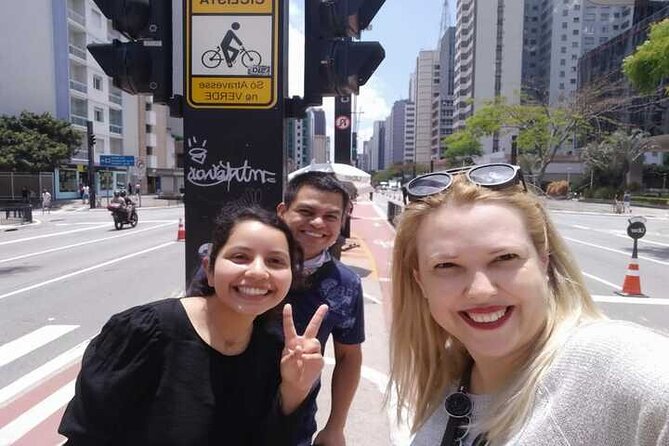
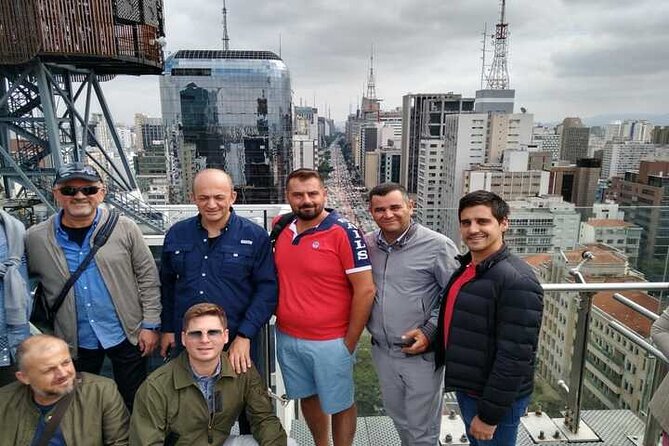
At Mirante Sesc Paulista, you get one of the most useful “pause and look” moments on the day. Sesc Paulista is a cultural and leisure center, and the observation deck lets you see a long distance across the São Paulo skyline. There’s also a café, so if you need a quick breather, this is where it makes sense.
Short timing here means you should decide in advance: will you prioritize the view or grab a snack? Either choice is valid. For me, the view is what earns the stop.
From there, the walk pivots into a very modern kind of storytelling: large-scale panels by street artist Eduardo Kobra, with works featuring people like Formula 1 driver Ayrton Senna and architect Oscar Niemeyer. Even if street art isn’t your thing, Kobra’s scale forces you to look up, and that’s what you want on a city-walk.
You’ll also pass a cultural institute focused on valuing Brazil’s diverse culture and society. Think of it as another clue that Paulista keeps reinventing itself as a place for public identity.
The institutional stop list that makes Paulista feel real
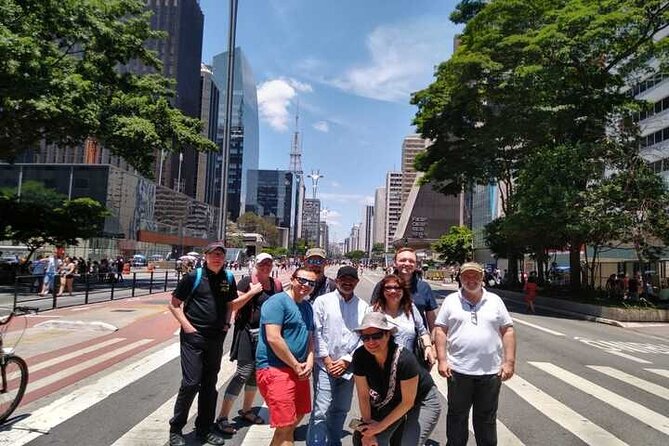
Some of the best moments on this tour are the less flashy ones: schools, cultural centers, and research-focused institutions. These are the places that explain how the city functioned beyond shopping and nightlife.
On this route, you’ll see:
- A more than a century-old school designed by Ramos de Azevedo, and noted as the largest polling station in Brazil
- A scientific research entity that played a big role in the eradication of animal rabies in the early 20th century
You might not spend a long time inside any one building, but the point is interpretation. When your guide explains what these institutions meant, Paulista starts to feel like a civic machine, not just a photo spot.
Centro Cultural Fiesp and the MASP area
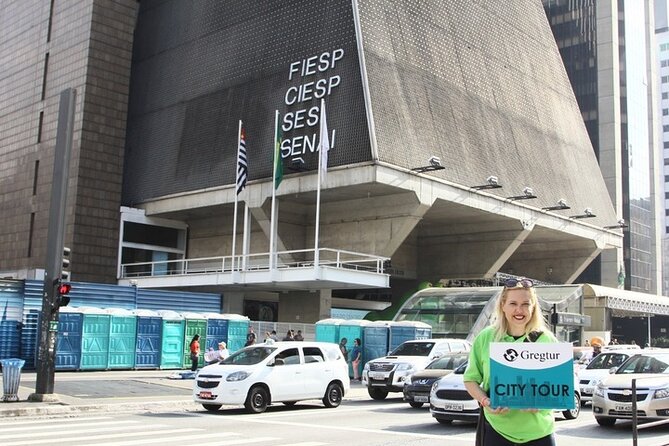
You reach Centro Cultural Fiesp, the headquarters of the Industrial Federation of the State of São Paulo. It’s described as a postcard of the city and an iconic landmark. Even if you’ve never studied Brazilian industry, Fiesp ties right back to the themes of industrialization and the role of power in shaping space.
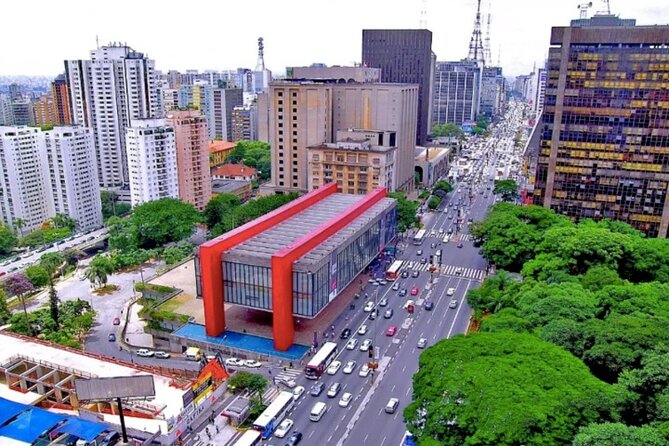
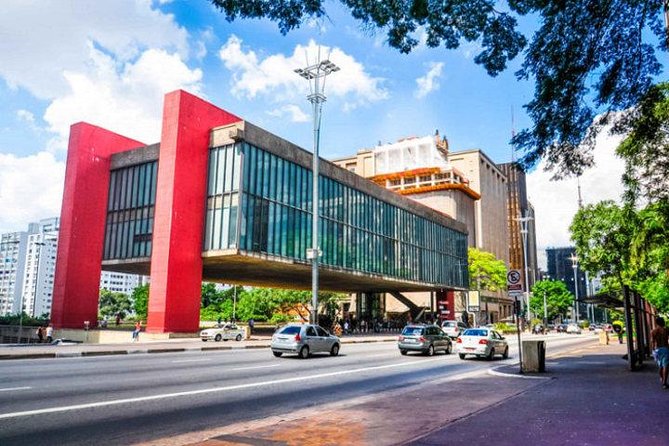
Then comes a stop at São Paulo Art Museum (MASP), listed as one of the most important Brazilian cultural institutions and one of the most attended museums.
Between the buildings, there’s also a reminder that not everything on Paulista is purely urban. You’ll see a historic park remnant of the original Atlantic Forest, with centenary trees and relevant art works. This kind of stop matters because it breaks the “all concrete, all the time” feeling. It also helps you remember that São Paulo’s growth came with loss, and the city now tries to preserve what it can.
One practical consideration: museum-heavy areas can attract lots of people. That makes timing useful. With a guide, you spend less time figuring out where to stand and more time learning what to notice.
Mirante 9 de Julho, media power, and the surprising mixed-use vibe
Next is Mirante 9 de Julho, described as an abandoned place that was rediscovered and turned into a multicultural space. That is exactly the kind of city adaptation that Paulista is known for: older structures get repurposed, not erased.
After that, you’ll head toward the head office of Fundação Cásper Líbero, described as a centenary traditional media conglomerate. Media matters in a place like this because it helps shape public conversation, not just entertainment.
Then you get a contrast in residential history. The route notes that only a few elegant residences on Paulista resisted time and speculation such as this abandoned palace. Even if you just glance from outside, the fact pattern tells a story about who benefited from growth and who got pushed aside.
You’ll also pass a street known for nightlife: dance clubs, brothels, striptease clubs, and an LGBT section with bars. This is another reason Paulista feels like the city’s stage. Work, study, entertainment, demonstrations, leisure, shopping, theaters, and gastronomy all overlap here.
My advice: keep your mindset flexible. If you expect only polished culture, this portion is a good reality check. If you like how cities actually work, you’ll probably enjoy the contrast.
Conjunto Nacional and the 1950s blueprint feeling
At Conjunto Nacional, you’ll get a taste of architectural planning that influenced similar building projects in São Paulo during the 1950s. This kind of stop is less about one single landmark and more about the idea of how design can shape everyday life.
Think of it as a bridge from the older layers of Paulista into the more modern city logic: built forms that keep commerce, movement, and culture tightly connected.
Even if architecture isn’t your main interest, this is the point where you start to see Paulista as a system.
IMS Paulista for photography, literature, and cinema
The tour ends at Instituto Moreira Salles (IMS Paulista) at Av. Paulista 2424. The stop is described as a cultural institute promoting programs in photography, literature, iconography, plastic arts, music, and cinema.
This ending location is useful because it’s near major metro access, with the tour ending after your visit to the building. The route notes close connections to the Paulista station on the yellow line and Consolação station on the green line.
If you want to keep your momentum after the walk, this is a convenient place to do it. You get a final cultural stop, not a random ending point in the middle of traffic.
The guide experience, and why Deborah’s style is a big deal
One of the strongest signals from past guests is the quality of the guidance. I’d focus on that. A tour on Paulista can easily become a list of names and dates. A good guide turns it into a sense of place.
In particular, Deborah is mentioned for being kind and deeply invested in explaining Paulista’s history, architecture, art, and culture. That’s exactly what you should hope for, because this avenue rewards attention. The route packs a lot in, so your guide’s ability to connect dots is what makes it feel worth the time.
If your guide leans into how the avenue changed, you’ll walk away understanding why Paulista looks the way it does today.
Who should book this tour
This is a strong fit if:
- You want a structured overview of Paulista Avenue in one go
- You care about how culture and institutions shape a city, not just what’s pretty
- You’d rather have interpretation than hunt for it yourself across multiple stops
- You enjoy art and architecture, including street art at building scale
It may be less ideal if:
- You hate walking and prefer slow, seated sightseeing
- You want a pure museum day instead of a street-level route
- You’re traveling in weather that’s consistently poor, since the tour requires good conditions
Practical expectations for a smooth 3-hour walk
The tour is about 3 hours, and it’s built around short visits that stack many Paulista landmarks. That means you won’t linger for long inside every stop, but you will have enough time to absorb the main point and capture a few photos.
A few practical tips to make it easier:
- Wear comfortable shoes, because it’s still a city walk even with planned stops
- Bring a light layer for air conditioning and changing street temperatures
- If you want snacks, plan them around the café option at Mirante Sesc Paulista
And because it’s a private tour for your group, you can usually relax knowing you’re not juggling the pacing of strangers.
Should you book this Paulista Avenue walking tour?
Book it if you want the fastest honest way to understand why Paulista Avenue is famous. For $90, the private licensed bilingual guide, the structured route, and the mix of free-entry cultural stops add up to good value, especially if you’re short on time.
Skip it or consider self-guiding if you already know Paulista well or if you prefer longer museum visits with no walking. Also keep an eye on weather. Since the experience requires good weather, you’ll be happier if you can keep plans flexible.
If you like city stories that connect buildings to big forces like coffee, industrial change, and cultural identity, this is the kind of walking tour that turns “I’ve been here” into “I get it.”
FAQ
How long is the walking tour on Paulista Avenue?
The tour lasts about 3 hours.
How much does the tour cost?
It costs $90.00 per person.
Is this a private tour or a group tour?
It is a private tour. Only your group participates.
Where does the tour start and where does it end?
It starts at Japan House São Paulo, Av. Paulista, 52 – Bela Vista. It ends at Instituto Moreira Salles – IMS Paulista, Av. Paulista, 2424, and the tour ends after the visit to the IMS building.
Are tickets required for the stops?
The itinerary lists free admission tickets for the stops included on the route.
What is included in the price?
A professional licensed bilingual private tour guide, plus VAT, all taxes, and handling charges.
Are meals and drinks included?
No. Meals and drinks are not included.
Do I need to bring cash for the tour?
The information provided says you’ll receive a mobile ticket, and the included stops list free admission, but it does not mention payment details. Tips are optional.
What weather conditions does the tour require?
The tour requires good weather. If it’s canceled due to poor weather, you’ll be offered a different date or a full refund.
What is the cancellation policy?
You can cancel for a full refund up to 24 hours in advance of the experience’s start time. Cancellation cut-off times are based on local time.
Newest São Paulo reviews
- Roundtrip Private Transfer from Sao Paulo Airport (GRU)(CGH)★ 3.5 · 3 reviews
- São Paulo Nightlife: Pub Crawl in the City that Never Sleeps!★ 5.0 · 3 reviews
- Shopping Tour In São Paulo: Best Deals In The Company Of A Local Expert Guide★ 5.0 · 3 reviews
- Private Helicopter Tour – Romantic Lunch or Dinner At Itália Terrace Restaurant★ 5.0 · 3 reviews
- Football Tour – Great Stadiums of Brazilian Football★ 5.0 · 3 reviews
- Full-Day Private Tour of Santos with Boat Tour and Viewpoints – Tickets Included★ 5.0 · 3 reviews
- Beach Town Of Bertioga – Relaxing Day At One Of The Coolest Beaches In The Coast★ 5.0 · 3 reviews
- 5h City Tour (pick up & delivery within SaoPaulo city)★ 5.0 · 3 reviews
São Paulo Highlights, compared.

São Paulo’s Full Day City Tour: Main City Sights in 7 Hours – (Shared Group)
Read our review →
5-hour Private Tour Of São Paulo With Its Main Sights – Optional Airport Pickup
Read our review →
Main City Sights in 7 Hours – Shared Group Tour
Read our review →
6-Hour Classic Half-Day Private Tour of São Paulo – Optional Airport Pickup
Read our review →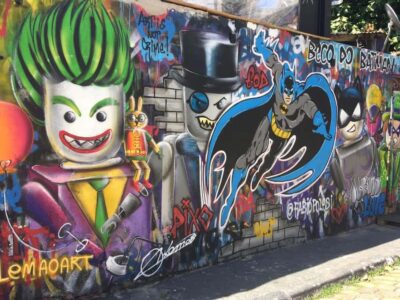
Amazing São Paulo overview in 4 or 5 hours with a private guide
Read our review →
Browse the lists this tour appears in