
Reviewed · FLORIANóPOLIS
4h Cooking Class in Florianopolis: 8 Recipes & Bottomless Drinks
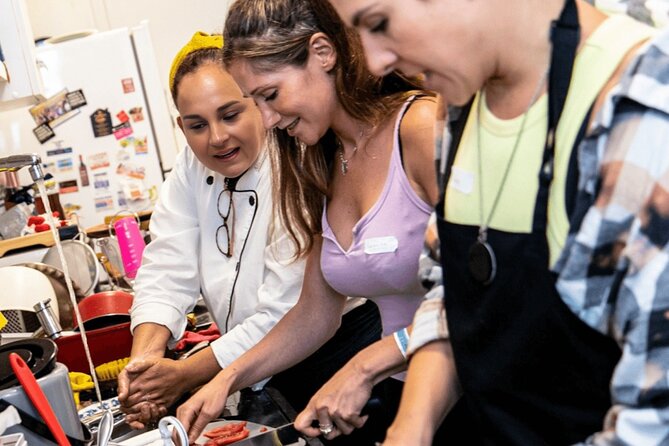
A cooking class in Florianopolis that puts you in a real Brazilian home kitchen, not a demo room, is a rare treat. You get to work with the food, hear the why behind the flavors, and then sit down together to eat what you made.
I especially love the small group size and the way the menu covers both everyday staples and the more character-heavy dishes. I also like that you get unlimited caipirinha during the experience, so the meal feels like a proper get-together, not just a timed activity.
One thing to consider: there is no hotel pickup, so you’ll need to get yourself to Lagoa da Conceição (Servidão Bonifácio da Rosa, 51) when it starts.
Key Highlights You’ll Feel Fast
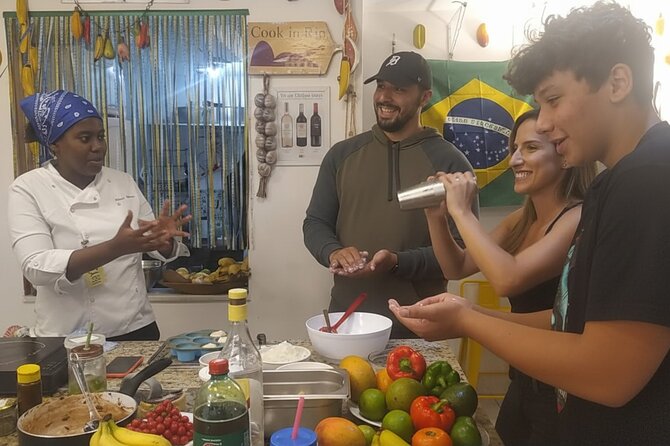
- Small group max of 6, so you can ask questions while you cook
- Hands-on cooking with ingredients, utensils, and an apron provided
- Unlimited caipirinhas served throughout the experience
- Real Brazilian home-food lineup including moqueca, tapioca, pão de queijo, and brigadinho
- Digital recipe book plus a Brazilian Food Guide after class
- Candid photos so you keep more than just your memory
A Real Home Kitchen in Lagoa da Conceição
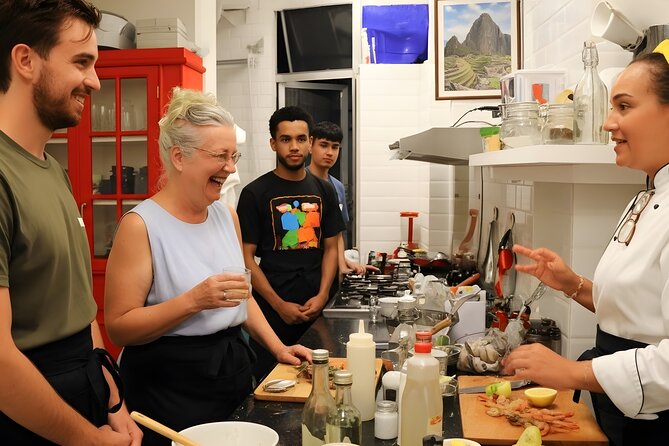
This class is built around one idea: you shouldn’t just watch Brazilian food being made. You should learn it by doing it, with a bilingual local host guiding you step by step in the kitchen.
The setting helps a lot. You start in Lagoa da Conceição at Servidão Bonifácio da Rosa, 51, and the activity ends back there. Because it runs about 3 hours 30 minutes and keeps a relaxed rhythm, it feels like you’re joining a cook at home for an afternoon, not cramming through a warehouse-style class.
You also benefit from the group size. With a maximum of 6 travelers, you’re not stuck in the corner waiting your turn forever. You can get your hands on the ingredients, ask what you should do differently, and actually hear explanations without the room turning into noise.
The host is bilingual and you’ll be cooking traditional dishes like moqueca and farofa (in this menu, you’ll also make a banana version). The overall approach is intuitive, focused on how people cook day to day, not on rigid, overly technical instructions. That matters if you want to recreate it later, because real home cooking is rarely exact down to the milliliter.
The main logistical trade-off is simple: no hotel pickup or drop-off. If you’re staying far away or you don’t know how to get around Florianópolis, plan ahead so you’re not rushing. Once you’re there, though, the experience moves at a comfortable pace.
More of Florianópolis:
- Floripa City Tour by Bus – Whole Island – The Most Complete City Tour
★ 5.0 · 672 reviews - Rafting Adventure in Apuama – Rio Cubatão in Greater Florianópolis
★ 5.0 · 281 reviews - Balneário Camboriú tour and cable car ride from Florianópolis
★ 4.5 · 74 reviews
What You Make First: Caipirinha, Tapioca, Pão de Queijo, and Cassava
The experience starts with a drink you’ll understand even if you’ve never cooked in Brazil before. Caipirinhas are served as a starter and are unlimited throughout the experience. That sets a friendly tone early, and it also means you get time to settle in while the kitchen gets going.
From there, you’ll shift into Brazilian staples that many people only recognize from pictures. You’ll make:
- Tapioca crepe, a cassava-based crepe you’ll often see in homes and street stalls
- Pão de queijo, classic cheese bread originally from Minas Gerais
- Cassava sticks, fried cassava you’d commonly spot as a snack or side
- Butter cassava with herbs, another familiar home-style preparation
These choices are smart for a few reasons. First, cassava is a cornerstone ingredient in Brazil, and cooking with it teaches you texture and timing, which is half the battle. Second, tapioca and pão de queijo are usually easier to replicate at home than dishes that depend on very specific fish or hard-to-source spice blends. You’ll likely be able to find most ingredients worldwide, which the class emphasizes directly.
Also, because everything is included, you don’t have to guess what you’re missing. The class provides ingredients, utensils, and an apron. You just show up and cook. That’s good value and it keeps your mental load low.
One more detail I really like: you’re not only learning recipes. The host shares practical techniques and cultural context that don’t usually make it into cookbooks. In this first phase, that kind of context helps you understand why these foods are served the way they are, and how Brazilian eating habits shape the menu.
A possible drawback here is that you’ll be working with multiple cassava preparations during the morning or afternoon block. If you prefer one focus dish at a time, you might feel a bit of kitchen jumpiness. But that variety is also what makes the class feel like a proper slice of Brazilian food, not a single-dish workshop.
Moqueca and Rice: Learning the Flavor Logic of Everyday Brazil
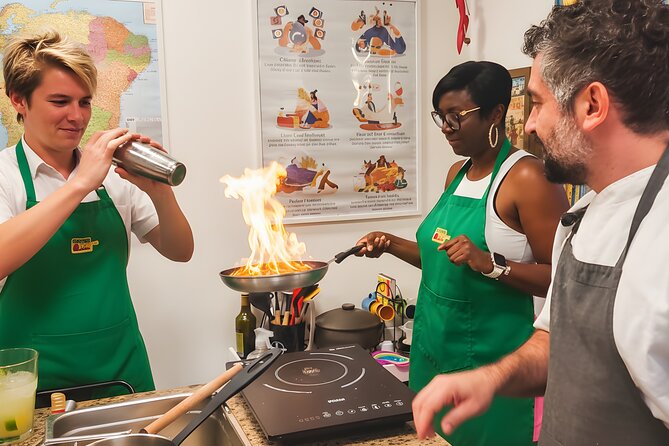
When the class moves to the main meal, it gets more “Brazil” in the best way. You’ll make Brazilian style white rice, which is everyday food for lunch and dinner across the country. It might sound plain on paper, but rice is a teaching tool. When you cook it alongside stews and sides, you learn how Brazilians build meals as combinations, not isolated dishes.
Then comes the star: fish or shrimp or veggie moqueca. Moqueca is a traditional Brazilian stew made with coconut milk and dendê oil. Dendê oil is one of those ingredients that instantly signals “this is the real deal,” and it’s usually the difference between a moqueca that tastes like a guess and one that tastes like the dish.
What you’re aiming to learn in a moqueca class is more than how to follow a recipe. You want the method and the balance, the part about when to let flavors combine and when to avoid overdoing the stew. Since the class is hands-on and run by a bilingual local host, you can ask questions that matter to your taste at home. You’re not limited to a printed set of steps.
And because moqueca is served with rice and sides, you’ll see how the stew functions in the meal. The class doesn’t treat moqueca as a solo performance. It treats it as a centerpiece that needs proper support.
There’s also a practical angle to the seafood or veggie choice. If you’re not into seafood, the veggie moqueca option keeps you in the dish family without forcing you into something you don’t want. If you love seafood, you’ll get that classic richness the stew is known for.
Even if you’re a careful cook, the relaxed rhythm helps. You’ll be guided through the kitchen work, but it isn’t overly formal. That means you can move at home cooking speed, which is exactly what you want for later success.
Farofa and Brigadinho: The Side Dish and the Sweet Finish
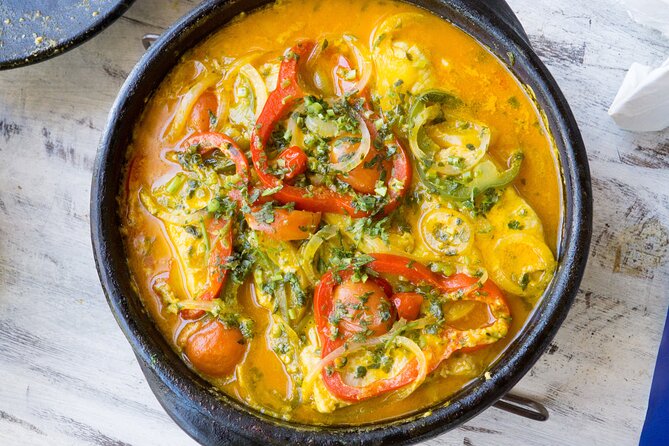
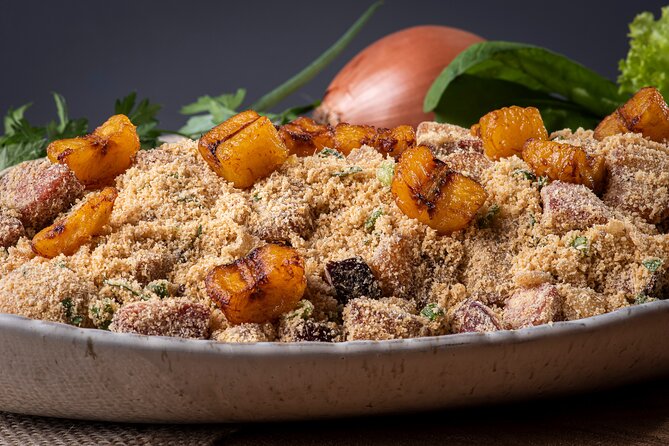
Every good Brazilian meal leaves room for side dishes that do real work, and this class includes one of the best examples: banana farofa. Farofa is toasted cassava flour, and in this version it’s combined with banana. That combination matters because farofa brings a dry, toasted texture that contrasts with stews and rice. You get a meal that has bite and body, not just softness.
Toasting cassava flour teaches you a skill you can use again and again. The goal is depth without burning. In a short class, you don’t have time to experiment for hours, but you do get guided practice. That’s the kind of thing you can replicate back in your own kitchen: toast until it smells right, then finish with the add-ins.
For dessert, you’ll make brigadilho, Brazilian chocolate fudge, and it’s described as the country’s most famous homemade chocolate dessert. The class positions it as a celebratory finish, and it makes sense. Fudge-style sweets are one of the easiest ways to keep the flavor session going after you’ve cooked savory foods.
If you’re worried about dessert being “too much,” don’t. The class works because it spreads the heavy lifting across multiple dishes. You’ll already have cassava snacks, rice, stew, farofa, and dessert. Each one plays a role, so the sweet finish feels like a clean ending, not a surprise calorie bomb.
More Cooking Classes in Florianópolis:
- Cooking class in Salvador, an authentic dinning experience
★ 5.0 · 132 reviews - 4h Cooking Class in Salvador with 9 Recipes & Bottomless Drinks
★ 5.0 · 73 reviews - Family Cooking Class in Rio Make 9 Brazilian Dishes Together
★ 5.0 · 32 reviews - 4h Cooking Class in São Paulo with 9 Recipes & Bottomless Drinks
★ 5.0 · 30 reviews
Sitting Down Together: Photos, Memories, and the Shared Table
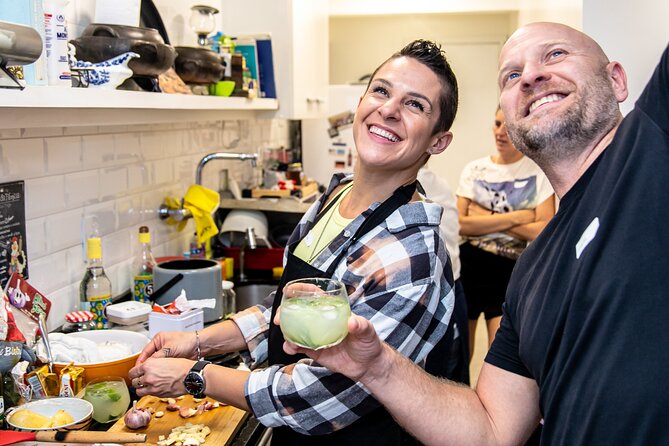
Here’s where this experience feels different from a standard cooking demo. When everything is ready, your group sits down together to eat the meal you prepared. Caipirinhas keep flowing, and the kitchen turns into a shared table of conversation and laughter.
This matters more than you might think. Cooking classes can sometimes feel like lessons you complete, then leave. This one turns into a social meal where you get to taste what you made in context. You’re not tasting cold dishes or sampling tiny portions. You’re eating the full setup as a group.
Another thoughtful detail: candid photos are taken while you cook and eat. That sounds small, but it helps you remember the moments that happen between the “instruction parts.” Afterward, you receive a digital recipe booklet along with a Brazilian Food Guide so you can keep exploring local flavors.
The “not just recipes” part is key for your long-term value. A recipe booklet helps you recreate the dishes. The food guide helps you understand what to try next, based on what you learned in the kitchen.
There’s also a 5-star experience guarantee with a money-back promise. You’re not likely to care about that while you’re cooking, but it does signal that the provider wants you to leave satisfied.
Price and Value: Why $85 Makes Sense Here
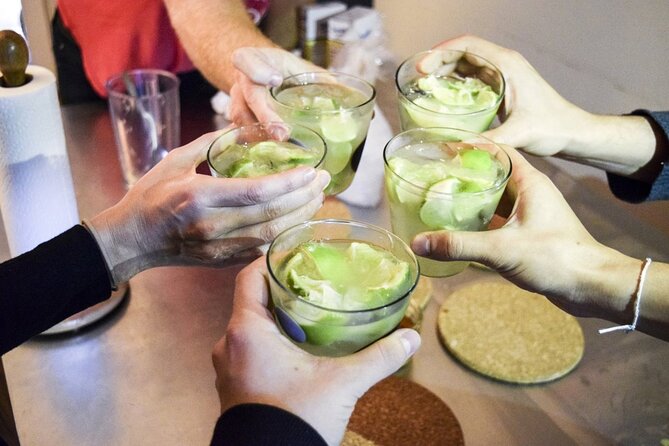
At $85 per person, you’re paying for more than a few cooked samples. You get an actual hands-on class in a home kitchen, with everything included: ingredients, utensils, apron, and a full meal made by the group. You also get unlimited caipirinhas during the experience.
Break down the value and it gets clearer:
- You cook multiple dishes instead of watching
- You eat the full meal you make (appetizer, main, dessert)
- Drinks are included via unlimited caipirinhas
- Follow-up materials are included in digital form: recipe book plus a Brazilian Food Guide
- Group size is small with max 6 travelers, which usually costs more in other settings
If you’ve paid for cooking classes elsewhere, you know the hidden costs add up fast. Here, you don’t bring anything for prep, because the class supplies it. That reduces friction and makes the cost easier to justify.
The only extras mentioned are wine, which is sold separately, and hotel pickup, which is not included. If you don’t plan on buying wine, your main expenses stay predictable. And because caipirinhas are unlimited, you’ll still have drink coverage without paying extra.
One more angle: the menu includes dishes that many people want to cook at home, but don’t know how to start. Moqueca and farofa are usually the types of dishes where people guess on ingredients and technique. This class gives you a practical entry point, and that’s what you’re truly paying for.
Who This Cooking Class Fits Best
This is a great match if you want hands-on cooking with a real meal payoff. It’s especially good for:
- People who like to learn by doing, not by watching
- Foodies who want both familiar Brazilian comfort foods and signature dishes like moqueca
- Travelers who prefer small-group experiences over crowded tours
- Anyone who wants the confidence to cook Brazilian flavors at home after just one session
It also suits couples or small groups because the cap is 6 travelers, so it won’t feel like you’re sharing your workbench with a huge crowd.
If you’re traveling alone, you’ll likely feel comfortable because the class is designed for participation and shared eating. You’re also likely to get more personal attention from the host than you would in a bigger class.
If you’re very sensitive to alcohol, it’s good to know the experience can also teach non-alcoholic drinks (mocktails). Just tell the instructor at the beginning. That keeps the experience welcoming for different preferences.
Final Call: Should You Book This Class?
I’d book this if you want a Brazilian cooking experience that’s practical and social, with a menu that goes beyond one dish. The value is strong because you’re not only learning recipes. You’re also eating what you made, with unlimited caipirinhas, plus you leave with a digital recipe booklet and a Brazilian Food Guide to keep you cooking after the trip.
I’d pause if you hate getting yourselves to a meeting point. Since there’s no hotel pickup, your enjoyment depends on how easy it is for you to reach Lagoa da Conceição on time. Also, if you want a deep focus on only one recipe, the class covers a lot of ground in one afternoon.
If you’re flexible and excited to cook, this is the kind of activity that sticks with you. Not because it’s a performance, but because you walk away with hands-on skills and a meal you actually tasted right then.
FAQ
Is the cooking class hands-on or a demonstration?
It’s hands-on. You’ll cook inside a real Brazilian home with a bilingual local host, and you’ll use provided ingredients, utensils, and an apron.
How long is the experience?
The duration is about 3 hours 30 minutes.
What food and drinks are included?
You get a full meal, including an appetizer, a main dish, and dessert. Caipirinhas are served unlimited throughout the experience.
Is wine included?
Wine is not included. Red or white wine is sold separately.
Can I get non-alcoholic drinks instead of caipirinhas?
Yes. The instructor can teach non-alcoholic drinks (mocktails). Tell the instructor at the beginning of the class.
What if I need to cancel?
You can cancel for a full refund if you cancel up to 24 hours before the experience starts. If you cancel less than 24 hours before, the amount paid is not refunded.
Newest Florianópolis reviews
- Florianópolis: Caminho da Costa da Lagoa Trail★ 4.7 · 3 reviews
- Climbing gym in Floripa★ 5.0 · 3 reviews
- Shared Shuttle between Florianópolis Airport and Hotel with optional City Tour★ 4.0 · 3 reviews
- Secret Island Adventure: Gravata Trail, Floripa★ 5.0 · 3 reviews
- Transportation to Beto Carrero Park from Florianópolis★ 5.0 · 3 reviews
- Regular Arrival Transfer from Florianópolis to Praia do Rosa★ 5.0 · 4 reviews
- Roundtrip transfer from Florianópolis Airport to Bombinhas★ 4.5 · 4 reviews
- Floripa by Night: The Local Party Tour★ 4.0 · 4 reviews
Florianópolis, compared.

Floripa City Tour by Bus – Whole Island – The Most Complete City Tour
Read our review →
Rafting Adventure in Apuama – Rio Cubatão in Greater Florianópolis
Read our review →
Balneário Camboriú tour and cable car ride from Florianópolis
Read our review →


Paragliding flight with instructor in Florianópolis
Read our review →
Discover Florianópolis: Full Day City Tour and Local Highlights
Read our review →
Browse the lists this tour appears in