
Reviewed · AMAZON RAINFOREST
Rubber Museum from Manaus
The Rubber Museum trip out of Manaus is interesting because it takes you to the world behind Brazils rubber boom, from trees in the jungle to the way rubber was prepared and shipped. It is a realistic slice of what life and work looked like during the rubber rush, and it does not shy away from the harsh side of the story.
I like the mix of hands-on displays and real setting, especially the short jungle walk where you can actually see rubber trees and the collection process. I also love the contrast between places, the workshops and warehouses, then the homes that show how different people lived during the same industry.
One drawback to plan for is the time and distance from Manaus. The route includes a boat ride to reach Vila Paraíso, and if you only have a short window in town, this may feel like a lot of transport for one museum visit.
Quick Key Points Before You Go
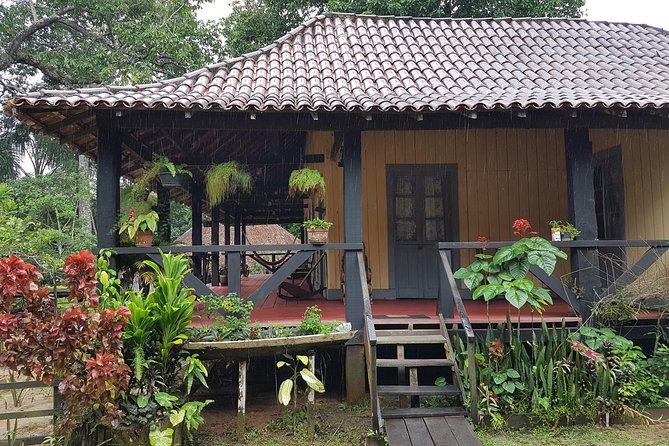
- Vila Paraíso plantation re-creation that shows tools, processing steps, and how rubber was prepared
- Jungle trail visit where you can see rubber trees and watch part of the collection process
- Warehouses and workshops focused on how rubber was collected, processed, and stored
- House visits that contrast the Rubber Master home with the modest worker homes
- Tupé Beach stop for a possible swim if you have time
- Small group size with a maximum of 15 people and an English-speaking guide
Why This Rubber Museum Trip Makes Sense From Manaus
If you want more than a quick museum stop, this one has a built-in storyline. You go from a recreated plantation setup, to the working spaces tied to rubber extraction, to the point where rubber was loaded and sent around the world. That flow matters, because it helps you connect the dots between tree to product, and product to profit.
I also like that the experience is structured like a guided day, not a free-for-all. A local guide leads you through specific zones, from the large tent where tools were kept, to the chapel and flour warehouse, then onward to workshops, storage areas, and worker housing. It is organized enough to follow, but still feels like you are walking through an era, not just reading about it.
One more thing: the tour time lines up well with a morning start. You begin at 9:00am, then you are back in Manaus around 1:00pm with a brief Tupé Beach possibility. That makes it an easy half-day anchor if you are planning other Manaus sights afterward.
More Museums in Manaus
- Manaus: MUSA and INPA Museums with Observation Tower Tour
★ 3.4 · 26 reviews - Manaus: Museu do Seringal Rubber Museum
★ 1.2 · 4 reviews - Manaus : Visit to MUSA (Amazon Museum)
★ 3.0 · 4 reviews
Getting There: Boat Access and What to Expect Timing-Wise
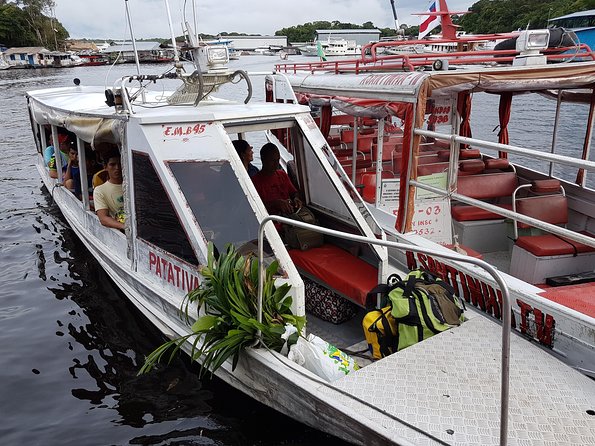
This visit is not a quick hop. Vila Paraíso is reached by boat, and that is a key part of the experience. You should assume there will be travel time to and from the site, plus time for loading, unloading, and moving as a group.
The schedule can be confusing if you expect a tight 3-hour museum-only slot. The activity length is listed around 3 hours, but the day plan runs closer to about 4 hours when you factor in hotel pickup and the return stop at Tupé Beach. The practical target is a 9:00am start and a hotel arrival around 1:00pm.
So here is my advice. If you only have a limited number of half-days in Manaus, and you hate boat rides or long transfers, this might not feel efficient. If you like learning experiences that require getting out of town a bit, the boat ride stops being a chore and starts feeling like part of the story. Rubber was not just made on land, it moved through water routes too.
Museu do Seringal Vila Paraíso: Tools, Chapel, and a Jungle Walk
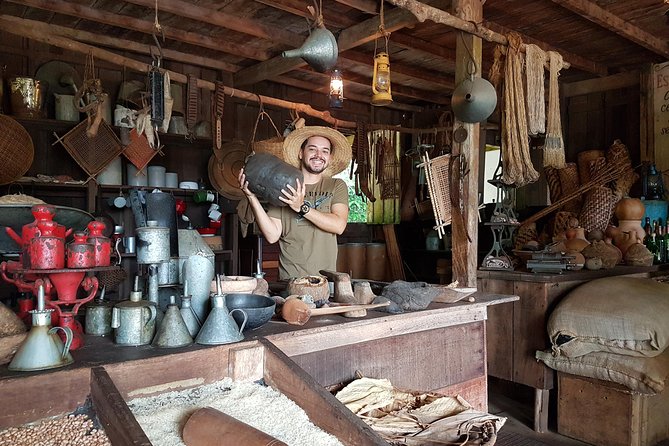
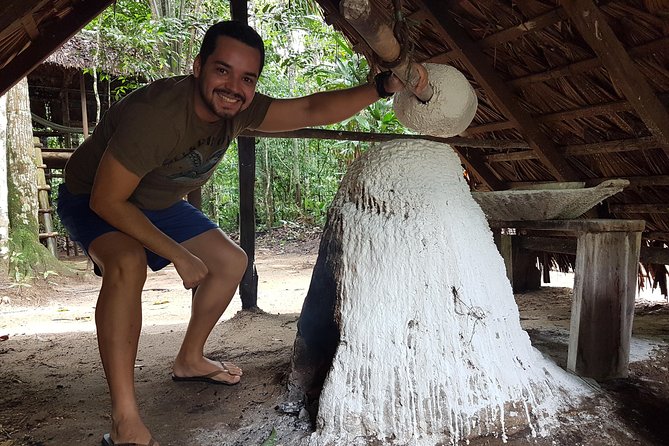
Your first major stop is the Museu do Seringal Vila Paraíso, where the plantation is recreated in a way that helps you picture real work routines. You start in areas that explain the setup: the large tent where rubber making tools were kept, the chapel, and the flour warehouse. These small details are not random decoration. They help you understand how an extraction operation functioned like a community, not a single isolated activity.
Then you walk along a short trail into the jungle. This is one of the best parts because it breaks the museum-only pattern. You get to see rubber trees and you witness the process of collecting latex. Even if you have seen photos before, seeing the process in person makes it easier to grasp how the industry worked day to day.
A standout moment is how rubber balls were used to begin the smoking process. That is an essential step in turning collected latex into a form that could be stored and shipped. When you see the processing described in the context of the plantation grounds, it clicks.
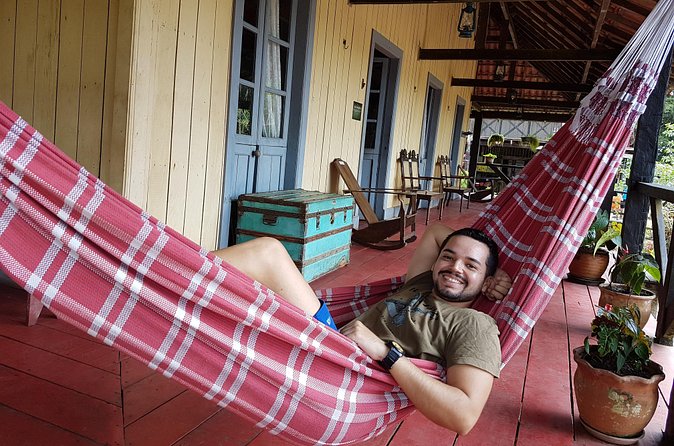
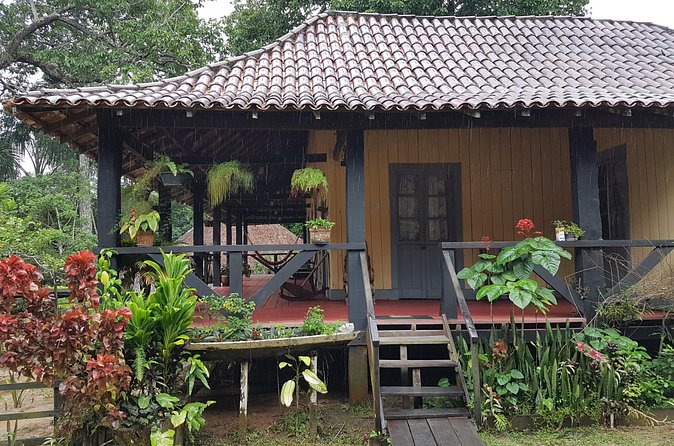
The stop also includes modest homes where rubber extraction employees lived. The goal here is to show everyday life and habits from that era, and it gives weight to the topic you learn about later in the day. You are not just looking at machines, you are looking at living conditions.
Workshops and Warehouses Where Rubber Was Collected and Stored
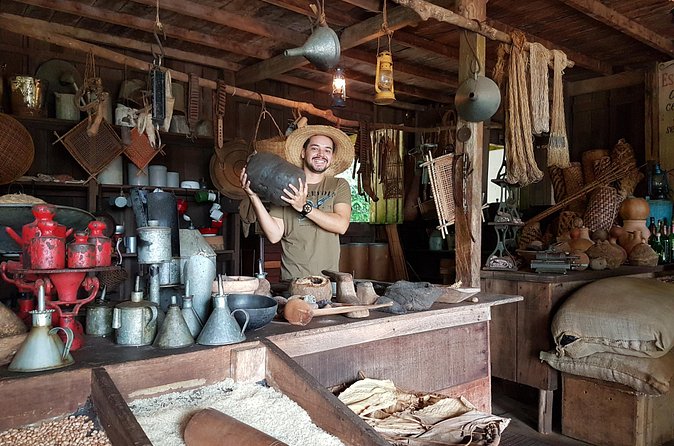
After the plantation walk, you shift from the tree and collection scene to the spaces that handled rubber once it was gathered. This is where the tour becomes practical in a history way. You visit workshops and warehouses tied to how rubber was collected, processed, and stored.
If you are the type of person who likes to understand how things worked, you will likely appreciate this section. Rubber was not a magical substance that appeared ready to ship. It needed handling, processing, and storage before it could move to the next stage of the supply chain.
One of the most helpful elements is the way the visit connects the dots between processing and storage. It gives you a sense of workflow and timing, which is the kind of context that museums often forget. Instead of isolated artifacts, you get a sequence that feels more like an operation.
And because the tour is guided in English, you can ask quick questions without guessing what you are looking at. The guide quality seems to be a strong point for this activity, with the English-speaking guide described as well informed.
More of the Amazon:
- From Manaus: One-Day Amazon Jungle Experience
★ 4.8 · 408 reviews - Manaus: Full-Day Tour on the Amazon River
★ 4.2 · 362 reviews - From Manaus: Presidente Figueiredo Waterfalls Daytrip
★ 4.3 · 149 reviews - 3 Days Amazon Jungle Adventure Tour
★ 4.0 · 145 reviews
From the Rubber Master’s House to Employee Homes
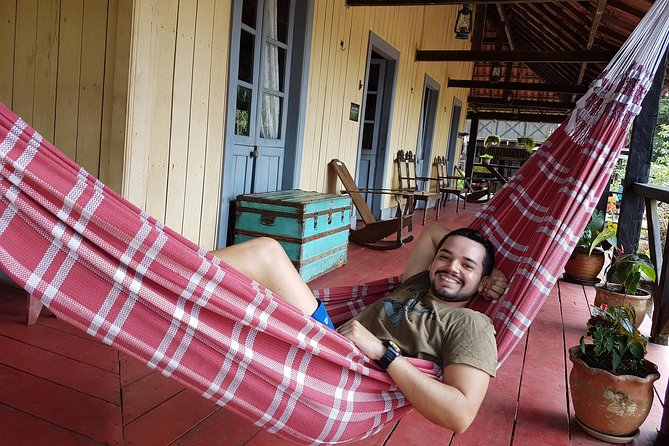
This tour builds in an uncomfortable, important contrast. You visit the Rubber Master’s opulent house, then the more modest homes of typical industry employees. That difference is the point, and it helps you understand the power gap behind the industry.
This is also where you can learn about the darker side of the rubber rush. The employee homes are part of a storyline about how serengueiros were subjected to slavery during that period. You are not just seeing architecture. You are seeing a system made visible through living spaces.
I think this section is valuable because it avoids sweeping statements. It shows material differences, and it uses the environment to explain what that meant for people. If you care about human stories, not just production details, this is a must-attend part of the day.
Just keep your expectations grounded. This is a museum experience and a re-creation, so you should treat it as interpretation of an era rather than a direct time capsule. Still, the contrasts are powerful, and they give your rubber boom learning a real emotional anchor.
Tupé Beach: The Possible Quick Dip After the Museum
At the end of the morning, you return to Manaus and you might stop at Tupé Beach. Swimming is a possibility if there is time, so think of it as bonus time, not guaranteed.
I like having this in the itinerary because it helps you reset after a topic that can feel heavy. Also, the beach stop can be a convenient way to break up the day before you head to lunch.
Just plan like a realist. The swim depends on how the day runs, and the tour ends with arrival around 1:00pm at your hotel. If you want a relaxed beach moment, bring swim gear and be ready to move quickly if the stop lines up.
Price and Value: Is $89.99 Worth It?
At $89.99 per person, this is not the cheapest activity in Manaus. The value comes from what is included: hotel pickup and drop-off, a local guide, and admission tied to the experience.
So you are paying for three things at once.
First, you pay for getting out to Vila Paraíso and back, including the boat access that makes the site reachable. Second, you pay for a guide to connect the story from tools and processing to storage and shipping. Third, you pay for the admission itself, which is what lets you visit the plantation zones and the associated buildings.
Is it worth it? For me, yes, if you want a guided, structured history visit that is more than just walking indoors. If you mainly want a quick rubber-themed museum, you might feel the transport cost in your schedule. One criticism you should take seriously is that the distance from Manaus is not always obvious, and some people feel this is easier to justify when paired with other Manaus plans.
My rule of thumb: if you are doing this as a full half-day education slot, you will feel good about the price. If you are trying to fit too much in one day, the logistics can make the cost feel higher than it is.
Who Should Book This Rubber Museum Tour (and Who Might Skip It)
This tour fits best if you want a clear, guided explanation of Brazils rubber trade and the human lives connected to it. You should especially consider it if you like historical context you can walk through: tools, processing steps, warehouses, and housing, all in one flow.
It is also a good match for people who appreciate small group size. With a max of 15 people, you should have enough time for questions and photo pauses without constant crowd pressure.
Where it may not fit is if you want minimal transit. The boat access and distance from Manaus can be a deal breaker for some. If you hate boats, or if you have only one short morning free and you need maximum flexibility, you may want a different option.
It also may not be ideal if you prefer modern museum comfort only. This is a plantation-focused, outdoor and walking-oriented experience, plus a jungle trail segment. You do not need to be an athlete, but you should be ready to walk.
Practical Tips That Make the Day Easier
A few practical things can help you get the most out of this trip.
Bring a simple day kit. Sun protection matters, especially if you hit the jungle trail portion. Also consider water, even though drinks are listed as not included. If you want an adult beverage, the tour notes alcohol is available to purchase, but it is not included.
Wear shoes you trust on uneven paths. The jungle trail is described as a short walk, but it is still outdoors and you will be moving as a group.
If swimming at Tupé Beach is important to you, bring a swimsuit or quick-dry layer. The swim depends on time, but being prepared is the difference between going home disappointed and getting a bonus dip.
Finally, do not overpack your schedule. Plan other Manaus activities after the 1:00pm return. This helps you avoid the classic mistake of stacking one stressful commute after another.
Should You Book the Rubber Museum from Manaus?
I would book this if you want a guided, story-driven experience that connects rubber production to real human lives. The combination of the plantation re-creation, the jungle walk to see rubber trees and collection, the processing and storage spaces, and the contrast between the Rubber Master house and worker homes makes it feel like a whole chapter, not a random stop.
I would think twice if distance and boat travel are your least favorite parts of travel days. The site is reachable only by boat, and it is easy to feel like the time cost is high if you treat it as a standalone museum visit.
If you like your history grounded in places you can walk through, and you are okay giving the day a small structure, this tour is a strong use of a morning in Manaus. Just plan your other activities around it, so you do not feel rushed when the day comes back to the hotel around 1:00pm.
FAQ
What is the start time for the Rubber Museum from Manaus tour?
The tour starts at 9:00am.
How long does the tour take?
It runs for about 3 hours on average, with the full schedule set up to return to your hotel around 1:00pm.
How much does it cost?
The price is $89.99 per person.
Is hotel pickup and drop-off included?
Yes. Hotel pickup and drop-off are included. You must inform the provider of your hotel choice.
What languages are offered?
The tour is offered in English.
Is a ticket included for admission?
Yes. Admission ticket is included as part of the tour.
Is there a mobile ticket?
Yes, mobile tickets are provided.
What is the group size?
The group is limited to a maximum of 15 travelers.
Can I cancel and get a full refund?
Yes. You can cancel for free up to 24 hours in advance for a full refund.
Newest Manaus reviews
- Manaus City Sightseeing Tour★ 4.5 · 15 reviews
- Manaus City Sightseeing Tour★ 4.5 · 15 reviews
- Adventure: 4-hour hike in the Amazon rainforest★ 5.0 · 16 reviews
- Getting in to the Jungle 3D/2N-At Tapiri Rio Anavilhanas Lodge★ 5.0 · 16 reviews
- Walking Tours in Manaus★ 3.5 · 16 reviews
- Private transfer in Manaus – 24h★ 5.0 · 17 reviews
- Amazon Adventure Trip 4D/3N at Tapiri Anavilhanas Lodge★ 5.0 · 17 reviews
- Amazon Survival Experience★ 5.0 · 18 reviews
Amazon Rainforest, compared.

8-Hour Amazonas Jungle Treck & Anavilhanas Archipelago
Read our review →
Browse the lists this tour appears in