Reviewed · RIO DE JANEIRO TOURS
Path DA Resistance: Discover the Black Culture of Rio
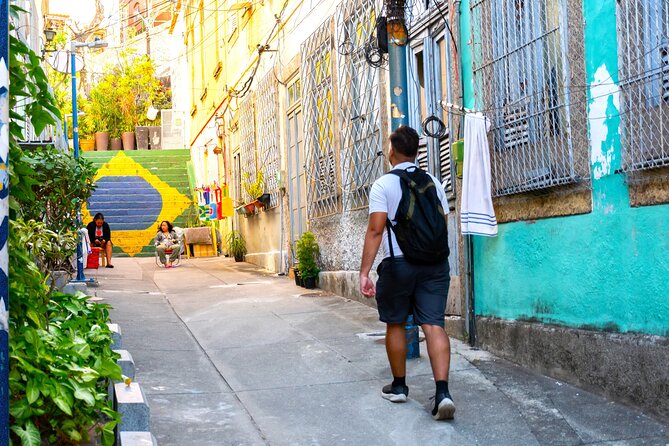
A walk called Path DA Resistance: Discover the Black Culture of Rio sounds like a marketing line until you realize what you are actually doing. You are moving through real Rio neighborhoods where Black history shaped the city, not just museums and statues. It is built as a guided route, with quick stops that give you context you would likely miss on your own.
I love the way the tour connects places to everyday culture, from samba meeting points to carnival-era stories. I also love the human side of it, especially when guides like Lucas Reves bring personal background and answer questions with real passion. One possible drawback: it is mostly outdoors and keeps a steady pace, so if you want long, slow sightseeing breaks, you may feel a bit rushed.
Quick hits to know before you walk
- Free stops at major Little Africa sites, so your money goes to the guide, not admissions
- Samba and carnival context tied directly to specific streets, squares, and mosaics
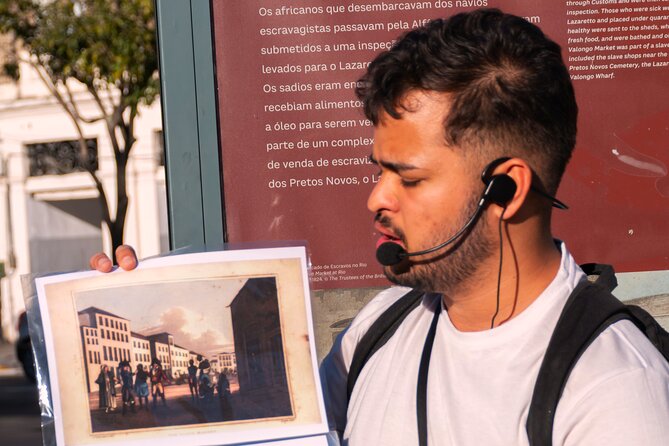
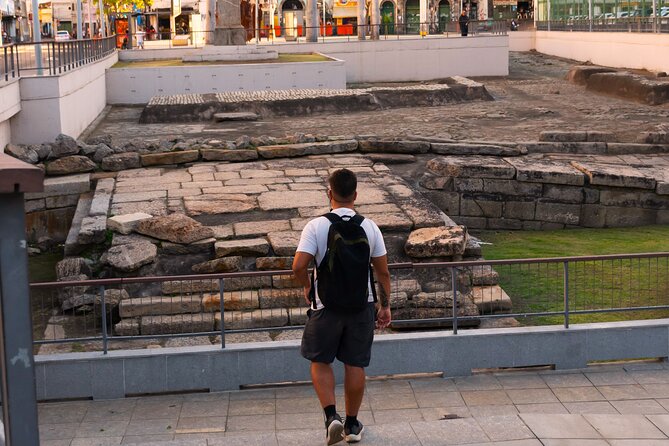
- Cais do Valongo included, a deeply important archaeological reminder from the slavery period
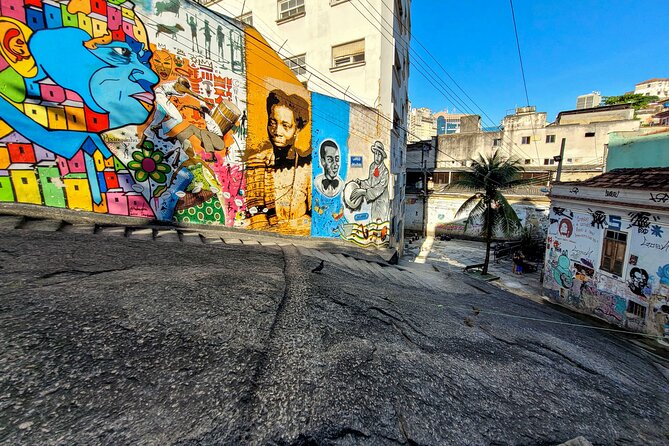
- Photo-friendly moments at iconic spots like the staircase view points and the mosaic
- Private group experience, so you get more time for questions and discussion
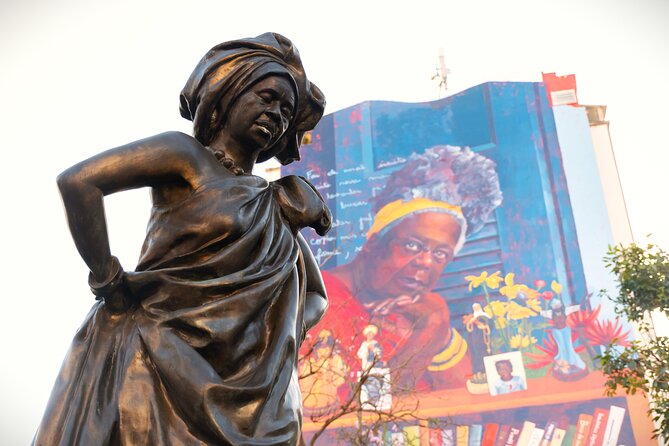
- Ends at the Kobra Etnias mural, a strong visual landing point for the journey
Little Africa on foot, not just on a map
This tour works because it treats Rio’s Black culture like something living and layered, not a single lecture. You start in the port area area of Saúde near Rio’s Museum of Art, then you gradually work your way through the areas often grouped as Little Africa, where culture, resistance, and community history show up in the street itself.
I like that the route is designed to be short enough to stay focused, but long enough to feel like a real walk through a story. Each stop is timed tightly, usually around 15 to 25 minutes, which means you get context without spending half your day in transit.
You will also feel the emotional range of Rio’s story. Some stops are meant for photos and quick orientation, like staircases and mosaics. Others carry heavy historical weight, especially the slavery-era remains at Valongo. If you are sensitive to that kind of material, plan your day so you are not rushing straight into a nightlife plan afterward.
More days in Rio:
- Rio de Janeiro: 6-Stop Highlights of Rio with Lunch
★ 4.4 · 5,157 reviews - Christ the Redeemer Entry Ticket by Corcovado Train
★ 4.4 · 4,476 reviews - Rio’s City Tour – Tickets for Christ, Sugar Loaf & Lunch included
★ 5.0 · 4,389 reviews
A guide you can actually talk to, Lucas Reves included
The biggest strength here is the guide. The tour is built around a specialized guide to Afro-Brazilian culture and history, and the best part is how interactive it feels. When I think about what makes a historical walking tour worth it, it is not just facts. It is the ability to ask follow-up questions and get straight answers.
From the praise this tour has received, one name comes up for a reason: Lucas Reves. People describe him as personable, friendly, and clearly proud of sharing his background. That matters, because it shifts the tone from outsider storytelling to community-rooted explanation. You also get a sense that Black history in Rio is still being uncovered, explained, and created through the community today, not only studied in the past.
If you show up with curiosity, you will leave with a tighter understanding of how African-Brazilian culture shaped the city’s identity. If you show up with a phone full of questions, even better. This format makes it easy to ask, and the guide has the time and context to respond.
One more practical point: because it is a private tour, you do not have to compete for attention with a large group. Your questions land better, and the pacing feels more human.
The 2 to 3 hour route, stop by stop
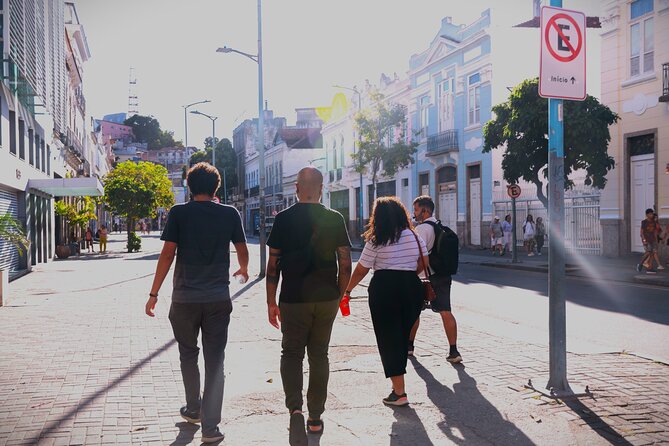
Expect a route that lasts about 2 to 3 hours. It is paced so you can learn and walk without burning out, but it is still a walking tour. Comfortable shoes help, and if you want lots of photos, give yourself a little extra attention at the stops that are clearly designed for picture time.
Museu de Arte do Rio (MAR), framing Little Africa
Your first stop is at Museu de Arte do Rio (MAR). You will get an introduction that sets the tone, including contextualization of Little Africa. This is a smart starting point, because it helps you understand what you are seeing next, before you start collecting visuals.
Time here is about 20 minutes, and admission is free for this stop. I like using the first stop to orient your brain. Even if you do not remember every detail, you start with a framework: what Little Africa means, why it matters, and what you should listen for as you move.
Another way to spend a day in Rio de Janeiro:
- Full Day: Christ Redeemer, Sugarloaf, City Tour & Barbecue Lunch
★ 4.5 · 3,142 reviews - Rio de Janeiro: Rocinha Favela Walking Tour with Local Guide
★ 4.8 · 3,052 reviews - Rio’s Full Day: Selarón Steps, Christ & Sugarloaf – Tickets & Lunch Included
★ 5.0 · 2,724 reviews - Rio: Christ the Redeemer, Sugarloaf, Selaron & BBQ Lunch
★ 4.5 · 2,428 reviews
Escada da Bandeira do Brasil, a quick photo parade
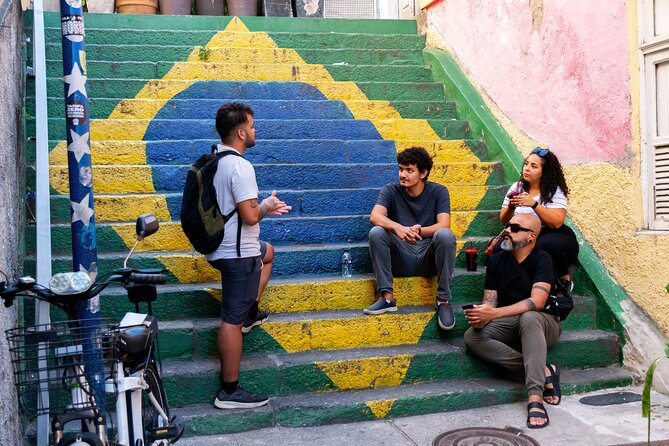
Next up is Escada da Bandeira do Brasil, the famous Brazil flag staircase. The goal is simple: stop, take photos, and use the viewpoint to understand the space you are in.
Time is around 15 minutes and admission is free. This is not the kind of stop where you get deep historical discussion, but it does serve a purpose. It is an easy mental reset between heavier topics, and it gives you images you will remember while you continue learning.
If you hate photo stops, you can still make them work. Take 2 to 3 photos, then refocus on what the guide is explaining nearby.
Mosaico Hilário Jovino, carnival origins tied to community
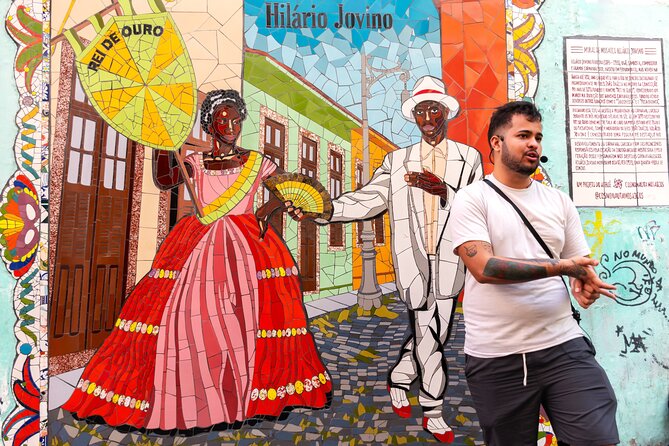
Then you head to Mosaico Hilário Jovino, a mosaic that connects the creation of carnival with its relationship to Small Africa. This is a cultural stop, and it is the kind of place where looking matters. Mosaics often feel like background art until someone points you to the stories inside them.
Time is about 15 minutes, admission is free. I like this stop because it turns carnival from a distant festival into something tied to community memory and creativity. You will start seeing culture as something built, not just something watched.
Largo São Francisco da Prainha, resistance in public space
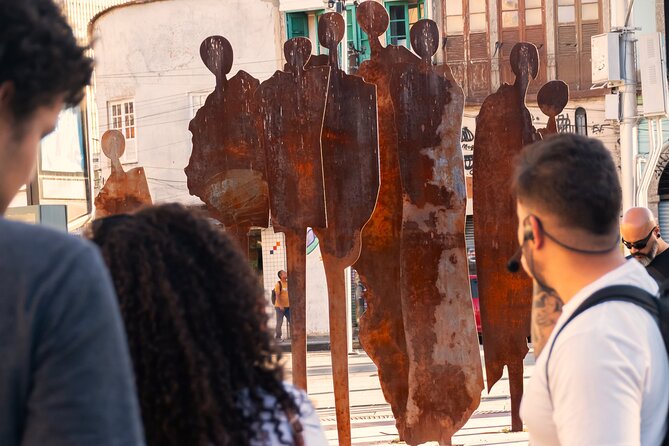
At Largo São Francisco da Prainha, the tour shifts toward space, memory, and resistance. This square is described as an important place for cultural expression and resistance from the Black community in Rio.
You spend about 25 minutes here, making it one of the longer stops. Admission is free. This length gives the guide room to slow down a bit, and it gives you time to absorb what a square means when it has been a meeting place across generations.
Practical note: squares can be windy and sun-exposed. If the weather is bright, plan for shade breaks by leaning into indoor or museum-adjacent stops earlier.
Pedra do Sal, where samba has roots
The next stop is Pedra do Sal, a meeting point for Samba musicians that is today a monument to Afro-Brazilian culture. This is one of those stops where your understanding shifts quickly. You realize samba is not only a sound you hear. It is a community network, a practice, and a history.
Time here is about 20 minutes, and admission is free. I like how the tour connects cultural production to place. You are not learning samba as a vague tradition. You are seeing where musicians gathered and how that has been remembered in the city.
Bring your best listening ears here. If you do, the explanation will likely make you notice patterns in how people talk about culture in Rio after the tour ends.
Cais do Valongo, the slavery landing you cannot ignore
Then comes Cais do Valongo, an archaeological ruin from the slavery period, described as the landing place for about 1 million enslaved people. This is the emotional center of the route.
Time is about 20 minutes, admission is free. This is not a stop where you should rush for photos. Even if the location is visually striking, the meaning is heavier than pretty views. I recommend you slow down, take in the space, and let the guide’s context do the work.
This is the kind of stop that can change how you interpret the rest of your Rio trip. When you understand the forced history behind major parts of cultural life, you start to see resilience in a different light. If you are planning museums later, give yourself a little breathing room before your next big attraction.
Kobra Etnias mural, finishing with indigenous visibility
Your final cultural landing point is the Kobra Etnias mural, by Brazilian artist Kobra. The mural depicts indigenous peoples from all continents, giving the tour a wider lens at the end.
You spend about 15 minutes here, admission is free. I like ending with a piece of public art because it offers a visual summary of the route’s broader theme: identity, presence, and community storytelling in the streets.
From a practical standpoint, this end point is close to public transportation, which makes it easier to get moving without feeling stranded.
Value for $62.34, and what your money buys
At $62.34 per person, this tour is priced for a guided experience, not a bargain admission deal. The value comes from a few things that add up quickly.
First, each listed stop is free for admission. That means your payment is really paying for interpretation: a specialized guide to Afro-Brazilian culture and history, plus structured time at the main places of Little Africa.
Second, you are not just “walking with someone.” The stops are arranged so the story flows, from framing context at MAR to cultural expressions at mosaics and squares, then into the historical weight at Valongo, and out through the public art finish at Kobra.
Third, the tour is private, meaning only your group participates. That usually matters most if you care about asking questions or if your group includes different interest levels, like one person who wants more photos and another who wants more historical detail.
If you want a low-stress way to learn, this is a decent use of time and money. If you already know a lot of Afro-Brazilian history and prefer self-guided wandering, you might feel the structured pacing a bit limiting.
How to plan around weather, walking pace, and photos
Because this tour requires good weather, check your forecast and build some flexibility into your Rio schedule. If poor weather cancels the experience, you should expect an offered different date or a full refund.
The route lasts 2 to 3 hours, and it is designed as multiple short stops. That means you will walk, then stand, then walk again. I recommend wearing shoes that can handle city sidewalks and comfortable clothes you can adjust for sun or breeze.
If you love photos, you will enjoy the staircase and mosaic stops. Still, remember that the Valongo site deserves more than a quick camera pass. Take your photos where it feels appropriate, then put the camera away and listen.
One more small practical point: it uses a mobile ticket, and it is offered in English. If you prefer to follow along on your phone, bring your charger plan. Also, the route is near public transportation, which is helpful for both the start at Praça Mauá area and the finish near the Orla Pref. Luiz Paulo Conde.
Service animals are allowed, and most travelers can participate. If you have mobility concerns, you might want to contact the provider in advance, since the format is built around multiple outdoor stops in a limited time window.
Who this tour fits best
This is a great fit if you want culture and history tied to real places in Rio. I especially think it works for people who:
- want an Afro-Brazilian perspective that goes beyond general Rio sightseeing
- like guided context at specific stops instead of reading alone at each location
- enjoy asking questions and getting answers on the spot
It also fits well for first-time visitors, because it helps you understand why Rio’s culture looks the way it does, and why certain neighborhood spaces matter. If you are returning to Rio and want a deeper theme, this can change how you interpret other parts of the city too.
If your travel style is mostly about long museum time, or if you dislike outdoor walking, you may prefer a museum-focused day instead. This is an active route.
Should you book Path DA Resistance: Discover the Black Culture of Rio?
Yes, I think you should book it if you want a guided, place-based route through Little Africa with strong cultural storytelling. The best reason is the guide quality, especially the kind of thoughtful, friendly approach tied to Lucas Reves, with enough time for your questions and clear enthusiasm.
You should consider skipping or swapping if you hate steady pacing, plan to spend the rest of the day at unrelated attractions right after a heavy historical stop, or you only want free self-guided attractions with no guide.
Overall, for the time and price, this is a practical way to see Rio with sharper context. You finish with photos, but more importantly you finish with a better sense of how community shaped the city, from samba meeting points to carnival stories to the Valongo ruins.
FAQ
How much does Path DA Resistance: Discover the Black Culture of Rio cost?
It costs $62.34 per person.
How long is the tour?
The tour lasts about 2 to 3 hours.
Is the tour offered in English?
Yes, it is offered in English.
Where do you meet and where does the tour end?
You start at Rio Museum of Art at Praça Mauá, 5 – Saúde, Rio de Janeiro, and you end at the Kobra Etnias mural near Orla Pref. Luiz Paulo Conde – Centro.
Is this a private tour?
Yes. It is a private tour, so only your group participates.
What is included in the price?
The tour includes a specialized guide to Afro-Brazilian culture and history, plus a visit to the main places of Little Africa.
Is food or drink included?
No, food and drink are not included.
What is the cancellation and weather policy?
You can cancel for a full refund if you cancel at least 24 hours before the experience’s start time. The experience requires good weather, and if it is canceled due to poor weather, you will be offered a different date or a full refund. It may also be canceled if a minimum number of travelers is not met, with an alternative date or a full refund offered.
Newest Rio de Janeiro reviews
- Two Brothers Hike in Rio de Janeiro At sunrise★ 5.0 · 3 reviews
- Rio Paragliding Experience w/ Brazilian Female Champion video inc★ 5.0 · 3 reviews
- Tour 7 ( 4 hours ) : Tijuca National Park and Favela★ 4.5 · 3 reviews
- Tijuca Forest + Botanical Garden + Lage Park – by Alan Denis★ 5.0 · 3 reviews
- Rio de Janeiro by Yourself with English Driver by private Vehicle★ 5.0 · 3 reviews
- Personalized Tour in Rio. Main Attractions and Cultural Walk.★ 5.0 · 3 reviews
- Museum of Tomorrow – | Round Trip Transfer + 2 Tickets★ 4.5 · 3 reviews
- Stadium Stories & Food: Join a Maracanã stadium tour with a Local★ 3.5 · 3 reviews
Rio de Janeiro Tours, compared.

Christ the Redeemer Entry Ticket by Corcovado Train
Read our review →
Rio’s City Tour – Tickets for Christ, Sugar Loaf & Lunch included
Read our review →
Full Day: Christ Redeemer, Sugarloaf, City Tour & Barbecue Lunch
Read our review →

Rio’s Full Day: Selarón Steps, Christ & Sugarloaf – Tickets & Lunch Included
Read our review →
Christ the Redeemer, Sugarloaf, Selaron & BBQ Lunch
Read our review →