

Reviewed · GUIDED
Little Africa Guided Tour with Transfer
Little Africa in Rio is the kind of place that makes you look twice. This 4-hour guided walk connects today’s streets to the port where enslaved Africans arrived, and it does it with small-group pacing so you can actually follow the story. I also really like the way the tour slows down at key sites, like Cais do Valongo, where the physical setting and the historical details work together.
One possible drawback to plan for: it’s a walking-style experience with emotional subject matter, and the rhythm can depend on your group and guide. Bring comfortable shoes and a little extra patience for a careful, sometimes heavy, conversation.
Key highlights you’ll feel during this Little Africa tour
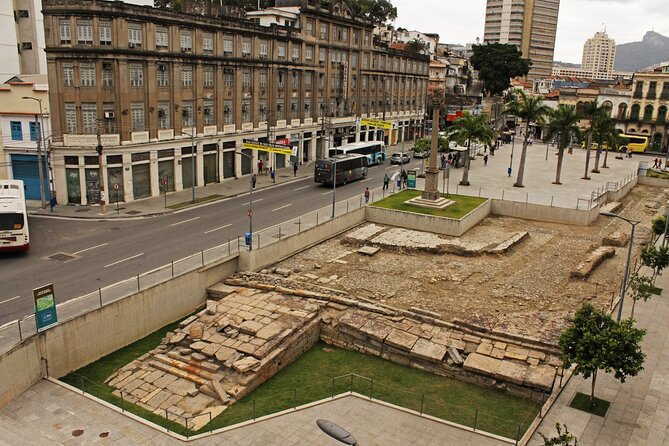
- Cais do Valongo port area, tied to an important UNESCO-listed pier site, with the story of how the place was covered and later rediscovered in 2011
- Casa da Tia Ciata, where you’re guided to notice details that shaped Afro-Brazilian culture in the area
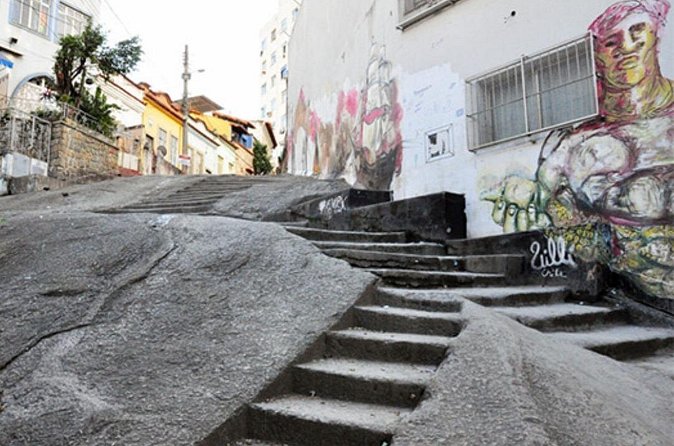
- Pedra do Sal, including what the name is connected to and the tough conditions people faced nearby
- Instituto de Pesquisa e Memoria Pretos Novos (IPN), with the focus on why preserving memory matters
- Air-conditioned vehicle plus a max 19-person vehicle group, so the logistics don’t feel chaotic
A respectful walk through Little Africa’s most meaningful streets
If you want Rio that goes beyond beaches and postcard views, this is one of the better ways to do it. You’re walking through the neighborhood called Little Africa, but the real point is what the guide connects for you: how the physical places carry layers of history, and how the story has been renamed, moved, covered up, and finally brought back into public memory.
The tour can be emotional, and that’s not a marketing line. You’re dealing with slavery, forced migration, and the way people were processed and controlled. The good part is how the guide handles it with care and empathy, keeping the tone human. That matters, because this isn’t a history lecture you can mentally tune out. It asks you to pay attention.
I also like the structure. You get a sequence of stops that slowly build the picture: the port first, then community and cultural spaces, then memorial preservation. It helps your brain organize what you’re learning, instead of just collecting facts.
More days in Rio:
- Rio de Janeiro: 6-Stop Highlights of Rio with Lunch
★ 4.4 · 5,157 reviews - Christ the Redeemer Entry Ticket by Corcovado Train
★ 4.4 · 4,476 reviews - Rio’s City Tour – Tickets for Christ, Sugar Loaf & Lunch included
★ 5.0 · 4,389 reviews
Copacabana meeting point and how the transfer pickup works
The tour starts at Hotel Rio Othon Palace in Copacabana (Av. Atlântica, 3264, 5º andar). The experience ends back at the meeting point, so you’re not stuck figuring out last-mile details.
Pickup is available from most hotels in Leblon, Ipanema, Copacabana, Flamengo, and Centro. If you’re staying in Barra da Tijuca or Recreio dos Bandeirantes, pickup is available for an additional price. The key practical move is timing: contact the operator 24 hours prior to confirm your hotel location and the pickup time.
A couple of small planning tips based on the way this kind of group tour usually runs:
- Ask your hotel desk to spell out the exact pickup address or give a clear landmark. It reduces confusion.
- If you’re traveling with multiple people, confirm the vehicle size you’ll get. Some groups can end up in tighter seating arrangements depending on day and guide.
Stop 1: Cais do Valongo, where the port tells the story
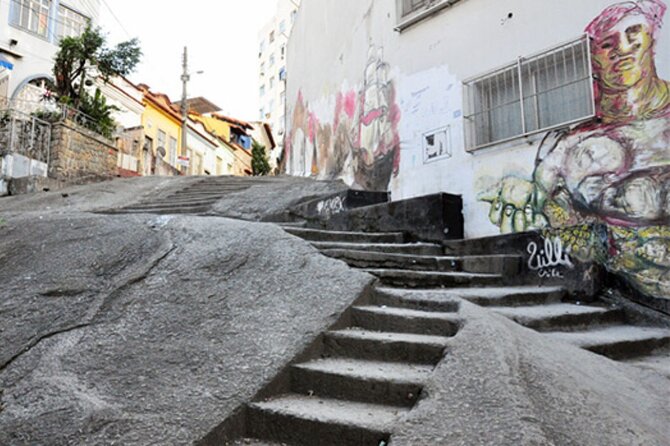
Your first big moment is Cais do Valongo, the former harbor. This is not just a location you glance at. It’s a place where the stones used to build the harbor were carried by the same enslaved population who arrived here. That connection is hard to forget once you hear it, because it ties labor, architecture, and human suffering into one physical setting.
What I like about this stop is the way it explains naming. The harbor changed names throughout history, and the guide frames that as intentional. In other words, the story wasn’t only hidden by time. It was shaped.
Expect to walk around and focus on what makes this site significant, while you learn the timeline and the meaning behind what you’re seeing. The official site admission for this stop is free, so there’s no separate ticket cost to worry about.
If you’ve read about Rio’s hidden past, this is where the tour usually makes it real. In at least one case, the guide described the area as tied to a UNESCO heritage pier site, including how the pier was covered and forgotten until rediscovered in 2011. Even if you come in with some background, this framing often hits harder once you’re standing there.
Stop 2: Casa da Tia Ciata, cultural roots in plain sight
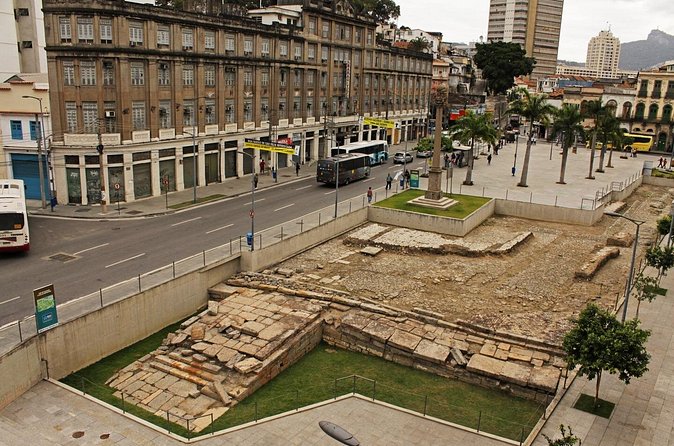
Next comes Casa da Tia Ciata. The time here is about an hour, and the instruction is simple: admire the setting, then pay attention to the details the guide points out. That’s important, because what you’re looking for is often easy to miss if you treat the building like a photo backdrop.
This stop adds a different angle to the story. Instead of only focusing on arrival and control, you start seeing how community life and culture formed under pressure. Your guide connects the dots between place, people, and everyday creativity.
Here’s the practical value: if you’ve been only thinking about slavery as a closed chapter, this is where the tour helps you understand continuities. You’re not only learning about what happened. You’re seeing how cultural life took shape around it.
Admission for this stop is free, so again, you’re paying mainly for the guide’s interpretation, pacing, and the way they point your attention to what matters.
A few more Rio de Janeiro options
- Rio de Janeiro: Rocinha Favela Walking Tour with Local Guide
★ 4.8 · 3,052 reviews - 3 Hour Rocinha Favela Walking Tour with a Local Guide
★ 5.0 · 833 reviews - Rio de Janeiro: Guided Jeep Tour through Tijuca Rainforest
★ 4.3 · 740 reviews - Jeep Adventure: Guided Tour through Tijuca Rain Forest
★ 4.0 · 554 reviews
Stop 3: Pedra do Sal, the name with a reason
Pedra do Sal is shorter, about 30 minutes. That might sound quick, but it’s a focused stop: you find out the truth behind its name and learn about the hard-working conditions of the people in the area.
This is one of those places where the name sounds poetic, but the meaning is tied to real labor and real hardship. I like that the guide doesn’t let you romanticize it. Instead, the stop reinforces how everyday survival shaped the neighborhood’s identity.
Because the official stop time is brief, use it strategically:
- Take a photo if you want, but keep your eyes on the guide’s explanation.
- If you’re tempted to wander, slow down and anchor yourself in what you’re being told, since the payoff is in the specific details.
Admission is free here too, so you’re not paying for access. You’re paying for sense-making.
Stop 4: IPN (Pretos Novos) memorial museum and why it matters
The final stop is the Instituto de Pesquisa e Memoria Pretos Novos (IPN). This part lasts about an hour, and the admission is included. If you remember one thing from this stop, make it this: the tour ends by shifting from sites that explain history to a place that protects memory.
Your guide explains how the Instituto dos Pretos Novos was built and why preserving the memory and history of Africans in Brazil is essential. This is where the story stops being only about what happened and becomes a discussion about responsibility now, and what it takes to keep difficult history from disappearing again.
What I appreciate is that this stop gives your emotions somewhere to land. You’ve already confronted the port and the neighborhood context. Now you get to see an approach to remembrance that is active, not passive.
If you tend to like museums, you’ll likely enjoy the tone here. It’s not about huge spectacle. It’s about preserving and interpreting the past so it stays visible.
Small-group comfort, pace, and why the guide makes the difference
This is set up as a small group experience. The vehicle capacity is listed at a maximum of 19 people, and the overall tour maximum is 100 travelers. In practice, that usually means you won’t get swallowed by a crowd and ignored by your guide.
You’ll also want to know the experience is offered in English. That’s good news for most visitors. Still, based on real experiences shared by guests, the quality of English can vary by guide. One guest had a bad experience with a guide named Antonio, saying English was hard to follow. Another guest had an excellent experience with a guide named Monica, praising her professionalism, responsiveness, and empathy with older travelers.
That doesn’t mean you should panic. It does mean you should be smart:
- If English precision matters a lot to you, consider messaging the operator before you go and asking who will be guiding your departure.
- If you’re sensitive to unclear narration, plan to ask questions during the tour whenever something feels fuzzy.
Pace can also shift. Monica, for example, adjusted pace for older travelers and even added brief stops at additional sites. That’s a plus when you want the story tailored to the group. Just remember this is still a guided walk, so you should expect some time on your feet.
What the $60 price gets you, and what it doesn’t

The price is $60 per person, and it includes an air-conditioned vehicle. That sounds simple, but it matters because the stops are not all in one tiny block of perfect walking distance. The vehicle supports group movement and keeps the day more comfortable, especially in Rio’s heat.
What’s not included is lunch. So if you take this tour mid-day, I suggest eating before or after, not during. Build your schedule with that in mind, because the emotional heavy-lifting of the story can also make you feel more tired than you expected.
Also, remember that tickets are a mixed bag by stop:
- Cais do Valongo: free
- Casa da Tia Ciata: free
- Pedra do Sal: free
- IPN: admission included
So most costs are wrapped into the guide and organization. You’re not paying extra entry fees across the day.
Practical advice: shoes, sun, and how to make the day easier
This isn’t a sit-and-stare tour. Wear comfortable shoes. Bring sunglasses and sunscreen. A hat is also a good idea. The guidance is straightforward, but it’s worth taking seriously because you’re outside for most of the experience.
If you’re booking at a time when you’ll be running on tight energy, give yourself margin. The tour can be emotional, and you’re learning a lot quickly. A little planning helps you absorb it instead of rushing through it.
Also check weather. The experience requires good weather, and it can be canceled due to poor weather, with alternative date options or a full refund. In Rio, that can matter more than you’d think.
Should you book this Little Africa tour with transfer?
Book it if you want a meaningful Rio that respects the subject matter and gives you context in the right order. I think it’s especially good value if you like guided walking tours, want to understand the port and neighborhood story behind Little Africa, and appreciate a guide who can slow down when it matters.
Consider skipping or at least preparing yourself if:
- You’re not comfortable with emotionally heavy topics about slavery and forced migration.
- Clear English narration is a must-have and you’re worried about variation between guides. Ask questions before you go.
- You prefer tours with very little walking and no outside time. This is a walking-style day, so shoes and sun protection are not optional.
If you’re flexible, open-minded, and ready to pay attention, this is one of those experiences that sticks with you for the right reasons.
FAQ
Does this Little Africa tour include pickup from hotels?
Yes. Pickup is available from most hotels in Leblon, Ipanema, Copacabana, Flamengo, and Centro. Contact us to adjust the pickup time.
Where is the meeting point for the tour?
The tour starts at Hotel Rio Othon Palace, Av. Atlântica, 3264 – 5º andar, Copacabana, Rio de Janeiro, RJ 22070-001, Brazil. The activity ends back at the meeting point.
Is pickup available in Barra da Tijuca or Recreio dos Bandeirantes?
Yes, but it has an additional price for pickup in Barra or Recreio. Contact us to confirm pickup time according to your hotel location.
How long is the tour?
The duration is about 4 hours.
Are tickets included for the stops?
Cais do Valongo, Casa da Tia Ciata, and Pedra do Sal are free. Admission to Instituto de Pesquisa e Memoria Pretos Novos (IPN) is included.
Is lunch included in the tour price?
No, lunch is not included.
What language is the tour offered in?
The tour is offered in English.
Do I need ID, and are children allowed?
ID (or a copy) is mandatory, including children. Children under 4 are free of charge and must sit on their parent’s lap in the vehicle, and children must be accompanied by an adult.
What happens if the weather is bad or I need to cancel?
The experience requires good weather. If it’s canceled due to poor weather, you’ll be offered a different date or a full refund. You can cancel up to 24 hours in advance for a full refund.
Newest Rio de Janeiro reviews
- Two Brothers Hike in Rio de Janeiro At sunrise★ 5.0 · 3 reviews
- Rio Paragliding Experience w/ Brazilian Female Champion video inc★ 5.0 · 3 reviews
- Tour 7 ( 4 hours ) : Tijuca National Park and Favela★ 4.5 · 3 reviews
- Tijuca Forest + Botanical Garden + Lage Park – by Alan Denis★ 5.0 · 3 reviews
- Rio de Janeiro by Yourself with English Driver by private Vehicle★ 5.0 · 3 reviews
- Personalized Tour in Rio. Main Attractions and Cultural Walk.★ 5.0 · 3 reviews
- Museum of Tomorrow – | Round Trip Transfer + 2 Tickets★ 4.5 · 3 reviews
- Stadium Stories & Food: Join a Maracanã stadium tour with a Local★ 3.5 · 3 reviews
Guided, compared.


3 Hour Rocinha Favela Walking Tour with a Local Guide
Read our review →

Jeep Adventure: Guided Tour through Tijuca Rain Forest
Read our review →Jeep Adventure: Guided Tour through Tijuca Rain Forest
Read our review →

Guided Expedition with Canoeing and Waterfalls in Iguaçu
Read our review →
Favela Tour Rio de Janeiro – Vidigal Walking Tour by Russo Guide
Read our review →Browse the lists this tour appears in