Reviewed · RIO DE JANEIRO TOURS
Jewish Tour in Rio de Janeiro
This is interesting because it ties together Rio’s Jewish story and the city you actually want to see, beaches, neighborhoods, and viewpoints, all in one half-day outing. I especially like the small-group size (up to 14) and the fact that you get hotel pickup and drop-off, so you skip the “how do we get there?” stress.
I also like that the tour goes past one synagogue photo-op and connects the dots between communities, education, and remembrance. One thing to consider is that some bigger sites have limited access and admission rules, so you’ll want a bit of flexibility on the day and budget for a couple of paid entries.
Key highlights worth knowing before you go
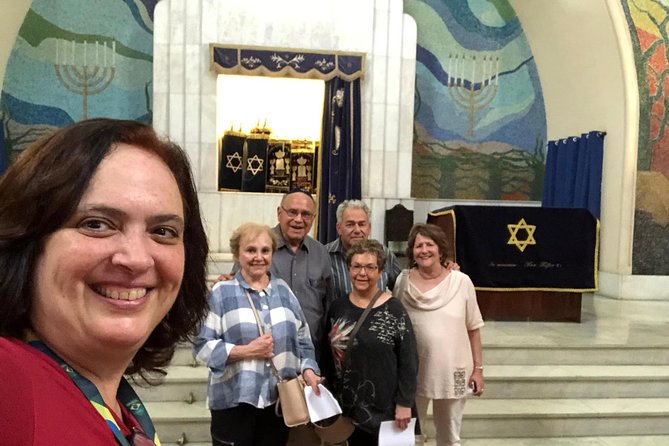
- Small group, personal attention: Up to 14 people, led by locals tied to the community
- Pickup that saves time: Selected hotels plus port pickup, with drop-off back afterward
- Synagogues across denominations: You can see different styles of Jewish life in Rio
- Anne Frank legacy in public education: A named school ties Jewish values to Brazilian school culture
- A serious stop for memory: The Jewish Museum includes research and media collections
- Big monument, limited access: The Great Temple’s opening depends on season and events
Why A Jewish History Tour on Rio’s Beach Neighborhoods Works
Rio can be loud, bright, and totally physical. What I like about this tour is that it uses that setting to make Jewish history feel real, not sealed behind ropes.
You’ll spend a good chunk of the morning near the water in places like Leblon, Ipanema, and Botafogo. That matters because many Rio stories are tied to where people lived and gathered. When you’re standing near synagogues and community centers, you start to understand why those institutions were placed where they were, right inside everyday neighborhoods.
Also, the tour has a practical rhythm. You’re not just walking into one place, you’re moving through different “chapters” of community life, faith spaces, cultural centers, schools, and museums, without needing to figure it all out on your own.
If you like history that comes with context and photos, this is a strong fit. If you want an all-day, museum-heavy itinerary, it may feel short, because each stop is intentionally time-boxed.
More days in Rio:
- Rio de Janeiro: 6-Stop Highlights of Rio with Lunch
★ 4.4 · 5,157 reviews - Christ the Redeemer Entry Ticket by Corcovado Train
★ 4.4 · 4,476 reviews - Rio’s City Tour – Tickets for Christ, Sugar Loaf & Lunch included
★ 5.0 · 4,389 reviews
Price and What You Really Get for $95
At $95 per person for about 3 hours, you’re paying for three things at once:
1) a local guide who can connect locations to community history,
2) transportation by car or van, including pickup and drop-off,
3) a structured route that reaches multiple Jewish sites in one morning.
Your main “budget” considerations are simple. Food and drinks aren’t included, and not every entry is free. The museum and the Great Temple have admission that is not included, while several of the synagogue and park stops are listed as free.
So the value math is usually this: if you’d otherwise pay for taxis plus a guide to explain what you’re seeing, the tour makes sense. If you’re planning to just grab quick photos from the street and skip deeper context, you might feel like it’s pricier than necessary.
The good news is that the stops are chosen to teach you more than you’d get by wandering independently.
The Pickup Plan: Start at Copacabana and Let the Van Handle the City
The tour starts at 9:00 am with pickup and drop-off arranged through the operator. The meeting point is the Hilton Rio de Janeiro Copacabana (Av. Atlântica, 1020). Hotel pickup is offered for selected hotels, and there’s also port pickup and drop-off, which is useful if you’re doing a cruise day.
You’ll travel in a vehicle, car or van, and the group size stays small, which keeps things from turning into a cattle-call. In the experiences people describe, the ride is part of the comfort package, and you get time to pause for photos between stops.
One practical tip: if you’re anxious about exact pickup timing, confirm your pickup details when you book and again the closer you get. A good day is all about avoiding last-minute confusion.
Stop 1 in Leblon: Beit Lubavitch and Midrash Cultural Center
Your first major area is Praia do Leblon, one of Rio’s more upscale neighborhoods. The vibe here is a mix of expensive real estate and a “this is where people actually live” calm that feels different from the most chaotic parts of central Rio.
This stop is short, about 20 minutes, and includes the Beit Lubavitch Synagogue area plus the Midrash Cultural Center. Admission here is listed as free.
Why this matters: Leblon is not just a fancy backdrop. It gives you a sense of how Jewish institutions fit into modern Rio life, including community education and religious study. When you see a synagogue tied to a cultural center, you start to understand how practice and learning reinforce each other.
Drawback: because the visit is brief, you’ll get more orientation and highlights than a slow, detailed walk-through. If you want to linger, plan to follow up with your own extra time after the tour, or come back later in your trip.
Another way to spend a day in Rio de Janeiro:
- Full Day: Christ Redeemer, Sugarloaf, City Tour & Barbecue Lunch
★ 4.5 · 3,142 reviews - Rio de Janeiro: Rocinha Favela Walking Tour with Local Guide
★ 4.8 · 3,052 reviews - Rio’s Full Day: Selarón Steps, Christ & Sugarloaf – Tickets & Lunch Included
★ 5.0 · 2,724 reviews - Rio: Christ the Redeemer, Sugarloaf, Selaron & BBQ Lunch
★ 4.5 · 2,428 reviews
Ipanema Beach Area and the CIB Jewish Community Center
After Leblon, you move along the shoreline toward Ipanema, the strip many people immediately associate with Rio. The tour uses this geography for a reason. Synagogues and community institutions are not just “things you visit,” they’re “things you live near.”
You’ll see the CIB Jewish Community Center in this beachfront neighborhood context. The tour ties this stop to community life, and the name comes up again in how people describe the experience, especially the sense of space for everyday Jewish connection.
Why I like this part of the morning: it shows Judaism as active civic life. This isn’t just worship. It’s community building in a city where people go outside, work, and socialize in public.
If you’re the type who loves an iconic view but also wants the story behind it, this stop hits that sweet spot.
Botafogo Beach: A Named Anne Frank School and the ARI Synagogue
Next up is Botafogo, where the payoff is a postcard view of Rio. You get that classic “I can see the hills and the bay” feeling, and it helps you visualize where Jewish life developed in different parts of the city.
Here’s where two specific, meaningful pieces come in.
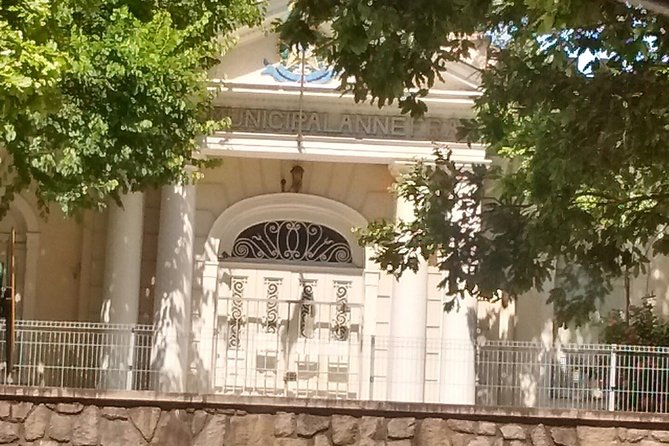
First, you’ll visit a municipal school named after Anne Frank. This school is part of a broader network of schools connected to Anne Frank, using her values to promote peace, respect for diversity, and human rights across Brazilian public education.
Second, you’ll go to the A.R.I. Synagogue, connected to Progressive Judaism. It was founded in 1942 and is affiliated with the World Union for Progressive Judaism (WUPJ). The Jewish Religious Association of Rio de Janeiro raised the Rabbi Henry Lemle Community Center, which opened in 1997 and includes classrooms, a library, an auditorium, administrative offices, and a synagogue called Henrique Peres (with capacity up to 150). The center also connects to a Center for Reference and Research on the Holocaust Zinner Family.
Admission for this whole Botafogo beach and synagogue area segment is listed as free, and the stop is about 30 minutes.
Why this section hits hard (in a good way): it’s not only faith, it’s education and memory, and you can see the infrastructure behind those ideals. If you care about how communities carry values forward into institutions, this is one of the tour’s strongest chapters.
Possible drawback: Progressive and Orthodox or traditional structures can feel different on the inside, and every community’s atmosphere is its own world. If you prefer one single style of Judaism, you may still appreciate the contrast, but it may not match your expectations perfectly.
Botafogo Bay From Itzhak Rabin Park: A View With Meaning
Then the tour moves to Botafogo Bay and a viewpoint at Itzhak Rabin Park, located on Morro de Pasmado. You’ll get about 20 minutes here, with free entry.
The park is named after Israel’s former prime minister Itzhak Rabin, inaugurated by Leah Rabin, his wife. In the center is a bust of Rabin, and the park represents the relationship between the Brazilian state and Israel.
Why I like adding a viewpoint to a heritage tour: it turns your brain from “reading names” into “seeing space.” You understand the city as a physical place again. You’re not just collecting facts, you’re tying the facts to where people could actually gather and see the horizon.
Practical consideration: viewpoint access can depend on the day’s conditions, but since it’s described as accessible, it should generally work well for most visitors. Still, wear comfortable shoes, because any viewpoint in Rio can mean stairs or uneven ground.
Museu Judaico do Rio: Small in Space, Serious in Resources

The highlight for many people on this tour is Museu Judaico do Rio de Janeiro, where you’ll spend about 30 minutes. Admission is not included, and this is one of the places where you should expect the day’s biggest “ticket cost” decision.
The museum was founded in 1977 after a donation of a menorah. It’s described as a dynamic cultural center built to preserve memory and promote Jewish culture through exhibits and ongoing activities.
What makes this museum different from the typical quick stop is that it’s more than display cases. It runs regular exhibits about the history of the Jewish community in Rio and Jewish traditions across religious, cultural, and historical angles. It also supports academic research related to migration and organizes annual student competitions.
There’s also a Study Center that conducts research on migration and the Holocaust, plus a video archive with over a thousand films and a library.
Why this is worth your time: it gives you a place where you can keep exploring after your morning tour ends. Even if the museum experience on a given day is more compact than you expected, the emphasis on research collections is the point.
Possible drawback: some visitors describe it as smaller than a community of that size might suggest. If you go in expecting a huge multi-room museum, you might feel slightly underwhelmed by the physical footprint.
Grande Templo Israelita do Rio de Janeiro: Big Architecture, Limited Access
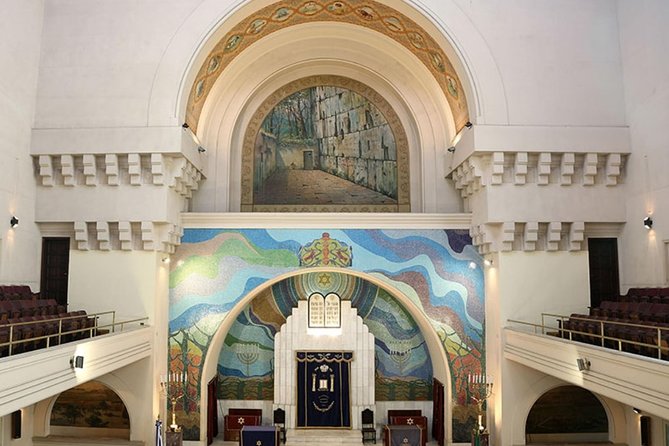
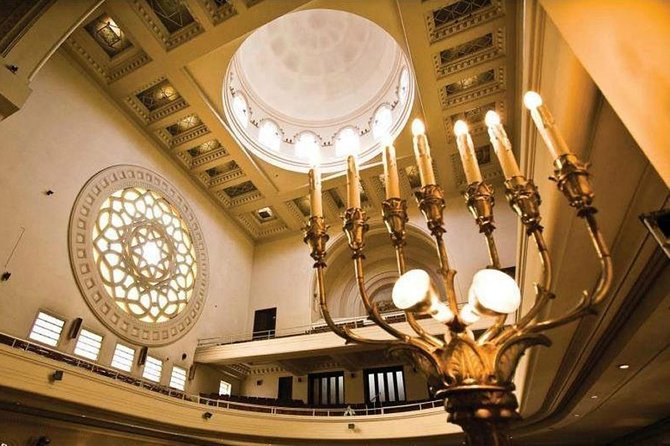
The last stop is the Grande Templo Israelita do Rio de Janeiro, the Jewish Community of Rio de Janeiro’s largest monument. This is Ashkenazi in type.
It’s an important architectural and historical landmark tied to the early Jewish presence in Rio. The building uses an eclectic style with elements of Hebrew origin and classical architecture. The design was elaborated in 1919 by architect Vodred, and the temple opened in 1932. Later, the mosaics were created in 1976 by artist Humberto Cozzo.
Then reality hit. The temple collapsed in 1987. Today, it’s open only during High Holidays, special events, and tourist visits.
Admission is not included, and the visit is about 30 minutes.
Why I still recommend this stop: even with limited access, you get a sense of scale and a lesson in how community life changes over time. It also helps you contrast “today’s working institutions” with “the monuments that once signaled community size and permanence.”
Possible drawback: because access is restricted, you may not be able to see everything you hope to see. If you’re very temple-focused, keep your expectations flexible and let your guide explain what you can access that day.
How to Best Use This Morning in Your Rio Trip
This tour is ideal for a first-time visitor who wants a fast, human introduction to Jewish Rio while still seeing the city’s most famous zones.
Here’s how you can make it click:
- Wear sunscreen and plan for coastal weather shifts. You’ll be moving between neighborhoods and near the beach.
- If you’re a photo person, bring a strap or a small daypack. You’ll be taking pictures across several sites.
- After the tour, choose one follow-up: either spend extra time around the CIB area or revisit the museum or a synagogue that you found most meaningful.
- If you’re planning other city highlights, treat this as your “heritage plus orientation” block. The viewpoints and beachfront geography help you understand where other sights sit in Rio.
In the experiences people share, the guiding style is a major part of the value. Names like Ephraim and Leonardo appear often, along with Gisela as a pickup or companion in some cases. The consistent theme is warm hospitality plus real explanations that connect faith, community building, and modern Rio.
Should You Book This Jewish Tour in Rio?
Book it if you want a guided, efficient introduction to Jewish history in Rio that also shows you the neighborhoods where people actually gather. At $95, the combination of small-group pace, pickup convenience, and multiple faith and culture stops is usually a fair trade for a 3 hour window.
Skip it or temper expectations if you need a long museum day or you’re hoping every site will be fully accessible indoors. Some places are free while others require admission, and a couple of the bigger landmarks can have restricted access depending on timing.
If you want history with context, plus the bonus of real Rio scenery, this tour is a strong way to spend your morning.
FAQ
How long is the Jewish tour in Rio de Janeiro?
The tour lasts about 3 hours.
Where does the tour start, and what time does it begin?
It starts at Hilton Rio de Janeiro Copacabana at 9:00 am.
Is hotel pickup and drop-off included?
Yes. Hotel pickup and drop-off are included for selected hotels, and there is also port pickup and drop-off.
How big is the group?
The group size has a maximum of 14 travelers.
What’s included in the price?
Included are a professional guide, transport by car or van, and hotel and/or port pickup and drop-off.
Are food and drinks included?
No. Food and drinks are not included.
Do I need to pay admission fees for all stops?
Not all of them. Some stops list free admission, but the Jewish Museum and the Great Temple list admission as not included.
Can children join the tour?
Children must be accompanied by an adult, and most travelers can participate.
Is the Great Temple always open?
No. It is currently open only during High Holidays, special events, and tourist visits.
Can I get a refund if I cancel?
Yes, free cancellation is available up to 24 hours in advance for a full refund.
Newest Rio de Janeiro reviews
- Maracanã Matchday Tour – Ticket + Guide + Transfer★ 5.0 · 14 reviews
- Angra & Ilha Grande From Rio: Boat Tour With Barbecue and Drinks★ 5.0 · 14 reviews
- Private Tour with Churrasco in Vela Catamaran – Velas do Rio★ 5.0 · 14 reviews
- Half-Day Private Tour:Rio de Janeiro Highlights by Bernard Moraes★ 5.0 · 14 reviews
- Tijuca Forest Adventure★ 4.5 · 14 reviews
- Rio de Janeiro: Join a Fluminense game at Maracanã with locals★ 5.0 · 15 reviews
- Rio de Janeiro: Join a Botafogo soccer game with transport★ 5.0 · 15 reviews
- Christ the Redeemer, Selaron Steps and Santa Teresa Half-day Tour★ 4.5 · 15 reviews
Rio de Janeiro Tours, compared.

Christ the Redeemer Entry Ticket by Corcovado Train
Read our review →
Rio’s City Tour – Tickets for Christ, Sugar Loaf & Lunch included
Read our review →
Full Day: Christ Redeemer, Sugarloaf, City Tour & Barbecue Lunch
Read our review →

Rio’s Full Day: Selarón Steps, Christ & Sugarloaf – Tickets & Lunch Included
Read our review →
Christ the Redeemer, Sugarloaf, Selaron & BBQ Lunch
Read our review →