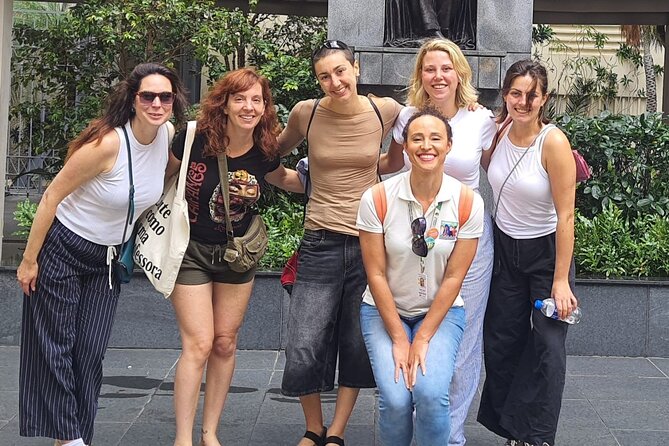
Reviewed · RIO DE JANEIRO TOURS
Explore the Women Behind the Monuments
Women’s history is often treated like a side topic. This tour flips the script in the middle of Rio’s Centro, using famous addresses as the starting point for stories you do not usually hear. You get a walk that feels structured, but never stiff, because the focus is on the people behind the stone, not just the stone itself.
I really like how the route is built around clear, specific stops, so you can connect the ideas to what you are actually seeing on the sidewalk. I also like that the guide, Jessica, stays energetic and approachable, with explanations that make you want to ask questions and keep going.
One thing to consider: this is an external visit tour. You will see buildings and monuments from the outside, but internal access is not part of the experience.
Key highlights you will feel right away

- Six focused stops tied to different women, from literature to public art to civic spaces
- Exterior-only viewing that keeps the pace moving through Rio’s Centro
- A small group size, capped at 20 people, which helps you stay part of the conversation
- Free admission tickets listed for each stop, so you are not juggling entry costs mid-walk
- A guide who adapts to your interests, with time for questions along the way
- A route that covers multiple time periods, ending with colonial, imperial, and republican landmarks
Why the Women Behind the Monuments route clicks in Rio’s Centro
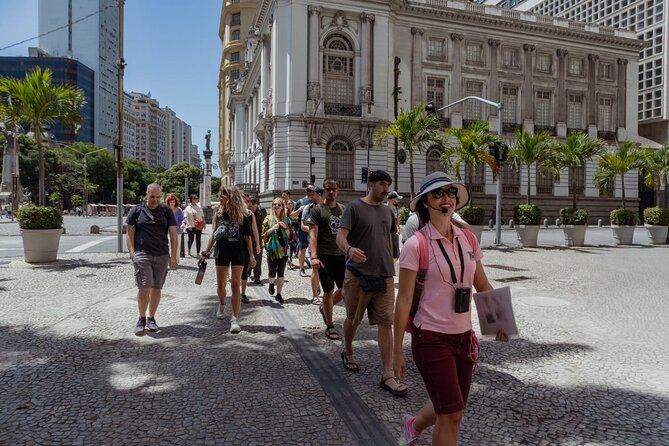
Rio’s Centro is where you go to get your bearings fast, but it can also feel like a blur of buildings and names. This walk gives you a thread to hold onto. Instead of only learning dates or architectural styles, you follow women’s stories through the same streets you would walk anyway.
That matters because Rio is a city of layers. You see colonial-era traces, later imperial and republican signals, and then modern life pressing in around it all. When the stories are anchored to real addresses, you start noticing details you would normally miss, like how public monuments signal power, how institutions shape culture, and how women’s contributions have often been written into the margins.
I like that the pace is built for attention. It is not a museum sprint. It is a steady walk where each stop adds context and then hands you something to watch for at the next one.
More days in Rio:
- Rio de Janeiro: 6-Stop Highlights of Rio with Lunch
★ 4.4 · 5,157 reviews - Christ the Redeemer Entry Ticket by Corcovado Train
★ 4.4 · 4,476 reviews - Rio’s City Tour – Tickets for Christ, Sugar Loaf & Lunch included
★ 5.0 · 4,389 reviews
Your guide, the small group vibe, and why it feels personal
The experience runs with a maximum of 20 people. That size is not just a comfort detail. It helps the guide keep explanations clear and answer questions without turning the whole thing into a lecture with no back-and-forth.
In the reviews you can feel the same theme over and over: Jessica is passionate about the topic, and her delivery is warm and practical. When the weather turns bad, the tone still stays upbeat. That is not a small thing in Rio, where rain can change plans quickly.
If you like guided walks where you can interact, this is a good match. If you prefer total quiet and passive listening, you might find the question-friendly style less your speed, but the focus stays on the route and the stories.
Price and value: what you get for about 29 dollars
At $29.57 per person for roughly 2 to 2.5 hours, this is priced like a focused walking tour. The key value is not just that you pay for a guide. You are paying for interpretation, a structured route, and context that turns recognizable landmarks into a women-centered narrative.
Also, each stop lists admission tickets as free. That does not mean you are going inside every building, because internal visits are not included. Instead, think of the “ticket free” part as clearing the way for an easier schedule and fewer add-on costs while you are moving between sites.
Given the number of stops and the fact that most of the experience is outdoors, it is a good use of a morning slot. You get a concentrated overview of Rio’s Centro through stories you likely will not find in a standard sightseeing walk.
Walk it step by step: the monuments and the women behind them
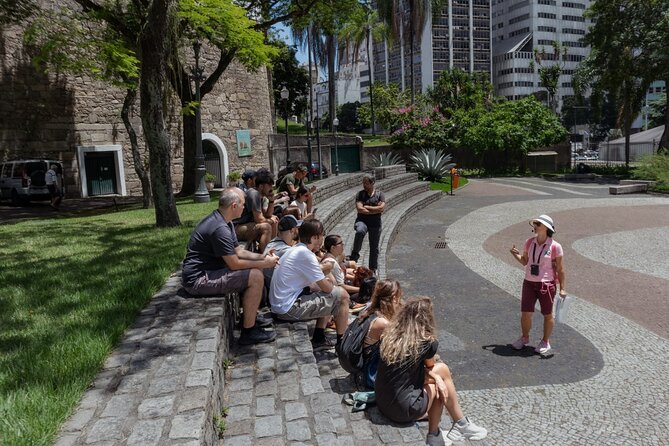
Another way to spend a day in Rio de Janeiro:
- Full Day: Christ Redeemer, Sugarloaf, City Tour & Barbecue Lunch
★ 4.5 · 3,142 reviews - Rio de Janeiro: Rocinha Favela Walking Tour with Local Guide
★ 4.8 · 3,052 reviews - Rio’s Full Day: Selarón Steps, Christ & Sugarloaf – Tickets & Lunch Included
★ 5.0 · 2,724 reviews - Rio: Christ the Redeemer, Sugarloaf, Selaron & BBQ Lunch
★ 4.5 · 2,428 reviews
Academia Brasileira De Letras, a first-woman story hidden in plain sight
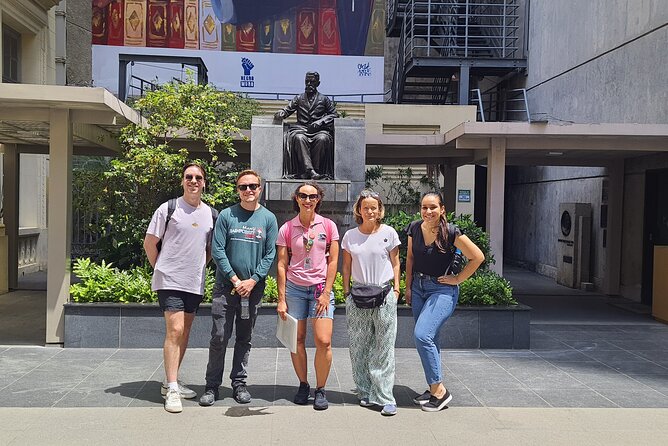
You start at the Academia Brasileira de Letras, the headquarters associated with Brazil’s Academy of Letters. Even if you are not a literature person, this is a strong opening because the site sets the theme: institutions that shape culture also shape whose stories become official.
The tour frames this location as the place where the story of the first woman is tied to the academy’s world. That approach is useful for you because it trains your eyes. You start looking at how cultural prestige gets built, and how women’s presence can be acknowledged, ignored, or rewritten depending on who controls the narrative.
What you will enjoy here is the contrast between what the building looks like from outside and what the story adds. It is a reminder that Rio’s “official faces” often have back doors and footnotes.
Potential drawback: since internal access is not included, your understanding of the academy is shaped by what you can see externally and what the guide explains. If you want to tour rooms or collections, plan a separate museum stop later.
Monumento a Floriano Peixoto, three women connected to a presidential symbol
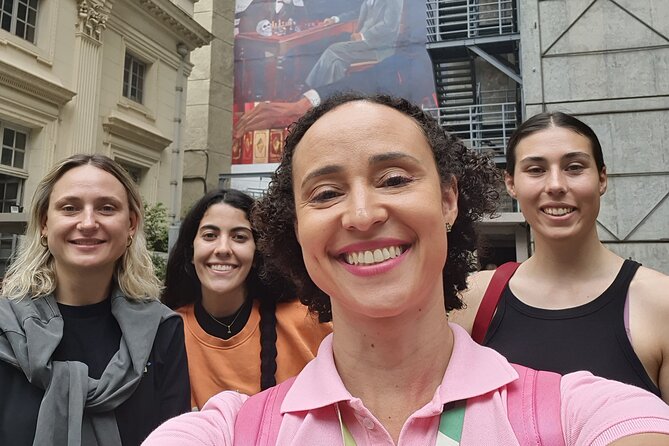
Next comes Monumento a Floriano Peixoto, tied to Brazil’s second president. A monument like this usually gets treated as a statue and a fact check about history. Here, the monument becomes a prompt for stories of three different women.
This stop works especially well if you like seeing how public art communicates power. A political figure is one part of the message. The tour pushes you to notice the other part: the way society organizes itself around gender roles, and how women’s lives intersect with leadership, conflict, and public memory.
You will probably find yourself looking at the monument with different questions. Not just who it represents, but what it leaves out, and why some stories get staged in public while others remain hard to locate.
A consideration: monuments can be quick photo moments. The value here is the narrative, so stay close to the guide’s pacing. If you drift off to take pictures nonstop, you will lose some of the connective tissue.
Palacio Pedro Ernesto and the Municipal Chamber, a tragic woman’s story in civic space
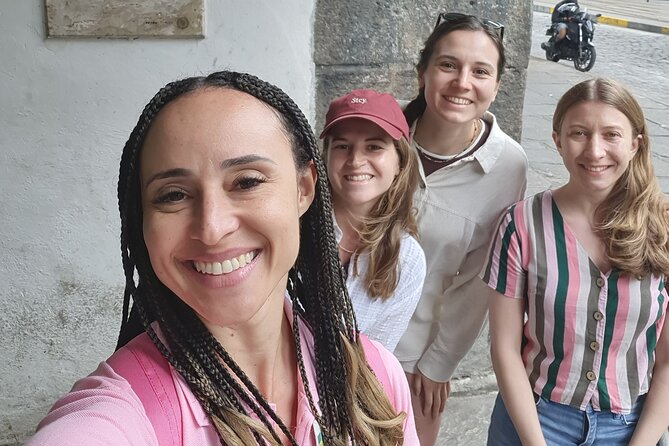
Then you reach Palacio Pedro Ernesto, the Câmara Municipal do Rio de Janeiro area. Civic buildings can feel intimidating, even from the sidewalk. The tour turns that feeling into meaning by focusing on a tragic story of a woman tied to the location.
This is one of the stops that changes the emotional temperature of the walk. It is not all art and architecture. Rio’s civic life has always been connected to real people, real decisions, and real consequences. When the guide connects a woman’s story to this kind of institutional setting, it helps you understand how systems can harm, and how recognition sometimes comes too late.
What I like about this segment for your experience is that it broadens the type of women’s stories you see on the tour. It does not keep everything in the realm of artists and intellectuals. It includes struggle and consequence.
Practical note: because this is an outside visit, you will not be able to verify details inside documents or displays. So lean on the guide’s narration to fill in the context.
Theatro Municipal do Rio de Janeiro, French eclectic elegance with three artistic women
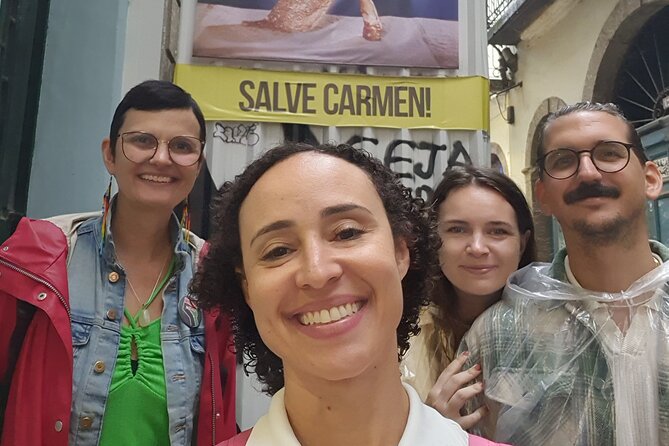
One of the most photogenic parts of the walk is Theatro Municipal do Rio de Janeiro, described as the epitome of French eclectic style in the city. You see the building’s theatrical presence immediately, and the tour uses that stage-like setting to tell stories of three artistic women.
This is where you get a double dose: architecture plus creative influence. Theatre buildings are already about performance, so connecting them to women in the arts feels natural. You are not just learning names. You are learning how art spaces can amplify certain voices and exclude others.
If you enjoy the feeling of standing outside a place that once held full rooms, you will like this stop. Even without going inside, the exterior makes the point that culture has a physical home, and that women’s creativity has historically fought for access, attention, and credit.
Possible drawback: if you want the full sound and atmosphere of the theatre, exterior-only means you will not get that. But for many people, it becomes a helpful prelude for planning a night out at a performance later.
Largo da Carioca, Rio’s first water fountain and a group of women’s story
Next is Largo da Carioca, tied to the first water fountain in Rio. Water infrastructure might sound like an odd starting point for a women’s history tour, but it actually fits perfectly.
Water is where everyday life begins. Fountains and public water points shape routines, neighborhoods, and social connections. The tour connects that space to a group of women, so you can see how community roles and gendered labor show up even in a basic need like drinking water.
This stop is a good reset after the theatre. It returns you to the everyday. You can start noticing how public spaces become meeting points, how power is managed in practical ways, and how women often move through the city’s systems in roles that do not always get recorded.
Tip for this part: slow down for photos, but keep listening. The “first water fountain” framing helps you see the plaza as more than a pretty corner.
Praça Quinze de Novembro, where colonial, imperial, and republican stories meet
Your final stop is Praça Quinze de Novembro, a square that represents three historic periods of Brazil: colonial, imperial, and republican. The tour closes here with the last three women, tying the city’s timeline to the people who lived through it.
Ending in a multi-era space is smart. It makes you look at the city like a timeline you can walk through, instead of separate “tourist stops” that never connect. The guide’s women-centered lens gives the periods emotional weight, not just dates.
What you will like most about the wrap-up is how it ties earlier themes together. You started with literature and institutions, moved through political symbolism, civic life, arts, and public essentials. Then you land at a square designed to show different eras. The stories of women across those stages make the periods feel connected.
Practical consideration: the final square can be busy in general. Stay near your group and follow the guide’s pacing so you do not miss the closing thread.
Timing, walking comfort, and what to bring
This is a morning tour that starts at 10:00 am and runs about 2 to 2 hours 30 minutes. You are walking in the open air, and in Rio, weather can be a factor. The good news is the tour keeps a steady rhythm even when conditions are rough, based on the way the guide handles the day.
Bring comfortable shoes. Add a light rain layer if the forecast looks wet. And if you like interaction, come ready with at least one question. Jessica’s approach is open to them, which can make the experience feel tailored instead of generic.
Who should book this Women Behind the Monuments tour
This tour suits you if you:
- want Rio’s Centro with a fresh lens, not the same top-ten landmarks
- enjoy architecture and public spaces, but want the human story behind them
- like guided walks where the guide keeps the pace lively and explanations clear
- want a small group experience with room for questions
It may not be the best fit if you:
- want interior access to the buildings and collections
- hate walking outdoors for a couple of hours
- prefer strictly factual, date-heavy tours with minimal discussion
Should you book Women Behind the Monuments in Rio?
If you want a guided way to understand Rio’s Centro that goes beyond surface sightseeing, this is an easy yes. For about $29.57, you get a structured route with multiple stops, a women-centered storyline, and a guide described as energetic, prepared, and genuinely invested in the subject.
You should book it if you like thoughtful walking tours that make you look twice at monuments and institutional buildings. You might skip it if your priority is going inside famous sites, because this experience is exterior only.
If you are deciding between this and another generic city walk, this one gives you a clearer narrative payoff. You leave with names, themes, and a stronger sense of how gender, power, and culture intersect right where you are standing.
FAQ
How long is the Women Behind the Monuments walking tour?
The tour runs about 2 hours to 2 hours 30 minutes.
What time does the tour start in Rio de Janeiro?
The start time is 10:00 am.
Where is the meeting point?
Meet at Women in Rio Walking Tour, Av. Rio Branco – Centro, Rio de Janeiro – RJ, 20040-090, Brazil.
What is the end point of the tour?
The tour ends at Praça Quinze de Novembro – Centro, Rio de Janeiro – RJ, 20010, Brazil.
Is the tour price $29.57 per person?
Yes, the price is $29.57 per person.
Are internal visits included?
No. The tour is an external visit only, and internal visits are not included.
How big is the group?
The tour has a maximum of 20 travelers.
Is service animals allowed?
Yes, service animals are allowed.
Can I cancel for a full refund?
Free cancellation is available. You can cancel up to 24 hours in advance for a full refund.
Newest Rio de Janeiro reviews
- Maracanã Matchday Tour – Ticket + Guide + Transfer★ 5.0 · 14 reviews
- Angra & Ilha Grande From Rio: Boat Tour With Barbecue and Drinks★ 5.0 · 14 reviews
- Private Tour with Churrasco in Vela Catamaran – Velas do Rio★ 5.0 · 14 reviews
- Half-Day Private Tour:Rio de Janeiro Highlights by Bernard Moraes★ 5.0 · 14 reviews
- Tijuca Forest Adventure★ 4.5 · 14 reviews
- Rio de Janeiro: Join a Fluminense game at Maracanã with locals★ 5.0 · 15 reviews
- Rio de Janeiro: Join a Botafogo soccer game with transport★ 5.0 · 15 reviews
- Christ the Redeemer, Selaron Steps and Santa Teresa Half-day Tour★ 4.5 · 15 reviews
Rio de Janeiro Tours, compared.

Christ the Redeemer Entry Ticket by Corcovado Train
Read our review →
Rio’s City Tour – Tickets for Christ, Sugar Loaf & Lunch included
Read our review →
Full Day: Christ Redeemer, Sugarloaf, City Tour & Barbecue Lunch
Read our review →

Rio’s Full Day: Selarón Steps, Christ & Sugarloaf – Tickets & Lunch Included
Read our review →
Christ the Redeemer, Sugarloaf, Selaron & BBQ Lunch
Read our review →