
Reviewed · AMAZON RAINFOREST
Amazon River Boat Adventure from Manaus
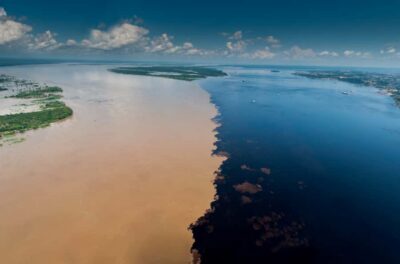
The Amazon around Manaus feels huge on paper, but what makes this trip special is how it strings together the river’s big moments with smaller, up-close nature scenes. You’ll start at the Meeting of the Waters, where the Rio Negro and Solimões flow together without mixing right away, then keep moving into flooded forest and archipelago country.
I especially love two things: the chance for a canoe ride through igapós (that flooded forest that looks like it belongs in a nature documentary), and the way the day-to-day activities actually feel varied instead of one long boat loop. Add a dolphin encounter and it’s the kind of trip that keeps paying off each time you think you’ve seen the highlight.
One drawback to consider is the early starts and active days. You’ll wake before sunrise on Day 2 and Day 3, and the trip also includes walks and time on small boats, so if you want a fully relaxed vacation, this may feel busy rather than calm.
Key things to know before you go
- Small group size (max 6) means more attention from your guide and less waiting around.
- Choice of morning or afternoon departure gives you some control over your schedule in Manaus.
- Multiple wildlife-style stops are built in, from flooded-forest animals to igapós canoe time.
- Dolphins via Tucuxi interaction (optional) is scheduled as a distinct payoff near the end.
- Jungle camping day on Day 2 turns this into more than sightseeing, with campfire and an improvised barbecue dinner.
- Good value for what’s included: fuel, bottled water, guide, hotel pickup, and meals are part of the package.
Why the Amazon around Manaus starts at the Meeting of the Waters
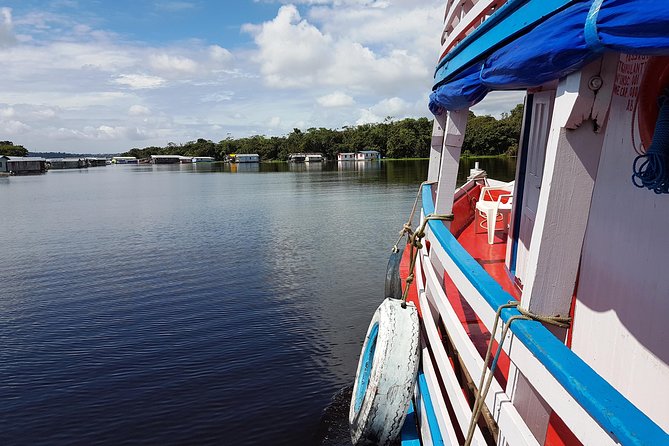
Manaus is often described as the gateway to the Amazon, but this itinerary treats it less like a gateway and more like a launch pad. The day begins at the Meeting of the Waters, where two rivers with different colors and speeds meet. It’s not just a photo stop. You get the chance to understand the Amazon as a living system, where even water changes behavior at the confluence.
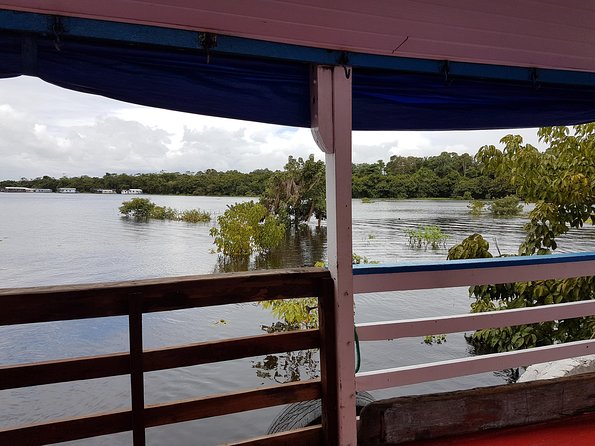
From there, the trip keeps you moving into the flooded-season world. That matters because the Amazon is not one environment. During the flood period, it rearranges itself, and that’s exactly what you’ll see when you visit areas like January Lake with floating houses on inundated land.
You’re not just chasing wildlife sightings. You’re learning how the river shapes what’s possible, from canoes cutting through flooded forest to animals using igapós for shelter and food.
More Boat Tours in Manaus
- Manaus to Belem 5-Day Local Boat Trip
★ 3.4 · 46 reviews - From Manaus: 3 or 4-Day Rio Negro & Anavilhanas River Cruise
★ 4.2 · 32 reviews - Full Day Amazon River Experience with Night Boat Tour
★ 5.0 · 28 reviews
Day 1: Meeting of the Waters, January Lake floating homes, and igapós canoe time
Day 1 is where the Amazon setting locks in. First stop is the Meeting of the Waters, watching the Rio Negro and Solimões form what people call the Amazon River. Expect a “wow” moment that’s easy to understand: the two waters meet, and you can see the difference before everything evens out later downstream.
Next comes January Lake, which is famous for flood-season living. You’ll see floating houses in an inundated area because the river’s flood cycle changes the landscape. This part is valuable for two reasons. One, it gives you context for how local people adapt to the river. Two, it makes the rest of the trip make sense, because you’re seeing the flood world first rather than hearing about it later.
Then there’s a fair of local crafts, a small but meaningful break that connects the scenery to everyday life. After that, you ride canoes into the lake Igapós. This is where the flooded forest becomes your foreground. The plan includes time to look for wildlife such as monkeys, sloths, anacondas, birds, and water lilies. Even if you don’t spot every animal (that’s normal in the wild), the overall experience is about being in the right habitat and learning how to scan it.
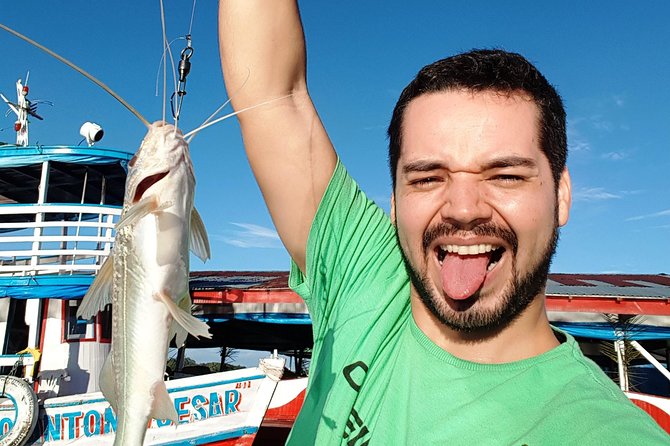
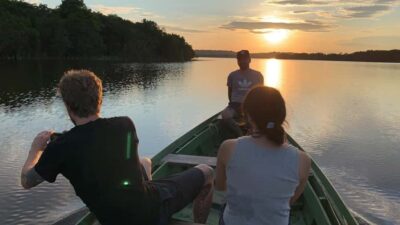
Day 1 also includes fishing for piranhas and other species. If you like hands-on activities, this is one of the “do something” moments rather than just watching. Later, you return to the boat for sunset and to get ready for the night tour. The data doesn’t spell out exactly what the night tour includes, but it’s clearly part of the Day 1 experience, so I’d treat it as more Amazon time, not a simple evening transfer.
Practical tip: if you’re the type who gets motion sick, bring what works for you. You’ll be on boats and in canoes, and day one stacks several water-based segments.
Day 2: Rubber tree history, optional ritual dancing, and camp in the jungle
Day 2 starts early, with a 5:30 AM wake-up to catch birds and local flora. This is the Amazon in morning mode: calmer air, active wildlife, and the natural world feeling less staged. After breakfast, you head to Paraiso village to learn about rubber milk extracted from the rubber tree, including a history and a demonstration tied to how it’s made and sold.
This is one of the trip’s smartest inclusions. Rubber history is not an abstract topic. It connects the Amazon to global demand, local labor, and the way natural resources changed lives across centuries. You’ll get more than a quick stop. You’ll see the process as a demonstration, which helps the story stick.
After that, you stop at a beach to swim before lunch. It’s a nice break from constant boat time, and it’s also a reminder that the river system isn’t just “deep forest.” People live, rest, and work around it too.
Then you visit an indigenous community for interaction, including a ritual and folk dancing option. The dancing part is marked optional, which is a good sign for families or anyone who wants control over how involved they are. This section is where respect matters. If something feels too formal, or you’re unsure how to participate, you can always watch and learn at your own pace.
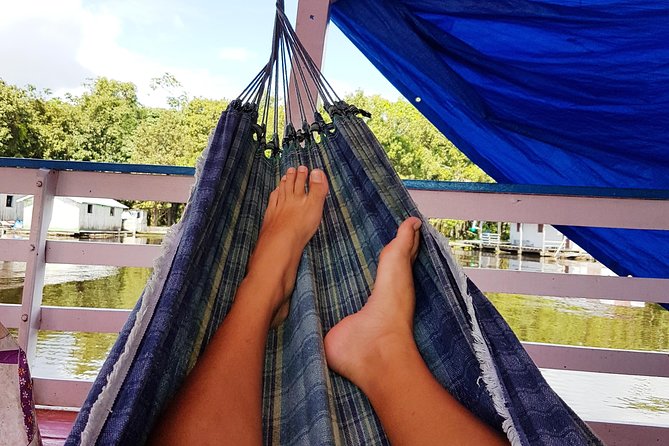
The second half of Day 2 turns this into a true Amazon overnight experience. You continue sailing to a property where you camp in the jungle. The sequence is straightforward: first contact with the forest, then a walk on a trail. After that you gather for campfire and prepare an improvised barbecue dinner.
This is where the trip wins its “worth it” reputation. The Amazon is not just a landscape to look at. It’s a place that changes your daily rhythm. With camping and a trail walk built in, you’re not only seeing the forest, you’re also living one evening inside the flood-zone reality.
What to consider: camping in humid weather can be uncomfortable even when it’s exciting. Pack for damp conditions and bring anything you need for bug control and staying warm if evenings cool off.
Day 3: Anavilhanas igapós by canoe and the tucuxi dolphin interaction
Day 3 is another early start, with a 6:00 AM wake-up and a jungle trail returning to the boat for breakfast. It’s a good way to catch morning activity before the sun makes everything feel harder. Then you explore the archipelago of Anavilhanas and its igapós by canoe.
Anavilhanas is the kind of place that makes you understand why the Amazon is so hard to conquer. It’s maze-like, made of river islands and flooded forest channels. The canoe portion is one of the best ways to get close without rushing past everything from a big boat deck.
Next, you navigate crossing the Rio Negro to the point where you have the tucuxi dolphin interaction (optional). This is a big moment on the itinerary because it’s separate from the general wildlife searching. If dolphins are your must-see, plan to take this stop seriously and treat it as your final “big payoff.”
You return to Manaus at around 18:00. So Day 3 is not a slow drift. You get morning trail time, canoe exploration, the dolphin segment, then a full return day.
Practical tip for families: Day 3 can feel like a sprint because it’s early and it includes multiple water segments. If your kids have short attention spans, bring small activities for the boat ride times, and plan on using snack breaks as your reset.
More of the Amazon:
- From Manaus: One-Day Amazon Jungle Experience
★ 4.8 · 408 reviews - Manaus: Full-Day Tour on the Amazon River
★ 4.2 · 362 reviews - From Manaus: Presidente Figueiredo Waterfalls Daytrip
★ 4.3 · 149 reviews - 3 Days Amazon Jungle Adventure Tour
★ 4.0 · 145 reviews
Price and logistics: what $900 buys you in real-world terms
At $900 per person, this isn’t a cheap outing. But the package is built with a lot of the expensive parts folded in: hotel pickup and drop-off, a professional guide, all activities, bottled water, fuel surcharge, and meals (breakfasts, lunches, and two dinners). Alcohol isn’t included, but drinks are typically the one flexible cost on these trips.
Here’s how I’d judge the value: you’re paying for (1) multi-day organization, (2) access to multiple river habitats, (3) guide time, and (4) meals and overnight camping structure. If you tried to piece together a similar mix of Meeting of the Waters, igapós canoe time, jungle trail experiences, and tucuxi dolphin time on your own, the cost and friction would add up fast.
Also, the group size is small, with a maximum of 6 travelers. That’s a major quality factor. Fewer people means the guide can actually explain what you’re looking at, rather than spending the whole day herding a crowd.
Two details that help you plan: you can choose morning or afternoon departure, and the meeting start time is listed as 9:30 AM. That combination suggests the tour is flexible enough for different schedules, but you should still plan to be ready at the stated start time for your exact departure option.
Comfort, pace, and who this trip suits best
This is family friendly and designed for travelers who want active days without needing to be wilderness experts. The itinerary includes swimming, trail walks, canoe rides, and camping. It also notes a moderate physical fitness level.
So, who is it perfect for?
- Families with kids who are comfortable in small boats and can handle early mornings.
- Couples or small friend groups who want a guided Amazon experience with built-in variety.
- Anyone who prefers a structured plan but still wants real nature time.
Who might find it challenging?
- People who want a mostly seated, slow sightseeing day.
- Anyone with severe motion sickness or who struggles with humidity and bug exposure.
- Travelers who feel uneasy about any kind of wildlife or community interaction that includes photo opportunities. If that’s a concern, you’ll want to keep a respectful mindset and follow your guide’s direction on how to behave.
A recurring theme in the experience is that the guides explain things clearly and keep the day organized. In at least one instance, an English translator named Sofia was specifically praised for being kind and involved in explanations. Another guide mentioned by name is Lucio Torres, praised for making expectations clear around wildlife interactions. That points to a key strength you can rely on: guidance that helps you experience the Amazon rather than just pass through it.
What you’ll actually see: wildlife, flooded forests, and river culture
The itinerary sets you up for wildlife spotting in a few different ways:
- Canoes through igapós, where flooded forest plants and animals create a natural maze.
- Fishing for piranhas and other species, which changes the day from observation to participation.
- A jungle trail and camp setting, which increases your odds of noticing animals moving in the background.
- The tucuxi dolphin interaction segment, which is focused on one species rather than general wildlife searching.
On the culture side, you’ll see rubber tree history at Paraiso village, plus interaction with an indigenous community where ritual and folk dancing are optional. You also stop at a crafts fair. Together, these stops keep the trip from becoming only “nature tourism.” It’s Amazon life as well as Amazon scenery.
And yes, there’s always some unpredictability. The Amazon is the Amazon. But the structure is strong, and it repeatedly puts you where wildlife and river life are likely to show up.
How to prepare for Manaus heat, early wake-ups, and boat time
This kind of itinerary is easier if you show up ready for discomfort, not surprised by it. A few practical ideas based on the schedule and activities:
- Bring light, quick-drying clothes. You’ll likely feel sticky by mid-morning.
- Pack for water and humidity. You’ll have swimming time plus lots of time around moving water.
- Plan for early starts. Day 2 and Day 3 begin before sunrise.
- If you care about bug protection, bring what works for you. The trip includes jungle trail time and camping.
- Bring a small dry bag if you have one, so you can keep your phone and essentials safer during canoe segments.
- Sunglasses and sunscreen help, because you’re on open water in the day and around reflective water surfaces.
If you like photos, you’ll have plenty of chances. But don’t treat every moment like a camera mission. Let your eyes do some work too. In the igapós canoe portion, slow scanning matters.
Should you book this Amazon River boat adventure from Manaus?
If your goal is a 3-day Amazon trip that mixes big river icons with real flooded-forest experiences, this is a strong choice. The combination of Meeting of the Waters, igapós canoe time, fishing, a village history stop tied to rubber, indigenous interaction, jungle camping, and a tucuxi dolphin segment makes the itinerary feel like a full Amazon sampler without dragging into a long boat odyssey.
I’d especially recommend it if:
- You want a small-group experience (max 6) with a professional guide.
- You’re traveling with family and want something that’s active but structured.
- You care about value, because the price includes pickup, guide, activities, fuel surcharge, bottled water, and most meals.
I’d think twice if:
- You need a slow, restful vacation with late mornings.
- You dislike any animal or photo-related experiences and prefer highly controlled, conservation-first formats.
- You’re very sensitive to motion or humidity.
Bottom line: for most people, this works because it’s not only about seeing the Amazon. It’s about spending time in the Amazon’s different modes, from river confluences to flooded forest to an actual night in the jungle.
FAQ
What time does the tour start in Manaus?
The listed meeting start time is 9:30 AM. The exact flow of each day begins from there.
Is hotel pickup and drop-off included?
Yes. Hotel pickup and drop-off are included.
Does the tour include meals and water?
Yes. Bottled water is included, and meals are part of the package: breakfast (2), lunch (3), and dinner (2). Coffee and/or tea are also included.
Is the tucuxi dolphin interaction guaranteed?
The dolphin interaction is listed as optional, so it depends on conditions and your participation.
What’s included if I choose this tour?
Included items are: fuel surcharge, bottled water, all activities, professional guide, hotel pickup and drop-off, coffee and/or tea, and the listed meals. Alcoholic drinks are not included, but they can be purchased.
Can I cancel for free?
Yes, free cancellation is offered. You can cancel up to 24 hours in advance for a full refund.
Newest Manaus reviews
- Manaus City Sightseeing Tour★ 4.5 · 15 reviews
- Manaus City Sightseeing Tour★ 4.5 · 15 reviews
- Adventure: 4-hour hike in the Amazon rainforest★ 5.0 · 16 reviews
- Getting in to the Jungle 3D/2N-At Tapiri Rio Anavilhanas Lodge★ 5.0 · 16 reviews
- Walking Tours in Manaus★ 3.5 · 16 reviews
- Private transfer in Manaus – 24h★ 5.0 · 17 reviews
- Amazon Adventure Trip 4D/3N at Tapiri Anavilhanas Lodge★ 5.0 · 17 reviews
- Amazon Survival Experience★ 5.0 · 18 reviews
Amazon Rainforest, compared.
8-Hour Amazonas Jungle Treck & Anavilhanas Archipelago
Read our review →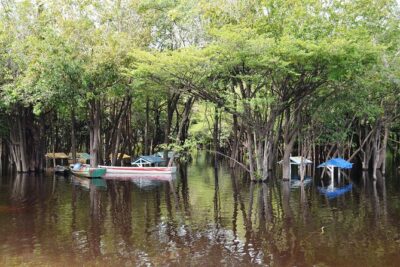
Browse the lists this tour appears in