
Reviewed · AMAZON RAINFOREST
Amazon Jungle Experience with Overnight
The Amazon around Manaus is interesting because it is not staged like a zoo, it is travel by boat, mud paths, and sunrise timing that can change minute by minute. I love how this tour stacks major highlights without wasting your time, especially the pink river dolphin swim experience. I also like the small-group feel, where guides such as Fabio and Dennis/Denis can actually keep an eye on the group and slow down when a moment matters.
One drawback to plan for up front: this is active travel in real rainforest conditions. During the rainy months, you should expect mosquitoes and muddy ground, plus a longer jungle hike than you might guess from the headline.
Key points before you go
- Small group (max 12 travelers) keeps the pace friendly and gives you more attention when you get in and out of boats.
- Pink river dolphin time includes a close-up viewing platform, and there is a chance to enter the water if conditions allow.
- Cachoeira do Castanho day 1 loop mixes jungle plants, boats, sunset on the Negro River, piranha fishing, and night spotting.
- Guided indigenous culture visit (CIPIA) includes rituals and gives you a chance to buy souvenirs with cash and small bills.
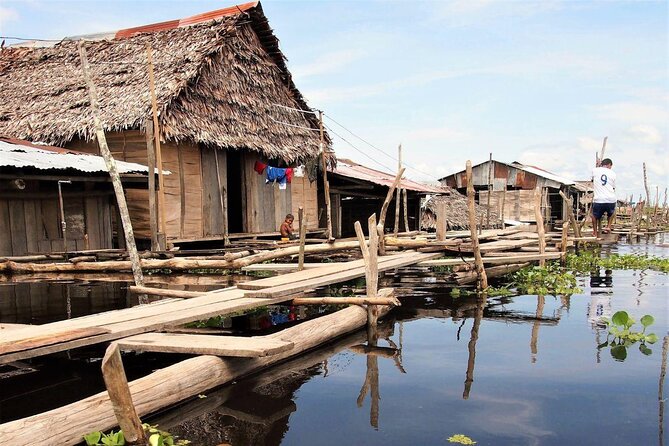
- Floating village on Lago do Catalão lets you see daily life on houses built on logs of trees, plus a pirarucu feeding stop.
- Meeting of Waters is short but dramatic, where the brown and black rivers run side by side without mixing for a while.
Why this Manaus Amazon overnight feels real
This is a 2-day, 1-night style outing, built around moving through the rainforest the way locals do, by canoe and motorized boat. You get a lot of variety for one trip: jungle trail time, river time, culture time, and then that special moment where you realize you are traveling inside a living system.
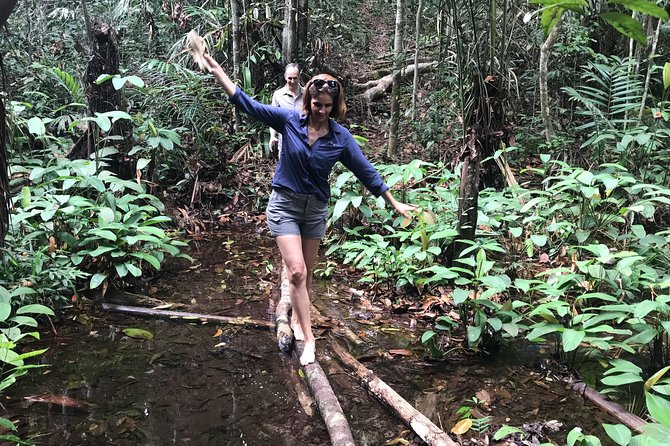
Day 1 is anchored around the Cachoeira do Castanho area. You hike through the forest while your guide points out medicinal plants and shows how people build shelters in this environment. Then you keep moving, first for river activities and then for sunset and night wildlife searching.
Day 2 shifts focus to communities and big river scenery. You start very early, visit an indigenous village, cruise toward parks and beaches, then end with the Meeting of Waters and a return to central Manaus around late afternoon.
More of the Amazon:
- From Manaus: One-Day Amazon Jungle Experience
★ 4.8 · 408 reviews - Manaus: Full-Day Tour on the Amazon River
★ 4.2 · 362 reviews - From Manaus: Presidente Figueiredo Waterfalls Daytrip
★ 4.3 · 149 reviews
Price and what $300 buys you (and what it does not)
At $300 per person, the value comes from the amount that is bundled. Your tour includes meals and accommodation, plus the key admission parts of the day. You also get guided transport by car, canoe, and speedboat, which is the expensive part in Amazon country because it takes time, fuel, and people to move everyone safely.
Think of it like paying for a packed experience with logistics handled: guides, boats, and scheduled stops. If you have only a short window in Manaus and you want the core highlights, the total package makes sense.
What is not included is what you should plan to bring yourself: towel, swimming suit, boots, and souvenirs. If you show up without the right clothes, you will feel it on the hike and during the water activities.
Day 1: Cachoeira do Castanho, medicinal plants, and a long jungle hike
Your first day starts when you are picked up and driven about an hour west of Manaus to the Cachoeira do Castanho region. From there, you hop into a motorized canoe and head into the jungle area. The hike is listed as about 2.5 hours, and this is the part that sets expectations: it is not just an easy walk for photos.
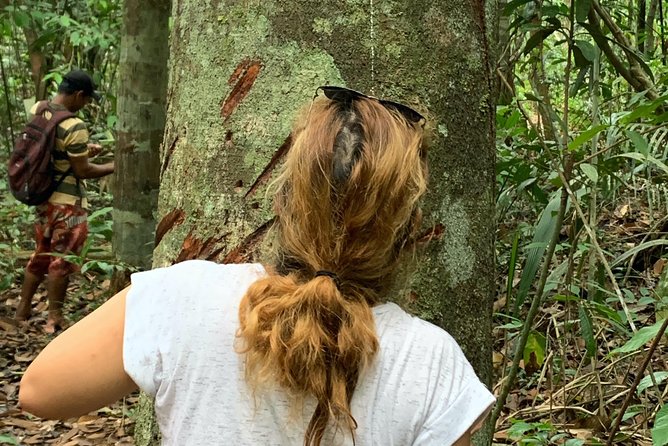
During the hike, the guide shows medicinal plants and discusses practical jungle skills, including how shelters work in this environment. The tour also makes it clear that wildlife sightings are never guaranteed because animals are free in the wild. You are going for the experience of the forest itself, not a promise of a guaranteed animal lineup.
Practical tip: wear closed shoes and long pants. If you are traveling in the rainy season (October to July), the terrain can be muddy, and mosquito pressure can be high. I would pack bug spray and be ready to keep your legs covered even if you feel warm.
Day 1 lunch on the floating house and the food reality check
After the hike, you head to the floating house for lunch. The lunch options described include fish or chicken, with rice, beans, spaghetti, and manioc flower. This is simple Amazon comfort food, and it is very much meant to be local and filling after a hike.
One consideration is dietary flexibility. The tour notes it cannot provide special meals like vegetarian options for the day 1 lunch. If vegetarian eating works for you using the basic staples mentioned (rice, beans, spaghetti), you should be fine. For people who need strict vegetarian meals, you will want to manage expectations for day 1.
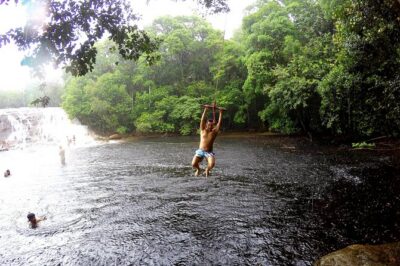
After lunch, there is time to relax and enjoy the view, with an option to swim if you want to cool off before the next boat segment.
More days out of Manaus:
- Indian Village and Meeting of the Waters Tour
★ 4.5 · 241 reviews - A Whole Day in the Jungle
★ 5.0 · 155 reviews - 3 Days Amazon Jungle Adventure Tour
★ 4.0 · 145 reviews - Amazing Waterfalls of the Amazon – Presidente Figueiredo
★ 4.5 · 141 reviews
Day 1 pink river dolphins: close up, optional water time
This is one of the headline moments: you go to a platform where researchers work on pink river dolphins. The tour describes the dolphins as docile and friendly, and it mentions their size range, including up to nearly 3 meters long.
What matters for you: it is not just watching from far away. You are able to come very close for photos, and there is also an opportunity to enter the water. The tour recommends bringing swim suits and towels, because getting in means you will need a way to dry and stay comfortable.
Cash can come in handy here too. The tour notes you may have a chance to buy beers or coconut juice, so bring some cash if you like that extra treat.
Day 1 canoeing on the Rio Negro and the igapó forest effect
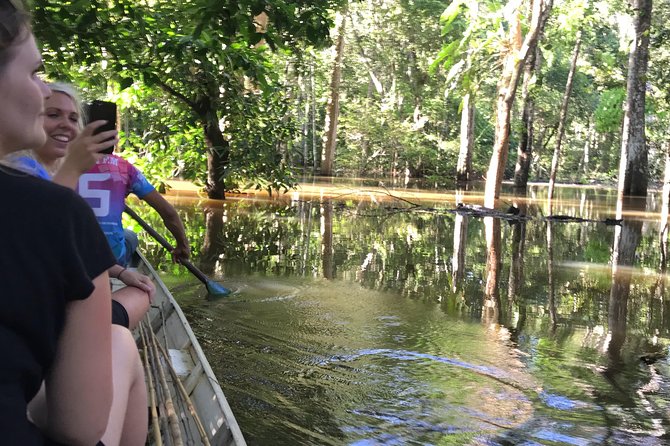
After dolphins, you canoe through the Negro River side. The big ecological context is the seasonal change. During the flood season (March to August), you can experience the flooded forest called Igapó.
This is not just scenic. It changes how the forest works and how you feel inside it. Navigating among trees under flood conditions is one of those Amazon moments where you understand why people rely on boats and why walking and water levels are tied together.
If you come during the dry season, you will still be on the same river, but you will miss that flooded-forest look. That is not a flaw, it is just how the Amazon cycles.
Piranha fishing and what to expect from the hook
Next up is piranha fishing. It is described as doable but not easy, and it is presented with a safety mindset. Piranhas are called dangerous in the description because of sharp teeth, and the tour notes it is a wise idea to let the guides remove them from the hook.
If you catch a fish big enough, you may bring it for dinner. That is a classic Amazon field-meets-kitchen moment, and it adds meaning beyond the thrill of trying.
If you dislike fishing as a concept, you can still enjoy it as a cultural and guided activity. But I would not call this a guaranteed action sport, it depends on catching something and on the day’s conditions.
Acutuba Beach sunset and a night search for caymans
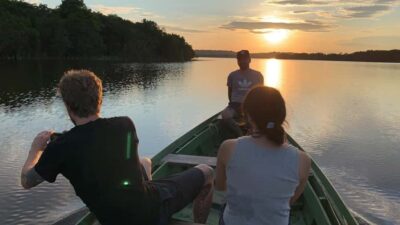
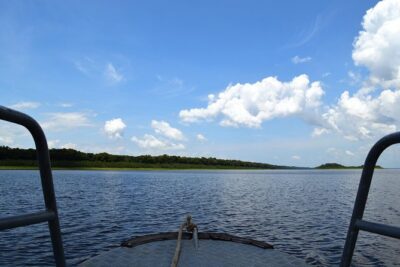
When the day shifts toward evening, you paddle to the middle of the river and watch the sunset. The stop is timed for sunset on Acutuba Beach, and this is one of those moments that works even if wildlife is quiet earlier. The river itself is huge, and sunset reflections on the Negro River can feel almost lake-like.
After dark, you go on a search for night creatures hidden around the area. With luck, you can spot a cayman close enough for videos and photos. Again, sightings are never guaranteed, but night searching is part of what makes an overnight work, instead of just a day trip.
Dinner and overnight come after these activities. You return to a guest house with simple beds and mosquito nets. The toilet is private, but the place is intentionally basic, meant to bring you closer to how people live in the area rather than recreating a city hotel.
Sleeping in the jungle: simple beds, and sometimes better than you expect
The tour describes the overnight setup as simple, with mosquito nets and private toilet, but not a hotel standard. That said, recent experiences shared show variation: some guests reported cabins with air conditioning and a private bathroom, and even notes about wifi in certain stays.
So here is how to think about it: you are signing up for jungle proximity, not luxury resort vibes. If your definition of comfort is strict, focus on tempering expectations and think of the overnight as part of the story, not the main attraction.
For me, the best benefit is practical. After a full day of boats and hiking, you do get the chance to hear the rainforest after dark, and that changes your whole perspective.
Day 2 at 5:30 am: sunrise timing and why rain matters
Day 2 begins early, around 5:30 am, with a ride while it is still dark to catch sunrise. The reasoning is simple: the Amazon is near the equator, and day-night changes can bring more activity. The guide also notes it can rain in the rainy season, and sunrise might not be possible then.
So you should treat sunrise as a bonus, not the only point of the morning. Even if you do not do the hill-time wildlife tracking, the day still delivers community visits, river cruising, and major scenery.
CIPIA indigenous village: culture, rituals, and cash-only souvenirs
After the early start, you travel a longer distance by speedboat to Comunidade Indigena CIPIA. The purpose is to learn about culture and history and to see a performance of traditional rituals. The tour description notes they moved from the border with Colombia and now live closer to Manaus, while keeping their own dialect.
This is one of the most meaningful stops on the itinerary because it shifts the question from what you can see in nature to how people live with and within the region. You are not just taking in scenery, you are meeting a community and watching traditions presented in a direct way.
Souvenirs are possible, but the tour notes it is cash only with small bills, so plan ahead.
Praia do Tupe beach time: quick swim, warm water, white sand
Next is Praia do Tupe, a beach stop that depends on season. It is described as usable during part of the dry season (August to September) and part of the flood season (January to June). The plan is short, about 30 minutes, and it is built around a swim, photos, and relaxing in warm waters.
This stop is not for deep exploration. It is for a break and a reset, and it gives you a different feel from boats and forest trails.
Janauary ecological park: flooded forest walk and floating restaurant lunch
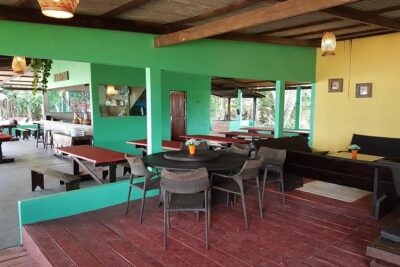
Then you go to Parque Ecologico Janauary. This works during flood season and part of the dry season (January to September). Lunch is at a floating restaurant with a good variety of food, and the tour explicitly says vegetarian options are included here.
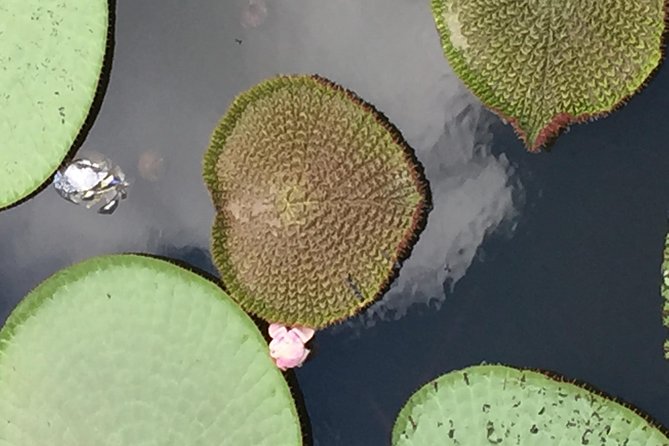
After lunch, you walk through the flooded forest and look for water lilies on a lake. You do this at the end of a suspended walkway, almost by the canopy of the trees. That means you are seeing forest structure up close while staying safer than wading through uncertain water.
If there is not enough water to enter the park, the plan adjusts. You still eat at a floating restaurant along the Negro River side, with similar food quality, but without water lilies.
Lago do Catalão floating village and the pirarucu fish farm feeding
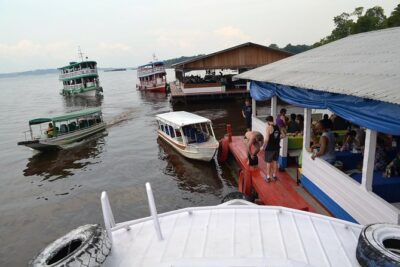
In season-appropriate conditions (flood season and parts of dry season from January to September), the next big stop is a floating village on Lago do Catalão. The description says there are over a hundred families, with houses built on huge logs that float. The village includes school, church, shops, and restaurants, so it is a whole community, not a photo stop.
Then you head to the fish farm for pirarucu, which the tour describes as Arapaima gigas, including the idea of it being the biggest freshwater fish with scales. Your activity is feeding it using rods with no hooks, just bait attached. The aim is to get close and feel the fish’s power.
For anyone worried about safety or weird fishing methods, the fact that rods have no hooks matters. You still should stand by the guide and follow instructions, but the design reduces the danger compared to traditional hook-and-line fishing.
Meeting of Waters and the return to Manaus
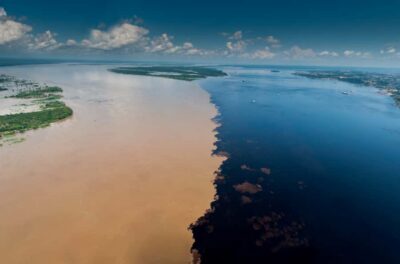
Finally comes Meeting of Waters, one of the nature phenomena described as a “seven wonders” type moment. Two rivers, one brown and one black, run side by side without mixing because of differences in density, velocity, temperature, and acidity.
The stop is short, around 30 minutes, but it is the kind of moment you do not need long to understand. If you like big river visuals and science-ish explanations, you will appreciate it.
From there, you head back toward Manaus. You pass the industrial park area, including a long list of factories assembling global brands, and you visit the port zones including the biggest private floating port in South America and the fish port. You are also told you might notice the dome of the Amazonas Theater and the main port area where boats travel to other parts of northern Brazil.
The estimated return time to your hotel is around 5 pm.
Season and safety notes that will save your day
This trip is weather-dependent. The tour says it requires good weather and may be canceled if conditions are poor, with an alternative date or refund offered. Even when it runs, the Amazon can shift fast.
If you travel during rainy months, expect:
- Mud underfoot during jungle hikes
- Higher mosquito activity
- Possible rain that can affect early sunrise plans
Also, be ready for effort. The tour calls for moderate physical fitness, and some guests have noted the hike can feel longer and hotter than expected. If you have mobility limits, ask yourself honestly whether long periods of walking, climbing into boats, and standing on uneven surfaces are manageable.
Who should book, and who should skip this one
I think this tour is a strong fit if you want a high-activity Amazon overview without spending a week in the jungle. It is especially good for first-timers who want key “must-see” Amazon moments within two days, like river dolphin time, piranha fishing, indigenous culture, a floating village, and Meeting of Waters.
I would skip it if you:
- Want a relaxed, low-effort style trip
- Need strict vegetarian meals every single stop
- Are uncomfortable with muddy ground and mosquito conditions during the rainy season
- Expect a hotel-level overnight setup every night
Final decision: Should you book the Amazon Jungle Experience with Overnight?
If you want maximum Amazon in minimum time, I would book it. The pricing makes more sense when you see how much is included: meals, accommodation, transport by multiple boat types, and the major admission-based stops.
Just go in with realistic expectations. Wild animals are not guaranteed, the hike is real, and the overnight is simple jungle living. If that is your kind of travel, this is a memorable, well-paced way to experience the Amazon from Manaus.
FAQ
What is the duration of the Amazon Jungle Experience with Overnight?
It runs for about 2 days (approx.).
What is the meeting point and start time?
The meeting point is Amazonas Theater, Largo de São Sebastião – Centro, Manaus – AM, 69067-080, Brazil, and the start time is 8:00 am.
Does the tour include meals and accommodation?
Yes. It includes breakfast, dinner, and lunch (2), plus accommodation for the overnight.
How many people are in the group?
The tour is limited to a maximum of 12 travelers.
What should I pack for this tour?
Bring closed shoes and long pants for the jungle hike. If you want to join water activities, the tour recommends a swimming suit and towel. Boots are also mentioned as not included, so plan for footwear. Cash is helpful for things like souvenirs and some drinks.
Is there vegetarian food?
Day 1 notes it cannot provide special meals like a vegetarian option. If basic items like rice, beans, and spaghetti work for you, it should be fine. Day 2 lunch at the floating restaurant includes vegetarian options.
What happens if weather is bad?
The experience requires good weather. If it is canceled due to poor weather, you will be offered a different date or a full refund.
Newest Manaus reviews
- Manaus City Sightseeing Tour★ 4.5 · 15 reviews
- Manaus City Sightseeing Tour★ 4.5 · 15 reviews
- Adventure: 4-hour hike in the Amazon rainforest★ 5.0 · 16 reviews
- Getting in to the Jungle 3D/2N-At Tapiri Rio Anavilhanas Lodge★ 5.0 · 16 reviews
- Walking Tours in Manaus★ 3.5 · 16 reviews
- Private transfer in Manaus – 24h★ 5.0 · 17 reviews
- Amazon Adventure Trip 4D/3N at Tapiri Anavilhanas Lodge★ 5.0 · 17 reviews
- Amazon Survival Experience★ 5.0 · 18 reviews
Amazon Rainforest, compared.
8-Hour Amazonas Jungle Treck & Anavilhanas Archipelago
Read our review →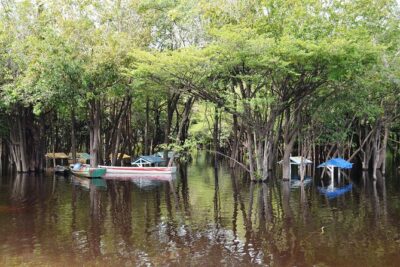
Browse the lists this tour appears in