
Reviewed · FAVELA TOURS
The real life behind the word favela
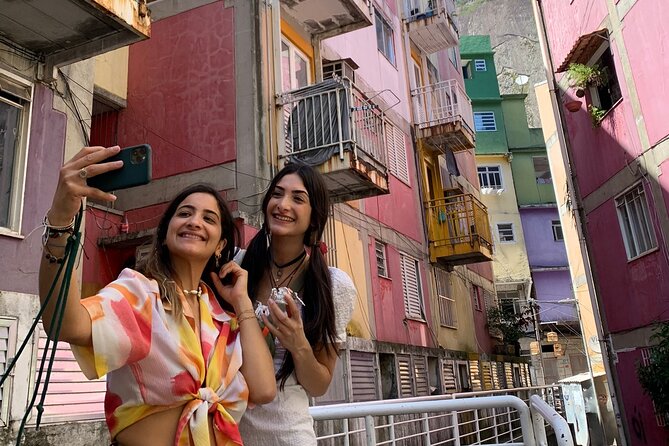
Rocinha is the kind of place that gets reduced to a single word, favela, and that is the point of this tour: it pushes you to see the real people, daily routines, and community culture behind the label. I like that the experience is built around a local agency, Favela Lives Tour, created by a guide with 9 years of experience. I also love that it is not a sit-and-stare type of outing, you move through the neighborhood with a personal guide and private transportation.
What stands out is how the tour leans social and cultural, with hands-on moments like capoeira and time around local schools and community landmarks. In feedback for guides such as Carlos, Carolina, Gilvan, and Carlls Henrique, the common theme is clarity and patience, people ask questions and get straight answers in very good English. One thing to consider is that a couple of negative comments point to communication issues, including a possible extra payment request during a stop, so you should go in with questions answered early.
If you want Rio beyond the postcards, this is one of the more direct ways to do it. Just keep your expectations grounded: it is a real neighborhood with real rules, so go respectful, go prepared, and plan to walk at a moderate pace on uneven streets.
Key highlights to know before you go

- Local-guided in Rocinha, one of Rio’s most known communities, with a city-within-a-city feel
- Viewpoint included, so you get context fast instead of arriving blind
- Culture in motion, with examples like capoeira and everyday stops rather than museum-only explanations
- Small group size (up to 20), which makes questions easier and the pace more human
- Private transportation, helping you travel safely between sections without playing taxi roulette
- 3 hours total, a solid window for learning without draining your whole day
Why Rocinha, and what this tour is trying to fix
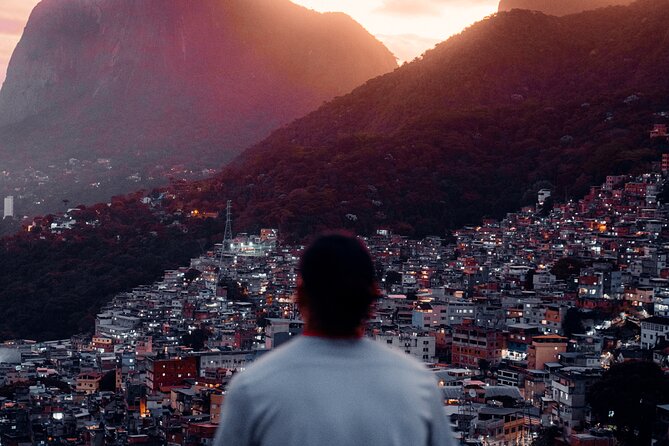
Rocinha is described as the largest favela in Latin America, a city within a city. That matters because so much of what people think they know about favelas comes from fear, headlines, or secondhand stories. Here, the goal is simpler and smarter: you are guided through the neighborhood with the intention of showing daily life, not selling a stereotype.
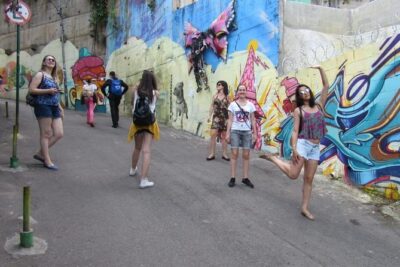
The phrase that keeps coming up in positive feedback is real-life context. You are not just taking photos of colorful streets. You are hearing how people organize their days, how culture shows up in shared spaces, and how the community has its own history and landmarks. And because the tour is guided by locals through Favela Lives Tour, the explanations tend to connect street-level details to bigger ideas, like community identity and how Rocinha formed.
At the same time, you should not mistake a cultural walking tour for a perfect TV script. You will be in an active neighborhood, with narrow lanes and lots of human texture. So come with curiosity, not a need to confirm every worry you ever had.
More favela tours led by residents:
- Rio de Janeiro: Rocinha Favela Walking Tour with Local Guide
★ 4.8 · 3,052 reviews - Rio De Janeiro: Half-Day Rocinha Favela Walking Tour
★ 4.7 · 2,272 reviews - 3 Hour Rocinha Favela Walking Tour with a Local Guide
★ 5.0 · 833 reviews
Meeting at Metrô São Conrado, then getting oriented fast
The tour starts at Metrô São Conrado, at Saída BEstr. da Gávea, in São Conrado. Ending back at the meeting point keeps the experience simple, you are not hopping across the city at the end while your energy drops.
You also get private transportation, which is a big deal on this kind of outing. In Rio, travel time can turn into stress fast, especially if you are trying to coordinate multiple pickups. With a provider handling the movement, you can focus on the actual purpose of the trip.
One practical perk: the meeting point is near public transportation. That means if you are staying somewhere else in Rio, you are not forced into a complicated plan just to start. If you hate last-minute scrambling, this setup helps.
Finally, the group size is limited to up to 20 travelers. With a smaller group, guides can answer questions without turning your tour into a lecture with zero back-and-forth. That quality shows up clearly in the kind of feedback the tour gets.
The viewpoint stop, where you get the lay of the land
You get a viewpoint during the tour, and that is not just for photos. A viewpoint gives you scale. From higher ground, you can start to understand how streets, hills, and clusters of housing connect. You also start to see why people describe Rocinha as a city within a city.
This is where I think the tour does something genuinely useful for visitors: it helps you get your bearings early. Without that, it is easy to feel lost or confused while you are walking narrow routes. With an overview first, you tend to notice patterns later, and the guide’s explanations land better.
If you go in bright midday sun, bring water. If you go on a cooler or cloudy morning, you might appreciate a light layer. The data you were given does not promise perfect temperatures, and good views often come with some waiting and exposure.
Inside Rocinha: narrow lanes, local schools, and capoeira culture
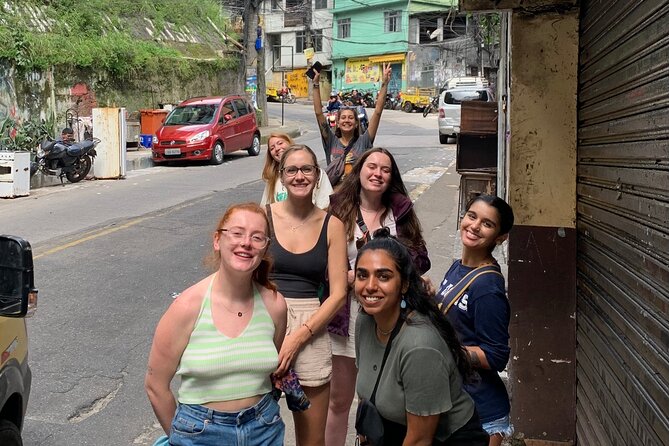
Once you move off the early orientation, the tour shifts into real community rhythm. Based on the experiences described, you can expect time in areas that feel compact and close, with narrow ways where the neighborhood’s daily flow becomes visible.
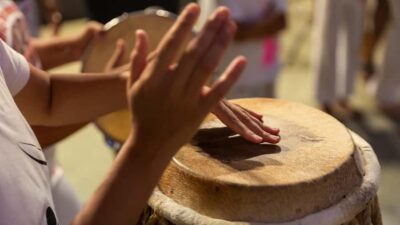
A couple of cultural anchors show up in feedback. Capoeira is one of them. Instead of treating it like a staged performance, it is presented as part of community life and a way to explain culture through movement and practice. You may also pass by or spend time around local schools, which can help you understand what daily routines look like for families.
Some groups even mention a motor-taxi ride as part of the journey. If that happens for you, it is not a gimmick, it is a way to cover short distances quickly in a neighborhood where standard car routes can be tricky.
Here is the practical value: when you see schools, culture spaces, and street-life in one tour, you start connecting ideas. You stop thinking of Rocinha as a single image and start seeing it as a living place with schedules, learning, and community bonds.
More days in Rio:
- Rio de Janeiro: 6-Stop Highlights of Rio with Lunch
★ 4.4 · 5,157 reviews - Christ the Redeemer Entry Ticket by Corcovado Train
★ 4.4 · 4,476 reviews - Rio’s City Tour – Tickets for Christ, Sugar Loaf & Lunch included
★ 5.0 · 4,389 reviews - Full Day: Christ Redeemer, Sugarloaf, City Tour & Barbecue Lunch
★ 4.5 · 3,142 reviews
The cathedral stop and the origin story of Rocinha
A highlight mentioned repeatedly in feedback is a stop at the cathedral, described as connected to the origin of Rocinha. Even if you do not consider yourself religious, a cathedral stop can do something important on a cultural tour: it anchors the stories people tell about where they are from and how identity is built.
In plain terms, origin stories make neighborhoods feel less like a background and more like a place with roots. That is a counterweight to the usual outsider narrative. When your guide explains the meaning behind landmarks, you often find yourself asking better questions.
Also, this kind of stop gives you a mental reset. After walking and watching everyday scenes, stepping into a landmark can slow the pace, help you digest what you just learned, and gives you another angle on the community.
One caution. One negative comment mentions an extra payment request of 5 reals per person after a terrace stop. Since that detail is specific, it is worth handling early. I would ask your guide at the start whether any small extra payments might come up during the tour, and what the payment would be for. You want clarity so you are not deciding in the moment.
Guides like Carlos and Carolina, why that matters more than you think
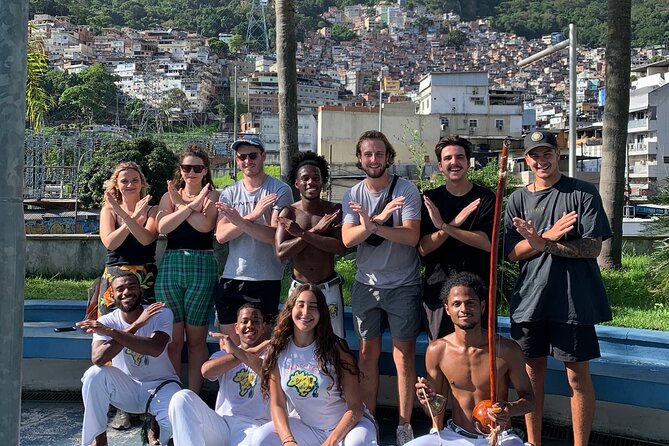
This tour is built around a local guide, and that is the secret ingredient. When a guide speaks excellent English, explains clearly, and keeps answering questions, the tour becomes about understanding instead of just observing.
In the feedback you provided, guides like Carlos and Carolina get singled out for knowledge and communication. Gilvan is praised for being friendly and helpful. Carlls Henrique is mentioned for clear explanations and covering different corners while keeping people engaged. The consistency is not just personality, it is the ability to connect what you see with what it means.
A great guide also manages the social side. In neighborhoods that outsiders often approach with nervousness, your guide’s tone can make the difference between feeling like a visitor and feeling like you are part of a respectful exchange.
So before you go, plan to use the time. Ask about history in human terms. Ask what surprised them when they first started guiding. Ask how community life changes week to week. You will get more from the tour if you treat it as a conversation.
Price and value: what you get for $49.05 in 3 hours
At $49.05 per person for about 3 hours, this tour is not cheap, but it is also not trying to be a luxury experience. The value comes from what is included:
- Private transportation
- A viewpoint
- A personal guide
- Admission ticket included
That package matters because you are paying for access and context. You are not just buying time in Rocinha. You are buying a planned route, a guide who can interpret what you are seeing, and transport so you do not waste your energy figuring out logistics.
What is not included is also clear, foods and souvenirs. That is normal for a half-day style tour, but it means you should eat before you go and bring basic essentials like water. If you get hungry, you might have to handle it on your own outside the tour.
If you are deciding between a street-level photo tour and a more structured cultural tour, this one generally makes more sense. The ticket price is doing more than entry, it is funding knowledgeable local guidance and the movement between stops.
How safe does it feel, and what you should do to feel comfortable
Safety is a sensitive topic, and the information you have includes strong positive signals about comfort. One comment says the favela felt safe and nice to visit, and another highlights how the guide prioritized safety first.
The tour also asks for moderate physical fitness. That is likely your cue that you will be walking on uneven surfaces and navigating slopes and narrow routes. If you have knee issues or get tired quickly, consider whether a walking-based neighborhood tour fits your day.
There are also practical accessibility notes: service animals are allowed, and it is near public transportation. But beyond that, the core requirement is your ability to walk at a reasonable pace for about three hours.
My advice is simple: wear shoes you can trust. Skip slick sandals. Bring sun protection. And do not treat the day like a quick photo sprint. When you slow down, you notice details and your guide can guide conversations without everyone rushing.
Weather, timing, and avoiding tour-day stress in Rio
The tour requires good weather. Rio can change fast, so even if your schedule is locked in, the tour’s success is tied to conditions.
Because one negative comment mentions a guide no-show, take small precautions that protect your day. Confirm your meeting details the day before. Arrive a few minutes early so you are not stressed in the first minutes. Keep your provider contact handy and make sure you know where to stand at the start point.
Also, the tour is commonly booked about 9 days in advance on average. If you are traveling in busier periods, that lead time can be a clue. For peace of mind, book when your plan is firm.
Who this tour is best for, and who should skip it
This fits best if you want cultural context and you like asking questions. It is also a strong choice if you have been to mainstream Rio stops already, like beach or classic viewpoints, and you now want a different perspective.
It can also work well for couples, families, and solo travelers, since the small group size and guide-led structure help people feel included.
You might want to choose something else if:
- You are not comfortable with walking on uneven streets
- You want a purely visual, low-interaction tour
- You prefer very structured, predictable schedules with zero uncertainty
If your goal is understanding rather than sightseeing, this tour is built for you.
Should you book Favela Lives Tour?
If you want the real life behind a single word, I think this is one of the better ways to do it in Rio. The strongest reason to book is the combination of local guidance, a viewpoint for context, and culture stops like capoeira and community landmarks such as the cathedral. Add in private transport and a small group size, and the tour’s value becomes clearer.
Book it if you are ready for a respectful, human experience, and if you are willing to walk moderately and engage with your guide. If you like learning through conversation, guides such as Carlos and Carolina have a reputation for clear explanations and lots of patience.
Before you go, send one message or ask one question: whether any small extra payments might come up during stops, like the specific 5 reals per person detail that appeared in a negative experience. Clear expectations prevent awkward moments and keep the focus where it belongs.
FAQ
How long is the Favela Lives Tour?
The tour lasts about 3 hours.
What does the $49.05 price include?
It includes private transportation, a viewpoint, a personal guide, and an admission ticket. Food and souvenirs are not included.
Where do I meet the tour, and where does it end?
You start at Metrô São Conrado, Saída BEstr. da Gávea, São Conrado, Rio de Janeiro. The tour ends back at the meeting point.
Is this tour offered in a small group?
Yes. The tour has a maximum of 20 travelers.
Is the tour suitable for people with limited mobility?
It asks for a moderate physical fitness level, so you should be comfortable walking on uneven surfaces typical of a neighborhood environment.
What is the weather and cancellation approach?
The experience requires good weather. If it is canceled due to poor weather, you will be offered a different date or a full refund. You can cancel for a full refund up to 24 hours in advance.
Newest Rio de Janeiro reviews
- Maracanã Matchday Tour – Ticket + Guide + Transfer★ 5.0 · 14 reviews
- Private Tour with Churrasco in Vela Catamaran – Velas do Rio★ 5.0 · 14 reviews
- Angra & Ilha Grande From Rio: Boat Tour With Barbecue and Drinks★ 5.0 · 14 reviews
- Tijuca Forest Adventure★ 4.5 · 14 reviews
- Half-Day Private Tour:Rio de Janeiro Highlights by Bernard Moraes★ 5.0 · 14 reviews
- Rio de Janeiro: Join a Fluminense game at Maracanã with locals★ 5.0 · 15 reviews
- Rio de Janeiro: Join a Botafogo soccer game with transport★ 5.0 · 15 reviews
- Christ the Redeemer, Selaron Steps and Santa Teresa Half-day Tour★ 4.5 · 15 reviews
More in Favela Tours.



3 Hour Rocinha Favela Walking Tour with a Local Guide
Read our review →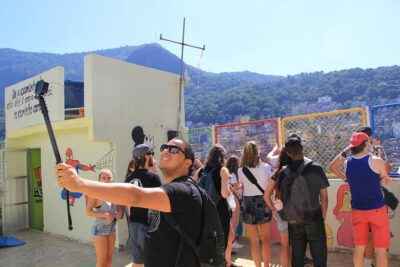

Favela Tour Rio de Janeiro – Vidigal Walking Tour by Russo Guide
Read our review →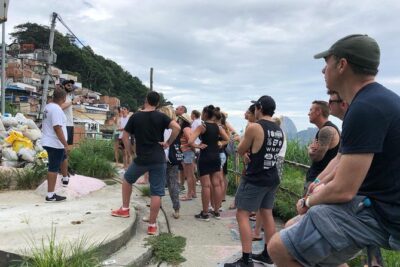
Browse the lists this tour appears in