
Reviewed · CARNIVAL & SAMBA
Samba Soul Tour
Samba Soul Tour is interesting because it treats samba like a city story, linking the Port Region, black cultural spaces, and the workshop where carnival parade craft gets made. I especially like the small group size (max 15 travelers), which keeps the pace human and the explanations clear.
My favorite part is Cidade do Samba, where you get a close look at how parade elements come together long before anything happens at Marquês de Sapucaí Sambadrome. On my tour experience, a guide named Celine did the best job of tying samba to a wider picture of Brazil, not just the music and costumes.
One consideration: the tour depends on good weather, and the first museum stop (Museu de Arte do Rio) is closed on Mondays, so you may want to double-check timing if your dates land on a Monday.
Key Highlights
- Terrace views at Museu de Arte do Rio over Praça Mauá and Guanabara Bay
- VLT tram ride past old docks, plus street art along Boulevard Olímpico
- Cidade do Samba workshop access with included tickets for Grande Rio’s parade production process
- Pedra do Sal, Small Africa roots tied to early samba traditions and the birth of urban carioca samba
- Ending at Largo da Prainha near Mercedes Baptista, setting you up for a roda de samba vibe
Start at Museu de Arte do Rio Terrace, then Rio’s Port Begins to Make Sense
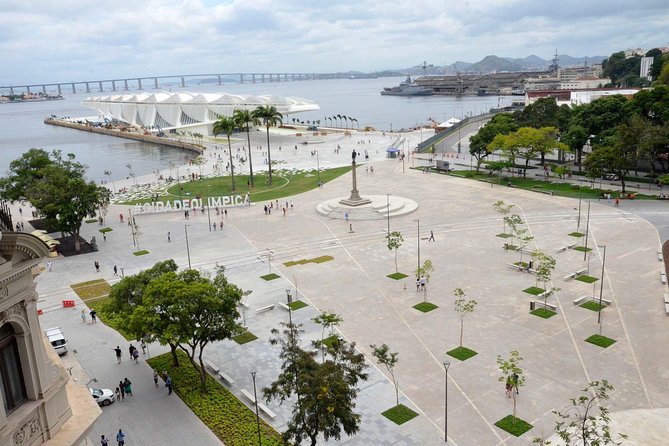
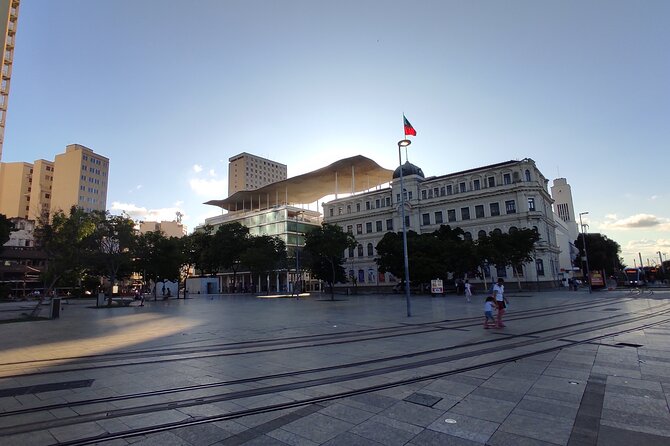
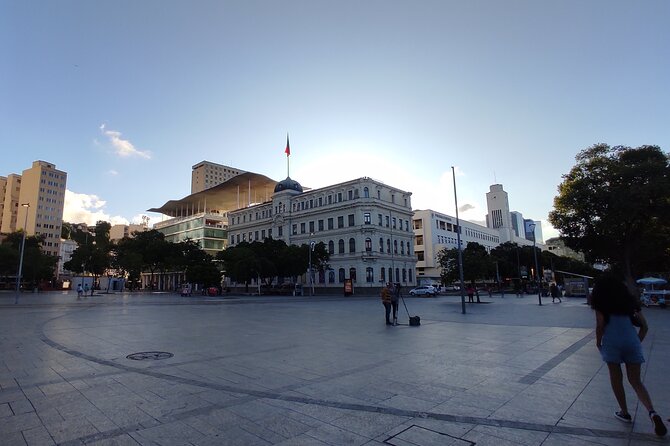
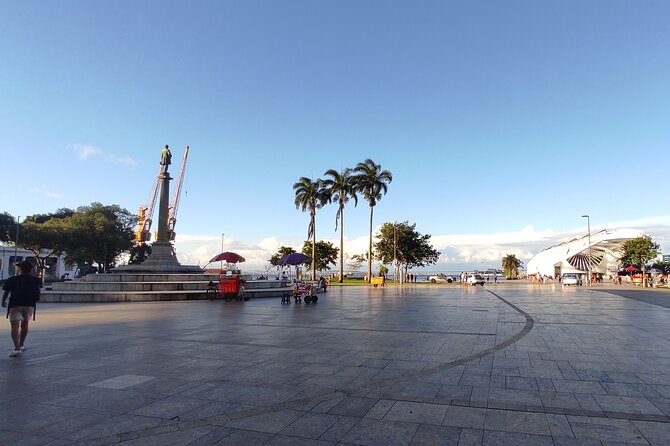
You begin at Museu de Arte do Rio (MAR) at Praça Mauá, right in the Saúde area. Even if you are not a museum person, this stop works because you start with a view, not a lecture. You head up to the museum terrace for a panoramic look toward Praça Mauá and Guanabara Bay, and suddenly the whole neighborhood feels connected to the rest of the tour.
MAR is closed on Mondays, so if your schedule includes Monday, plan for a likely change to this part of the route. If the museum is not operating, ask what replaces the terrace moment, since that first sightline is what helps you understand why the Port Region matters.
This is also a good moment to get your bearings fast. You see where the port action once was, and you understand why this area became a cultural crossroads instead of just a transportation zone. The guide’s talk then lands better, because you can match the story to the skyline in front of you.
Praça Mauá: The Port-Era Square That Links to Avenida Rio Branco
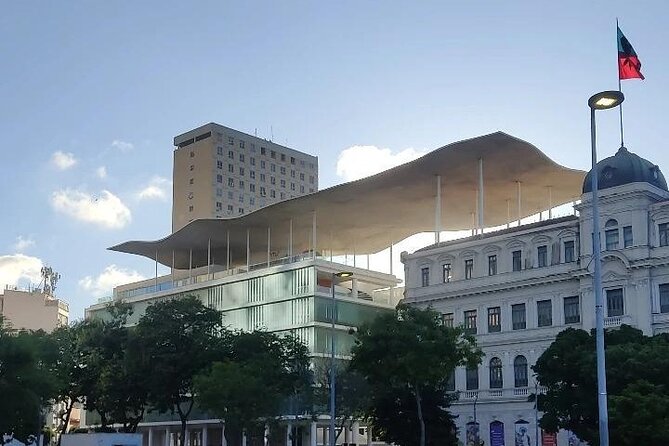
From MAR, you move to Praça Mauá. This plaza is basically a starting point for Avenida Rio Branco, and it also marks the beginning of Rio’s Port Region. In the early 1900s, when Porto do Rio opened in 1910, ships arrived here, and tourists started pouring into the city through this corridor.
I love this stop because the setting is simple, but the layers are not. Around Praça Mauá you find important buildings tied to Rio’s modern identity, including the Rio Art Museum (MAR) and the Museum of Tomorrow. You also get a reminder that even the skyline has a history, with the Night building, Rio’s first skyscraper, built in 1930.
For you, this stop is a quick history lesson with a payoff: it reframes samba as part of everyday life, not just something that shows up once a year. Samba did not develop in a vacuum. It grew through neighborhoods, work, migrations, and public spaces, and Praça Mauá helps you see that chain.
If you are sensitive to crowds, this is one place where foot traffic can be noticeable, especially when other events are happening nearby. The group size stays small, but the streets around Praça Mauá are busy by nature.
More Carnival & Samba in Rio de Janeiro:
- Rio de Janeiro: Beginner Samba Lesson in Ipanema
★ 4.9 · 1,071 reviews - Rio: Pub Crawl in Lapa with Cachaça Tasting and Live Samba
★ 4.7 · 881 reviews - Rio: Carnival Backstage Tour at Samba City with Cocktail
★ 4.6 · 520 reviews
Catch the VLT to Boulevard Olímpico, and See Rio’s Working Layers from a Tram
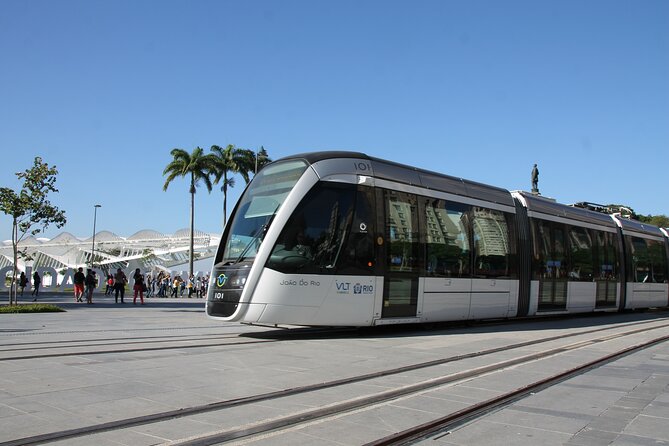
Next comes the tram ride. You take the VLT from Plaza Mauá toward Samba City, and that short transit is not wasted time. You can look out at the old docks area, which is the kind of visual context that helps the rest of the tour click.
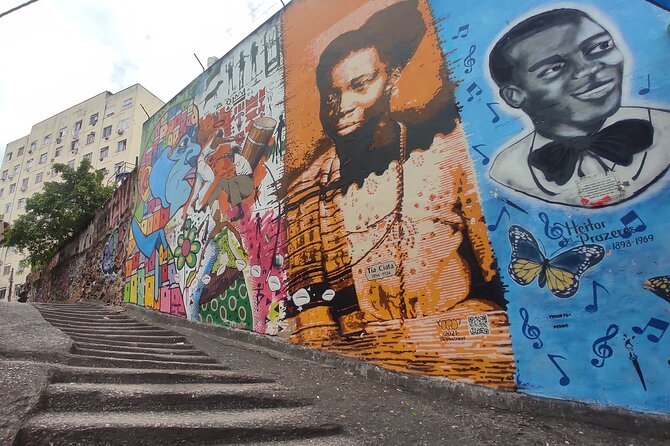
Boulevard Olímpico is the stretch you see along the way, with an extra bonus: street art that functions like an open-air gallery. Even if you only glance at it between stops, it changes the mood. It tells you this part of Rio is creative in more than one way.
This is also where you feel the tour’s pacing. The full experience runs about 4 to 5 hours, so you do not spend forever on each stop. Instead, each segment adds a small piece: view, story, ride, then production craft. That keeps your energy up and helps you stay engaged.
If you get motion sick easily, consider taking a seat where the tram ride feels steady to you. The ride is short, but it’s still time on public transit.
Cidade do Samba Workshop Time: Where Parade Craft Is Made by Hand
This is the heart of Samba Soul Tour. You go to Cidade do Samba, linked with the Carnival Experience connected to Grande Rio Samba School. The included City of Samba tickets matter here because they get you into the production side of carnival, which is not the same thing as watching a performance.
You spend about 1 hour learning how samba school creations get built. The guide explains how allegories and customs are made, and you see how the designs come together with real labor behind them. The key detail is that this is production you can stand close to. You do not just hear about it, you watch professionals work through the process that happens long before parade night.
One of the best parts of this stop is the way the tour frames timing. Marquês de Sapucaí Sambadrome is the famous stage, but the magic starts at the workshop. The tour gives you context so you can later recognize what you are seeing on parade night: structure, detail, and the choices that go into costumes and float components.
And yes, this is also where surprises can happen. The guide may include small extra moments during the workshop visit, and those add to the feeling that you got more than the standard route.
The only drawback: workshop energy can be busy and hands-on. If you prefer quiet viewing or long sit-down breaks, this part may feel like a lot of moving information. Still, it is worth it because it makes samba tangible.
Pedra do Sal: Small Africa and the Roots of Urban Carioca Samba
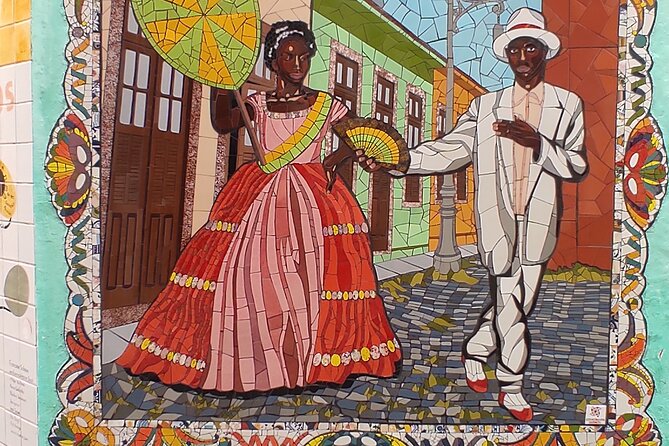
After the workshop, you shift to where samba’s cultural roots feel physical. You head to Pedra do Sal, on Conceição hill. This site is part of the region often called Small Africa, stretching from around Praça Mauá toward Cidade Nova. That range matters, because it shows samba’s story as something connected across neighborhoods.
Pedra do Sal is about more than scenery. The tour focuses on how early samba traditions worked as community events. You learn about rural samba rhythms, played with hands and supported by instruments like tambourine, along with other percussive elements. The dance element is described too, including tap dancing and movements tied to call-and-response culture, like the umbigadas that connect dancers to the music.
Then comes the big idea: this is described as a place where urban carioca samba was born from popular samba traditions and older carnival ranchos. That language matters because it explains why samba feels both local and evolving. It also explains why the carnival vibe is not just entertainment. It is identity, passed down through practice.
At this stop, you can also slow down a bit, because you are not inside a workshop. It’s a more reflective pace, and the guide’s context helps you look at the space differently than if you just walked past it alone.
Since this is a cultural landmark, treat it like one. Be respectful with photos, keep your distance from people who are simply being there, and let the guide finish their points so you get the full meaning.
More days in Rio:
- Rio de Janeiro: 6-Stop Highlights of Rio with Lunch
★ 4.4 · 5,157 reviews - Christ the Redeemer Entry Ticket by Corcovado Train
★ 4.4 · 4,476 reviews - Rio’s City Tour – Tickets for Christ, Sugar Loaf & Lunch included
★ 5.0 · 4,389 reviews - Full Day: Christ Redeemer, Sugarloaf, City Tour & Barbecue Lunch
★ 4.5 · 3,142 reviews
Largo da Prainha and Mercedes Baptista: The Tour Ends in the Right Mood for Samba
The final stop is at the Estátua de Mercedes Baptista at Largo da Prainha. This is a meaningful landing point because the tour connects samba culture to black women and their role in samba music and Afro-Brazilian dance. You end with the sense that samba is not one performer or one parade. It is a whole ecosystem of artists, leaders, and traditions.
Largo da Prainha is also practical. The tour tells you that you can grab a snack and refreshments in the area. That matters because lunch is not included, so having a place to get food without planning your whole afternoon around it is a real convenience.
You also get a vibe-setting moment near Pedra do Sal. The guide frames this area as a way to get in the mood for a roda de samba, the kind of gathering where samba becomes social, shared, and alive. You do not have to force anything. The tour ends where you are already in the right mindset.
The surrounding area has bars, taxis, and rideshare options, so leaving the tour is straightforward. The end point is easy to connect to the rest of your Rio plans.
Included Tickets and Small-Group Style: Why This Tour Feels Like Good Value
The tour includes two key things: tram tickets (VLT) and tickets for Cidade do Samba. That is not just a checkbox. It’s part of what makes this itinerary work as one smooth afternoon.
Without included transit and admissions, you would spend more time figuring out logistics, and you might miss the rhythm of the day. With them included, you can focus on the story the guide is building from stop to stop.
The small group size of up to 15 travelers also makes a difference at the workshop. When a space gets busy, it helps to have a group that can actually hear the guide. It also helps when you want to ask questions about what you are seeing, especially in a place where production details are easy to overlook.
English availability is another practical advantage. The tour is offered in English, and the guide’s explanations are aimed at helping you connect samba to broader Brazilian context. In particular, Celine’s style is called out as a standout, with explanations of samba plus a brief history of Brazil woven in. That combination is rare, and it’s why the tour feels rewarding even if you are not a samba superfan.
Timing, Walking, and Weather: How to Plan the Best 4 to 5 Hours
This experience runs about 4 to 5 hours. That timing is long enough to get context, but short enough that you can still do other Rio plans the same day. It is also compact, since the stops are close enough to connect via tram and walk in between.
You should plan for weather. The tour requires good weather, and if conditions are poor, you are offered an alternate date or a full refund. That means you should avoid booking this as your only option during a rainy window.
In terms of effort, you are moving between multiple stops, and you go inside at least one major venue plus the workshop setting. Wear shoes you can stand in for stretches. Bring a light layer if the sea air feels chilly later in the day.
Lunch is not included, so either plan to eat before you go or be ready to snack after. Largo da Prainha is one area mentioned where you can grab food and refreshments at the end.
Who Should Book Samba Soul Tour, and Who Might Want a Different Style
This tour fits best if you want more than a parade story. If you like context, the way samba connects to the Port Region, black cultural spaces, and the production world behind carnival will feel satisfying. The guide’s explanations around social and political angles are also a plus for you if you enjoy history that connects directly to places.
You will probably also enjoy it if you like hands-on craft details. Cidade do Samba is where you get close to how costumes and float components take shape. That makes samba feel like a real creative industry, not just a performance night.
If you mostly want a lot of free time to wander and take photos at every stop, this may feel a bit structured. The route is designed for pacing, so the guide keeps you moving. You still get time to look around, just not unlimited time.
Should You Book Samba Soul Tour?
If you want a one-day Rio experience that connects views, transit, workshop craft, and samba roots, I’d book this. The included VLT and Cidade do Samba tickets remove the biggest friction points, and the small-group approach helps the explanations land.
Book it especially if you care about understanding samba as culture and not only as spectacle. The stops at Pedra do Sal and Mercedes Baptista, plus the workshop time at Cidade do Samba, give the tour emotional balance.
Skip it only if you are traveling during a Monday when MAR is closed and you cannot adjust, or if you strongly prefer flexible free-time itineraries over guided context. Otherwise, this tour is a smart way to make a short afternoon in Rio feel meaningful.
FAQ
How long is the Samba Soul Tour?
The tour lasts about 4 to 5 hours.
Is the tour offered in English?
Yes. The tour is offered in English.
What is the group size?
The tour has a maximum of 15 travelers.
What tickets are included?
Tram tickets (VLT) and Cidade do Samba tickets are included.
Is lunch included?
No, lunch is not included.
Where do you meet for the tour?
You start at Rio Museum of Art, Praça Mauá, 5 – Saúde, Rio de Janeiro – RJ, 20081-240, Brazil. The VLT station stop is listed as Museum Stop.
Where does the tour end?
The tour ends at Estátua de Mercedes Baptista, Largo São Francisco da Prainha – Saúde, Rio de Janeiro – RJ, 20081-261, Brazil.
Is Museu de Arte do Rio open every day?
The museum stop includes Museu de Arte do Rio (MAR), and it is closed on Mondays.
What happens if the tour is canceled due to poor weather or the minimum number of travelers?
If it is canceled due to poor weather, you are offered a different date or a full refund. If it is canceled because the minimum isn’t met, you are offered a different experience or a full refund.
Can I get a full refund if I cancel?
Yes. You can cancel up to 24 hours in advance for a full refund. If you cancel less than 24 hours before the start time, the amount paid is not refunded.
Newest Rio de Janeiro reviews
- Two Brothers Hike in Rio de Janeiro At sunrise★ 5.0 · 3 reviews
- Rio Paragliding Experience w/ Brazilian Female Champion video inc★ 5.0 · 3 reviews
- Tour 7 ( 4 hours ) : Tijuca National Park and Favela★ 4.5 · 3 reviews
- Tijuca Forest + Botanical Garden + Lage Park – by Alan Denis★ 5.0 · 3 reviews
- Rio de Janeiro by Yourself with English Driver by private Vehicle★ 5.0 · 3 reviews
- Personalized Tour in Rio. Main Attractions and Cultural Walk.★ 5.0 · 3 reviews
- Museum of Tomorrow – | Round Trip Transfer + 2 Tickets★ 4.5 · 3 reviews
- Stadium Stories & Food: Join a Maracanã stadium tour with a Local★ 3.5 · 3 reviews
Carnival & Samba, compared.


Pub Crawl in Lapa with Cachaça Tasting and Live Samba
Read our review →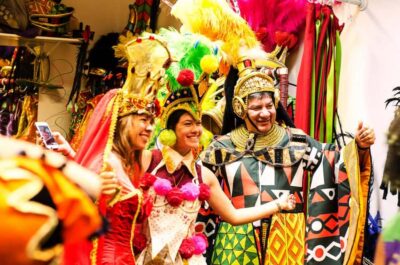
Carnival Backstage Tour at Samba City with Cocktail
Read our review →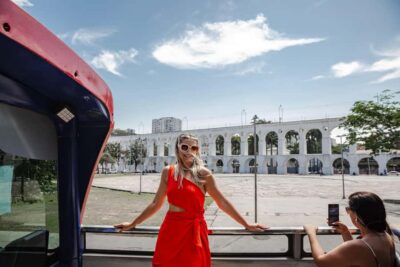
Hop-ON Hop-OFF Sightseeing Bus in Rio de Janeiro – Rio Samba Bus
Read our review →
Carnaval Experience: Backstage Tour at Samba City with Cocktail
Read our review →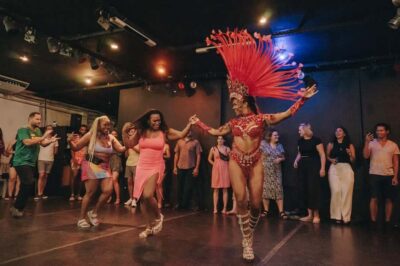
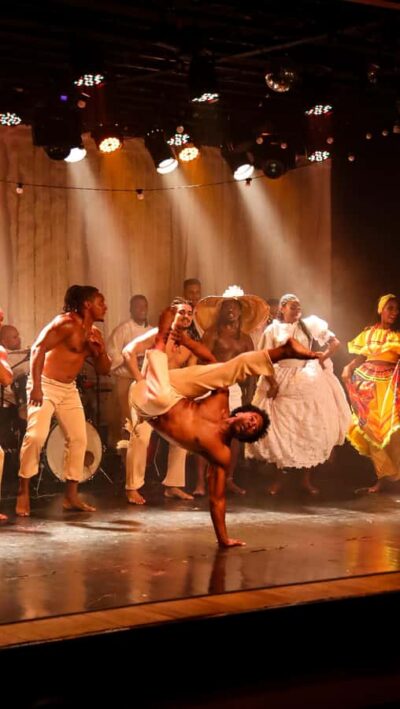

Ginga Tropical – Brazilian Samba and Folklore Show
Read our review →Browse the lists this tour appears in